

Introduction
India's FMCG market is rapidly shifting toward digital-first shopping experiences, with consumers increasingly purchasing everyday essentials through quick commerce (Q-commerce) platforms and major e-commerce marketplaces. Brands are no longer competing only on physical shelves; they must win visibility, pricing, availability, and customer attention across multiple online channels. Digital Shelf Optimization for FMCG Brands helps companies analyze how their products perform across digital marketplaces by tracking pricing, rankings, availability, assortment, promotions, and competitor movements.
With thousands of FMCG products competing across platforms such as Blinkit, Zepto, Swiggy Instamart, Amazon, Flipkart, BigBasket, and other online retailers, brands require accurate insights to improve their digital presence. Using digital shelf analytics for FMCG brands, businesses can evaluate product performance, identify pricing gaps, monitor competitors, and optimize product strategies based on real-time market conditions.
Modern FMCG companies are focusing on ways to Optimize digital shelf across Q-commerce & eCommerce channels by understanding category-level price trends, consumer demand patterns, and competitor positioning. Digital shelf optimization enables brands to maintain better visibility, improve conversion rates, and ensure that customers can easily discover their products while shopping online.
Growing Importance of Digital Shelf Optimization in India's FMCG Market
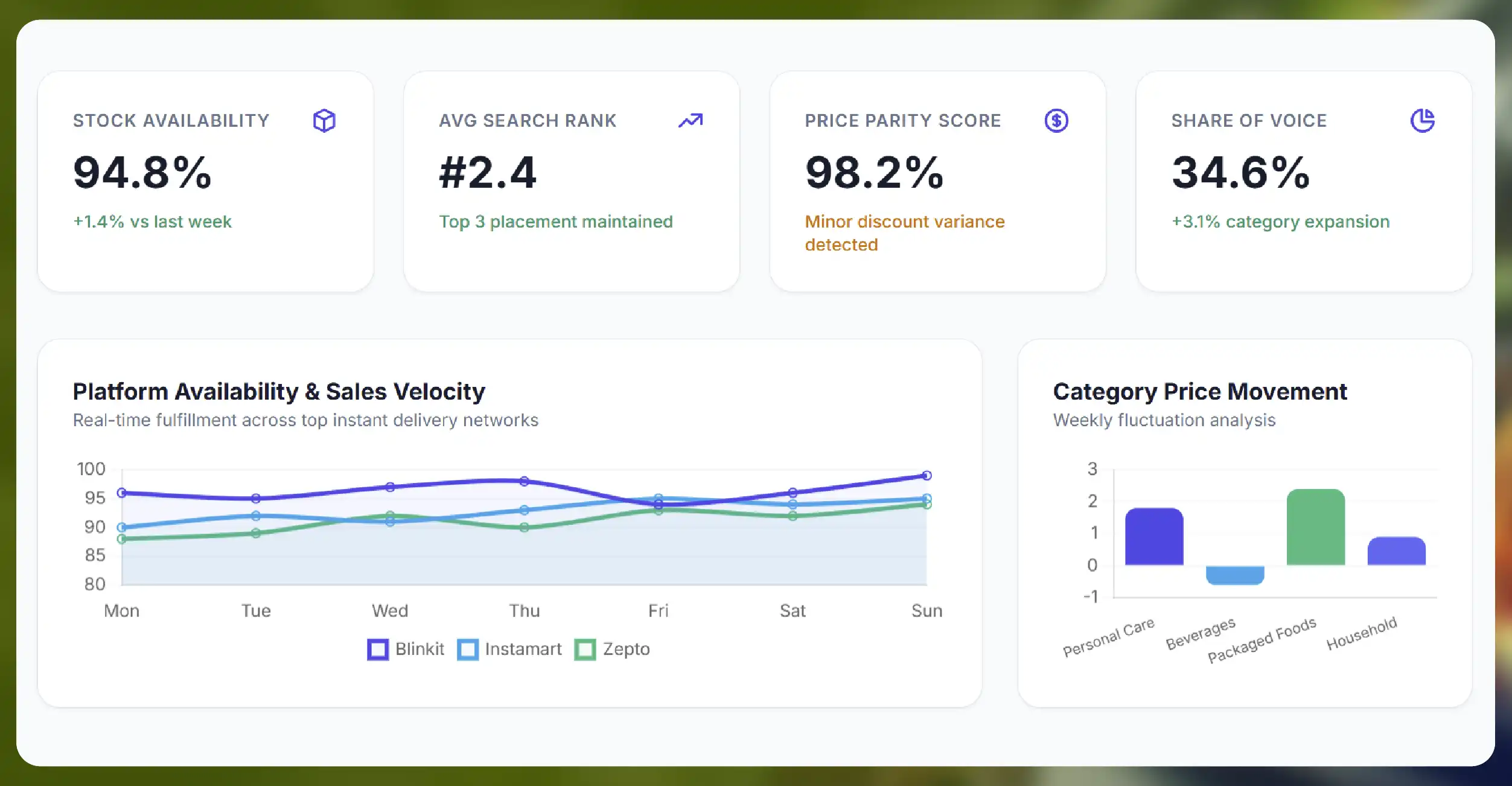
The growth of Q-commerce has transformed consumer expectations around convenience, delivery speed, and product availability. Customers now expect instant access to groceries, personal care items, household products, and daily essentials. For FMCG brands, this means that maintaining a strong digital shelf presence has become as important as traditional retail distribution.
Unlike physical stores where brands control shelf placement through negotiations and merchandising, online platforms use algorithms based on availability, pricing, ratings, reviews, promotions, and sales velocity. A product with poor visibility or inconsistent availability can quickly lose market share to competing brands.
Brands need continuous insights into:
- Product availability across multiple platforms
- Competitor pricing changes
- Category-wise price movements
- Product ranking positions
- Promotional campaigns
- Consumer preferences
- Marketplace assortment changes
By analyzing these factors, companies can make informed decisions about pricing strategies, inventory planning, and digital marketing investments.
Category-Wise Digital Shelf Pricing Analysis: Personal Care Products
The personal care category is one of the fastest-growing FMCG segments in India's online marketplace. Products such as shampoos, skincare items, soaps, deodorants, toothpaste, and grooming products experience frequent price changes due to discounts, seasonal campaigns, and competitive promotions.
Brands operating in this segment must monitor price differences across Q-commerce and e-commerce platforms to maintain competitive positioning. For example, a skincare brand may find that its product is listed at different prices on Amazon, Blinkit, Zepto, and BigBasket. These price variations can influence customer purchase decisions and impact brand perception.
Price tracking helps FMCG companies understand:
| Category | Key Pricing Factors |
|---|---|
| Skincare | Discounts, bundle offers, premium positioning, competitor pricing |
| Hair Care | Pack size variations, promotional pricing, brand comparisons |
| Oral Care | Brand competition, subscription offers, marketplace discounts |
| Grooming Products | Seasonal demand, new launches, influencer promotions |
Brands can use FMCG assortment and availability tracking to ensure that their products remain listed across important digital channels. Tracking assortment changes also helps identify missing SKUs, discontinued listings, and opportunities to expand product availability.
Category-Wise Digital Shelf Pricing Analysis: Dishwash Products
The dishwash category has witnessed strong growth through online grocery platforms due to changing consumer shopping habits. Products including dishwashing liquids, bars, powders, and premium cleaning solutions compete heavily on pricing, pack sizes, and promotional offers.
Consumers often compare multiple brands before purchasing dishwash products, making online visibility and competitive pricing extremely important. A small price difference between competing brands can influence buying decisions, especially in frequently purchased household categories.
Digital shelf monitoring enables brands to analyze:
| Product Segment | Digital Pricing Insights |
|---|---|
| Dishwash Bars | Price per unit, pack offers, competitor discounts |
| Liquid Dishwash | Premium pricing trends, customer ratings, promotions |
| Cleaning Packs | Multi-pack pricing, subscription offers, value comparisons |
Through FMCG product visibility monitoring, brands can identify whether products appear in top search results, category pages, and recommendation sections. Improving visibility helps increase product discovery and strengthens brand competitiveness.
Role of Product Ranking and Pricing Intelligence

Search ranking plays a crucial role in online FMCG sales. Products appearing on the first page or top recommendation sections generally receive higher customer engagement. However, rankings frequently change based on sales performance, pricing, reviews, and inventory status.
Brands can leverage Product ranking data scraping across Q-commerce & eCommerce platforms to understand how their products perform compared with competitors. These insights help identify ranking improvements, declining visibility, and opportunities for promotional optimization.
Pricing intelligence is another important component of digital shelf strategy. FMCG companies need continuous visibility into competitor prices, discounts, and promotional campaigns.
Q-commerce and eCommerce pricing intelligence allows brands to:
- Compare prices across multiple marketplaces
- Track competitor discount strategies
- Identify price fluctuations
- Analyze promotional effectiveness
- Improve revenue management
This data-driven approach enables brands to develop competitive pricing models while protecting profitability.
Digital Shelf Analytics for Better FMCG Decision-Making
Digital shelf analytics provides FMCG brands with a complete view of their online marketplace performance. Instead of relying on manual checks, companies can collect structured data from multiple platforms and analyze trends at scale.
Key metrics analyzed through digital shelf analytics include:
- Product listing accuracy
- Availability percentage
- Price positioning
- Competitor movements
- Customer ratings
- Review trends
- Search ranking performance
- Promotional activity
Digital shelf analytics helps brands understand consumer behavior and identify factors affecting online sales performance. For example, if a product has strong customer ratings but low visibility, the brand can focus on improving ranking strategies. Similarly, if competitors consistently offer lower prices, brands can adjust promotional planning.
Benefits of Digital Shelf Optimization for FMCG Brands
Digital shelf optimization provides several advantages for FMCG companies operating in India's competitive online environment.
Improved Product Visibility
Monitoring digital shelf performance helps brands identify ranking issues and improve product placement across marketplaces. Better visibility increases the chances of customer discovery and purchase.
Better Pricing Decisions
Continuous price monitoring enables brands to maintain competitive pricing while avoiding unnecessary discounts. Companies can identify market trends and respond quickly to competitor changes.
Enhanced Inventory Management
Availability tracking helps businesses prevent stockouts and improve fulfillment efficiency. Products that remain consistently available are more likely to achieve higher rankings.
Stronger Competitive Intelligence
Digital shelf insights allow brands to understand competitor strategies, product launches, promotional campaigns, and category movements.
Improved Customer Experience
Accurate product information, stable pricing, and reliable availability create a better shopping experience and improve customer satisfaction.
How Data Scraping Supports Digital Shelf Optimization?
Managing digital shelf performance across multiple Q-commerce and e-commerce platforms requires automated data collection. Manual tracking is time-consuming and often unable to capture frequent market changes.
Using Managed web scraping solutions, FMCG brands can collect structured marketplace data including product details, pricing, availability, rankings, and competitor information. Automated data collection enables companies to access accurate insights without spending extensive resources on manual monitoring.
Through Grocery data scraping, brands can analyze grocery marketplace trends, category-level pricing, and consumer purchasing patterns. This helps businesses improve assortment planning and identify new growth opportunities.
Similarly, E-commerce data scraping enables FMCG companies to monitor large-scale marketplace activities, compare competitors, and optimize their digital strategies across multiple platforms.
How iWeb Data Scraping Can Help You?
Automated Marketplace Tracking
Our data scraping services continuously collect FMCG product information from multiple online channels, helping brands monitor listings, price movements, availability changes, and competitor activities without relying on manual research.
Category-Level Price Intelligence
We analyze category-specific pricing patterns across personal care, dishwash, and other FMCG segments, enabling brands to understand market fluctuations, optimize pricing decisions, and maintain competitive positioning.
Search Visibility Improvement
Our solutions capture product rankings, search positions, and marketplace visibility signals, helping FMCG brands identify performance gaps and improve their product discoverability across Q-commerce and e-commerce platforms.
Assortment Gap Detection
We track product assortment across different digital retailers to identify missing SKUs, regional availability differences, and portfolio gaps, helping brands strengthen distribution and improve online sales opportunities.
Consumer Market Insights
Our scraping services gather ratings, reviews, promotions, and product trends from digital platforms, allowing FMCG companies to understand customer preferences and create data-driven marketing and product strategies.
Future of Digital Shelf Optimization in India
The future of FMCG competition will increasingly depend on digital shelf performance. As Q-commerce continues expanding and consumers become more price-conscious, brands must adopt advanced analytics solutions to remain competitive.
Artificial intelligence, automated monitoring, and predictive analytics will help FMCG companies forecast demand, optimize pricing, and personalize digital strategies. Brands that invest in real-time digital shelf intelligence will gain stronger visibility, improved customer engagement, and better market positioning.
Digital shelf optimization is no longer an optional strategy; it has become a critical requirement for FMCG brands aiming to succeed in India's rapidly evolving online retail ecosystem.
FAQs
Digital Shelf Optimization refers to the process of improving product visibility, pricing, availability, ranking, and performance across online marketplaces and quick commerce platforms.
Digital shelf analytics helps FMCG brands track competitor pricing, product availability, rankings, and customer trends to make better business decisions.
Brands can use automated data collection solutions to track product prices, discounts, promotions, and competitor changes across multiple Q-commerce platforms.
Categories such as personal care, dishwash, food products, beverages, household cleaning products, and grocery essentials benefit significantly from digital shelf optimization.
Product ranking data helps brands understand search visibility, identify ranking improvements, analyze competitors, and optimize marketplace performance.