Why Is It Important to Extract No Frills Grocery Data in Real Time?
Introduction
The grocery retail industry is evolving rapidly as brands, suppliers, and analytics
firms increasingly depend on real-time product intelligence to stay ahead of competitors. Retail
chains like No Frills generate massive volumes of data daily, including product pricing,
inventory updates, discount campaigns, category trends, and location-based product availability.
Businesses are now leveraging tools to Extract No Frills Grocery Data solutions to transform raw
grocery information into actionable retail insights that improve pricing strategies, supply
chain planning, and customer engagement.
Modern retailers and analytics providers use No Frills SKU Data Scraping to collect
detailed product-level information such as SKU IDs, product titles, pack sizes, brands,
nutritional details, promotional labels, and customer ratings. At the same time, companies rely
on No Frills Price Monitoring Data to track pricing changes across categories like dairy, frozen
foods, snacks, beverages, bakery items, household essentials, and fresh produce. These insights
help businesses monitor market trends, optimize promotional campaigns, and compare prices
against competing supermarket chains.
Why Grocery Data Extraction Matters in the Retail Industry?
The grocery industry has become highly data-driven, where accurate pricing and
product visibility significantly influence consumer purchasing decisions. Retailers must
constantly monitor competitor pricing, stock availability, and regional demand fluctuations to
remain competitive. Grocery data extraction enables companies to gather large-scale retail
intelligence without manual tracking.
Data extracted from grocery platforms helps brands understand changing consumer
preferences. Businesses can analyze which products receive the highest visibility, which
categories are heavily discounted, and which items frequently go out of stock. This information
becomes essential for demand forecasting, promotional planning, and inventory optimization.
Retail intelligence teams use grocery scraping technologies to capture thousands of
product records across multiple categories within minutes. Instead of manually checking grocery
websites every day, automated extraction systems provide structured datasets containing updated
pricing, product descriptions, store availability, discount percentages, and package variations.
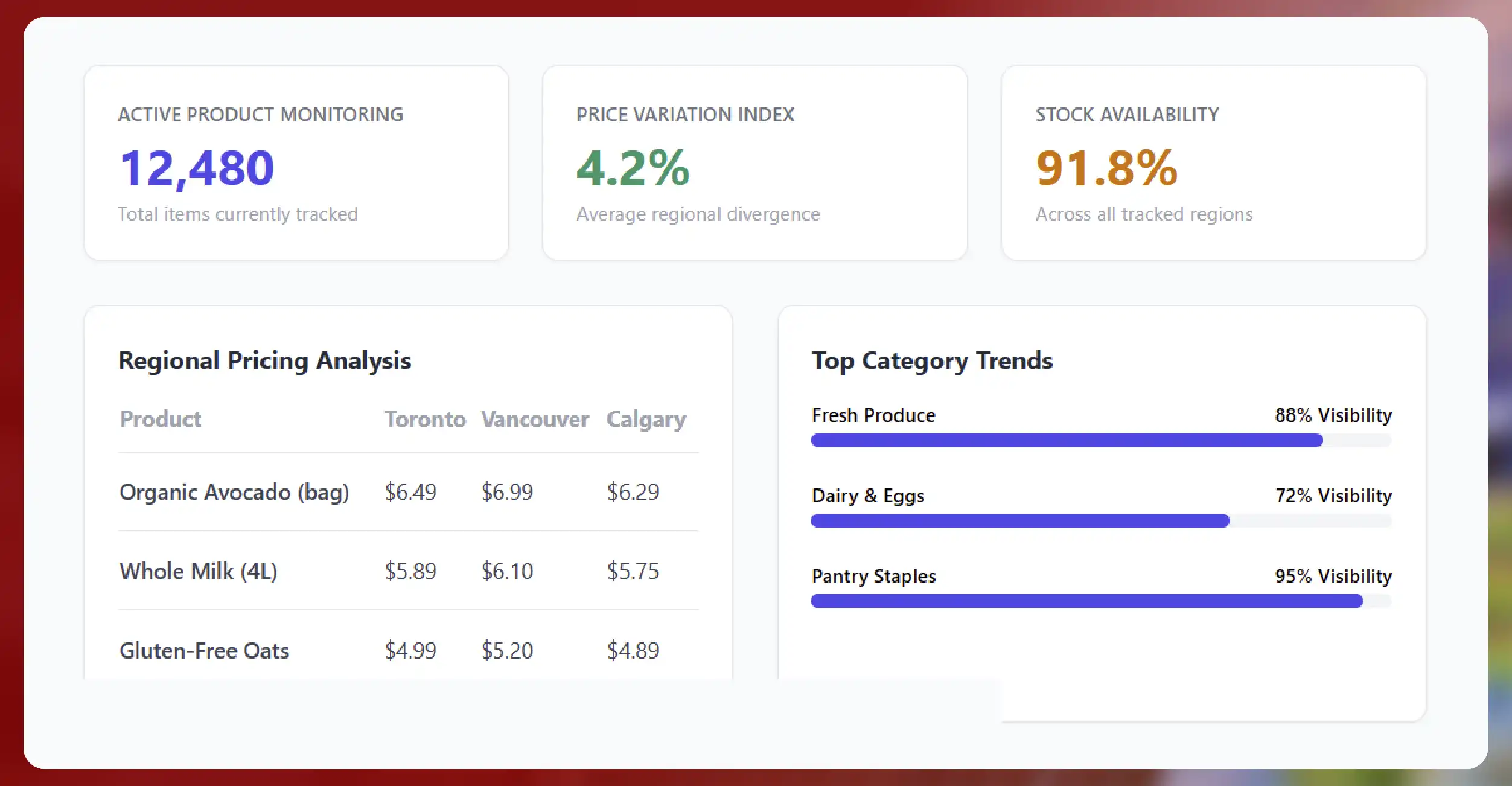
Retailers also use grocery analytics to identify pricing gaps between regions. A
product sold in Toronto may have a different price or availability status in Vancouver or
Calgary. Such variations provide valuable insight into regional pricing strategies and local
customer demand.
Understanding the Scope of No Frills Grocery Data Collection
Data extraction from grocery platforms involves much more than simply collecting
product names and prices. Modern grocery intelligence systems capture comprehensive retail
attributes that support business decision-making across multiple departments.
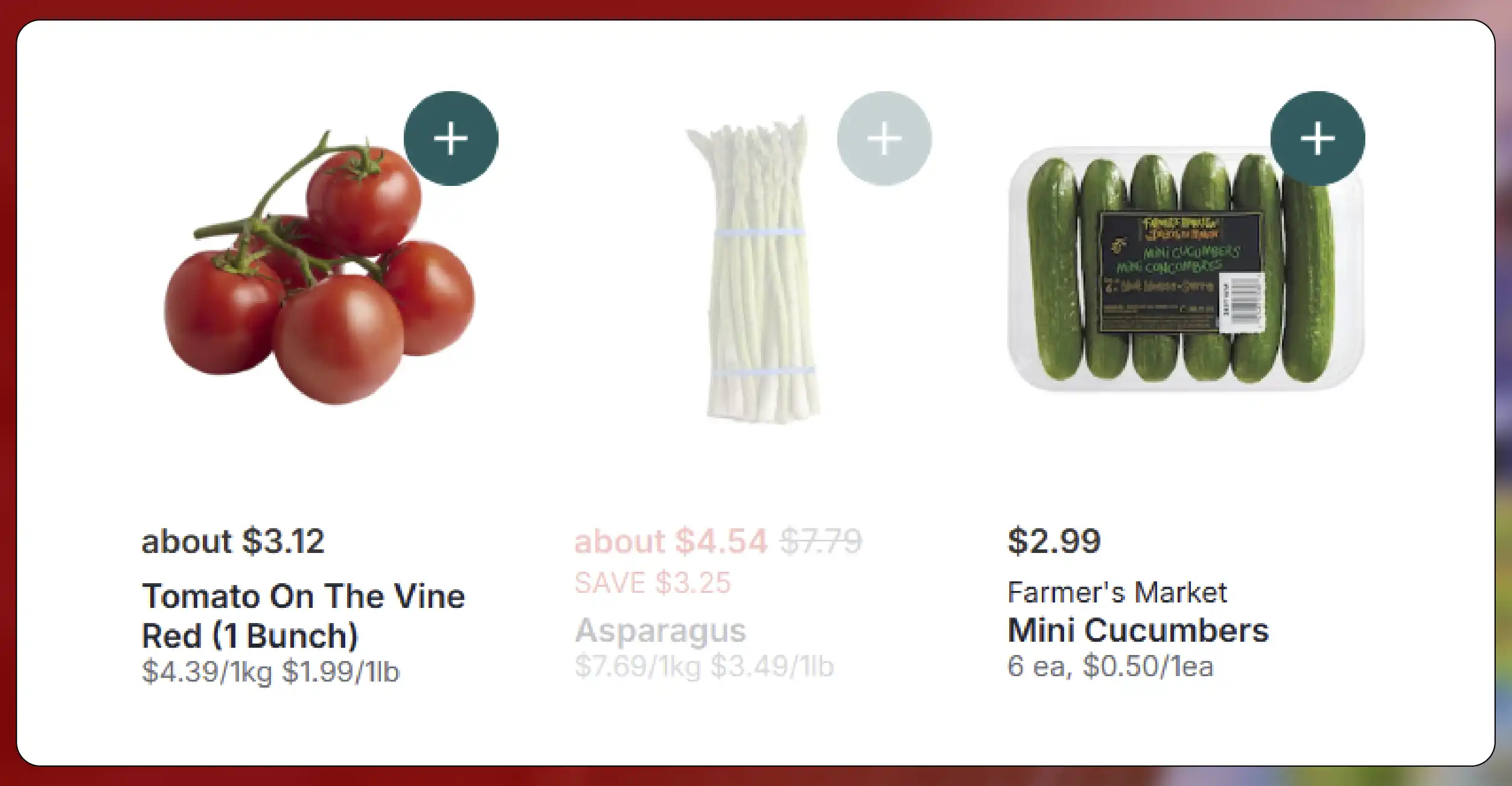
Product-level extraction typically includes SKU identifiers, UPC codes, product
names, brand names, categories, package quantities, nutritional information, product images,
ingredients, ratings, reviews, promotional tags, and availability status. These details help
retailers create accurate product catalogs and benchmark their inventory against competitors.
Location-based grocery analytics has become especially important in recent years.
Businesses increasingly depend on No Frills store level grocery analytics to understand how
pricing, promotions, and inventory vary between store locations. Store-level insights help
companies identify regional demand patterns and optimize supply chain operations accordingly.
Retailers and suppliers also use data extraction to monitor promotional campaigns in
real time. Flash sales, bundle offers, loyalty discounts, and seasonal pricing changes can
significantly affect customer purchasing behavior. Automated grocery data collection helps
businesses react quickly to these market changes.
Another growing application involves hyperlocal grocery intelligence. Businesses now
use systems designed to Extract city-wise grocery availability data from No Frills to identify
product shortages, stock availability trends, and local demand fluctuations across multiple
cities. Such insights are valuable for manufacturers, distributors, and delivery platforms
aiming to improve regional inventory management.
Benefits of Grocery Data Intelligence for Businesses
Retail analytics derived from grocery data provides businesses with a competitive
advantage in multiple operational areas. One major benefit is dynamic pricing optimization.
Companies can monitor competitor pricing daily and adjust their pricing models based on market
movements, seasonal demand, and promotional campaigns.
Consumer packaged goods brands also benefit significantly from grocery intelligence.
By analyzing product visibility and promotional positioning, brands can determine how their
products perform compared to competitors. These insights help improve shelf visibility
strategies and promotional investments.
E-commerce grocery businesses depend heavily on accurate product data. Updated
grocery datasets help online retailers maintain synchronized product catalogs, improve customer
experiences, and prevent pricing inconsistencies across platforms.
Another major advantage is inventory forecasting. Grocery analytics allows
businesses to identify products with high turnover rates and anticipate future demand trends.
Retailers can reduce stockouts while minimizing excess inventory costs.
Businesses involved in market research also use grocery datasets for trend analysis.
Historical pricing data, discount frequency, and category performance metrics provide valuable
indicators of changing consumer preferences and economic conditions.
The Role of API-Based Grocery Data Collection
As retail data ecosystems grow more complex, companies increasingly adopt advanced
extraction technologies for scalable data collection. Automated systems designed to Scrape No
Frills grocery data API provide faster, more structured, and more reliable access to grocery
information compared to traditional manual methods.
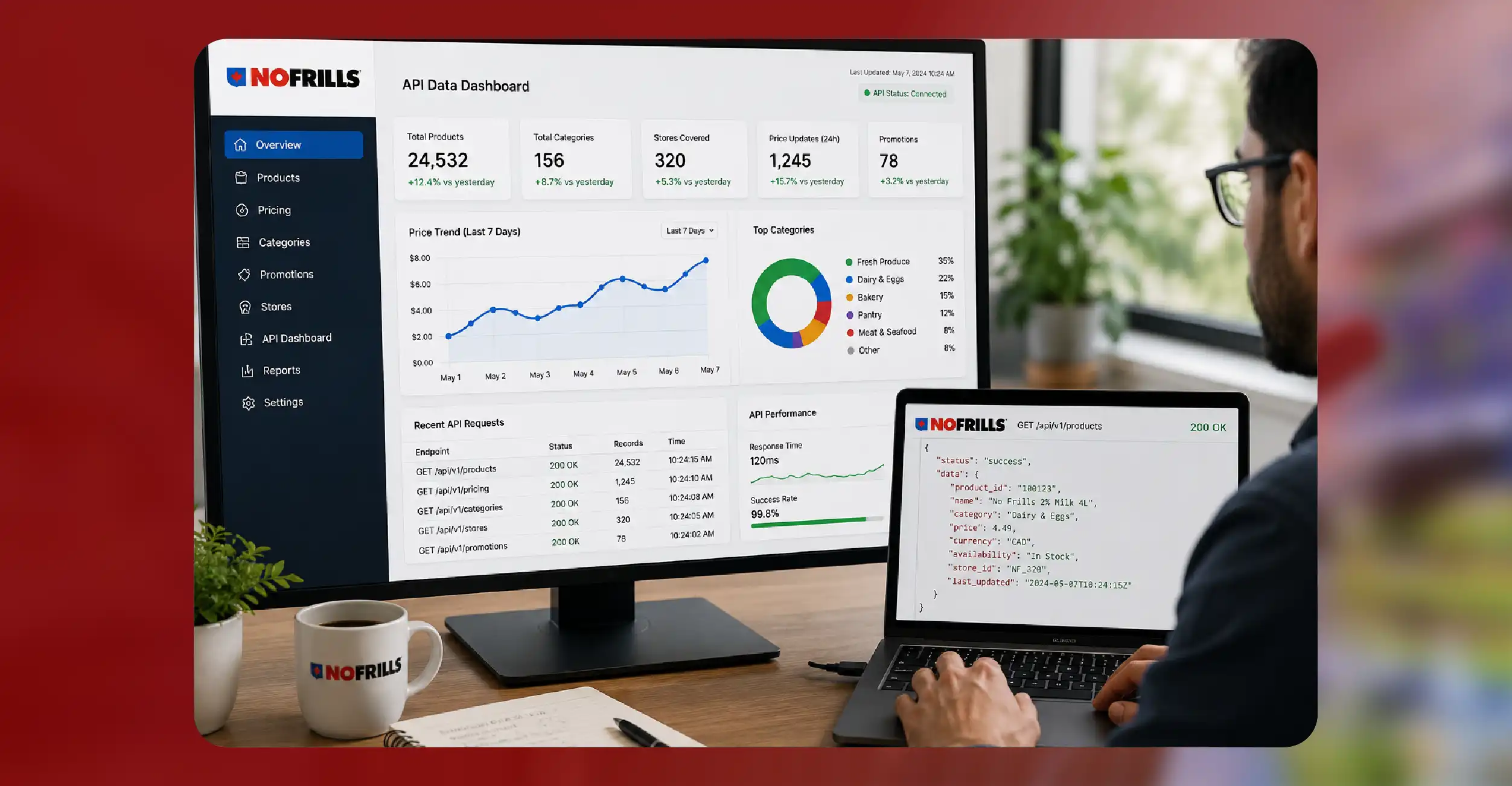
API-based extraction solutions allow businesses to collect data continuously without
interruptions. These systems can retrieve product listings, pricing details, stock availability,
and category information in real time. Structured API-driven datasets are easier to integrate
into analytics dashboards, business intelligence platforms, and inventory management systems.
Real-time grocery APIs also improve operational efficiency. Businesses can automate
competitor tracking, monitor promotional campaigns instantly, and generate alerts when prices
change significantly. This level of automation reduces manual labor while improving
decision-making speed.
Scalable extraction systems are especially important for enterprises managing
thousands of SKUs across multiple grocery chains. Large retailers and analytics firms require
automated infrastructure capable of handling millions of product records efficiently and
accurately.
Building Actionable Grocery Datasets for Analytics
Structured grocery datasets serve as the foundation for retail intelligence
platforms. Businesses rely on comprehensive datasets to perform predictive analytics, customer
behavior analysis, and pricing optimization.
A well-structured No Frills Grocery dataset typically contains detailed product
metadata, historical price changes, inventory status, category mapping, and regional
availability information. These datasets are widely used by retailers, manufacturers, consulting
firms, and market researchers.
Advanced analytics teams combine grocery datasets with external data sources such as
weather patterns, seasonal trends, and demographic information to generate deeper insights into
consumer purchasing behavior. Predictive models built on grocery data help businesses improve
demand planning and marketing effectiveness.
Data visualization platforms also benefit from structured grocery datasets.
Interactive dashboards allow decision-makers to monitor price fluctuations, identify
top-performing categories, and evaluate competitor strategies in real time.
Businesses operating in the retail intelligence sector increasingly invest in No
Frills Grocery and Supermarket Data Extraction Services to build scalable data
ecosystems
capable of supporting advanced analytics and AI-driven forecasting models.
Transform your business decisions with accurate, real-time data
scraping solutions designed for smarter growth and competitive advantage.
Challenges in Grocery Data Extraction
Despite its benefits, grocery data extraction presents several technical and
operational challenges. Retail websites frequently update their layouts, product structures, and
promotional formats, requiring extraction systems to adapt continuously.
Maintaining data accuracy is another critical challenge. Duplicate records,
inconsistent product naming conventions, and missing product details can reduce dataset quality
if not handled properly. Advanced extraction pipelines use validation mechanisms and automated
cleaning processes to maintain data consistency.
Large-scale extraction projects also require efficient infrastructure capable of
processing high volumes of data rapidly. Businesses often need cloud-based architectures to
support scalable grocery intelligence operations.
Another challenge involves handling multilingual product listings and
region-specific pricing formats. Grocery platforms operating across different regions may
display products differently based on location, language, or inventory availability.
Compliance and ethical data collection practices are equally important. Businesses
must ensure that their data extraction operations align with applicable legal guidelines and
platform usage policies.
Future Trends in Grocery Retail Intelligence
The future of grocery intelligence will increasingly depend on AI-driven analytics,
automation, and real-time market monitoring. Businesses are moving beyond simple pricing
analysis toward predictive retail intelligence systems capable of forecasting market changes
before they occur.
Artificial intelligence is expected to play a larger role in identifying shopping
patterns, optimizing product assortments, and predicting consumer demand trends. Machine
learning algorithms can analyze historical grocery data to forecast seasonal demand fluctuations
and recommend pricing strategies automatically.
Hyperlocal grocery intelligence will also continue growing in importance. Businesses
want more precise visibility into city-level inventory trends, regional pricing differences, and
localized customer preferences. Real-time regional analytics will become a key differentiator in
grocery retail competition.
Another emerging trend involves integrating grocery intelligence with supply chain
optimization systems. Retailers increasingly connect product availability data with logistics
operations to improve delivery efficiency and reduce fulfillment delays.
Companies are also investing in unified retail intelligence platforms that combine
grocery analytics with e-commerce insights, consumer sentiment analysis, and promotional
tracking. These platforms provide a holistic view of retail market dynamics and enable faster
strategic decision-making.
How iWeb Data Scraping Can Help You?
Real-Time Price Monitoring
Our data scraping services collect updated pricing information from multiple
platforms, helping businesses track competitor prices, optimize pricing strategies, identify
discount trends, and respond quickly to changing market conditions for better profitability.
Product and Inventory Tracking
We extract product availability, stock status, SKU details, and inventory changes in
real time, enabling businesses to manage supply chains efficiently, reduce stock shortages, and
improve operational planning across locations.
Competitor Market Intelligence
Our scraping solutions gather competitor product listings, promotions, ratings, and
category trends, helping businesses understand market positioning, identify growth
opportunities, and make informed strategic decisions using accurate retail intelligence.
Custom Structured Datasets
We deliver clean, organized, and customized datasets tailored to business
requirements, allowing companies to integrate extracted information into dashboards, analytics
systems, research platforms, and business intelligence tools seamlessly and efficiently.
Automated Scalable Data Collection
Our automated scraping infrastructure supports large-scale data extraction with
speed and accuracy, reducing manual effort while ensuring continuous access to valuable market
data for analytics, forecasting, and business growth initiatives.
Conclusion
In conclusion, grocery data extraction has become an essential component of modern
retail intelligence strategies. Businesses use structured grocery datasets to monitor pricing
trends, optimize inventory management, analyze regional demand, and improve customer engagement.
The increasing demand for real-time retail intelligence continues to drive innovation in
automated grocery extraction technologies and analytics platforms.
Organizations seeking scalable retail insights are increasingly adopting advanced Grocery and Supermarket Store Datasets
to power analytics and forecasting systems. As competition intensifies in the grocery sector,
businesses that leverage intelligent data collection strategies will gain a significant
advantage in pricing optimization, demand forecasting, and customer experience enhancement.
Companies offering Grocery &
Supermarket Data Extraction Services help enterprises streamline data collection,
improve operational efficiency, and build scalable retail intelligence ecosystems. At the same
time, advanced Web Scraping Services support automated
data acquisition across multiple grocery platforms, while enterprise-grade Web Scraping API Services enable seamless integration of
real-time retail data into business intelligence workflows.
Experience top-notch web scraping service
and mobile app scraping solutions with iWeb Data
Scraping. Our skilled team excels in extracting various data sets, including retail store locations and beyond. Connect with us
today to learn how our customized services can address your unique project needs, delivering the
highest efficiency and dependability for all your data requirements.