When Is the Right Time to Extract Offers & Bookings Data from District by Zomato for Trend Monitoring?
Introduction
The hospitality and food-tech landscape is evolving into a highly competitive, promotion-driven ecosystem where real-time insights determine profitability. District by Zomato has emerged as a dynamic platform integrating curated dining experiences, nightlife events, and time-sensitive offers into a seamless booking interface. For restaurants, aggregators, investors, and analytics firms, the ability to Extract Offers & Bookings Data from District by Zomato provides structured intelligence that goes far beyond surface-level listings.
Businesses increasingly rely on District by Zomato Offers Data Scraping Services to monitor discount strategies, campaign frequency, and promotional positioning across cities. Simultaneously, Web Scraping District by Zomato Reservations and Offers enables tracking of slot availability, booking density, and demand fluctuations. Together, these methods convert publicly visible data into measurable competitive insights that guide pricing, marketing, and expansion decisions.
Understanding District’s Data Structure and Business Value
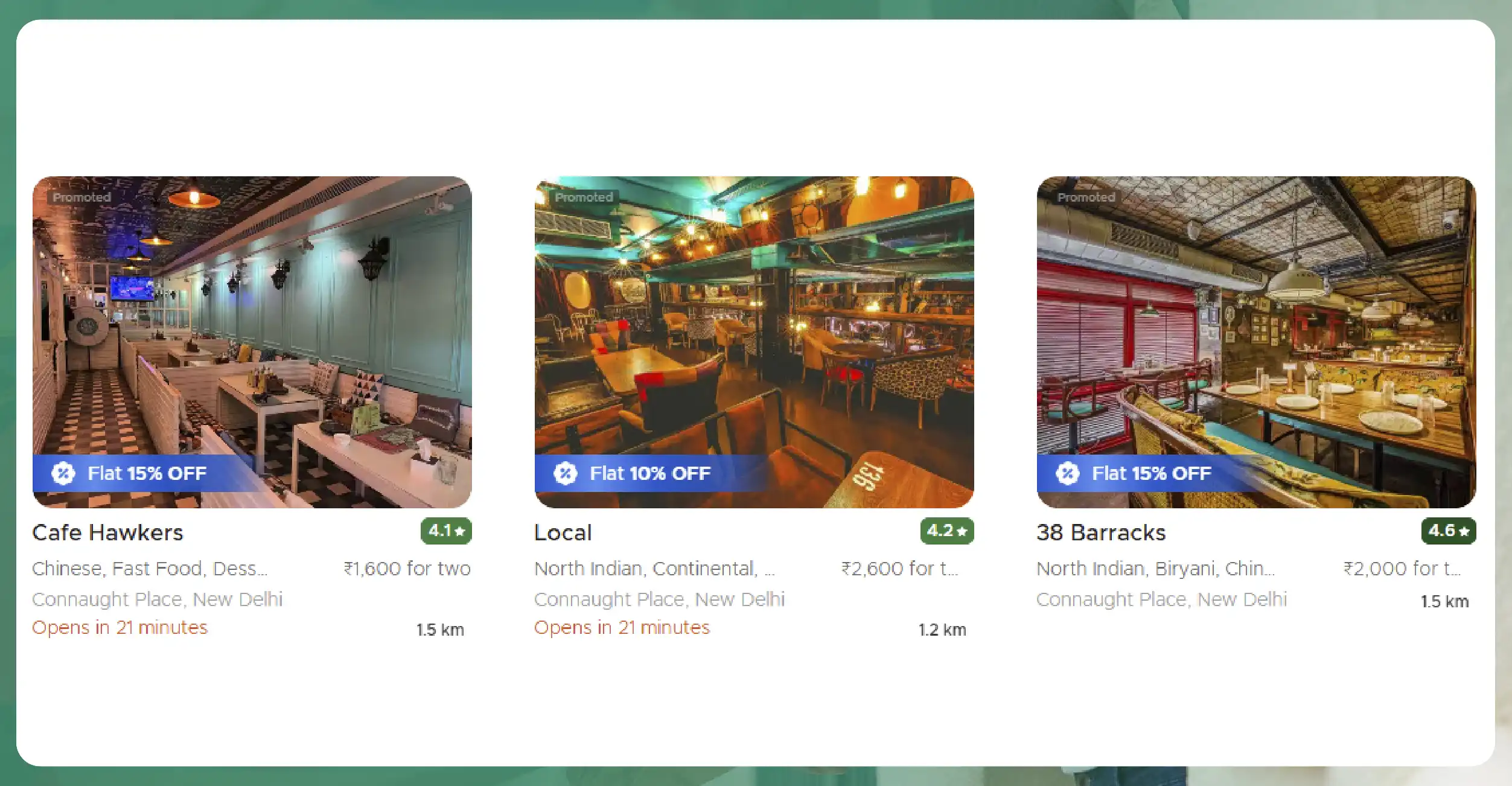
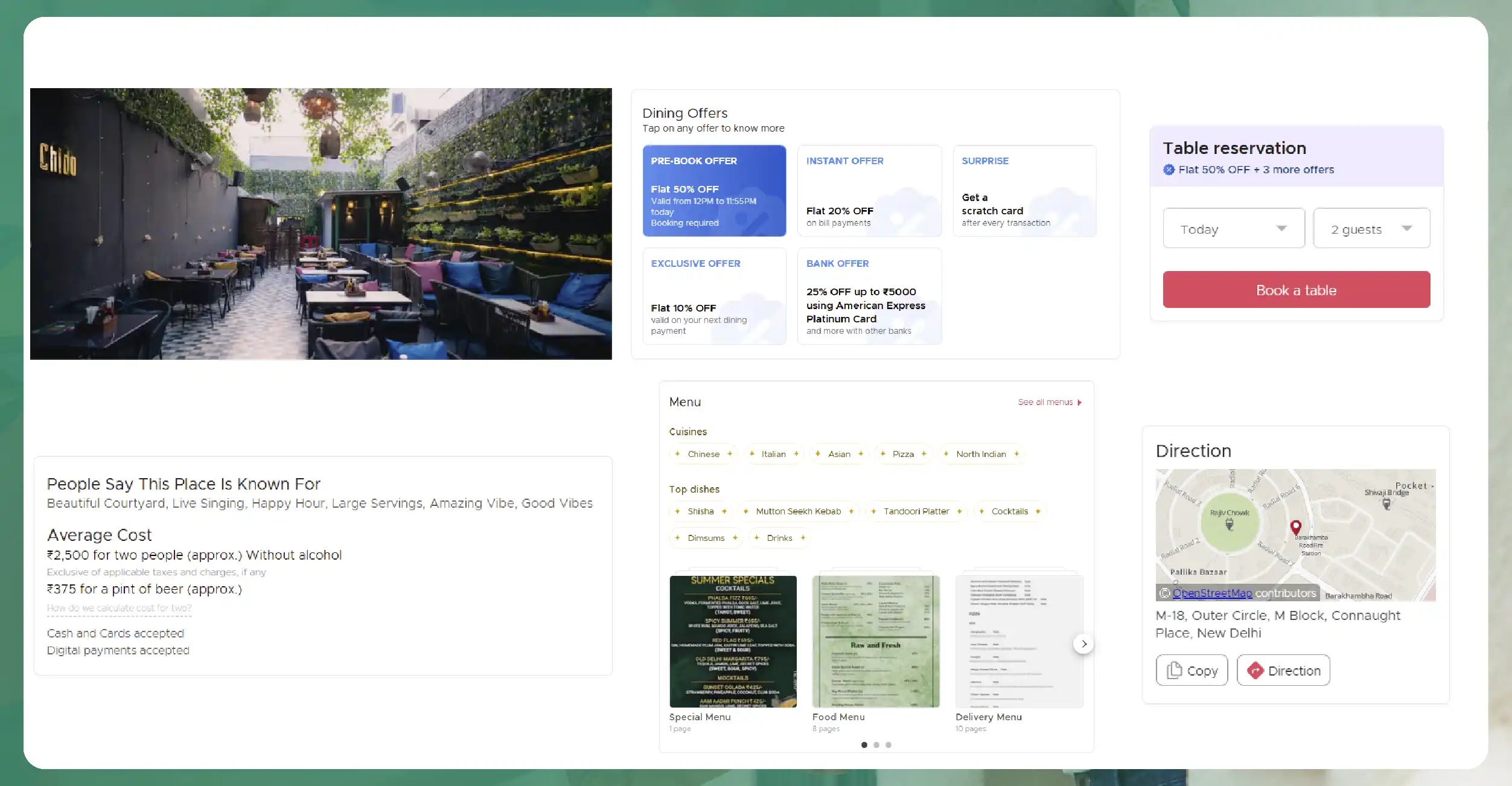
District by Zomato listings typically include restaurant details, cuisine type, city-level filters, rating distribution, base pricing, curated packages, and time-bound promotional banners. When organizations Extract District by Zomato Reservations and Deals Data, they gain access to both static attributes and rapidly changing dynamic fields.
Static data provides foundational intelligence such as venue category, average price range, and geographic positioning. Dynamic data reveals flash sales, seasonal discounts, event-based packages, and real-time reservation availability. An advanced District by Zomato Booking and Discount Data Scraper captures these fluctuating elements continuously, allowing businesses to compare pre-discount pricing with effective transactional values.
This structured information helps answer key strategic questions. Are competitors relying on aggressive weekday discounts? Are premium venues focusing more on experiential bundling than flat price reductions? Are certain neighborhoods consistently overbooked during weekends? The answers lie in systematic data extraction and longitudinal analysis.
Integration with Broader Zomato Ecosystem
District booking analytics becomes significantly more powerful when integrated with Zomato Food Delivery App Datasets. Delivery data contains menu pricing, packaging fees, delivery charges, and customer rating metrics. By aligning reservation data with delivery metrics, companies can determine how restaurants balance dine-in versus delivery strategies.
Organizations leveraging Zomato Food Data Scraping Services often build centralized dashboards that merge reservation trends with menu-level insights. When businesses Extract Zomato Food Delivery Data, they gain the ability to identify channel prioritization patterns, promotional overlap, and cross-platform pricing consistency.
This cross-analysis reveals whether discounts are limited to dine-in reservations or extended to delivery platforms, offering a clearer understanding of margin management and competitive intensity.
Key Data Points Extracted from District
To build meaningful intelligence, structured extraction focuses on several high-impact elements. These commonly include:
- Offer title, discount percentage, and validity duration
- Reservation slot availability and peak-hour occupancy
- Base pricing versus promotional pricing
- Venue category, cuisine type, and city segmentation
- Event-linked packages and bundled dining experiences
Such structured extraction aligns with broader Food Delivery Data Scraping Services, where time-series monitoring reveals promotional cycles and demand shifts. Over weeks and months, datasets begin to show patterns such as festive surges, off-season discount spikes, and micro-market saturation.
Transforming Raw Data into Food Delivery Data Intelligence
Raw data alone does not create competitive advantage. The true value emerges through Food Delivery Data Intelligence, where structured datasets are processed using analytics models and visualization tools.
Through longitudinal tracking, businesses can measure:
- Discount dependency levels in specific cities
- Booking conversion trends during promotional campaigns
- Occupancy rates without discounting
- Seasonal variation in demand
Access to Food Delivery App Menu Datasets adds another analytical layer. By correlating menu items frequently featured in promotional packages, brands can identify high-margin dishes strategically bundled to increase perceived value. This insight supports smarter menu engineering and promotional design.
Demand Forecasting and Market Benchmarking
Reservation data combined with delivery insights supports predictive demand modeling. When businesses observe consistent weekend overbooking in certain zones, they can adjust staffing, inventory planning, and marketing allocation accordingly. Similarly, frequent midweek discounts may indicate underutilized capacity requiring targeted campaigns rather than blanket price reductions.
Comprehensive monitoring also strengthens benchmarking efforts. Restaurants can compare their promotional intensity against competitors within the same cuisine segment. Investors evaluating hospitality markets can assess whether a city shows sustainable booking growth or heavy discount reliance masking weak organic demand.
Operational and Technical Framework
Extracting offers and booking data requires adaptive scraping systems capable of handling dynamic calendars, location filters, AJAX-loaded content, and real-time availability modules. The technical pipeline typically includes automated extraction, data cleaning, normalization, validation, storage, and visualization layers.
Compliance and ethical data handling are essential components of sustainable data strategy. Structured automation ensures consistent updates, minimizes manual errors, and delivers near real-time dashboards for strategic decision-making.
Unlock smarter pricing and booking strategies today with our powerful, real-time data scraping solutions.
Strategic Outcomes and Long-Term Impact
The ability to systematically monitor District by Zomato transforms reactive pricing into proactive strategy. Instead of manually browsing listings, businesses rely on structured datasets that reveal pricing shifts, booking density patterns, and promotional positioning.
Over time, integrated intelligence from reservations, offers, and delivery channels enables smarter expansion planning, improved occupancy optimization, and stronger margin protection.
How iWeb Data Scraping Can Help You?
1. Real-Time Competitive Monitoring
Our data scraping services continuously track offers, discounts, and booking availability, helping you stay ahead of competitor pricing and promotional strategies with accurate, up-to-date intelligence.
2. Accurate Booking & Occupancy Insights
We extract structured reservation data, enabling you to analyze peak-hour demand, slot availability trends, and occupancy patterns to optimize staffing and revenue planning.
3. Promotion & Discount Analysis
Our solutions capture detailed promotional information such as discount percentages, validity periods, and bundled deals, helping you refine campaign strategies and avoid unnecessary margin erosion.
4. Multi-City & Multi-Segment Coverage
We collect standardized data across cities, cuisine categories, and venue types, providing scalable insights that support expansion planning and localized competitive benchmarking.
5. Custom Dashboards & Actionable Reports
Beyond data extraction, we transform raw datasets into structured dashboards and analytics reports, empowering smarter pricing, marketing, and long-term growth decisions.
Conclusion
In conclusion, structured analytics derived from District booking and promotional data empowers hospitality stakeholders with measurable competitive visibility. Professional Restaurant Data Scraping Service solutions ensure scalable, accurate, and compliant data collection tailored to business objectives. When combined with advanced Price Monitoring Services, organizations gain real-time awareness of discount movements and pricing trends. Integrated Pricing & Promotions Services further strengthen strategic planning, enabling brands to refine offers, enhance profitability, and maintain sustainable growth in an increasingly competitive dining ecosystem.
Experience top-notch web scraping service and mobile app scraping solutions with iWeb Data Scraping. Our skilled team excels in extracting various data sets, including retail store locations and beyond. Connect with us today to learn how our customized services can address your unique project needs, delivering the highest efficiency and dependability for all your data requirements.