

Introduction
In the competitive e-commerce market, accurate product information helps retailers, brands, marketplaces, and analysts make faster pricing and assortment decisions. Falabella operates across major Latin American markets, offering a broad selection of electronics, appliances, fashion, home products, beauty items, and other consumer categories. Accessing structured information from its online catalog can therefore support market research, competitor analysis, pricing intelligence, and product monitoring.
Businesses looking to Scrape Falabella Product Data via API can collect structured information at scale instead of manually reviewing thousands of product pages. API-driven extraction can help capture product names, categories, brands, SKUs, prices, discounts, ratings, availability, product URLs, images, specifications, and other relevant attributes.
For organizations requiring Falabella product catalog extraction, automated data collection creates a centralized dataset that can be integrated with dashboards, databases, analytics systems, or business applications. Similarly, companies seeking to Scrape Falabella product availability data API can monitor whether products are available, unavailable, out of stock, or otherwise restricted for purchase.
What Is Falabella Product Data Scraping?
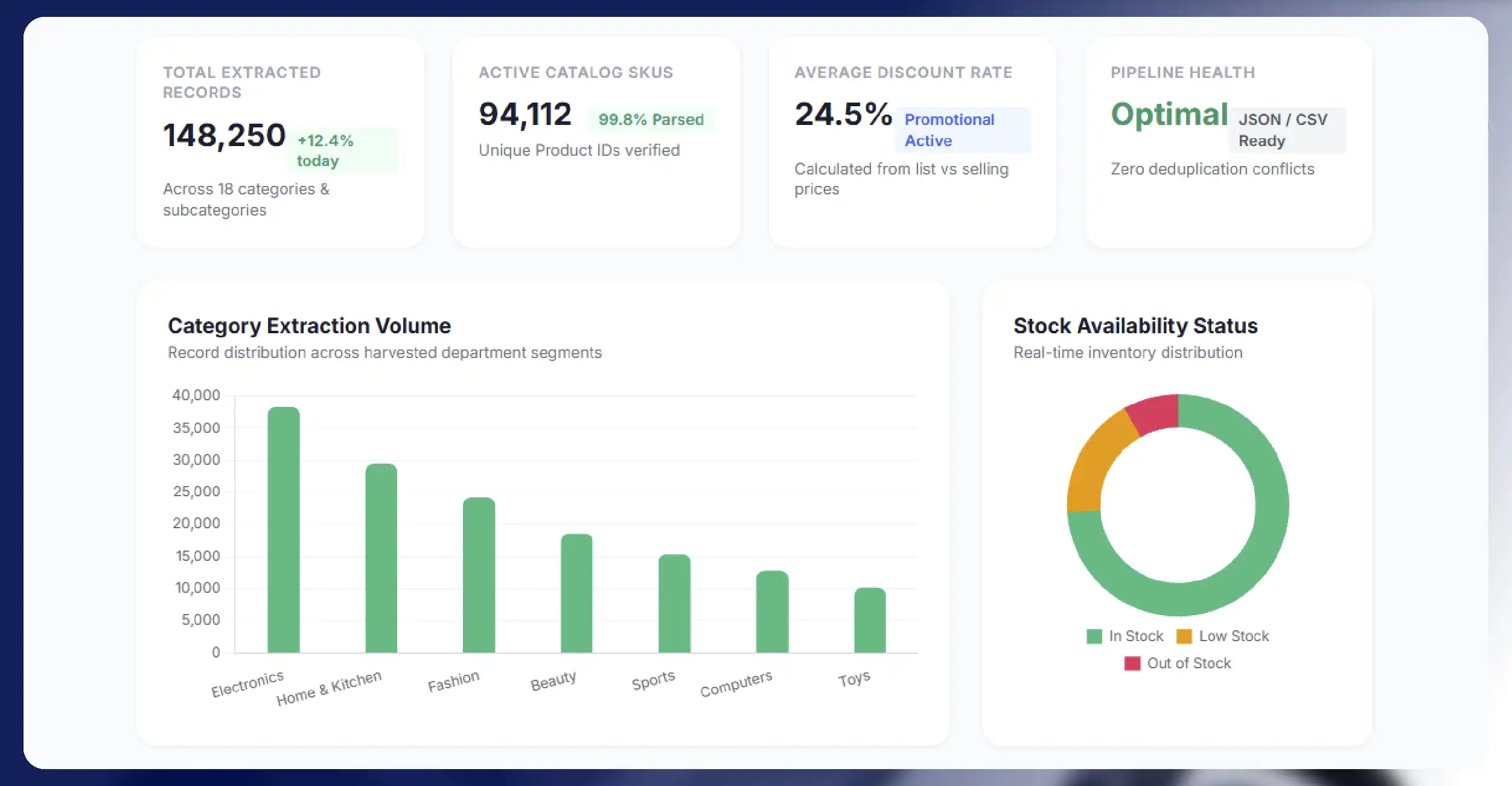
Falabella product data scraping is the automated process of collecting publicly accessible product information from Falabella's e-commerce platform and converting it into structured, usable datasets.
Instead of opening product pages individually, an automated scraper can process large numbers of URLs or catalog pages. Depending on the project requirements, the extraction system can collect information across categories, brands, search results, product detail pages, and other relevant sections.
Typical fields include:
- Product name and title
- Product ID or SKU
- Brand
- Category and subcategory
- Current selling price
- Original or list price
- Discount percentage
- Product availability
- Stock status
- Product description
- Technical specifications
- Customer ratings and review counts
- Product images
- Product URL
- Seller information where publicly displayed
- Promotional information
- Delivery-related information where available
The collected information can then be cleaned, normalized, deduplicated, and delivered in formats such as CSV, Excel, JSON, XML, or database-ready structures.
Why Use an API-Based Approach?
An API-based scraping architecture can make large-scale extraction more systematic. Rather than relying exclusively on manual browsing, an automated pipeline can request, parse, validate, and organize product information according to predefined fields.
For businesses performing Falabella competitor price tracking, API-driven data collection can provide recurring snapshots of competitor pricing. Historical records can then be compared to identify price movements, discounts, promotions, and changes in product positioning.
A structured Falabella product price comparison API can also support applications that compare product prices across sellers, categories, or competing marketplaces. Such systems can help identify price gaps and determine whether products are competitively positioned.
API-based extraction can additionally support scheduled workflows. For example, a business may collect selected products daily, several times per day, or according to specific monitoring requirements.
Key Falabella Product Data Fields
A well-designed extraction project should begin by defining the exact fields required for analysis. Product-level data may include product titles, identifiers, brand names, categories, descriptions, specifications, prices, discounts, ratings, images, URLs, and availability.
Pricing information is particularly valuable. A Falabella price data API can provide structured price records that businesses can store historically and analyze over time.
Availability is another important field. Monitoring inventory status can help companies identify products that become unavailable, return to stock, or experience changes in purchasability.
Product metadata can also be useful for assortment analysis. Brands and retailers can compare the number of products listed in different categories, examine competing brands, identify frequently promoted products, and detect assortment changes.
Falabella Price Monitoring and Competitive Intelligence
E-commerce pricing can change frequently because of promotions, seasonal campaigns, inventory conditions, and competitive movements. Manual monitoring can become difficult when thousands of products are involved.
A Falabella price monitoring API can automate recurring collection of price information. Historical datasets allow businesses to compare today's prices against previous observations and identify significant changes.
For example, a pricing intelligence system could track:
- Current product price
- Previous recorded price
- Price difference
- Percentage change
- Promotional discount
- Competitor pricing
- Product availability
- Date and time of collection
These records can feed pricing dashboards and alert systems. A business could establish rules that flag products when prices fall below a predefined benchmark or when a competitor changes pricing substantially.
How the Scraping Workflow Works?
A typical Falabella product data extraction workflow consists of several stages.
Define Data Requirements
The first stage identifies the categories, products,
URLs, geographic market, fields, frequency, and output format required for the project.
Discover Product URLs
The extraction system can identify relevant product pages
through catalog structures, search results, category pages, or predefined URL lists, depending on
the permitted collection method.
Send Automated Requests
The scraper accesses relevant public pages or permitted
interfaces and retrieves the available product information. Request management helps maintain an
organized extraction process.
Parse Product Information
The collected content is parsed to identify product
names, prices, SKUs, brands, specifications, availability, images, and other required fields.
Normalize the Dataset
Raw information is cleaned and standardized. Prices,
categories, product identifiers, availability values, and other attributes can be converted into
consistent formats.
Validate and Deduplicate
Quality checks identify missing values, duplicate
records, malformed fields, and inconsistent product information before delivery.
Store and Deliver Data
Final datasets can be delivered through databases, cloud
storage, APIs, dashboards, CSV files, Excel spreadsheets, or JSON feeds according to business
requirements.
Applications of Falabella Product Data
Collected product information can support several business applications. Retailers can use historical pricing to understand competitive positioning and identify opportunities for repricing.
Brands can analyze their representation across categories and compare their assortment with competing brands. Market researchers can study product availability, pricing trends, discounts, and category dynamics.
E-commerce businesses can use product datasets for competitive intelligence, assortment benchmarking, price intelligence, and digital shelf analysis.
Data can also support business intelligence dashboards. For example, a dashboard could display products with the largest price reductions, categories experiencing frequent price changes, unavailable products, or brands with the widest assortment.
Benefits of Automated Data Extraction
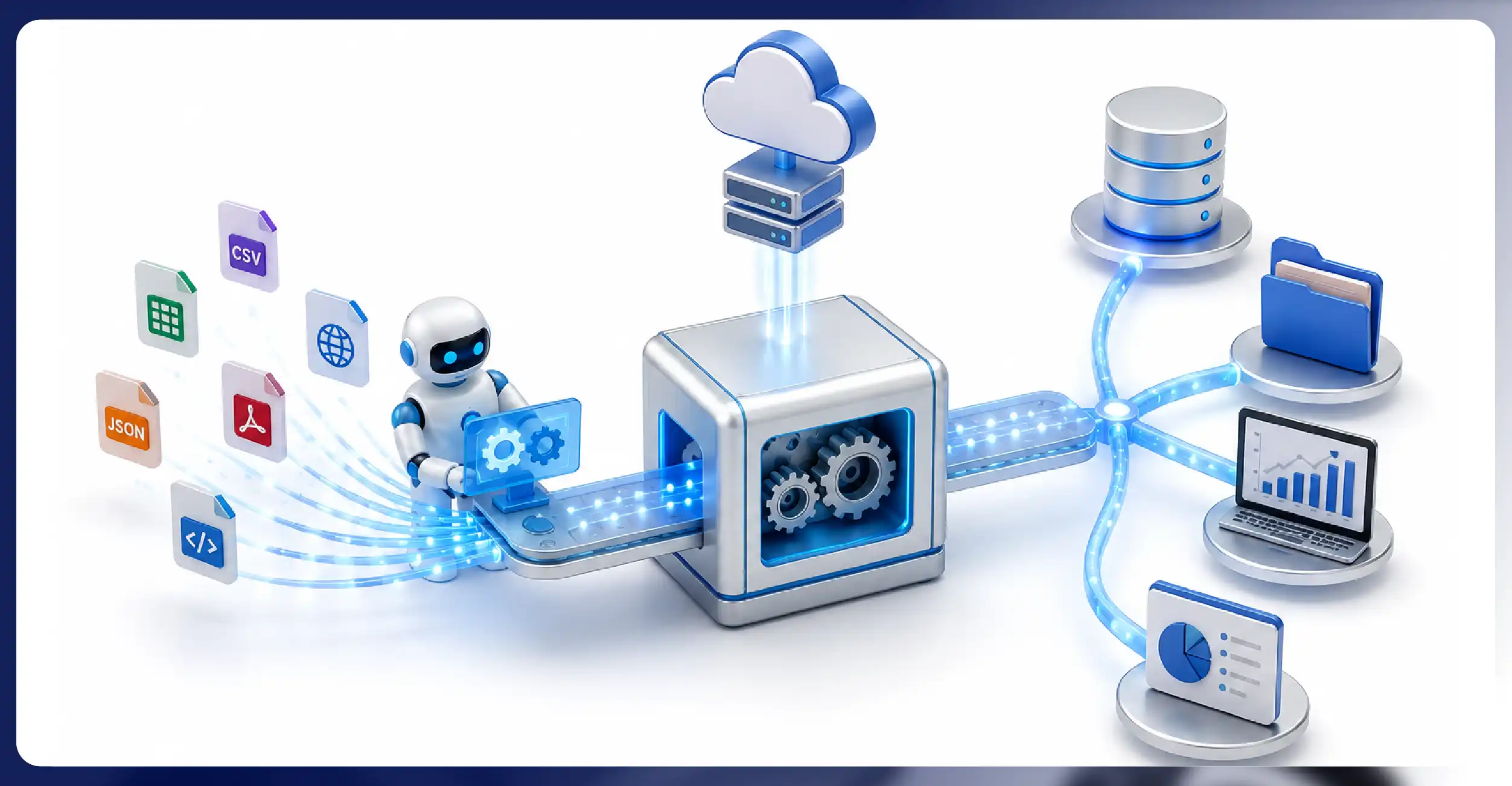
Automation reduces repetitive manual work and makes recurring data collection more scalable. Instead of maintaining spreadsheets manually, businesses can establish a structured pipeline that repeatedly captures relevant information.
Another advantage is historical analysis. A single product snapshot provides limited insight, whereas repeated collection creates a time-series dataset. This can reveal price trends, promotional cycles, assortment changes, and availability patterns.
Automation can also improve consistency. The same fields can be captured according to predefined rules during each collection cycle, making the resulting dataset easier to compare and analyze.
For larger projects, the architecture can be expanded with databases, cloud infrastructure, scheduled jobs, monitoring systems, and downstream analytics tools.
Data Quality and Compliance Considerations
Successful scraping projects should prioritize responsible data collection. Businesses should review the target website's terms, applicable laws, access restrictions, and other relevant requirements before collecting information.
Only necessary publicly accessible information should be collected, and personal or sensitive information should not be targeted. Request rates should also be managed responsibly to avoid placing unnecessary load on websites.
Data quality is equally important. A large dataset is useful only when product records are accurate, consistently structured, and appropriately refreshed. Validation, error handling, duplicate detection, and monitoring should therefore be part of the extraction architecture.
How iWeb Data Scraping Can Help You?
Automated Product Collection
iWeb Data Scraping can automate large-scale collection of product information, reducing repetitive manual research and creating structured datasets that are easier to analyze, compare, and integrate.
Competitive Price Intelligence
Our data workflows can capture recurring pricing observations, helping businesses study competitor movements, identify price differences, and build historical records for competitive pricing analysis.
Product Availability Monitoring
Automated collection can track changes in product availability and inventory indicators, allowing businesses to identify unavailable products and monitor assortment conditions across selected categories.
Customized Data Delivery
Extracted information can be organized around business-specific fields and delivered through formats such as JSON, CSV, Excel, databases, or API-based feeds for convenient downstream use.
Scalable Data Infrastructure
iWeb Data Scraping can support recurring extraction workflows with data validation, normalization, scheduling, monitoring, and scalable processing for businesses managing large product catalogs.
Conclusion
Falabella product data can provide valuable intelligence for retailers, brands, analysts, marketplaces, and pricing teams. Automated extraction enables businesses to transform large volumes of product information into structured datasets suitable for competitive analysis, price monitoring, assortment research, and business intelligence.
With reliable Web Scraping API Services, organizations can build repeatable workflows for collecting and processing product information according to defined requirements. A properly configured Web scraper can automate repetitive catalog research while supporting consistent data structures and scheduled extraction.
For businesses requiring Real-Time Web Scraping, automated monitoring can provide frequently refreshed information for pricing, availability, and competitive intelligence applications. By combining appropriate extraction methods, data validation, storage, and analytics, Falabella product information can become a practical resource for data-driven e-commerce decision-making.
FAQs
Depending on availability and project requirements, product name, SKU, brand, category, price, discount, availability, specifications, images, ratings, seller information, and product URLs can be collected.
Yes. A scheduled extraction workflow can collect selected product information periodically, creating historical datasets that can be used for price tracking and competitive analysis.
Data can be structured and delivered in formats such as CSV, Excel, JSON, XML, database tables, or API feeds depending on the intended application.
Yes. Where publicly accessible availability indicators are present, automated workflows can capture and compare availability information across recurring extraction cycles.
Falabella product data can support competitive pricing, assortment analysis, market research, product monitoring, promotional analysis, availability tracking, and broader e-commerce intelligence initiatives.