

Introduction
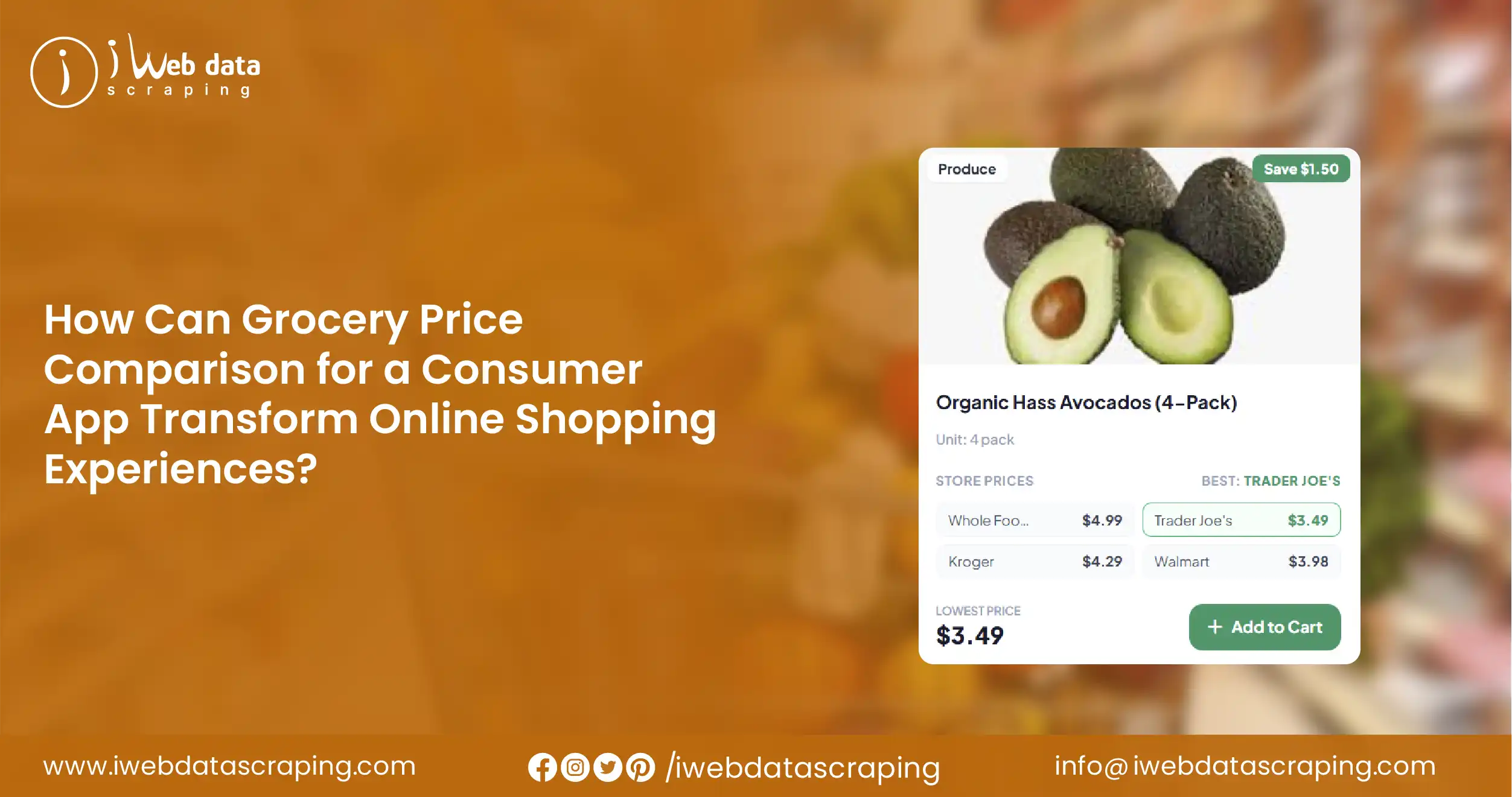
The grocery shopping landscape has changed significantly as consumers increasingly search for better prices, product availability, and convenient purchasing options. With multiple supermarkets, online grocery platforms, and quick commerce apps competing in the market, shoppers want transparency before making purchase decisions. A modern consumer application that compares grocery prices can help users discover the best deals, track price fluctuations, and optimize their monthly spending.
A successful Grocery price-comparison for a consumer app requires accurate, frequently updated, and structured information from multiple retail sources. By collecting pricing information from different grocery websites and applications, businesses can create digital platforms that empower customers with reliable comparison insights.
Consumers today expect Daily grocery price comparison across retailers because grocery prices often change due to promotions, seasonal demand, regional pricing strategies, and inventory conditions. A comparison app must continuously collect and analyze pricing updates to provide meaningful value.
The demand for Real-time grocery price tracking For grocery app solutions is growing as users prefer applications that show current prices instead of outdated product information. Real-time tracking allows shoppers to identify savings opportunities, compare alternatives, and make informed buying decisions.
Why Grocery Price Comparison Apps Are Becoming Essential?
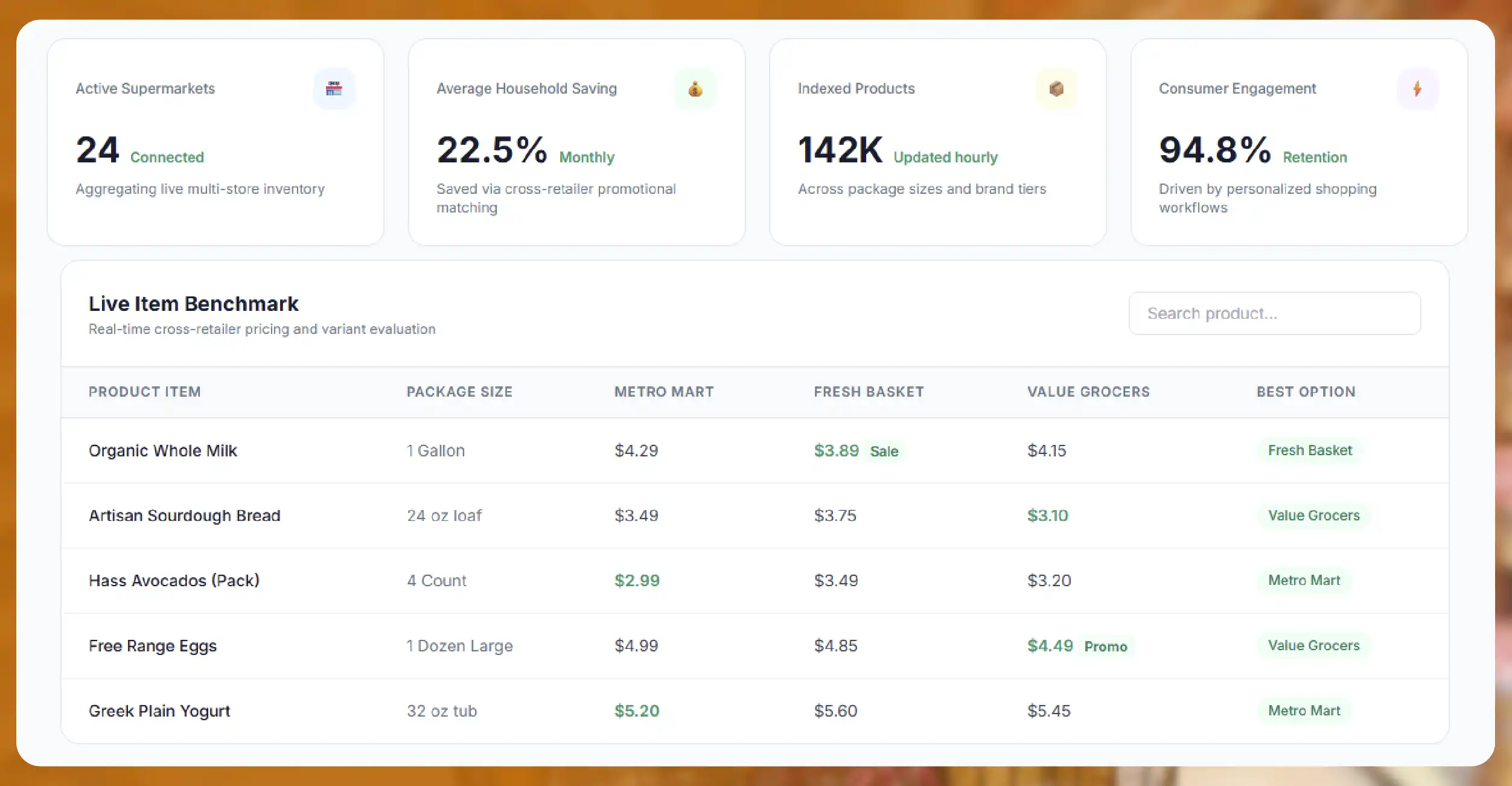
Traditional grocery shopping required customers to manually visit different stores or browse multiple websites to compare prices. This process was time-consuming and often resulted in missed discounts or higher spending. Grocery price-comparison applications simplify this experience by bringing product information from various retailers into one centralized platform.
These applications help users compare:
- Product prices across supermarkets
- Discounts and promotional offers
- Package sizes and product variations
- Brand alternatives
- Product availability
- Delivery options
For businesses, these apps create valuable opportunities to understand consumer behavior, improve customer engagement, and build personalized shopping experiences. Retailers and technology companies can use pricing intelligence to identify competitive gaps and optimize their strategies.
How Grocery Price Comparison Apps Collect Data?
The foundation of any grocery comparison application is accurate data collection. Since grocery information changes frequently, businesses need automated solutions that can gather product details from multiple online sources.
Companies often Scrape Daily grocery pricing data for app development to collect information such as product names, prices, discounts, categories, images, availability status, and retailer details. This data helps applications maintain updated product databases and deliver relevant comparisons.
The collected information can come from:
- Online grocery marketplaces
- Supermarket websites
- Quick commerce platforms
- Retail applications
- Digital catalogs
- Promotional pages
A strong data collection framework ensures that consumers receive accurate pricing information while businesses maintain competitive intelligence.
Role of Multi-Retailer Data Extraction in Grocery Apps
Modern grocery comparison platforms require information from numerous retailers because customers shop across different channels. A single retailer cannot provide complete market visibility, making multi-source data collection essential.
Through multi-retailer grocery price Data Extraction For app solutions, businesses can gather grocery details from multiple stores and organize them into a unified database. This approach allows users to compare similar products available from different sellers.
For example, a customer searching for cooking oil can instantly compare prices across several supermarkets instead of manually checking each platform. This improves convenience and encourages users to make cost-effective decisions.
Important Features of a Grocery Price Comparison Application
A competitive grocery comparison app requires several features that enhance usability and customer satisfaction.
Product Price Comparison
The primary feature allows customers to search for products and view prices from multiple retailers. Users can quickly identify the lowest price, available discounts, and better purchasing options.
Price History Tracking
Historical pricing information helps customers understand whether current deals are genuinely valuable. Price trends can show seasonal changes, promotional periods, and regular price movements.
Personalized Recommendations
Applications can analyze shopping behavior and suggest products based on previous purchases, preferred brands, and spending patterns.
Location-Based Comparison
Prices and availability may differ by location. Regional comparison features help users find nearby retailers offering better deals.
Alerts and Notifications
Customers can receive notifications when product prices drop, discounts appear, or previously unavailable products become available.
Benefits of Grocery Price Monitoring for Consumer Applications
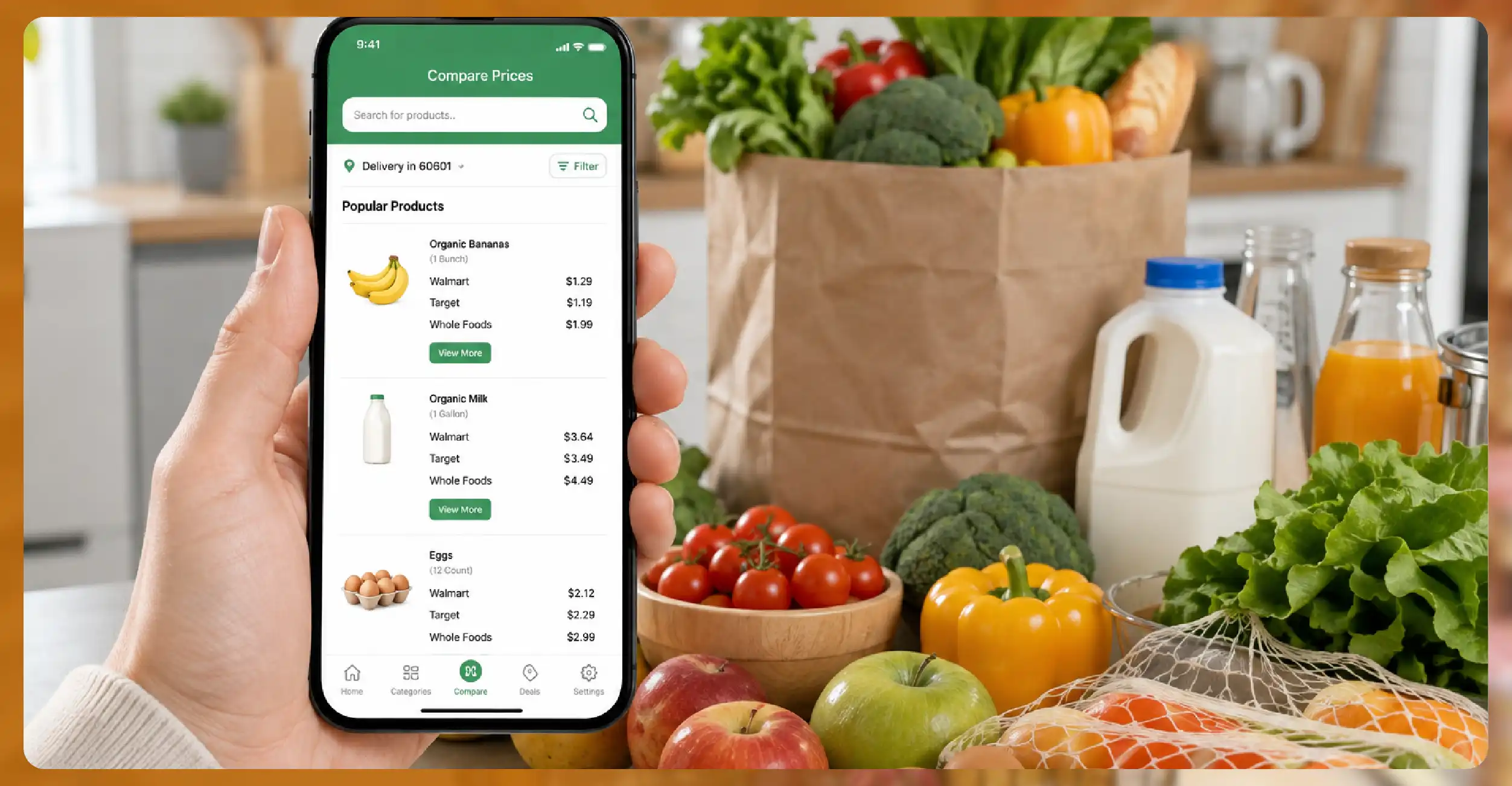
Businesses developing shopping comparison platforms need continuous visibility into market changes. Grocery price monitoring for consumer app systems help maintain updated information and improve customer trust.
Regular monitoring allows companies to:
- Identify pricing changes quickly
- Track competitor strategies
- Detect promotional campaigns
- Improve product recommendations
- Maintain accurate comparison results
For consumers, this means better shopping decisions and increased savings. For businesses, it creates opportunities to improve user retention and strengthen application performance.
Using Grocery Data Scraping for Better Consumer Insights
Data availability plays an important role in building reliable comparison platforms. Automated collection methods help businesses manage large amounts of grocery information efficiently.
Grocery data scraping enables companies to gather structured product information from different online sources. The collected data can support comparison engines, dashboards, analytics systems, and recommendation tools.
With properly organized grocery datasets, businesses can analyze:
- Price differences between retailers
- Consumer buying patterns
- Popular product categories
- Regional demand changes
- Promotional effectiveness
These insights help businesses improve application features and deliver more valuable experiences to users.
API-Based Grocery Comparison Solutions
As grocery applications grow, managing large volumes of pricing information becomes more complex. APIs help applications access structured grocery data and integrate comparison capabilities seamlessly.
Businesses can Extract Grocery price comparison API data to connect grocery datasets with their applications, dashboards, and analytics platforms. API-based solutions allow faster data delivery, improved scalability, and easier integration with existing systems.
A reliable API infrastructure helps maintain consistent updates and supports applications serving thousands or millions of users.
Challenges in Building Grocery Price Comparison Apps
Although grocery comparison applications provide significant value, businesses must address several challenges.
Frequent Price Changes
Retailers update prices regularly, making continuous data collection necessary. Outdated information can reduce user trust and negatively impact app performance.
Different Product Formats
Retailers may list products differently, including variations in names, quantities, and categories. Data standardization is required to create accurate comparisons.
Availability Issues
A product may appear available on one platform but unavailable in a specific region. Applications must manage availability updates carefully.
Large Data Volumes
Collecting information from multiple retailers creates large datasets that require efficient storage, processing, and management systems.
Future Scope of Grocery Comparison Applications
The future of grocery comparison apps will be influenced by artificial intelligence, automation, and predictive analytics. Advanced platforms will move beyond simple price comparisons and provide intelligent shopping recommendations.
AI-powered systems can predict price changes, identify purchasing patterns, and recommend the best time to buy specific products. Integration with smart shopping lists and digital assistants will further improve convenience.
Businesses can also use grocery intelligence platforms to understand customer demand and optimize product strategies.
How iWeb Data Scraping Can Help You?
Real-Time Price Intelligence
Our data scraping services collect updated grocery prices from multiple retailers, helping you build comparison applications with accurate pricing insights, discount tracking, and competitive market visibility for better customer experiences.
Multi-Retailer Data Collection
We extract grocery product information from various online stores, marketplaces, and quick commerce platforms, enabling your consumer app to compare prices, availability, brands, and product variations across multiple retailers.
Automated Product Monitoring
Our solutions continuously monitor grocery listings, price changes, promotions, and inventory updates, allowing businesses to maintain fresh datasets and provide users with reliable shopping recommendations through comparison platforms.
Structured Grocery Datasets
We transform raw grocery information into organized datasets containing product names, categories, prices, images, ratings, and availability, making integration with applications, dashboards, and analytics systems faster and more efficient.
Competitive Market Insights
Our scraping solutions help businesses analyze retailer pricing strategies, consumer preferences, and market movements, supporting smarter decisions for grocery applications, pricing optimization, demand forecasting, and customer engagement improvements.
Conclusion
Building a successful grocery comparison application requires accurate data, continuous updates, and reliable technology infrastructure. With Managed web scraping, businesses can collect structured grocery information efficiently while maintaining scalable and consistent data workflows.
Advanced solutions also support Stock-out and availability tracking, helping applications provide customers with accurate product availability information and better shopping experiences.
Through Market trend and demand intelligence, businesses can understand consumer preferences, identify emerging opportunities, and improve their competitive positioning in the evolving grocery technology ecosystem.
A well-designed grocery price comparison platform benefits both consumers and businesses by improving transparency, reducing shopping costs, and creating smarter digital grocery experiences.
Frequently Asked Questions
A grocery price comparison app collects product information from multiple retailers and allows users to compare prices, discounts, availability, and purchasing options in one place.
Data collection usually involves automated technologies that gather product details, pricing information, and availability updates from online grocery platforms and retailer websites.
Real-time pricing information helps businesses provide accurate comparisons, improve customer satisfaction, track competitors, and identify market opportunities.
Yes, grocery comparison applications can monitor product availability across retailers and help users identify stores where products are currently accessible.
Grocery data enables personalized recommendations, price alerts, better product discovery, and smarter purchasing decisions by providing customers with accurate market information.