


Introduction
Phu Quoc Island has become one of Vietnam's fastest-growing tourism destinations, attracting millions of domestic and international travelers every year. From luxury beachfront resorts and boutique hotels to budget accommodations and family-friendly stays, the island offers an extensive hospitality ecosystem that continues to expand. As competition intensifies, hospitality businesses, Online Travel Agencies (OTAs), travel startups, tourism boards, and investors require reliable, real-time hotel intelligence to make informed decisions.
A comprehensive Hotel Aggregation System for Phu Quoc Island helps organizations collect and consolidate hotel information from multiple booking platforms into a centralized database. Businesses can Scrape hotel listings for Phu Quoc Island to monitor newly listed properties, amenities, promotions, and seasonal offerings while simultaneously analyzing Phu Quoc hotel price and availability data for pricing optimization, competitive benchmarking, and demand forecasting. With automated data collection, businesses gain accurate insights that improve strategic planning and customer experiences.
The Growing Need for Hotel Aggregation
Today's hospitality industry operates in an environment where hotel prices, availability, and promotions change several times throughout the day. Travelers compare dozens of booking websites before making reservations, while hotels continuously adjust prices according to occupancy levels, seasonal demand, airline schedules, local festivals, and competitor pricing.
Monitoring all these changes manually is nearly impossible. A hotel aggregation system automates this process by collecting hotel listings from multiple online sources and organizing them into one unified platform. Instead of navigating countless booking websites, businesses receive structured, real-time information that supports faster and more informed decision-making.
This centralized approach improves visibility into market conditions while reducing operational effort, making it an essential solution for modern hospitality businesses.
How a Hotel Aggregation System Works
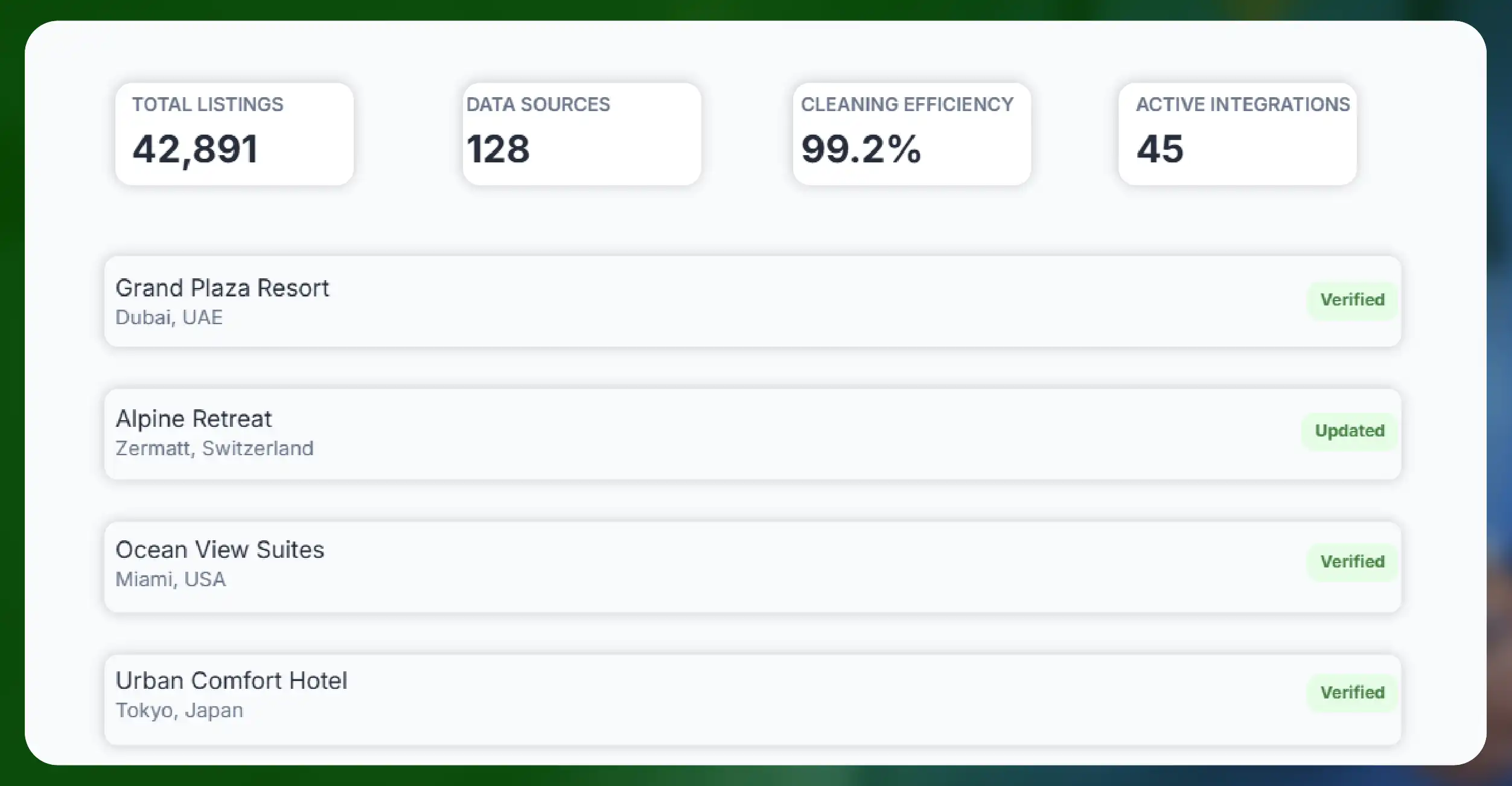
A hotel aggregation platform combines data collection, processing, validation, storage, and analytics into one seamless workflow.
The process begins by automatically extracting hotel listings from OTAs, hotel websites, tourism portals, travel marketplaces, and booking platforms. The collected information is then standardized by removing duplicate listings, correcting inconsistent naming conventions, validating addresses, and organizing room categories.
Once cleaned, the data is continuously updated and delivered through dashboards, APIs, downloadable datasets, or direct integrations with booking systems and business intelligence platforms. This enables organizations to monitor market activity without performing manual research.
Essential Data Points Collected
A modern aggregation platform captures significantly more information than hotel names and room prices. Comprehensive datasets provide a complete overview of each property and support advanced market analysis.
Typical data collected includes:
- Hotel name and property category
- Star ratings and accommodation type
- Room categories and occupancy capacity
- Daily room prices and seasonal pricing
- Live room availability
- Promotional discounts and package offers
- Taxes, fees, and cancellation policies
- Amenities including Wi-Fi, swimming pools, spas, restaurants, and parking
- Property descriptions and high-quality images
- Geographic coordinates and nearby attractions
- Guest ratings and review counts
- Multilingual customer reviews
- Check-in and check-out policies
- Sustainability certifications
- Accessibility features
These structured datasets allow businesses to understand customer expectations while evaluating competitive positioning across the destination.
Monitoring Dynamic Hotel Pricing
Hotel prices rarely remain constant. Room rates fluctuate depending on holidays, international travel demand, airline capacity, conferences, weather conditions, and local tourism events.
A Real-Time Hotel Room Price Dashboard continuously tracks these pricing movements, enabling businesses to compare competitor rates, identify promotional campaigns, monitor occupancy trends, and evaluate seasonal demand patterns.
Revenue managers can quickly recognize pricing opportunities, adjust strategies in response to competitor behavior, and maximize profitability without relying on outdated reports. Interactive dashboards also visualize pricing history, room inventory, occupancy indicators, and booking trends, providing a complete picture of market performance.
Competitive Intelligence Across Phu Quoc
Competition among hotels continues to increase as new resorts and boutique properties enter the market. Businesses therefore require deeper visibility into competitor activities beyond simple price comparisons.
Using Phu Quoc accommodation market intelligence, organizations can evaluate pricing strategies, promotional campaigns, room availability, service offerings, and accommodation growth across different regions of the island.
Hotels can identify underserved market segments, discover premium pricing opportunities, and benchmark their performance against similar properties. Tourism authorities also benefit from these insights by understanding regional accommodation trends and planning future tourism infrastructure accordingly.
Understanding Guest Experience Through Reviews
Guest reviews have become one of the most influential factors affecting booking decisions. Travelers rely heavily on previous customer experiences before selecting accommodations, making review analysis an essential part of hospitality intelligence.
Aggregating Hotel Guest Review & Rating Data in Phu Quoc enables organizations to analyze customer sentiment across multiple booking platforms without manually reviewing thousands of comments.
Businesses can identify recurring themes related to:
- Room cleanliness
- Staff professionalism
- Food quality
- Wi-Fi performance
- Beach accessibility
- Family-friendly services
- Swimming pool maintenance
- Transportation convenience
- Overall value for money
- Guest satisfaction trends
This information helps hotel operators improve service quality while allowing tourism organizations to better understand visitor expectations throughout the destination.
Delivering Data Through APIs
Modern travel technology depends on seamless system integration. Instead of manually exporting spreadsheets, organizations increasingly consume hotel intelligence through APIs.
A Hotel Aggregation System Data API delivers continuously updated hotel listings, pricing information, availability, amenities, images, ratings, and reviews directly into booking platforms, mobile applications, travel comparison websites, and internal business systems.
API integration simplifies software development while ensuring applications always display accurate and current hotel information. Developers can focus on building innovative customer experiences rather than maintaining complex data collection infrastructure.
Automated Hotel Data Collection at Scale
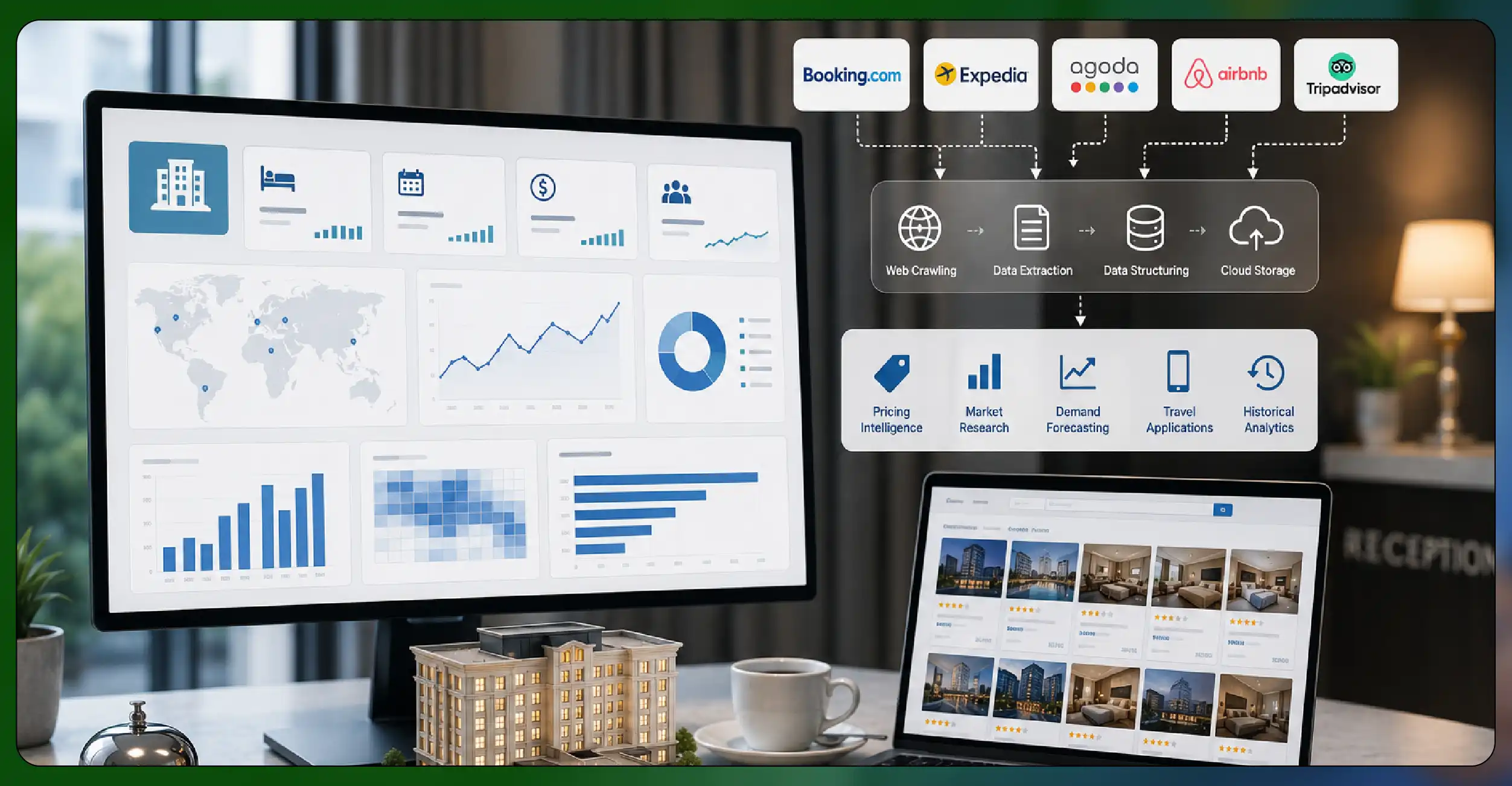
As the hospitality ecosystem expands, collecting hotel information manually becomes increasingly impractical. Automated extraction technologies solve this challenge by gathering structured information from multiple travel platforms around the clock.
Professional Hotel Data Extraction Services automate the entire collection process while managing dynamic website structures, multilingual content, pagination, anti-bot technologies, and changing booking interfaces.
Automation significantly improves data accuracy, minimizes manual effort, and provides businesses with continuously updated datasets that support pricing intelligence, market research, demand forecasting, and customer-facing travel applications.
Historical archives created through automated extraction also enable long-term tourism analysis and investment planning.
Revenue Optimization Through Hotel Analytics
Revenue management relies on timely market intelligence. Hotels that understand competitor pricing and demand fluctuations can optimize room rates while maximizing occupancy and profitability.
Historical pricing combined with real-time updates enables organizations to forecast demand based on holidays, airline schedules, festivals, weather conditions, and seasonal tourism patterns.
These insights help hotels adjust pricing proactively instead of reacting after competitors have already changed their rates. Investment firms, hospitality consultants, and tourism researchers also benefit from predictive analytics when evaluating long-term market opportunities.
Importance of Historical Hospitality Data
Real-time information is valuable, but historical datasets provide deeper business intelligence.
Organizations using Hotel Rates and Review Datasets can evaluate long-term pricing trends, guest satisfaction improvements, seasonal occupancy patterns, promotional effectiveness, and competitive positioning over several years.
Historical analysis also supports artificial intelligence models capable of forecasting future room rates, traveler demand, and occupancy levels with greater accuracy.
These datasets provide valuable evidence for strategic planning, investment analysis, and destination development initiatives.
Applications Across the Travel Industry
Hotel aggregation systems support numerous industries beyond traditional hotel booking platforms. Centralized hospitality intelligence creates value across the broader travel ecosystem.
Common applications include:
- OTA inventory management
- Dynamic pricing optimization
- Hotel revenue management
- Competitive benchmarking
- Tourism market research
- Travel recommendation engines
- Hospitality investment analysis
- Corporate travel management
- Destination performance monitoring
- Business intelligence reporting
These applications enable organizations to improve operational efficiency while making faster, data-driven decisions supported by reliable market intelligence.
The Future of Hotel Aggregation
Artificial intelligence, predictive analytics, cloud computing, and automation are transforming hospitality intelligence. Future hotel aggregation platforms will combine accommodation data with airline schedules, weather forecasts, tourism events, mobility data, and traveler sentiment to generate highly accurate demand predictions.
Hotels will increasingly rely on AI-powered pricing recommendations, automated revenue optimization, personalized traveler experiences, and predictive occupancy forecasting. As Phu Quoc continues to expand as an international tourism destination, real-time hotel intelligence will become a critical competitive advantage.
Organizations investing in automated aggregation systems today will be better positioned to adapt to changing traveler behavior, evolving market conditions, and increasing regional competition.
How iWeb Data Scraping Can Help You?
Real-Time Market Intelligence
Our automated data scraping solutions continuously collect hotel listings, pricing, availability, and promotional offers, enabling businesses to monitor market changes instantly and make faster, data-driven decisions with greater confidence.
Comprehensive Competitive Analysis
Track competitors' room rates, amenities, guest ratings, discounts, and seasonal pricing strategies across multiple booking platforms, helping you identify opportunities, optimize pricing models, and strengthen your market position.
Custom Data Integration
We deliver structured hotel datasets through APIs, CSV, JSON, Excel, or cloud integrations, allowing seamless connectivity with booking platforms, BI tools, CRM systems, and internal analytics dashboards.
Scalable Data Collection
Our advanced scraping infrastructure gathers high-volume hotel data from multiple travel websites with exceptional accuracy, supporting historical analysis, forecasting, revenue optimization, and large-scale hospitality market research initiatives.
Actionable Business Insights
Transform raw hotel data into meaningful insights with customized dashboards, trend analysis, and reporting solutions that improve pricing strategies, customer experiences, operational efficiency, and long-term business growth.
Conclusion
The hospitality landscape on Phu Quoc Island is evolving rapidly, creating new opportunities for hotels, travel companies, investors, and tourism authorities. Automated hotel aggregation systems provide the accurate, scalable, and continuously updated intelligence needed to improve pricing strategies, optimize operations, enhance customer experiences, and support long-term business growth.
By combining real-time pricing, hotel availability, guest reviews, competitive analysis, and predictive analytics into a unified platform, organizations gain a significant competitive advantage in one of Southeast Asia's most dynamic tourism markets. Integrating these capabilities with Travel & Tourism App Datasets further enhances booking platforms and travel applications, while professional Travel Data Extraction Services ensure reliable access to continuously updated hospitality information. Scalable Web Scraping API Services empower businesses to integrate high-quality hotel intelligence into dashboards, mobile applications, analytics platforms, and next-generation travel solutions, enabling smarter decisions and sustainable growth across the hospitality ecosystem.
FAQs
A Hotel Aggregation System for Phu Quoc Island is a centralized platform that collects hotel listings, room prices, availability, amenities, and guest reviews from multiple booking websites. It helps hotels, OTAs, travel agencies, and tourism organizations access real-time market intelligence for better decision-making.
A hotel aggregation system can collect property names, room types, pricing, availability, amenities, promotional offers, cancellation policies, guest ratings, customer reviews, hotel locations, images, and historical pricing data to support business intelligence and market analysis.
Real-time hotel price monitoring enables businesses to track competitor pricing, identify market trends, optimize dynamic pricing strategies, forecast demand, and respond quickly to changes in occupancy and seasonal travel patterns.
Hotel chains, online travel agencies (OTAs), travel startups, tourism boards, corporate travel managers, hospitality consultants, investors, and market research firms can all leverage aggregated hotel data to improve operations, pricing strategies, and customer experiences.
Hotel data APIs provide automated access to up-to-date hotel listings, pricing, availability, and reviews. They enable travel websites and mobile apps to display accurate information in real time, reduce manual data management, and deliver a seamless booking experience for users.