

Introduction
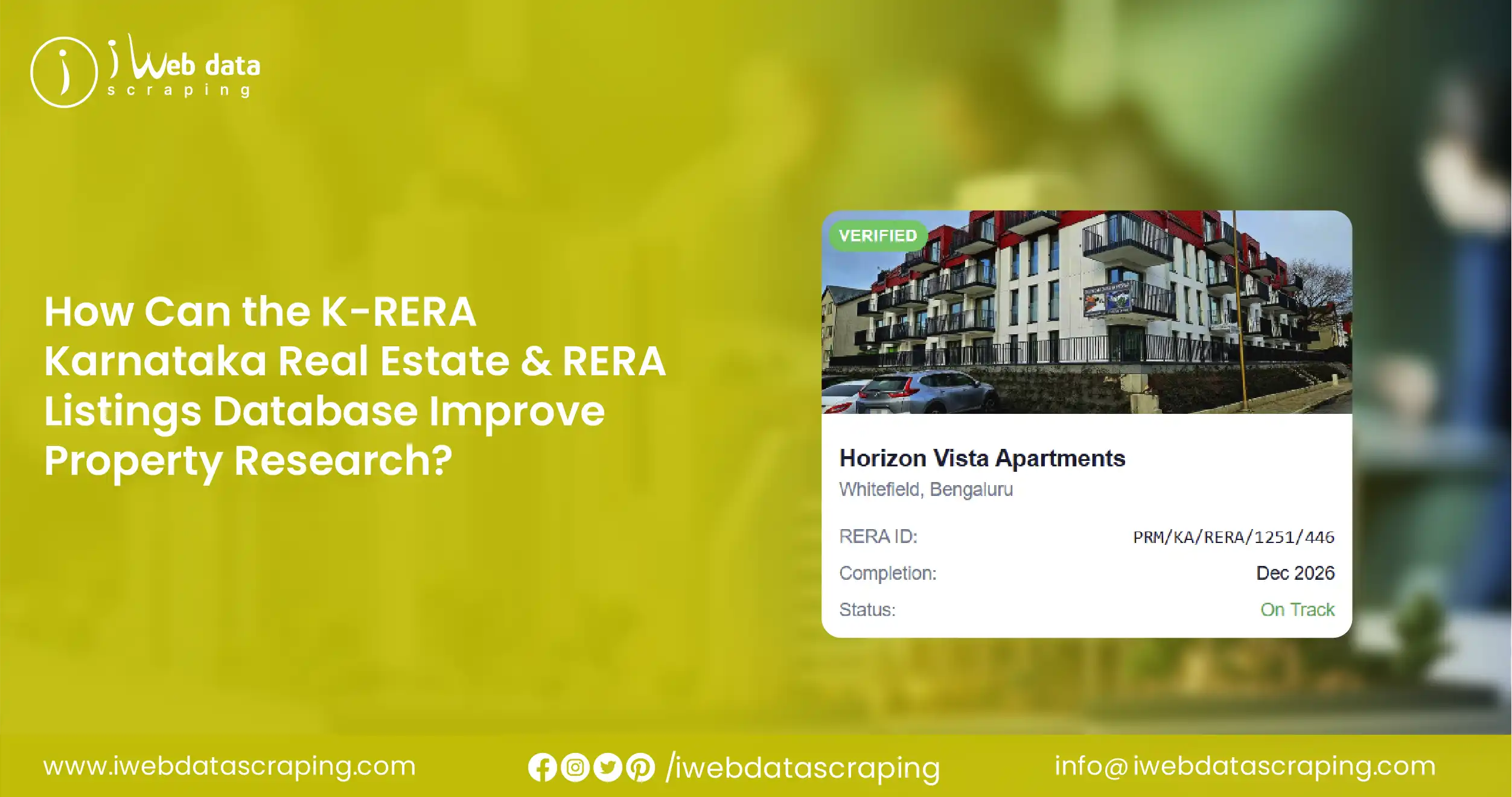
The Karnataka real estate market continues to evolve with rapid urban expansion, increasing investments, and stricter regulatory compliance. Developers, investors, financial institutions, property consultants, and PropTech companies increasingly rely on structured data to understand project registrations, promoter information, project status, approvals, and location-specific trends. Access to a reliable K-RERA Karnataka Real Estate & RERA Listings Database enables businesses to transform publicly available records into valuable market intelligence.
As demand for digital property insights grows, K-RERA Karnataka Real Estate Data Extraction allows organizations to automate the collection of project registrations, promoter profiles, approvals, project timelines, and compliance-related information. Rather than manually browsing thousands of records, businesses can build continuously updated databases for research and analytics.
Similarly, a comprehensive K-RERA Karnataka Project & Promoter Database helps companies analyze registered developers, project histories, construction status, project categories, and regional development trends. These datasets support better investment planning, competitive benchmarking, and regulatory monitoring across Karnataka's rapidly expanding property market.
Understanding the Importance of K-RERA Data
The Karnataka Real Estate Regulatory Authority (K-RERA) maintains a transparent registry of real estate projects and promoters. This information improves accountability within the industry while providing buyers with verified project information before making purchasing decisions.
For businesses, these records represent a rich source of structured market intelligence. Property portals, financial institutions, real estate consultants, insurance providers, valuation firms, construction companies, and investment analysts use K-RERA information to understand project launches, regional expansion, developer activity, project completion timelines, and regulatory compliance.
Instead of manually reviewing thousands of project records, automated extraction enables continuous monitoring and large-scale analytics.
Why Businesses Need K-RERA Listings Database?
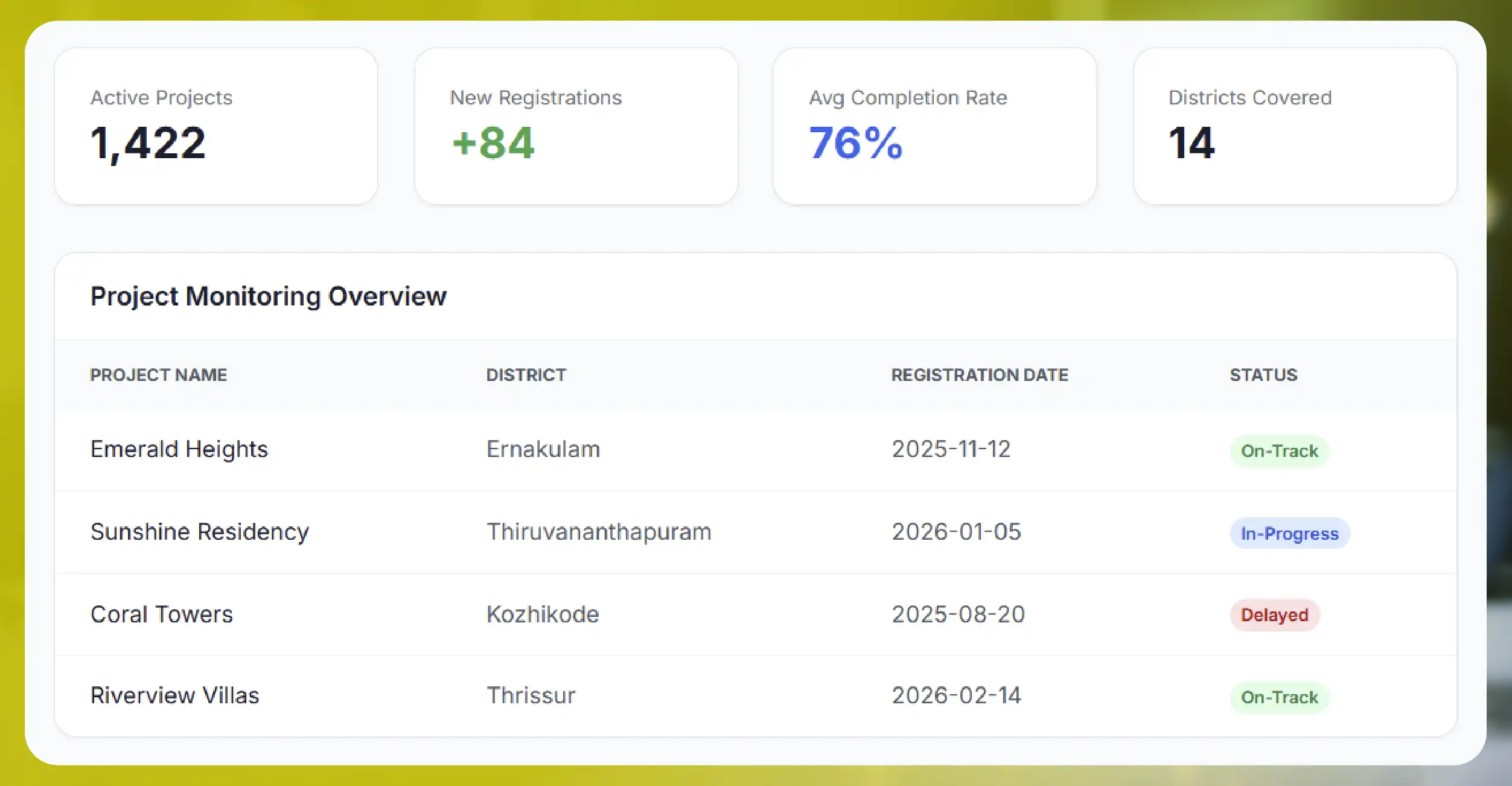
Modern real estate decisions depend on data rather than assumptions. A structured K-RERA listings database provides accurate information that supports investment research, risk analysis, project monitoring, and market forecasting.
Organizations can monitor new project registrations, identify emerging residential and commercial zones, evaluate developer performance, analyze project completion rates, and understand district-wise development activity. Historical datasets further help identify long-term market trends and investment opportunities.
With automated updates, businesses can ensure their internal databases remain current without investing significant manual effort.
Valuable Data Available from K-RERA
The K-RERA platform contains a wide variety of structured information that can be extracted for analytical purposes.
Project details typically include project name, registration number, registration validity, project type, current status, address, district, developer information, approval dates, land details, construction timelines, and completion schedules.
Promoter information may include promoter name, organization details, office address, registration status, contact information where publicly available, previous projects, and compliance records.
Supporting documents, approvals, project specifications, and legal disclosures can also be indexed depending on project availability and public accessibility.
When properly organized, these records become a powerful business intelligence asset.
Applications Across the Real Estate Industry
Different industries leverage K-RERA data in unique ways depending on their business objectives.
- Property portals use automated datasets to keep listings updated and provide verified project information.
- Banks and housing finance companies validate registered projects before approving loans.
- Investment firms analyze developer activity and regional growth patterns before allocating capital.
- Construction companies identify expanding markets and competitive developments.
- Insurance companies assess project risk based on registration and project progress.
- Legal firms monitor compliance and regulatory filings.
- Market research organizations generate regional reports covering project launches, completion rates, developer rankings, and district-wise development trends.
- Government agencies and urban planning consultants can also analyze macro-level housing developments across Karnataka.
Benefits of Automated Property Data Collection
Manual collection of property information is time-consuming, expensive, and susceptible to human error. Automated extraction significantly improves operational efficiency while ensuring consistency.
Businesses gain faster access to verified records, reduced manual workload, improved analytical capabilities, scalable data collection, and standardized database structures.
Automated workflows also simplify periodic updates, enabling organizations to monitor newly registered projects, modified records, project completions, and promoter changes without repeating manual research.
The result is faster decision-making supported by accurate and continuously refreshed information.
Scraping Property Listings for Business Intelligence
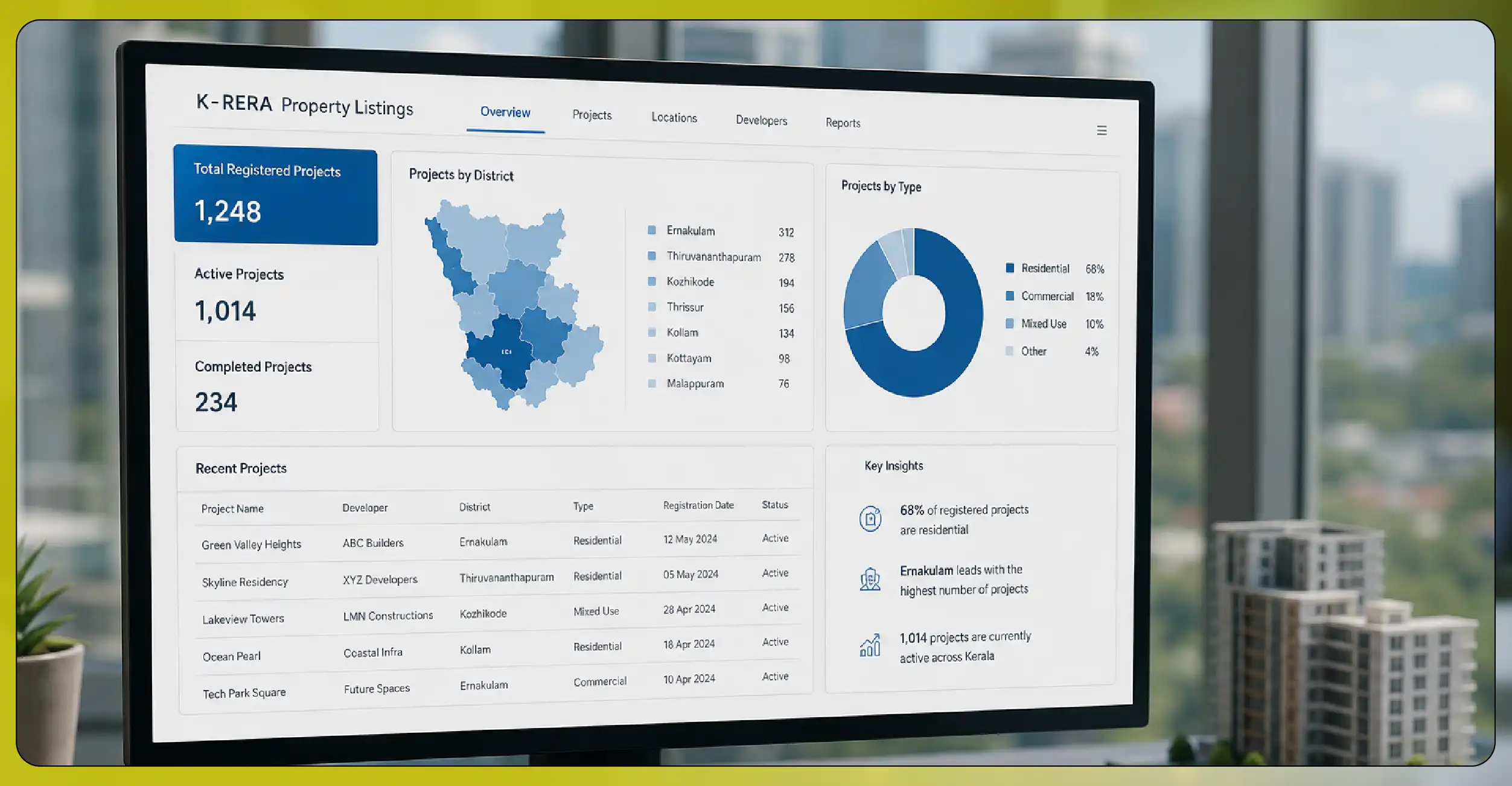
Organizations increasingly Scrape K-RERA Property Listings Data to build searchable databases that support investment research, compliance verification, competitive intelligence, and property analytics.
The collected information can be integrated into CRM platforms, BI dashboards, investment models, geographic information systems, property marketplaces, valuation software, and internal reporting systems.
This enables real-time visibility into project registrations, regional construction activity, and market dynamics.
Building Large-Scale Real Estate Analytics Platforms
Large organizations often combine K-RERA information with additional public datasets including property transactions, demographic information, infrastructure projects, municipal records, and economic indicators.
Integrated datasets help generate advanced analytics including market heat maps, district-wise growth forecasts, developer performance rankings, construction activity indices, investment opportunity scores, and supply-demand analysis.
These insights help stakeholders understand where development is accelerating and where future opportunities may emerge.
Supporting PropTech Innovation
PropTech startups increasingly depend on structured real estate datasets to build innovative platforms.
Verified K-RERA information strengthens property search engines, developer comparison tools, AI-powered investment advisors, mortgage platforms, property valuation engines, and construction monitoring solutions.
Accurate regulatory information improves user trust while reducing misinformation across digital property platforms.
As PropTech adoption continues to expand, high-quality regulatory datasets become even more valuable.
Market Research Through Automated Data Collection
Organizations performing Karnataka RERA listings data Scraping can evaluate regional development patterns with remarkable precision.
Researchers can identify high-growth districts, compare residential and commercial development, evaluate affordable housing initiatives, monitor luxury project launches, analyze developer concentration, and study project completion performance across multiple years.
Such insights support consulting reports, investment recommendations, feasibility studies, and market forecasts.
Maintaining Updated Registered Project Records
A continuously refreshed K-RERA Karnataka Registered Projects Dataset enables organizations to monitor changes without manually revisiting every project page.
Businesses can receive updated information regarding project registration status, revised completion dates, promoter changes, approvals, and newly registered developments.
This ongoing monitoring supports compliance teams, financial analysts, lending institutions, and property consultants who require current market information.
API-Based Integration for Enterprise Systems
Large enterprises frequently integrate structured datasets directly into internal platforms using automated pipelines. Organizations may Scrape K-RERA Real Estate Data API workflows where technically appropriate to synchronize property information with analytics systems, CRM platforms, enterprise databases, reporting dashboards, and valuation engines.
Automated integration eliminates repetitive manual imports while ensuring data consistency across multiple business applications.
This significantly improves operational efficiency for organizations managing large property portfolios or conducting nationwide market analysis.
The Growing Importance of Real Estate Datasets
Reliable Real Estate Property Datasets have become essential for businesses operating in today's competitive property ecosystem.
From investment firms and banks to insurance providers, consultants, developers, and PropTech startups, structured property data enables informed decisions supported by verified information instead of assumptions.
As digital transformation accelerates across the real estate industry, demand for automated, scalable, and continuously updated datasets will continue to grow.
How iWeb Data Scraping Can Help You?
Customized Data Collection
Our specialists develop tailored extraction solutions that capture project registrations, promoter profiles, approvals, construction milestones, compliance records, and property information according to your business objectives. Every dataset is structured, validated, and delivered in formats that integrate seamlessly into existing analytical and operational workflows.
Automated Data Refresh
We create automated monitoring systems that periodically update your databases with newly registered projects, revised approvals, promoter changes, project status updates, and regulatory modifications. Continuous synchronization helps organizations maintain current information while reducing manual effort and operational costs significantly.
Enterprise Data Integration
Our solutions integrate extracted datasets into CRM systems, business intelligence platforms, cloud storage, data warehouses, reporting dashboards, GIS applications, and internal software. Clean, standardized data enables faster reporting, advanced analytics, and informed strategic planning across multiple departments and stakeholders.
High-Quality Data Processing
Our quality assurance processes include validation, normalization, duplicate removal, structured formatting, and consistency checks before delivery. This ensures reliable datasets suitable for financial modeling, market research, predictive analytics, regulatory reporting, and enterprise-grade business intelligence applications across industries.
Scalable Data Delivery
Whether organizations require district-specific information or statewide datasets covering thousands of registered projects, our scalable infrastructure supports large-volume extraction with flexible delivery schedules. Businesses receive structured, analysis-ready data that grows alongside expanding operational requirements and research initiatives.
Conclusion
The Karnataka real estate sector continues becoming increasingly data-driven as investors, developers, financial institutions, and PropTech companies seek accurate regulatory information to guide strategic decisions. Automated property intelligence enables organizations to monitor projects efficiently, evaluate developers confidently, and identify emerging opportunities through structured analytics.
Our expertise in Real Estate Property Data Extraction empowers organizations with reliable, structured, and continuously updated datasets for comprehensive market analysis.
Through advanced Real Estate Data Intelligence Services, businesses gain actionable insights that support investment planning, competitive benchmarking, compliance monitoring, and digital transformation initiatives.
Our scalable Web Scraping API Services deliver seamless integration, automated updates, and enterprise-ready datasets that maximize the value of Karnataka's real estate information.
FAQs
The database can include project registration details, promoter information, project status, approvals, location details, registration validity, construction timelines, project specifications, and other publicly available regulatory information.
Real estate portals, banks, financial institutions, developers, consultants, investment firms, insurance companies, PropTech startups, researchers, and market intelligence providers all benefit from structured K-RERA datasets.
Data refresh frequency depends on business requirements. Organizations may schedule daily, weekly, or monthly updates to maintain current project registrations and promoter information.
Structured datasets can be delivered in CSV, Excel, JSON, XML, SQL databases, cloud storage platforms, or integrated directly into business intelligence and enterprise systems.
Automated extraction reduces manual effort, improves data accuracy, supports faster reporting, enables large-scale market analysis, maintains updated databases, and provides timely insights for informed real estate decision-making.