What Is Large-Scale Marketplace Data Scraping and Why Does Your Business Need It?
Introduction
Online marketplaces have transformed the way consumers discover, compare, and purchase products. Millions of products, thousands of sellers, and continuously changing prices create an environment where businesses must rely on accurate, real-time intelligence instead of assumptions. This is where large-scale marketplace data scraping becomes an essential business capability. Companies across retail, eCommerce, manufacturing, and market research use automated data collection to monitor competitors, analyze pricing strategies, evaluate seller performance, and identify emerging market opportunities.
As marketplaces continue expanding globally, Marketplace product data scraping enables organizations to gather structured information from thousands of product listings simultaneously. Likewise, Marketplace seller data extraction provides valuable insights into seller rankings, ratings, inventory trends, fulfillment methods, and customer engagement, helping businesses make faster and more informed strategic decisions.
Why Marketplace Data Matters More Than Ever?
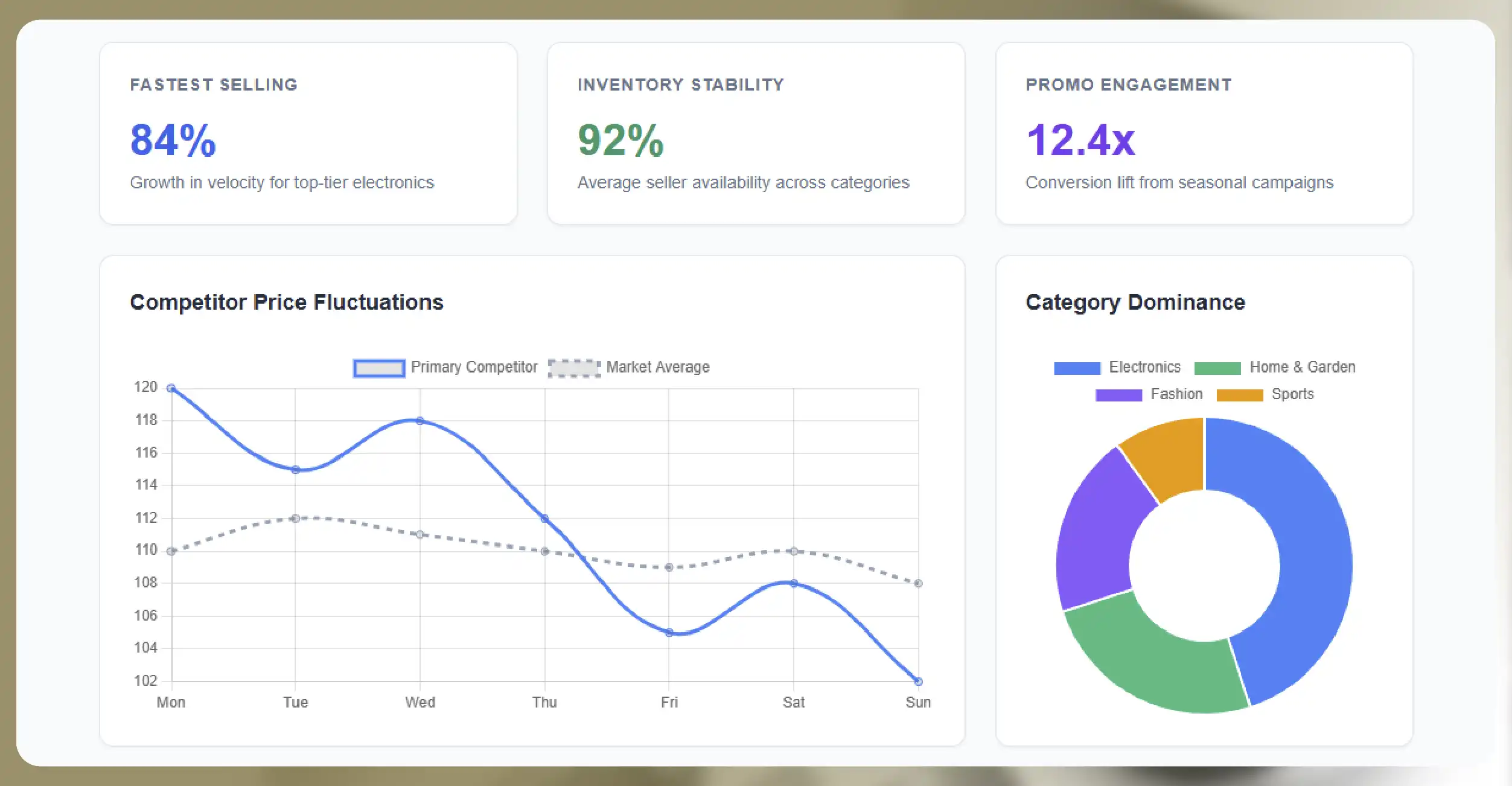
Modern marketplaces generate enormous amounts of valuable commercial information every minute. Prices fluctuate throughout the day, promotional campaigns appear without notice, new sellers enter the market, and customer reviews influence purchasing behavior almost instantly.
Manual research simply cannot keep pace with this level of activity. Businesses need automated solutions capable of collecting millions of records consistently while maintaining accuracy and scalability.
Marketplace data helps organizations answer critical questions such as:
- Which competitors are reducing prices?
- Which products are selling fastest?
- Which brands dominate specific categories?
- Which sellers consistently maintain inventory?
- Which promotions generate the highest customer engagement?
Having access to these answers enables organizations to react faster than competitors while improving operational efficiency.
Understanding Large-Scale Marketplace Data Collection
Large-scale marketplace scraping involves automatically collecting structured information from thousands or even millions of marketplace pages using intelligent automation systems.
Unlike small-scale scraping projects that gather limited datasets, enterprise-level marketplace extraction focuses on continuous monitoring across multiple regions, languages, currencies, and product categories.
Collected datasets commonly include:
- Product names
- Descriptions
- Brand information
- Images
- Specifications
- Pricing history
- Discount percentages
- Stock availability
- Seller details
- Ratings
- Reviews
- Shipping information
- Delivery estimates
- Marketplace rankings
- Product variations
- Category hierarchy
- SKU information
This extensive dataset becomes the foundation for business intelligence dashboards, pricing engines, forecasting models, and analytics platforms.
Business Benefits of Marketplace Intelligence
Organizations across industries rely on marketplace intelligence to improve decision-making.
Retailers use collected pricing data to adjust their own pricing strategies.
Manufacturers monitor reseller compliance and identify unauthorized sellers.
Brands evaluate customer sentiment through reviews and ratings.
Market researchers analyze consumer demand across different regions.
Investment firms assess category growth before making strategic investments.
Consulting organizations use marketplace datasets to build comprehensive industry reports.
These insights significantly reduce uncertainty while supporting data-driven planning.
The Role of Automation in Marketplace Scraping
Large marketplaces contain millions of dynamically generated pages that change continuously throughout the day.
Manual collection becomes impossible at this scale.
Automation solves this challenge by deploying intelligent crawlers capable of navigating product pages, seller profiles, category listings, promotional sections, and search results without interruption.
Modern scraping systems automatically detect page updates, manage pagination, rotate requests, validate collected records, and organize structured datasets for downstream analytics.
This automation dramatically improves collection speed while minimizing human intervention.
Monitoring Competitors More Effectively
Understanding competitor activity remains one of the strongest use cases for marketplace intelligence.
Organizations increasingly Scrape Marketplace competitor Data to observe pricing behavior, promotional campaigns, assortment expansion, inventory changes, and product launches.
Rather than checking individual listings manually, businesses receive continuous updates across thousands of competing products.
These insights support:
- Dynamic pricing
- Product positioning
- Promotion planning
- Assortment optimization
- Regional expansion
- Campaign timing
- Inventory forecasting
By identifying competitor strategies early, businesses can respond before market conditions shift significantly.
API-Based Data Collection Improves Scalability

Enterprise organizations require stable, repeatable, and scalable data pipelines.
A robust Marketplace Data scraping API allows businesses to automate extraction workflows without rebuilding collection systems every time marketplace structures evolve.
API-driven architectures simplify integration with:
- Business Intelligence platforms
- Pricing engines
- ERP systems
- CRM solutions
- Inventory management platforms
- Machine learning models
- Analytics dashboards
This integration creates a seamless flow of marketplace intelligence across departments while reducing operational complexity.
Price Intelligence Drives Revenue Growth
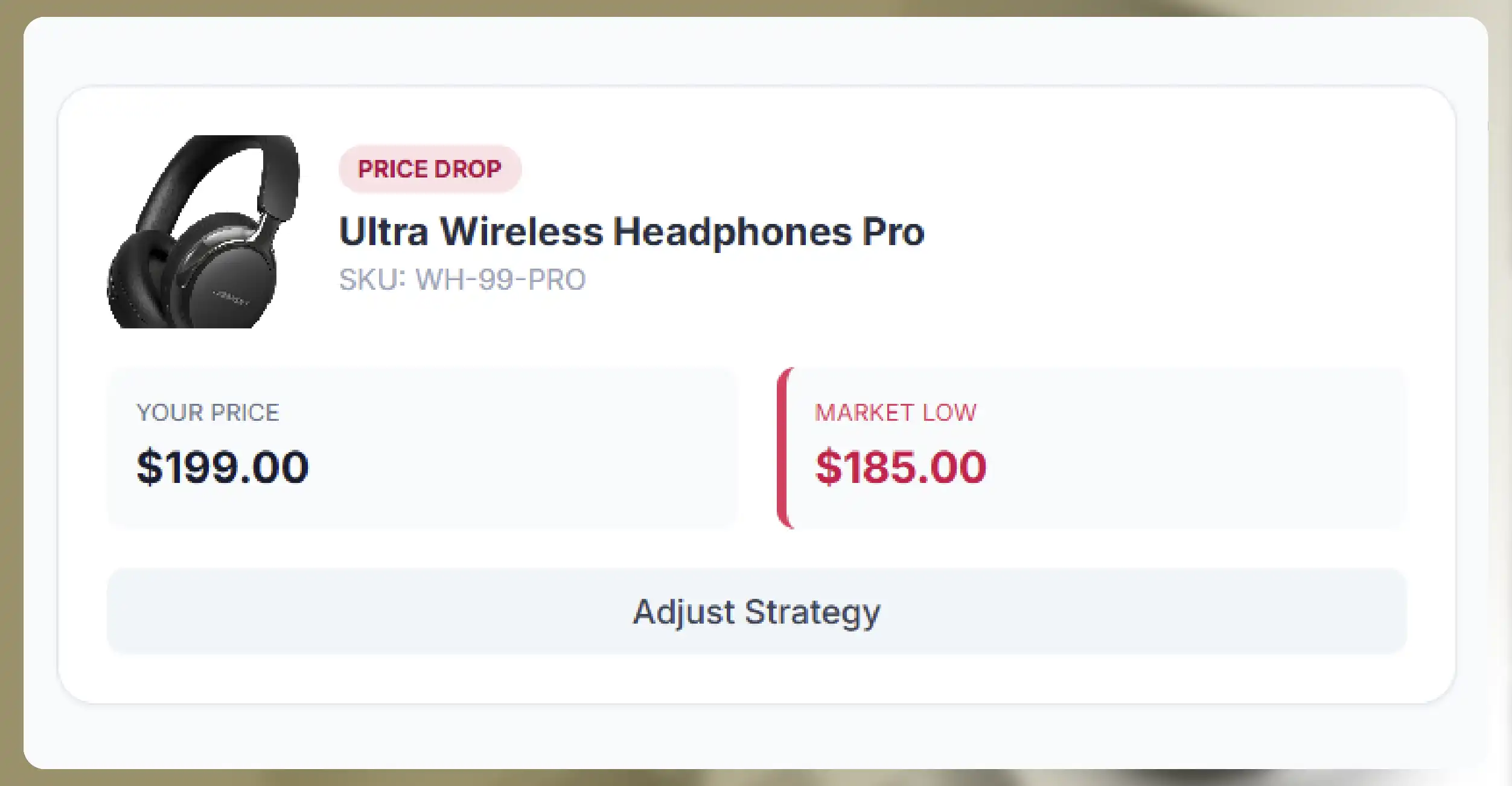
Pricing remains one of the most dynamic aspects of marketplace commerce.
Products may experience multiple price changes within a single day because of promotional events, inventory shortages, seasonal demand, or competitor actions.
Businesses increasingly depend on Real-time marketplace price monitoring to maintain competitive pricing while protecting profit margins.
Continuous monitoring helps organizations identify:
- Price drops
- Flash sales
- Bundle offers
- Coupon campaigns
- Regional pricing differences
- Seller-specific pricing
- Dynamic discounts
- Historical pricing patterns
Instead of reacting after losing sales, businesses proactively adjust pricing strategies based on live marketplace conditions.
Seller Intelligence Supports Better Marketplace Strategies
Marketplace success depends not only on products but also on seller performance.
Seller intelligence reveals valuable information such as:
- Average ratings
- Response times
- Fulfillment performance
- Inventory consistency
- Product assortment
- Delivery reliability
- Customer satisfaction
- Market share
These metrics help manufacturers identify high-performing partners while enabling retailers to benchmark themselves against leading marketplace sellers.
Organizations can also detect counterfeit sellers or unauthorized distributors by continuously monitoring seller activities.
Data Quality Determines Business Value
Collecting large datasets is only valuable when the information remains accurate.
Enterprise scraping systems incorporate multiple validation techniques to ensure data consistency.
These include duplicate detection, missing value validation, format normalization, category mapping, anomaly detection, and automated quality checks.
Reliable data improves forecasting accuracy while reducing business risks associated with incorrect market intelligence.
Multi-Marketplace Intelligence Expands Market Visibility
Many organizations sell products across multiple marketplaces simultaneously.
Instead of monitoring each platform separately, centralized data collection creates unified datasets for comparative analysis.
Businesses gain visibility into:
- Regional pricing
- Category performance
- Cross-platform availability
- Seller overlap
- Promotion effectiveness
- Brand consistency
- Customer sentiment
- Delivery performance
This comprehensive approach enables executives to evaluate overall marketplace performance rather than isolated platform metrics.
Artificial Intelligence Enhances Marketplace Analytics
Artificial Intelligence significantly increases the value of marketplace datasets.
Machine learning models analyze historical trends, identify anomalies, predict pricing movements, forecast inventory shortages, and classify products automatically.
Natural language processing evaluates customer reviews to detect recurring complaints, emerging preferences, and satisfaction patterns.
Computer vision algorithms can even compare product images for duplicate listings and counterfeit detection.
Combining AI with Automated marketplace data extraction transforms raw information into predictive business intelligence.
Get in touch today to unlock real-time marketplace insights with our reliable and scalable data scraping solutions.
Industry Applications
Marketplace intelligence benefits nearly every sector involved in digital commerce.
- Retail companies optimize pricing and inventory planning.
- Consumer brands evaluate reseller performance.
- Manufacturers monitor product distribution channels.
- Research organizations produce industry reports.
- Digital marketing agencies analyze promotional effectiveness.
- Financial analysts monitor category expansion.
- Supply chain teams forecast procurement requirements.
- Technology companies build recommendation engines using marketplace datasets.
The versatility of marketplace data continues expanding as businesses adopt increasingly sophisticated analytics solutions.
Overcoming Large-Scale Collection Challenges
Enterprise marketplace scraping requires careful planning to maintain efficiency and reliability.
Large datasets introduce challenges such as changing page structures, pagination complexity, duplicate products, multilingual content, inconsistent product specifications, regional pricing differences, and rapidly changing inventories.
Advanced scraping architectures overcome these obstacles through intelligent scheduling, automated validation, adaptive parsing techniques, distributed crawling infrastructure, and continuous monitoring systems.
These technologies ensure consistent data delivery despite constantly evolving marketplace environments.
Future Trends in Marketplace Data Intelligence
Marketplace intelligence continues evolving alongside advances in automation and artificial intelligence.
Future solutions will increasingly emphasize predictive analytics rather than descriptive reporting.
Businesses will leverage real-time dashboards, automated pricing recommendations, demand forecasting, seller risk assessment, product similarity detection, and AI-powered market opportunity identification.
Integration with cloud platforms and advanced analytics ecosystems will further accelerate decision-making while reducing manual analysis.
Organizations investing in marketplace intelligence today position themselves to compete more effectively in increasingly data-driven digital commerce environments.
How iWeb Data Scraping Can Help You?
Comprehensive Marketplace Data Collection
Our data scraping services collect extensive marketplace information, including products, prices, seller profiles, reviews, inventory, promotions, and categories, delivering accurate, structured datasets that support smarter business decisions and analytics.
Real-Time Price and Inventory Monitoring
We continuously monitor price changes, discounts, stock availability, and promotional campaigns across marketplaces, helping businesses respond quickly to market fluctuations, optimize pricing strategies, and maximize revenue opportunities.
Competitor and Seller Intelligence
Our solutions provide detailed competitor and seller insights, including pricing behavior, product assortment, ratings, rankings, fulfillment performance, and inventory trends, enabling businesses to strengthen competitive positioning and market strategies.
Custom Data Integration and API Delivery
We deliver marketplace data in customized formats through APIs, databases, dashboards, CSV, JSON, or Excel, ensuring seamless integration with your analytics platforms, ERP systems, CRM solutions, and business workflows.
Scalable, Reliable, and High-Quality Extraction
Our enterprise-grade scraping infrastructure ensures scalable, secure, and accurate data extraction with automated validation, scheduled updates, quality assurance, and continuous maintenance, providing dependable marketplace intelligence for long-term business growth.
Conclusion
Large-scale marketplace data scraping has become an indispensable capability for businesses seeking accurate, timely, and scalable market intelligence. From monitoring millions of products and tracking seller performance to identifying pricing opportunities and forecasting demand, automated data collection enables organizations to make confident, evidence-based decisions. As online marketplaces continue growing in complexity, businesses that leverage intelligent data extraction will be better equipped to respond quickly, optimize operations, and outperform competitors.
Professional Competitive Benchmarking Services help organizations compare products, pricing strategies, seller performance, and market positioning using continuously updated marketplace intelligence for stronger competitive decision-making.
Reliable Price Tracking Services enable businesses to monitor dynamic pricing changes, promotional campaigns, historical trends, and competitor pricing movements while maximizing profitability and pricing accuracy.
Enterprise-grade Web Scraping API Services deliver scalable, automated, and customizable data extraction solutions that integrate seamlessly with analytics platforms, business intelligence tools, machine learning models, and enterprise workflows.
Experience top-notch web scraping service and mobile app scraping solutions with iWeb Data Scraping. Our skilled team excels in extracting various data sets, including retail store locations and beyond. Connect with us today to learn how our customized services can address your unique project needs, delivering the highest efficiency and dependability for all your data requirements.