
41.7K+
TOTAL PROPERTY RECORDS PROCESSED

LoopNet Real Estate Data Extraction empowers investors with real-time property intelligence, pricing insights, availability tracking, and analysis.
This case study highlights a real-world enterprise scenario where a property intelligence team uses large-scale real estate data extraction methods to transform commercial property listings into structured market intelligence for investment analysis, pricing evaluation, and demand forecasting.
It is designed for:
LoopNet Real Estate Data Extraction enables businesses to organize large volumes of property information including listings, locations, pricing details, and availability signals into structured datasets for deeper analysis.
Scrape LoopNet real estate property pricing data to evaluate market rates, identify pricing fluctuations, and compare commercial property opportunities across different regions.
The client’s primary challenge was converting continuously changing property marketplace information into reliable intelligence. Manual tracking created delays, inconsistent records, and limited visibility into market opportunities.
A commercial real estate analytics organization implemented an automated property intelligence framework to monitor changing market conditions and extract valuable insights from online property listings.
The system collected property details, pricing information, availability updates, and location-based signals to create a centralized intelligence platform for decision-making.
LoopNet property availability tracking helped analysts monitor active listings, identify inventory changes, and understand supply movement across commercial real estate markets.
The solution also enabled teams to analyze historical pricing patterns and property performance trends through structured datasets.
LoopNet property sale history Data scraping supported deeper evaluation of transaction movements, allowing investors to compare previous property activity and identify valuable opportunities.
Machine learning models processed extracted records to detect pricing trends, market shifts, and demand indicators. Interactive dashboards helped stakeholders evaluate property performance and optimize acquisition strategies.
The initiative improved operational efficiency by replacing manual research with automated data pipelines capable of delivering consistent and scalable real estate intelligence.
The client operated in a highly competitive real estate environment where property listings, pricing updates, and market movements changed frequently. Traditional research methods were unable to capture real-time property changes effectively.
A major challenge was limited visibility into commercial property demand patterns across different locations. The organization needed deeper understanding of market behavior, buyer interest, and investment opportunities.
LoopNet real estate demand Data insights were required to analyze property interest levels, location trends, and changing market preferences for better investment planning.
The client also struggled with fragmented property information collected from multiple sources, making it difficult to maintain accurate records and perform reliable comparisons.
Extract LoopNet property data API capabilities were needed to automate data collection workflows and transform raw property information into structured analytical datasets.
Another challenge involved maintaining updated property databases while tracking availability, pricing changes, and new listings at scale.
loopnet.com Property Data Collection Services helped address these limitations by creating a continuous extraction system that improved data accuracy, reduced manual workload, and supported faster real estate decisions.
By implementing automated extraction workflows, the client replaced manual property monitoring with a scalable system that continuously collects, cleans, and analyzes commercial real estate information.
| Dimension | Traditional Property Research | Client Data Intelligence System |
|---|---|---|
| Data collection | Manual listing checks and spreadsheet updates | Automated property information extraction |
| Update frequency | Delayed market monitoring | Continuous property data refresh |
| Data organization | Scattered records | Structured property datasets |
| Market analysis | Limited comparison ability | Advanced pricing and demand analytics |
| Opportunity detection | Reactive decision-making | Early identification of market movements |
| Reporting | Manual reporting processes | Automated dashboards and insights |
The brand in focus is a real estate intelligence organization focused on transforming commercial property information into actionable insights for investors, brokers, and property analysts.
The company manages large-scale property information including commercial listings, pricing details, availability signals, location attributes, and market trends.
As its operations expanded, the organization faced increasing difficulty managing constantly changing property records. The growing volume of listings required a more efficient approach to data collection, validation, and analysis.
To overcome these challenges, the company adopted an automated real estate intelligence framework that converted marketplace information into structured datasets.
The new approach improved market visibility, supported better property evaluation, and allowed teams to identify opportunities faster within competitive real estate markets.
We delivered an end-to-end property analytics solution that transformed raw commercial listing information into structured real estate intelligence through automated extraction pipelines, data processing, and scalable analytics infrastructure.
The system collected property attributes including location details, property categories, pricing information, availability status, historical records, and market indicators. The collected information was cleaned, standardized, and enriched with analytical parameters for accurate decision-making.
loopnet Properties Dataset creation enabled the client to access organized property records containing essential listing attributes, market signals, and investment-related information.
The platform supported advanced comparison analysis by combining multiple property indicators into actionable dashboards. It helped identify pricing patterns, demand movements, and regional opportunities.
Real Estate Property Datasets were developed to provide structured information for valuation models, market research, and predictive analytics applications.
Using automated workflows, the solution reduced manual research dependency and enabled continuous monitoring of property marketplace changes. The final framework improved data accessibility, enhanced reporting accuracy, and supported strategic real estate decisions.
The implementation of automated property data extraction allowed the client to gain continuous visibility into commercial real estate activity. Instead of depending on manual listing checks, the system monitored property updates, pricing changes, and inventory movement automatically.
This improved the ability to understand market conditions, compare locations, and identify potential investment opportunities before competitors.
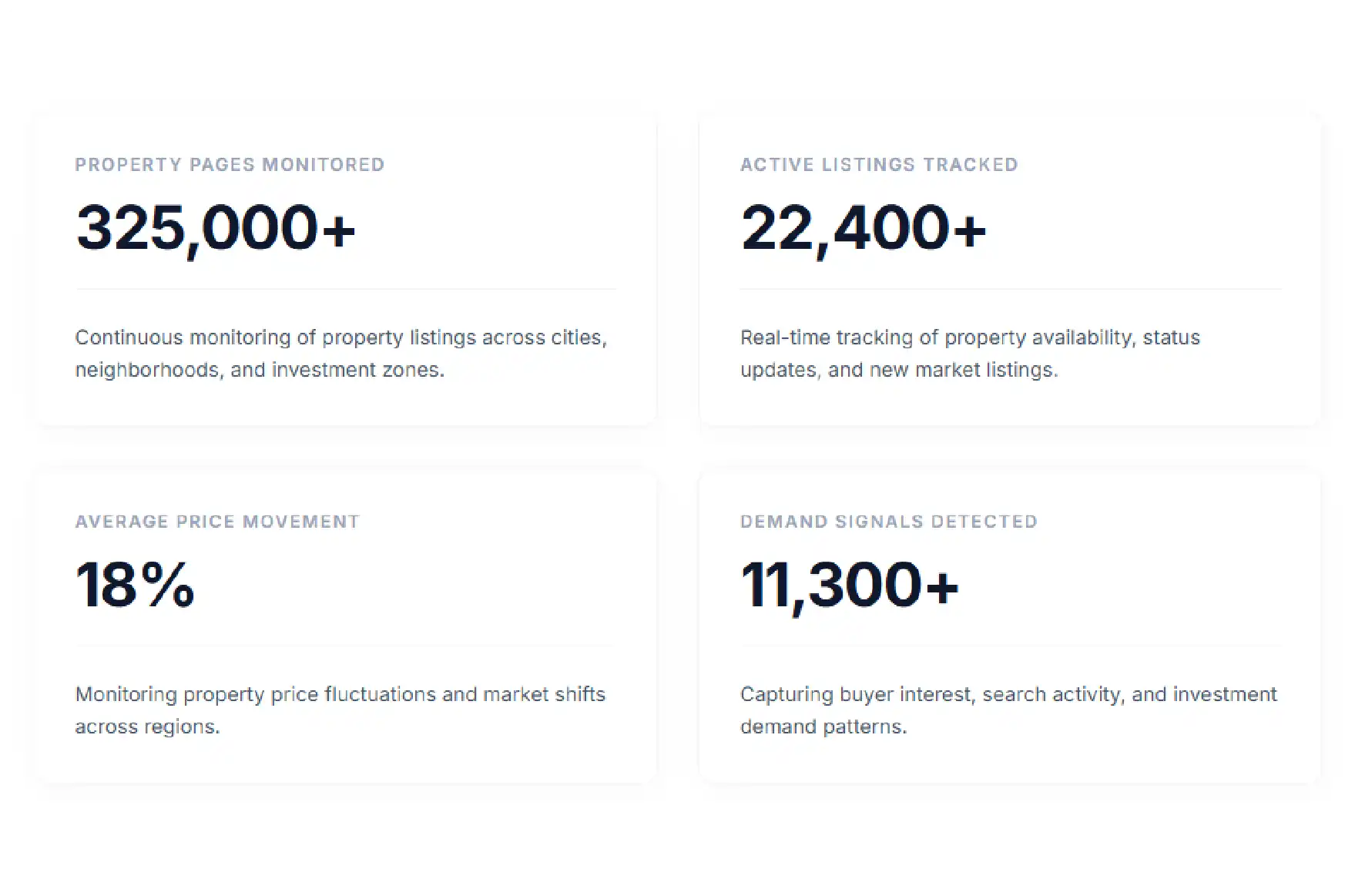
The analytics system analyzed property pricing fluctuations across multiple locations and categories. By tracking changes in listing values, rental expectations, and market activity, the client identified pricing opportunities more efficiently.
This helped investment teams make decisions based on current market intelligence rather than outdated reports.
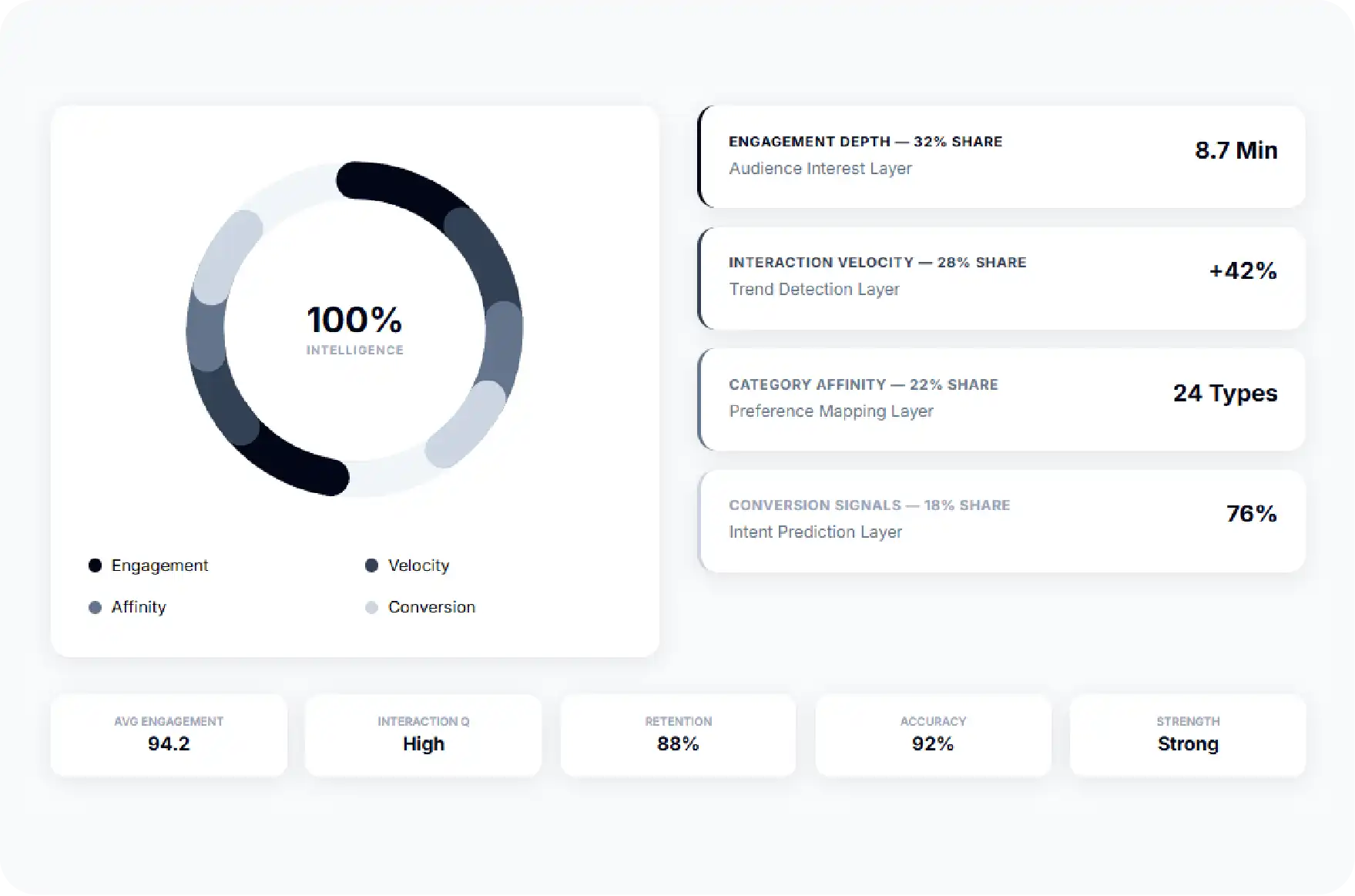
The structured dataset enabled deeper analysis of property demand patterns, buyer interest, and market engagement.
| Metric | Insight Captured | Business Impact |
|---|---|---|
| Property Pricing | Current and historical price movements | Improved valuation accuracy |
| Availability Status | Active and inactive listings | Better inventory planning |
| Location Trends | Regional demand patterns | Stronger investment decisions |
| Market Activity | Listing frequency changes | Early trend identification |
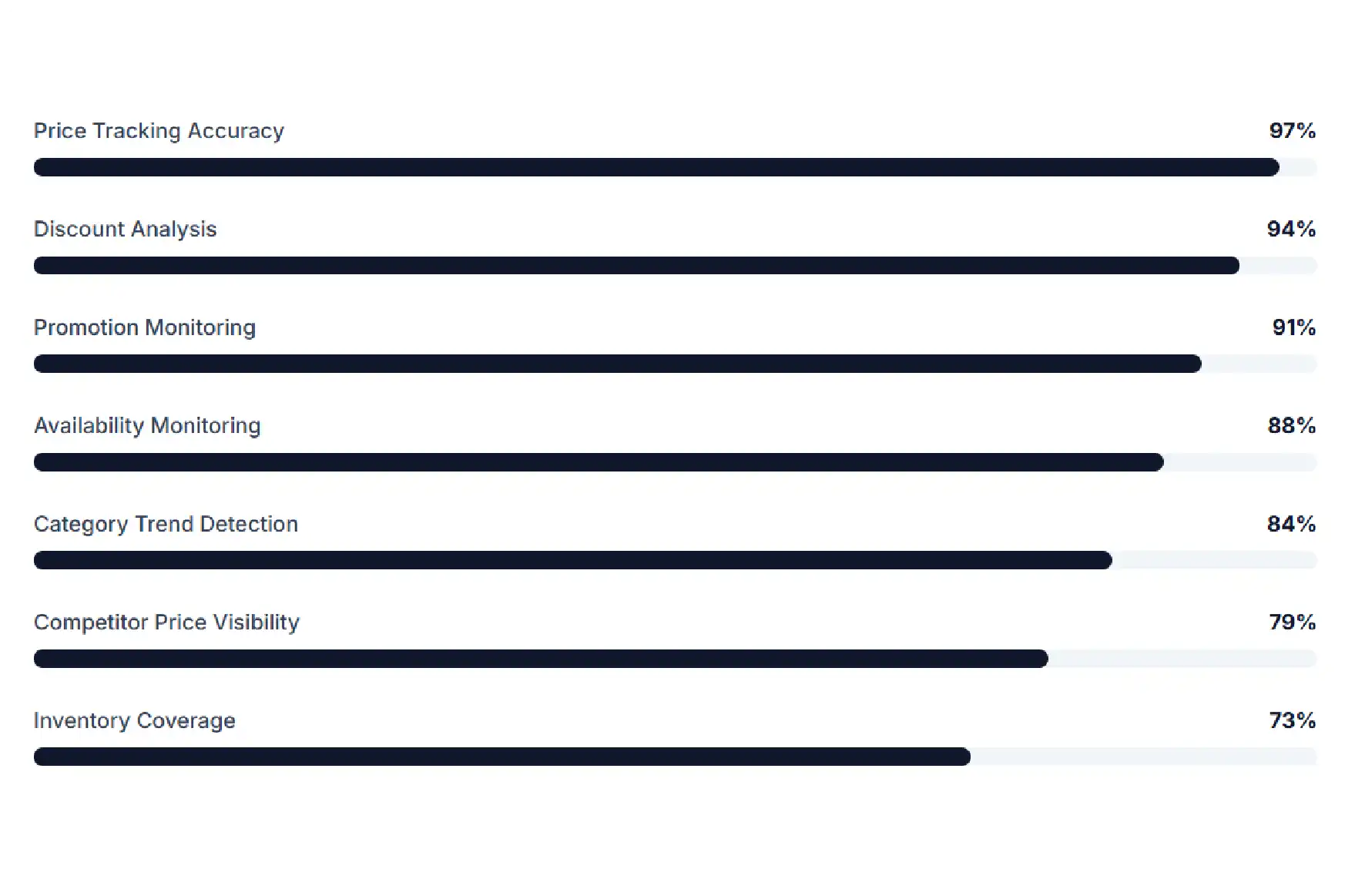
The automated system enabled large-scale monitoring of commercial property markets across multiple regions. Unlike manual processes, the solution continuously processed new listings, updated records, and market signals.
This scalability allowed the organization to expand coverage, improve research efficiency, and maintain competitive visibility in changing real estate environments.
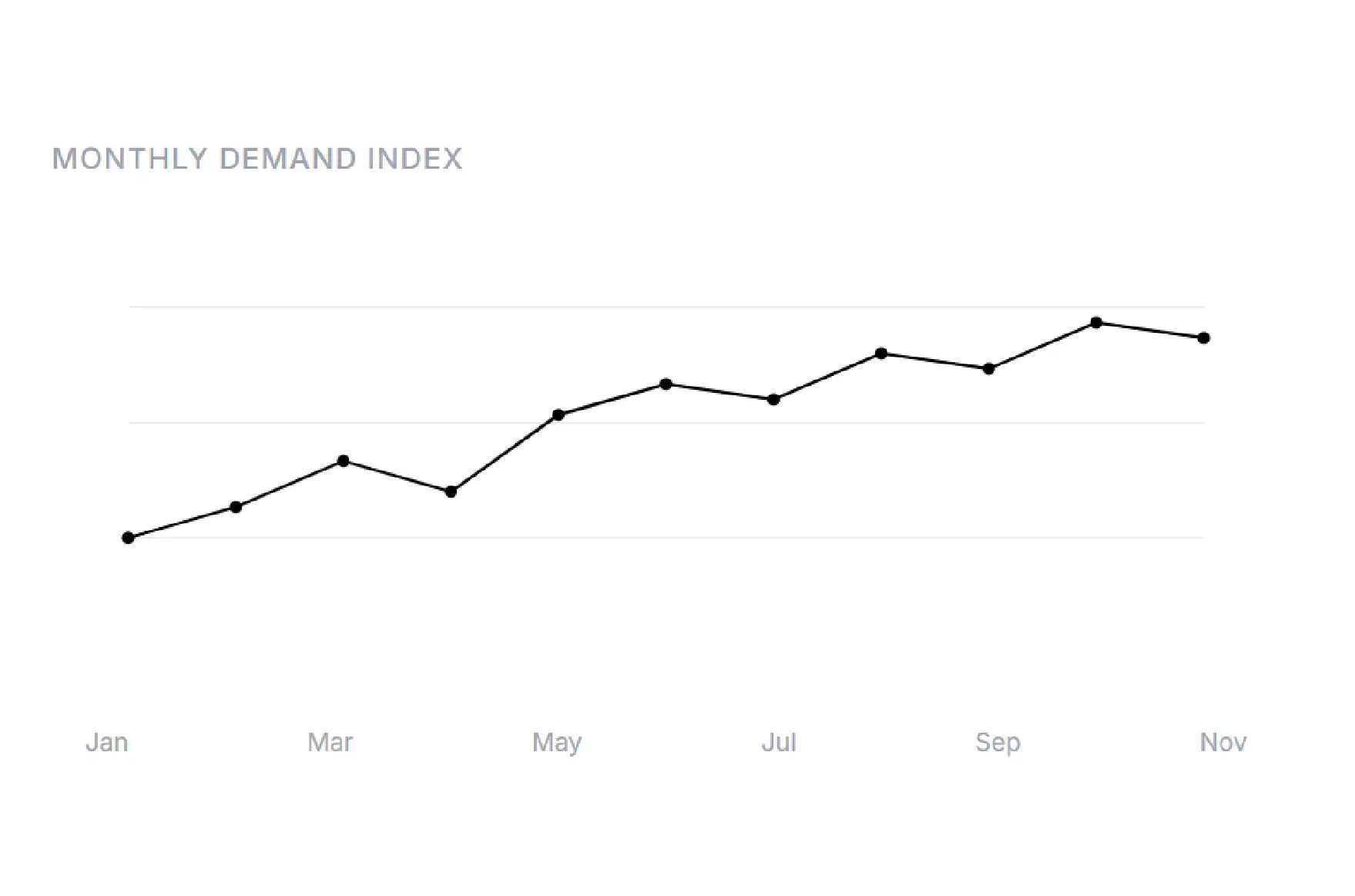
The dataset snapshot demonstrates commercial property performance analysis across different locations. It highlights how property type, pricing, availability, and demand indicators vary across markets.
| Property Type | Location | Price Range | Availability | Demand Signal | Key Insight |
|---|---|---|---|---|---|
| Office Space | New York | $2.8M | Active | High | Strong investor interest |
| Retail Property | Chicago | $1.9M | Active | Medium | Stable market activity |
| Warehouse | Dallas | $3.4M | Limited | High | Growing logistics demand |
| Industrial Unit | Miami | $2.2M | Moderate | Neutral | Balanced competition |
After implementing structured real estate intelligence, the client achieved improved visibility into property markets, faster analysis cycles, and better investment planning.
Our approach helps real estate organizations collect and organize large volumes of property information into structured intelligence systems that support analysis, reporting, and investment planning.
The solution removes fragmented data challenges by combining automated collection, data cleaning, and enrichment processes into a single workflow.
It enables businesses to monitor property market changes continuously, identify new opportunities, and understand competitive movements through reliable datasets.
Advanced validation techniques improve data quality by eliminating duplicate records, outdated entries, and inconsistent information.
The scalable framework supports growing data requirements while maintaining processing speed and accuracy across large property databases.
By converting raw property information into meaningful insights, organizations can make stronger decisions, improve forecasting, and optimize real estate strategies.
The data intelligence solution transformed the way we analyze commercial property markets. Earlier, our teams spent significant time collecting and organizing property information manually. The automated system improved our research speed, enhanced data accuracy, and provided valuable visibility into pricing and availability trends.
The structured dashboards helped our analysts understand market movements quickly and make informed investment decisions. The reliability and scalability of the solution exceeded our expectations and created a strong foundation for future real estate analytics initiatives.
— Director of Real Estate Analytics
The project resulted in a scalable real estate intelligence platform that converted raw property information into structured market insights. The client gained improved visibility into property pricing, availability, and demand movements.
Real Estate Property Data Extraction enabled continuous collection and processing of property information, improving analytics capabilities and supporting faster investment decisions.
The implementation improved operational efficiency by reducing manual research activities and creating reliable data workflows for market analysis.
Web Scraping Services provided the infrastructure needed to collect and process large volumes of property information efficiently while maintaining data quality.
The solution enhanced forecasting capabilities, strengthened competitive positioning, and supported long-term data-driven growth strategies.
Web Scraping API Services further enabled seamless integration of automated property data flows into existing analytics platforms and reporting systems.
Overall, the initiative delivered measurable improvements in research efficiency, market intelligence, and strategic decision-making.
Our advanced data solutions help businesses collect, analyze, and convert property information into valuable insights for smarter investment decisions and market strategies.
Start a projectProperty information such as listing details, pricing, availability, location attributes, property categories, and market indicators can be collected and structured for analysis.
Automated extraction provides updated market information faster, helping businesses analyze trends, compare properties, and identify opportunities without relying on manual research.
Yes, the system can continuously track listing changes, inventory updates, and market movements to provide current property intelligence.
Yes, the framework is designed to handle increasing property records and expanding market coverage while maintaining processing accuracy and performance.
Real estate firms, investment companies, brokers, analytics providers, and property marketplaces can use structured property intelligence for research and strategic planning.
Fields marked * are required. Everything else just helps us scope faster — skip what you don't know yet.