

Introduction
Modern electronics retailers generate enormous amounts of product information, including prices, specifications, discounts, ratings, stock status, and delivery details. Businesses that want to analyze this information at scale can use Web Scraping MediaMarkt data API solutions to collect publicly accessible retail data and convert it into structured datasets.
For businesses conducting competitive research, MediaMarkt product data scraping can provide valuable information about electronics, appliances, smartphones, laptops, televisions, gaming devices, cameras, accessories, and other products. The extracted information can support pricing intelligence, assortment analysis, product comparison, and market research.
Organizations can also use MediaMarkt API data extraction workflows to automate repetitive data collection instead of manually visiting product pages. Depending on the website structure and permitted access methods, an automated system can collect product information, normalize it, validate the records, and deliver the output through JSON, CSV, Excel, databases, or API endpoints.
MediaMarkt operates across multiple European markets, and individual country websites can have different product assortments, prices, availability information, and promotional campaigns. Therefore, a scalable extraction architecture can be configured according to specific countries, categories, brands, products, and business requirements.
What Is MediaMarkt Web Scraping?
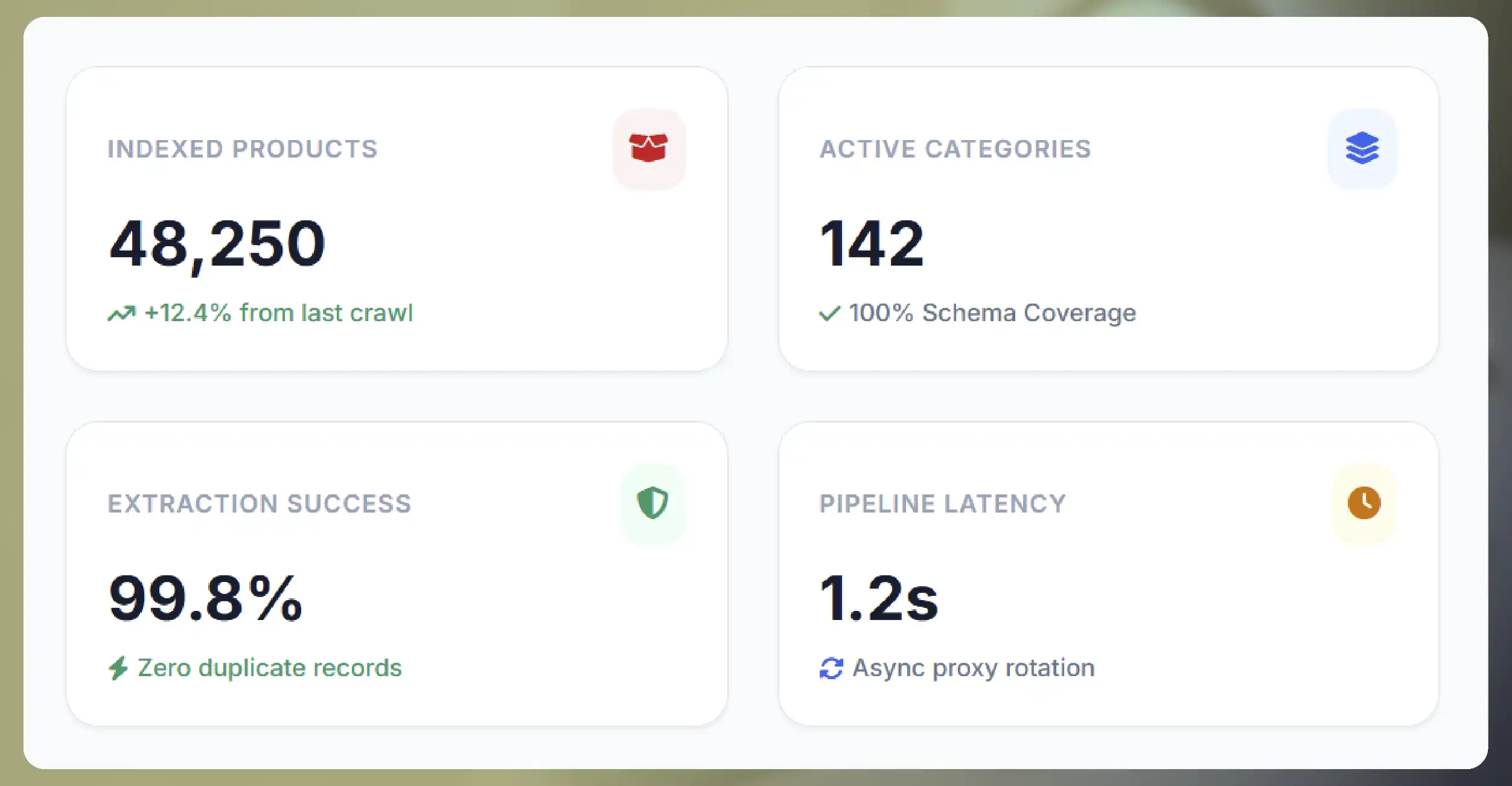
MediaMarkt web scraping is the automated process of collecting publicly available information from relevant MediaMarkt webpages and transforming it into structured business data. Instead of relying on manual research, companies can establish an automated pipeline capable of processing large numbers of product URLs.
A typical workflow begins by identifying category pages and product listings. The scraper then discovers individual product pages, extracts selected attributes, cleans the information, removes duplicates, and stores the resulting records.
For electronics businesses, extracted information can include:
- Product name
- Brand
- SKU or product identifier
- Category
- Subcategory
- Product URL
- Current price
- Previous or reference price when displayed
- Discount information
- Product specifications
- Product description
- Images
- Ratings
- Review counts
- Availability
- Delivery information
- Store pickup information
- Promotional labels
- Product variants
The exact fields depend on the website, target market, publicly accessible content, and project requirements.
MediaMarkt Product Catalog Data Collection
Building a complete product database can be difficult when information changes frequently. A structured MediaMarkt product catalog scraping workflow can automate catalog collection across selected categories and product groups.
For example, businesses analyzing laptops may want processor details, RAM, storage, screen size, graphics, operating system, brand, model number, price, and availability. A television dataset could contain screen size, resolution, display technology, refresh rate, smart-TV features, brand, model, price, and stock information.
Normalization is an important part of this process. Different products may display technical specifications using different naming conventions or formats. Data processing can standardize units, attribute names, categories, brands, and product identifiers so that records can be compared consistently.
Historical catalog snapshots can also help organizations identify newly introduced products, discontinued models, assortment changes, and category expansion.
How Does MediaMarkt Price Monitoring Work?
Retail prices can change because of promotions, seasonal events, inventory levels, product launches, and competitive pressure. Businesses therefore need updated pricing information rather than relying on occasional manual checks.
A structured MediaMarkt price monitoring system can periodically collect displayed prices and compare them against previous records. Each observation can contain the product identifier, previous price, current price, timestamp, currency, discount information, and product URL.
For example, a monitoring system may identify that a laptop has moved from one price level to another. The system can calculate the percentage change and store the event in a historical database.
Such information can help retailers understand:
- Competitor pricing movements
- Promotional frequency
- Discount depth
- Product-level price volatility
- Seasonal pricing behavior
- Pricing opportunities
- Market positioning
Automated alerts can also be configured when prices move beyond predefined business thresholds.
Stay ahead of retail trends with accurate, structured MediaMarkt product, price, and availability data. Connect with iWeb Data Scraping today to create a customized extraction solution that supports smarter pricing, market research, and competitive analysis.
How Can Businesses Track Competitor Prices?
Retailers frequently need to understand how their products compare with similar offerings available from competing stores. A structured MediaMarkt competitor price tracking solution can collect competitor pricing information and combine it with internal product data.
Product matching is particularly important. Two products may appear similar but differ in storage capacity, color, configuration, model number, bundle contents, or technical specifications.
Matching can therefore use identifiers such as manufacturer part numbers, model numbers, EANs, GTINs, UPCs, or normalized brand-model combinations where available.
Once comparable products are identified, businesses can calculate price differences and determine whether their products are positioned higher, lower, or similarly to comparable MediaMarkt listings.
This information can support dynamic pricing strategies, promotional planning, competitive benchmarking, and assortment decisions.
Why Is Product Availability Monitoring Important?
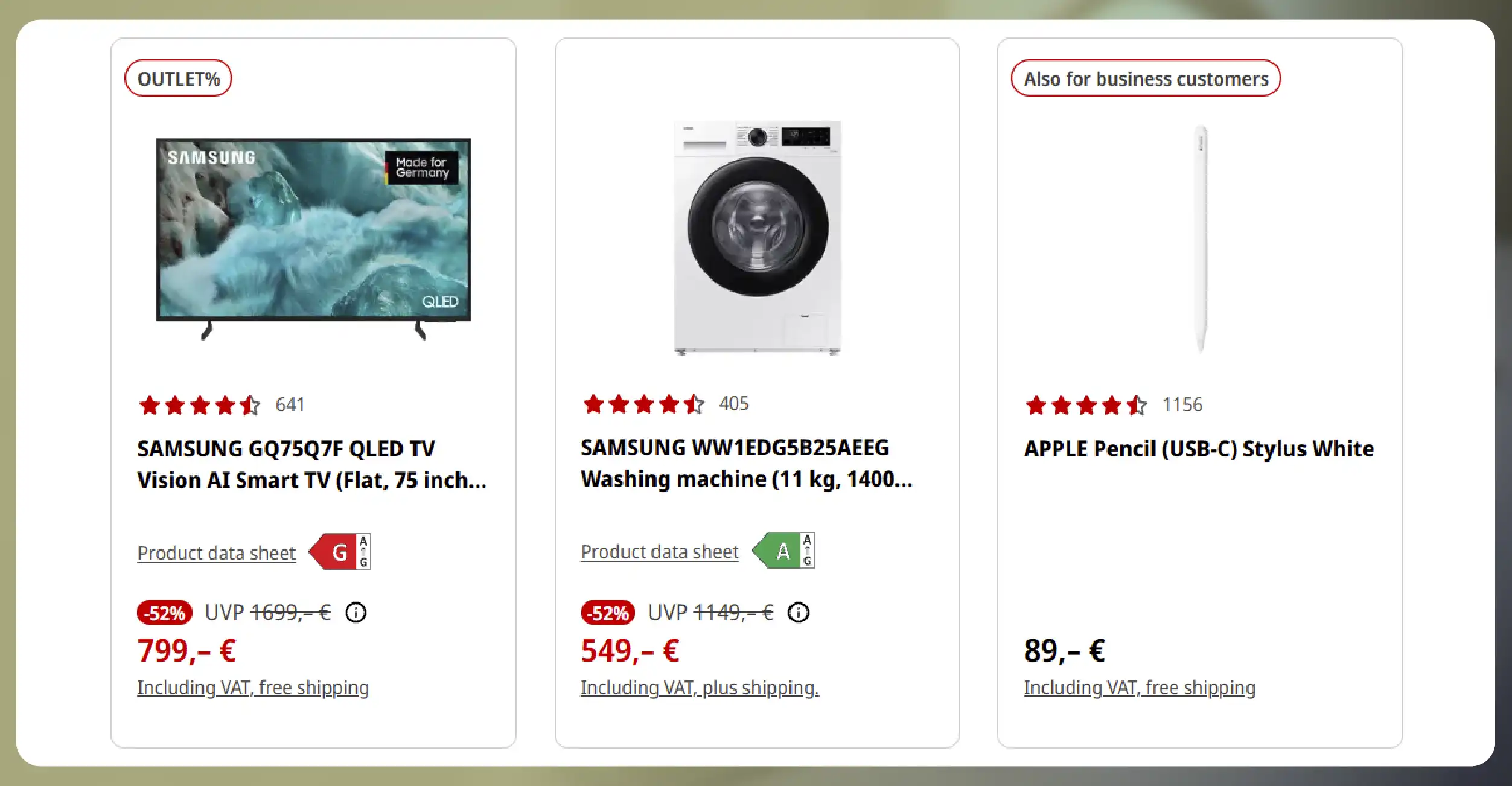
Price information alone does not provide a complete picture of retail competition. A competitor may list a product at an attractive price, but that product may have limited availability or be unavailable for delivery.
With MediaMarkt product availability monitoring, organizations can track publicly displayed availability states and, where exposed, store or delivery-related information.
Availability records can be collected repeatedly to create a historical inventory dataset. This can reveal products that frequently become unavailable, products that return to stock, and categories experiencing high availability fluctuations.
For businesses selling similar products, availability intelligence can provide additional context for pricing decisions. A competitor's low price combined with limited availability may represent a different competitive situation from a low price attached to consistently available inventory.
MediaMarkt Data API Extraction Process
An automated extraction project generally involves several interconnected stages.
Data Source Discovery
The first stage identifies relevant category pages, search
results, product pages, pagination structures, filters, and other publicly accessible sources. This
creates a map of the information that needs to be collected.
Automated Extraction
The extraction engine retrieves the required pages or
permitted data endpoints and identifies relevant fields. Python, Scrapy, Requests, BeautifulSoup,
Selenium, Playwright, or Node.js-based technologies can be selected according to the website
architecture.
Data Parsing
Raw webpage information is transformed into structured attributes.
Prices, product names, specifications, ratings, availability, and identifiers are separated into
dedicated fields.
Data Cleaning
Duplicate records, missing values, inconsistent units, malformed
URLs, and formatting differences can be identified and corrected through validation rules.
Product Matching
Where competitive analysis is required, products from MediaMarkt
can be matched against another retailer's catalog using product identifiers and normalized
attributes.
Storage and Delivery
Clean records can be stored in databases or delivered as
JSON, CSV, Excel, cloud files, or API responses.
Monitoring and Updates
Scheduled jobs can repeatedly collect selected products or
categories and compare new observations with historical records.
Technologies Supporting Large-Scale Extraction
A scalable solution requires more than a basic scraper. Crawling frameworks such as Scrapy can manage large collections of URLs, while browser automation tools can support pages where content depends on client-side rendering.
Python and Pandas can be used for data transformation, validation, and normalization. PostgreSQL and other databases can maintain structured historical datasets.
Large projects may also incorporate distributed processing, cloud infrastructure, task queues, caching, retries, logging, and monitoring. These components help maintain reliable data pipelines when thousands or millions of records need to be processed.
Technical implementation should also respect applicable laws, website terms, access restrictions, and reasonable request practices.
Business Applications of MediaMarkt Data
Collected retail information can support multiple business functions.
Competitive Intelligence
Businesses can compare their products, prices,
promotions, and availability against comparable MediaMarkt listings.
Market Research
Historical product and pricing datasets can help analysts
identify category trends, pricing patterns, and assortment changes.
Price Optimization
Retailers can use competitive observations to inform pricing
decisions and promotional strategies.
Product Intelligence
Brands can monitor how their products are presented,
positioned, priced, and made available across the retail ecosystem.
E-Commerce Analytics
Structured product information can feed dashboards,
analytics platforms, comparison engines, and internal business intelligence systems.
How iWeb Data Scraping Can Help You?
Customized Extraction Solutions
iWeb Data Scraping can build customized workflows around selected products, categories, brands, specifications, pricing fields, promotions, ratings, and availability attributes required for business analysis.
Automated Data Collection
Scheduled extraction pipelines can collect updated information at defined intervals, reducing repetitive manual research and helping organizations maintain current datasets for competitive intelligence and market analysis.
Data Cleaning and Standardization
Collected records can be cleaned, normalized, deduplicated, and transformed into consistent structures, making product information easier to analyze across categories, brands, markets, and competing retailers.
Historical Data Development
iWeb Data Scraping can maintain historical snapshots containing timestamps and product-level observations, enabling businesses to analyze pricing movements, assortment changes, promotional activity, and availability trends.
Scalable Data Delivery
Businesses can receive processed information through structured formats, databases, cloud storage, or API-based delivery systems, allowing extracted data to integrate with existing analytics and operational platforms.
Conclusion
Automating the collection of MediaMarkt retail information can help businesses transform constantly changing product pages into structured and actionable datasets. Product information, prices, specifications, promotions, ratings, and availability can support competitive intelligence, market research, catalog analysis, and pricing decisions.
A reliable extraction architecture should combine accurate data discovery, product matching, validation, scheduled updates, historical storage, and scalable delivery. Country-specific differences should also be considered because product catalogs, pricing, promotions, and availability can vary between MediaMarkt markets.
For organizations seeking scalable Web Scraping API Services, an automated Web scraper can provide structured data without relying on repetitive manual collection. Combining these capabilities with Real-Time Web Scraping can help businesses respond more quickly to changes in prices, products, promotions, and availability while developing stronger retail intelligence systems.
FAQs
Depending on publicly accessible pages and project requirements, data may include product names, brands, categories, prices, specifications, images, ratings, reviews, promotions, availability, delivery information, and product identifiers.
Yes. Automated workflows can periodically collect publicly displayed prices and compare current observations with historical records to identify price changes, discounts, and promotional movements.
Where availability information is publicly displayed, automated workflows can monitor product status and, where exposed, delivery or store-related availability information.
The frequency depends on business requirements, website behavior, permitted access, and the type of information being monitored. Scheduled workflows can be configured for periodic collection.
Processed data can be delivered in formats such as JSON, CSV, Excel, databases, cloud storage, or API responses according to the project's integration requirements.