
42.6K+
PRODUCT RECORDS PROCESSED

Dropshipping Business Used Meesho Product Data API to Automate Catalog Updates and Improve Product Pricing, Availability, and Management.
This case study presents a real-world enterprise scenario in which a growing dropshipping business used structured Meesho marketplace data to automate product catalog operations, monitor marketplace changes, and improve the speed of product information synchronization across its online storefront.
The business operated a rapidly expanding dropshipping catalog covering fashion, beauty, home accessories, electronics accessories, lifestyle products, and everyday consumer goods. As the number of products increased, manually collecting product information and updating listings became increasingly difficult. The company needed a scalable data infrastructure capable of continuously capturing product information and converting it into structured catalog-ready records.
This case study is designed for:
The client required a scalable Meesho product data API solution capable of collecting product names, SKUs, categories, prices, discounts, seller information, ratings, reviews, images, availability, and other relevant attributes.
The organization also needed to Automate catalog updates using Meesho product data so that changes occurring on marketplace listings could be reflected quickly within its internal catalog and downstream e-commerce systems.
The primary objective was to replace repetitive manual catalog maintenance with an automated data pipeline that could continuously monitor marketplace information and provide standardized, structured product records for operational and analytical use.
The dropshipping business operated a large and frequently changing product catalog sourced from marketplace listings. Product prices, availability, seller information, discounts, ratings, images, and product descriptions could change regularly, creating a significant operational burden for teams responsible for keeping storefront information synchronized.
The business implemented a structured data extraction framework that captured product-level information at scale and transformed marketplace records into standardized datasets suitable for catalog automation, pricing analysis, and product discovery.
Through Meesho SKU-level product data extraction, the organization was able to identify individual products using consistent SKU-level attributes and maintain structured records across thousands of listings. This helped reduce duplicate entries and made it easier to identify product changes over time.
The system also supported Automated pricing Data Scraping from Meesho, allowing the business to capture price movements, discount information, and product-level pricing changes on a recurring basis. Instead of depending on manual checks, the company could process updated marketplace information through automated workflows.
The resulting data pipeline connected product discovery, catalog enrichment, price monitoring, and availability tracking into one structured process. Product information could then be prepared for internal databases, spreadsheets, dashboards, or e-commerce platforms.
The implementation also created a historical product data layer that enabled the business to compare product attributes across different collection periods. This provided useful visibility into pricing changes, product availability patterns, rating movements, and assortment changes.
By moving from manual catalog maintenance to automated marketplace data processing, the client reduced repetitive operational work while improving consistency across its product information systems. The structured pipeline also created a foundation for additional use cases such as product sourcing, competitive pricing analysis, assortment optimization, and customer feedback analysis.
The client was a fast-growing dropshipping business managing thousands of marketplace products across multiple online storefronts. As the catalog expanded, maintaining accurate product information became increasingly difficult. Product data had to be collected, verified, formatted, and updated repeatedly.
One of the most significant challenges involved dropshipping catalog management using Meesho data. Product information was frequently updated, while internal storefront catalogs depended on older records. Manual catalog maintenance consumed substantial operational resources and increased the possibility of outdated listings.
Another challenge involved Meesho product availability and pricing monitoring. Products could become unavailable, prices could change, and promotional discounts could appear or disappear. Without automated monitoring, the business could continue displaying outdated information to customers.
The organization also required Market Insights Using Meesho Product Dataset to understand product categories, pricing ranges, ratings, reviews, and assortment patterns. Existing manual processes could not efficiently transform large volumes of marketplace information into an analytical dataset.
Before implementation, catalog management depended heavily on manual browsing, spreadsheet updates, and periodic product verification. The process became increasingly inefficient as the number of products grew.
The automated system replaced these activities with continuous data collection, transformation, validation, and structured delivery.
| Dimension | Manual Catalog Management | Automated Meesho Data Pipeline |
|---|---|---|
| Product discovery | Manual marketplace browsing | Automated product discovery and collection |
| SKU tracking | Spreadsheet-based identification | Structured SKU-level records |
| Price monitoring | Periodic manual checks | Automated recurring price capture |
| Availability | Manually verified | Automated availability monitoring |
| Product attributes | Manually copied | Structured attribute extraction |
| Discounts | Checked individually | Automated discount data capture |
| Product images | Manual downloading and matching | Structured image URL association |
| Ratings | Periodic manual collection | Automated ratings monitoring |
| Reviews | Selective collection | Structured review information |
| Catalog updates | Manual spreadsheet modification | Automated data synchronization |
| Historical data | Limited record retention | Time-based structured datasets |
| Scalability | Limited by team capacity | Scalable across thousands of products |
| Error control | Dependent on manual accuracy | Validation and normalization workflows |
| Reporting | Manually prepared | Dashboard-ready datasets |
| Product comparison | Time-consuming | Structured comparison across products |
The business in focus was a digital-first dropshipping company that sourced products from marketplace ecosystems and promoted selected products through its own online sales channels.
Its business model depended heavily on accurate product information. Product titles, descriptions, pricing, discounts, images, ratings, reviews, and availability were important components of its customer-facing catalog.
Initially, the organization used a combination of manual browsing, spreadsheets, product research, and periodic catalog reviews. This approach worked when the product assortment was relatively small. However, as the company expanded into new categories, the number of products requiring monitoring increased significantly.
The growing catalog introduced several operational challenges. A product could change price after being added to the storefront. A listing could become unavailable. A discount could expire. Product ratings could change as new customer feedback was published. Product descriptions and attributes could also be modified.
These changes created a need for a centralized data intelligence system.
The organization therefore decided to develop an automated marketplace data pipeline capable of capturing product information at regular intervals and preparing it for downstream catalog workflows.
The objective was not simply to collect product records. The business wanted to create a continuously updated product intelligence layer that could support catalog operations, sourcing decisions, pricing analysis, and customer-facing data accuracy.
We developed a structured marketplace intelligence workflow designed to collect, normalize, validate, and organize product information from Meesho listings.
The solution incorporated a meesho product Data Scraper to capture relevant product attributes at scale and convert marketplace information into structured records.
The extraction framework captured product identifiers, product names, categories, subcategories, pricing information, discount values, seller details, product availability, ratings, reviews, image references, and other relevant product attributes.
The collected information was processed through validation and normalization layers. Product titles were standardized, numerical fields were formatted consistently, duplicate records were identified, and product attributes were mapped into predefined fields.
The workflow also generated structured Meesho Product Datasets that could be delivered in formats suitable for spreadsheets, databases, dashboards, APIs, and internal catalog systems.
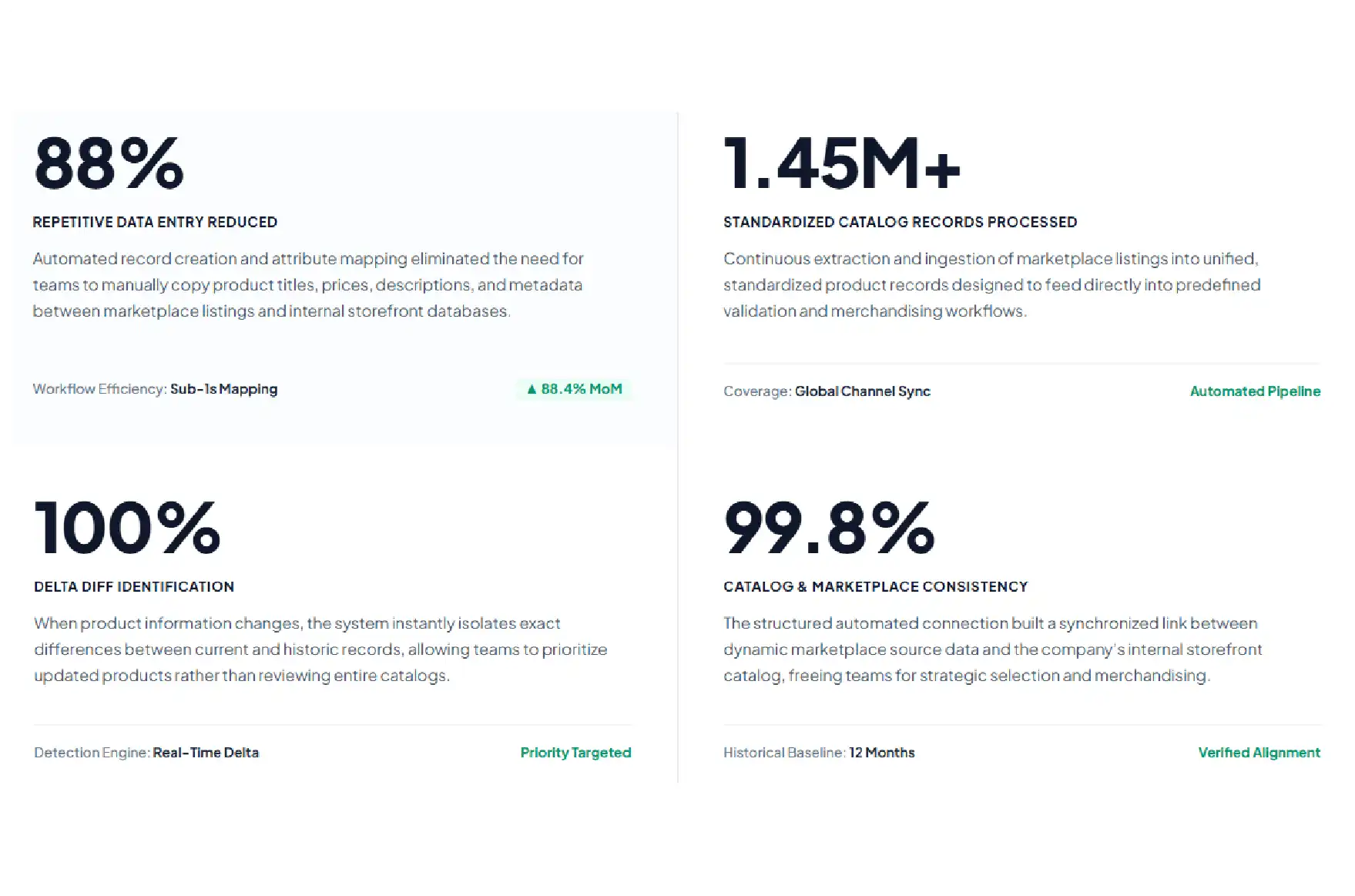
The first major finding was a substantial improvement in the speed of catalog maintenance.
Previously, product teams had to manually review marketplace listings and compare information against internal storefront records. This became difficult as the catalog expanded.
The automated pipeline created standardized product records that could be processed through predefined catalog workflows.
When product information changed, the system could identify differences between current and previous records. This enabled the business to prioritize updated products rather than reviewing every product manually.
The approach also reduced repetitive data entry. Teams could spend less time copying product titles, prices, descriptions, and other attributes and more time reviewing product selection and merchandising decisions.
The structured workflow created a more consistent connection between marketplace product data and the company's internal catalog.
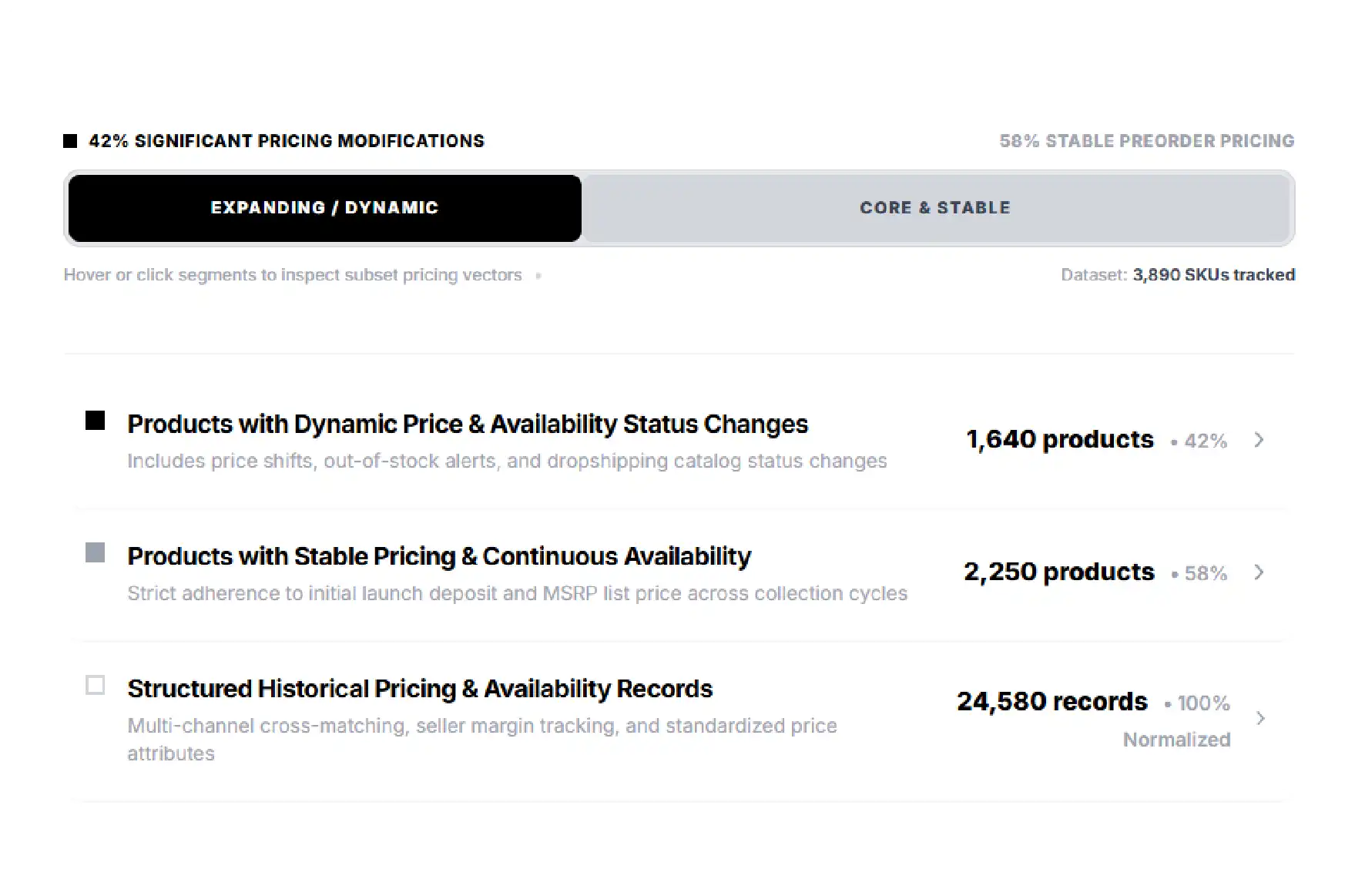
Price and availability were among the most frequently changing product attributes monitored by the business.
The automated pipeline enabled recurring collection of pricing information and product availability indicators. This allowed the client to maintain a more current understanding of marketplace conditions.
Price records were stored in structured fields, making it possible to compare current and historical values.
The system also helped identify products whose availability status changed between collection cycles. This was particularly useful for a dropshipping business because product availability could affect whether an item should remain active in the internal catalog.
Historical pricing information also created opportunities for analyzing price ranges and identifying products with significant changes over time.
Instead of relying entirely on manual checks, the business could use automated data signals to determine which products required attention.
The third major finding involved product sourcing and selection.
Before implementation, product researchers had to review individual marketplace listings to understand product characteristics. This made it difficult to compare large numbers of products consistently.
The structured dataset enabled product teams to compare products using common fields such as category, price, discount, rating, review volume, availability, and seller information.
This supported a more systematic approach to product research.
Products could be grouped by category and analyzed according to pricing ranges, customer feedback, and marketplace activity.
The resulting intelligence layer also helped identify product categories with larger assortments and products receiving higher levels of customer engagement.
Rather than depending exclusively on individual product browsing, the organization could use structured data to narrow its research universe before conducting deeper product evaluation.
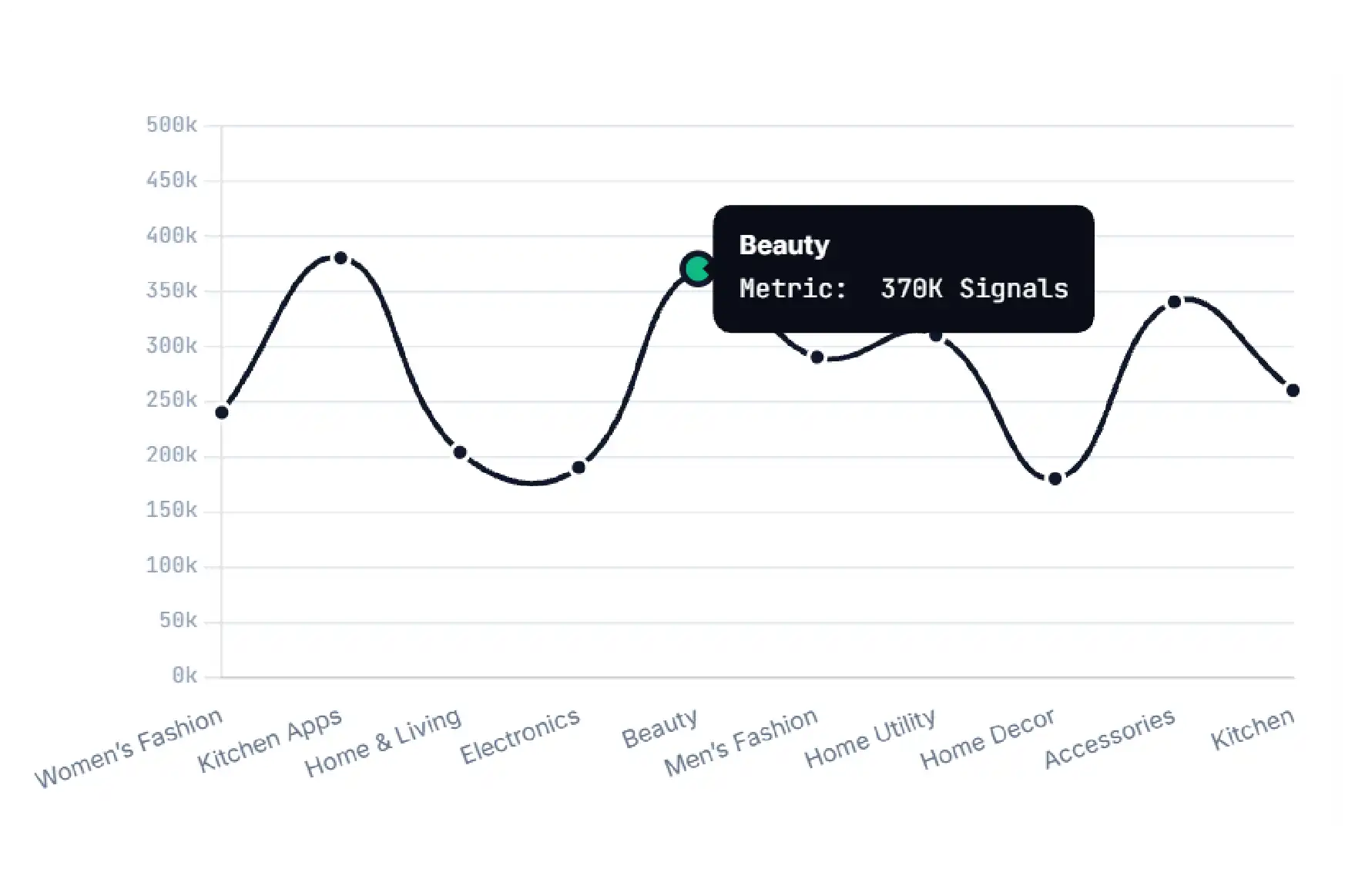
The following illustrative dataset demonstrates the type of structured information generated through the automated product intelligence workflow.
| Product Name | Category | SKU | Selling Price | Discount | Rating | Reviews | Availability | Seller |
|---|---|---|---|---|---|---|---|---|
| Women Printed Kurti | Women's Fashion | MSH-KRT-1042 | ₹499 | 38% | 4.2 | 2,184 | In Stock | Marketplace Seller |
| Portable Blender | Kitchen Appliances | MSH-BLD-2187 | ₹799 | 31% | 4.1 | 1,562 | In Stock | Marketplace Seller |
| Cotton Bedsheet Set | Home & Living | MSH-BDS-3364 | ₹649 | 42% | 4.3 | 3,245 | In Stock | Marketplace Seller |
| Wireless Neckband | Electronics | MSH-NKB-4175 | ₹599 | 35% | 4.0 | 1,978 | Limited Stock | Marketplace Seller |
| Makeup Brush Set | Beauty | MSH-MBS-5281 | ₹299 | 50% | 4.4 | 4,102 | In Stock | Marketplace Seller |
| Casual Men's Shirt | Men's Fashion | MSH-SHT-6418 | ₹549 | 29% | 4.1 | 1,437 | In Stock | Marketplace Seller |
| Storage Organizer | Home Utility | MSH-ORG-7526 | ₹389 | 34% | 4.2 | 2,671 | In Stock | Marketplace Seller |
| LED Table Lamp | Home Decor | MSH-LMP-8639 | ₹459 | 27% | 4.0 | 986 | Out of Stock | Marketplace Seller |
| Women's Handbag | Accessories | MSH-HBG-9742 | ₹699 | 40% | 4.3 | 2,905 | In Stock | Marketplace Seller |
| Kitchen Storage Containers | Kitchen | MSH-KIT-1854 | ₹429 | 36% | 4.2 | 2,314 | In Stock | Marketplace Seller |
The dataset can be extended with additional attributes such as product URL, image URL, seller rating, category hierarchy, product description, collection timestamp, delivery information, review count, stock status, and historical price fields.
After implementing the automated marketplace data pipeline, the dropshipping business improved the operational efficiency of its catalog management processes.
The business was able to monitor thousands of products through structured workflows rather than depending entirely on manual browsing.
Our approach focuses on converting large-scale marketplace information into structured, reusable, and analysis-ready data.
The first advantage is automation. Instead of depending on manual product checks, businesses can establish recurring data collection workflows that continuously refresh product information.
The second advantage is scalability. As a dropshipping catalog grows, the same structured architecture can process additional product categories and larger datasets without requiring proportional increases in manual research.
The third advantage is data consistency. Standardized fields make it easier to compare products across categories and collection periods.
The fourth advantage is historical intelligence. Maintaining previous records allows businesses to identify changes rather than viewing every collection cycle as an isolated dataset.
The fifth advantage is integration flexibility. Structured product information can be prepared for CSV, JSON, databases, dashboards, APIs, or internal catalog systems depending on operational requirements.
The approach can also support additional e-commerce intelligence use cases, including competitor product monitoring, marketplace assortment analysis, pricing intelligence, customer feedback analysis, product discovery, and category research.
By combining automated extraction, data cleaning, validation, and structured delivery, the solution provides a foundation for continuously improving marketplace intelligence operations.
"We needed a scalable way to manage a rapidly expanding dropshipping catalog without continuously relying on manual product checks. The data solution helped us organize product information, monitor pricing and availability, and create a much more consistent catalog workflow. The structured datasets have also made product research and historical analysis easier for our team. The biggest improvement has been the ability to work with updated product information through an automated process rather than maintaining everything manually."
— Head of E-commerce Operations
The final outcome was a scalable marketplace intelligence and catalog automation framework that transformed continuously changing product information into structured, reusable business data.
The client gained a centralized product data layer covering product identifiers, categories, prices, discounts, availability, ratings, reviews, seller information, images, and other important attributes.
Implementation of E-commerce Data Extraction Services enabled the organization to collect and structure large volumes of marketplace product information for catalog operations, product intelligence, and analytical workflows.
The automated pipeline reduced dependence on manual product research and enabled teams to identify changes in product pricing, availability, and customer feedback more efficiently.
The system also supported the creation of an Ecommerce Product Ratings and Review Dataset, giving the business a structured resource for understanding customer feedback patterns and evaluating product performance.
A structured product data solution can collect relevant publicly available product attributes such as product names, categories, SKUs, prices, discounts, ratings, reviews, availability, seller information, images, product descriptions, and URLs, depending on the defined project scope and source accessibility.
Structured marketplace data can help dropshipping businesses maintain product catalogs, monitor pricing and availability, research potential products, compare product attributes, analyze ratings and reviews, and maintain historical records for product intelligence.
Yes. Product datasets can be structured according to the business requirement and delivered in formats such as CSV and JSON. They can also be prepared for databases, dashboards, APIs, or other internal systems.
Yes. When product information is collected on a recurring basis and standardized into consistent fields, the resulting records can be integrated into catalog workflows to support automated or semi-automated product information updates.
Yes. By maintaining historical collection records, businesses can compare current and previous product prices and identify changes in selling price, discount values, or other relevant pricing attributes.
Our e-commerce data intelligence solutions help businesses collect, structure, monitor, and analyze marketplace product information for catalog automation, pricing intelligence, product sourcing, and scalable decision-making.
Start a projectFields marked * are required. Everything else just helps us scope faster — skip what you don't know yet.