How can NoBroker Rental Price Data Scraping Help in Understanding Property Pricing Patterns?
Introduction
The real estate rental market in India is rapidly evolving due to urban expansion, increased migration to metro cities, and growing demand for flexible housing options. Platforms like NoBroker have become essential data sources for understanding rental pricing behavior, property availability, and shifting demand patterns. Because of the large volume of listings and frequent updates, structured data extraction has become a key tool for analysts, prop-tech companies, and investors who want to make informed decisions.
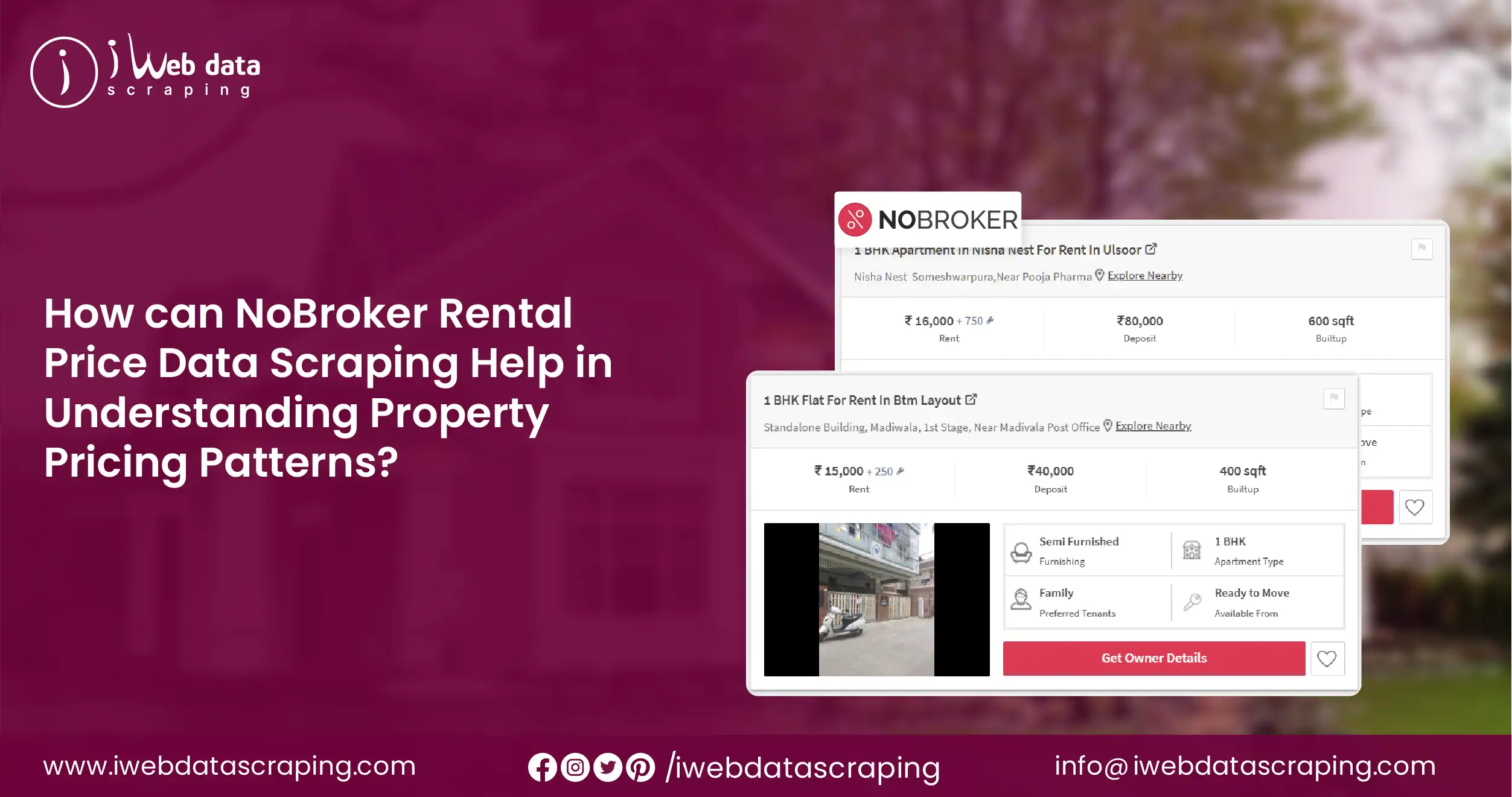
In this environment, NoBroker rental price data scraping is widely used to collect rental pricing information from listings and convert it into structured datasets for analysis. This helps in identifying how rent varies across locations, property types, and market conditions.
The process also includes strategy to Extract NoBroker property listings, which allows aggregation of detailed property information such as location, size, furnishing status, and rental value. This creates a foundation for building comparative pricing models.
Another important aspect is Rental property availability Data Scraping from NoBroker, which enables continuous tracking of active and newly listed rental properties. This helps platforms and businesses maintain updated rental inventories for users.
Understanding Rental Market Data from NoBroker
Rental housing data reflects real-world economic and urban development trends. Each listing contains valuable information about demand, affordability, and regional growth. However, the raw data is often unstructured and inconsistent, making it difficult to analyze directly.
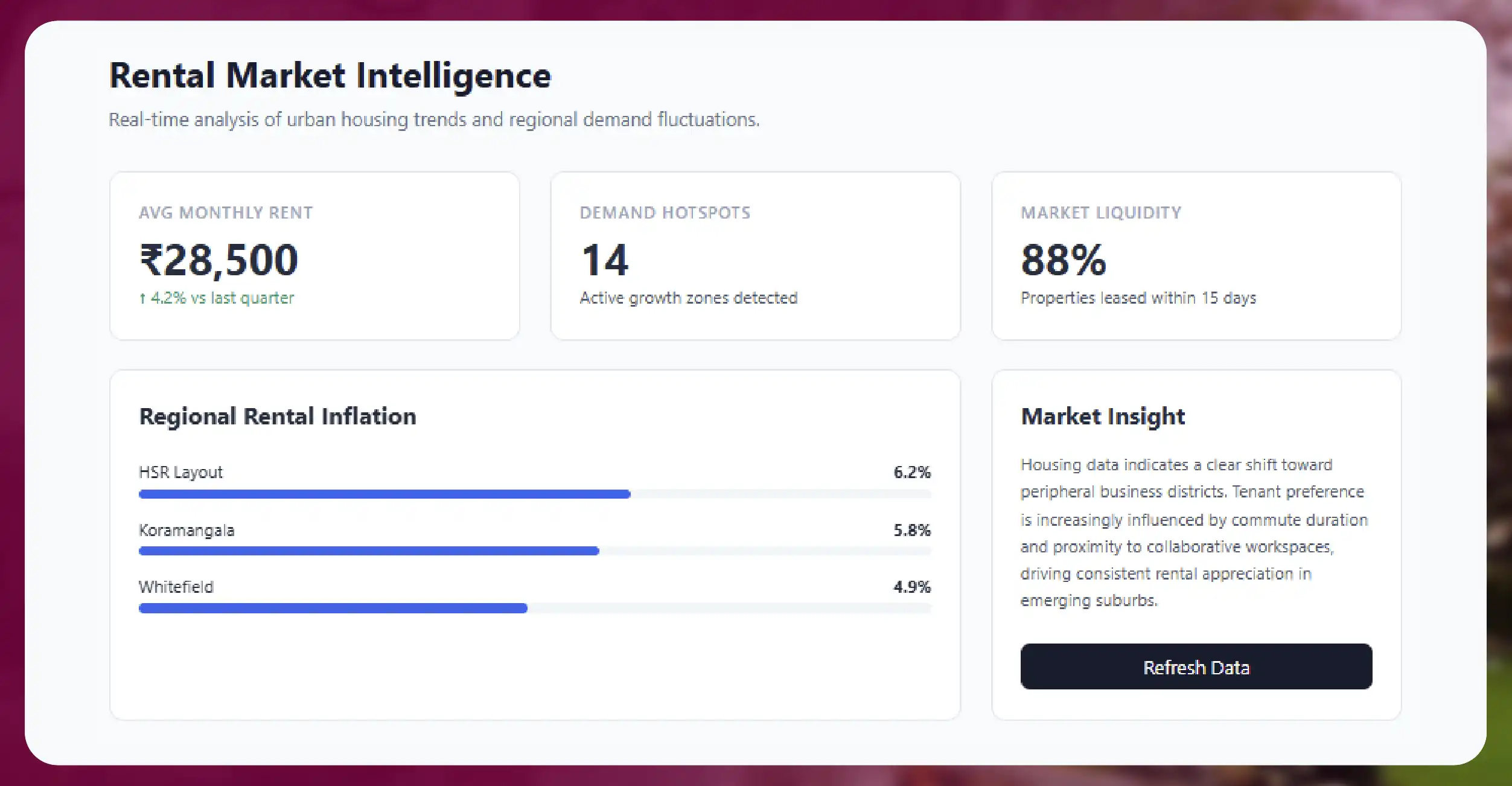
Through systematic extraction and structuring, this data becomes useful for identifying patterns such as rental inflation, demand hotspots, and seasonal price changes. Analysts can compare multiple neighborhoods and detect shifts in rental behavior over time.
The increasing importance of Rental market trend analysis Using NoBroker Data has encouraged companies to build advanced analytics systems that continuously monitor rental fluctuations and provide actionable insights for investors and tenants.
Real-Time Market Tracking and Insights
Speed is a critical factor in the rental market. Properties can be rented within hours or days, making real-time data essential for accurate decision-making. Static datasets quickly become outdated, especially in high-demand urban regions.
Real-time rental price monitoring From NoBroker enables continuous tracking of rental price updates, new listings, and delisted properties. This ensures that analysts and platforms always work with the most current data available.
Such real-time systems also help in identifying sudden price spikes, local demand surges, and shifting tenant preferences. This improves decision-making for brokers, landlords, and rental platforms.
Data Extraction and Structuring Process
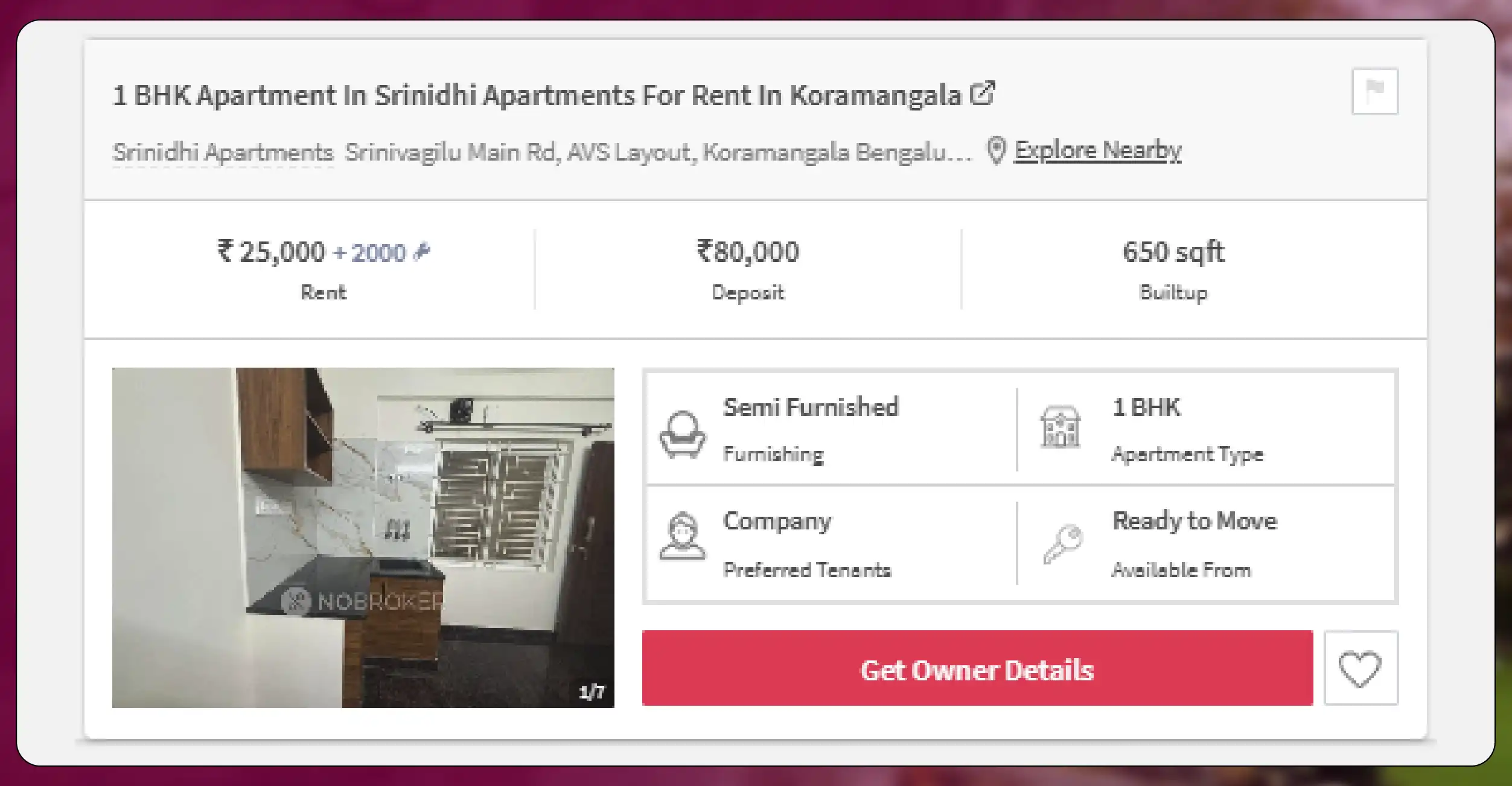
To derive meaningful insights, raw rental listings must be converted into structured datasets. This includes extracting fields like rent amount, deposit, location hierarchy, apartment type, and amenities.
NoBroker property data extraction focuses on organizing this information into structured formats suitable for analytics and machine learning models. This enables better visualization and reporting of rental trends.
Additionally, Extract NoBroker rental data API solutions allow automated and continuous data collection, reducing manual effort and ensuring consistent data flow into business systems.
Importance of Standardized Real Estate Data
Rental listings often vary in format, description, and completeness. Without standardization, it becomes difficult to compare properties or analyze trends accurately.
The concept of nobroker.in Real Estate Data Scraping refers to systematically collecting and normalizing rental data for analytical use. This ensures consistency across datasets and improves the accuracy of pricing models and forecasts.
Standardized data also helps in building dashboards that compare rental prices across cities, neighborhoods, and property categories.
Building Structured Real Estate Datasets
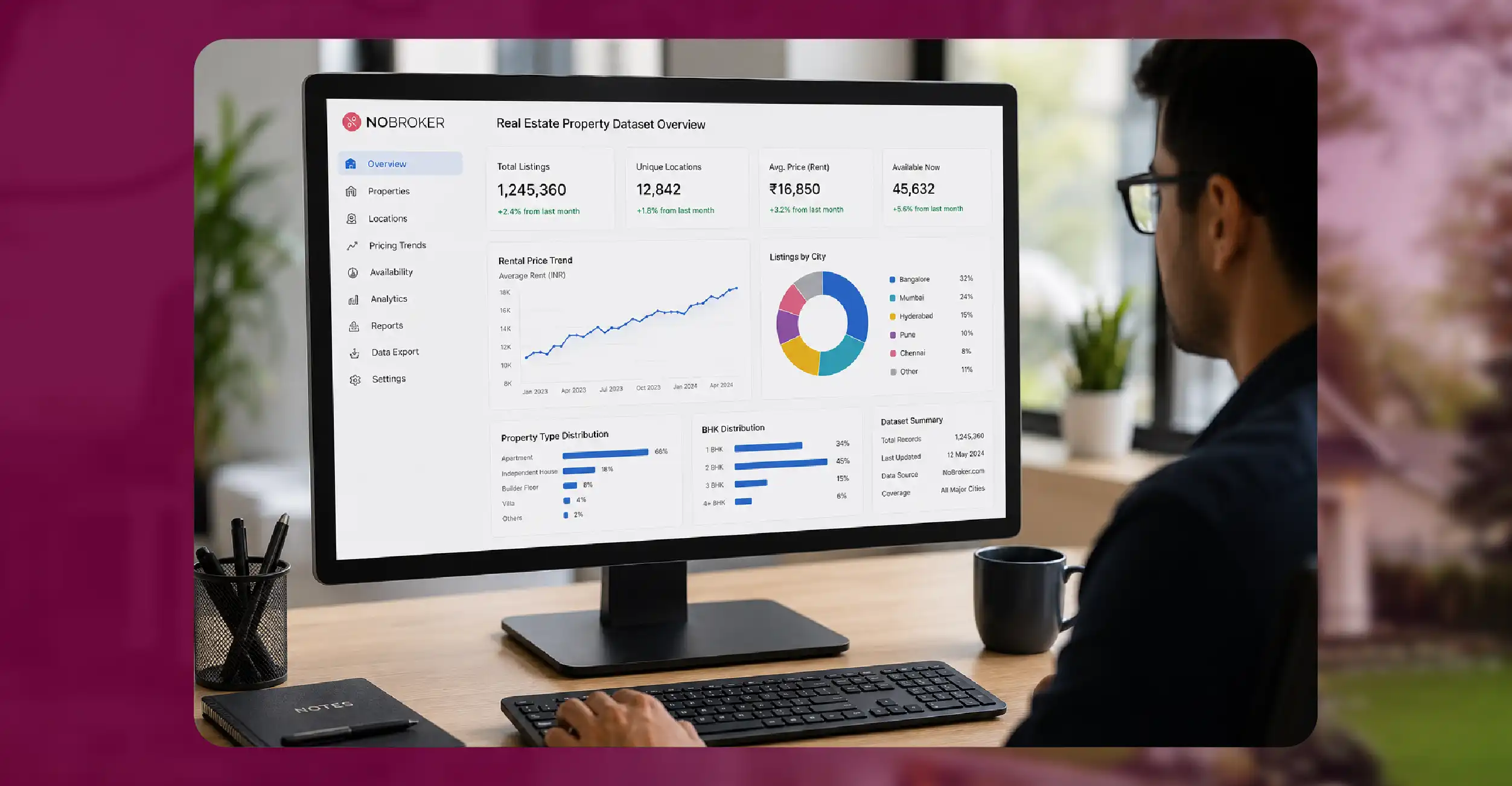
High-quality datasets are essential for predictive analytics and investment modeling. These datasets typically include location data, property features, pricing history, and availability status.
Real Estate Property Datasets generated from NoBroker listings are widely used in AI models, market research, and rental affordability studies. These datasets also support academic research in urban planning and housing economics.
With structured datasets, analysts can identify long-term trends such as rising rental demand in IT corridors or declining prices in oversupplied areas.
Start leveraging powerful rental data intelligence today to make smarter real estate decisions and stay ahead of the market with confidence.
Advanced Rental Analytics Applications
Once structured, rental data can be used for advanced analytics such as predictive pricing models and demand forecasting. These models help estimate future rental prices based on historical trends and current market behavior.
The evolution of Real Estate Property Data Extraction techniques has enabled automation in real estate decision-making. Systems can now suggest optimal rental pricing or highlight investment opportunities based on data-driven insights.
This improves efficiency for landlords, tenants, and investors by reducing uncertainty in decision-making.
API-Driven Data Automation
Modern real estate analytics relies heavily on automation to handle large-scale data. APIs help streamline the process of collecting and updating rental listings continuously.
Using Web Scraping API Services, organizations can integrate real-time rental data into their systems without manual intervention. This improves scalability and ensures consistent data freshness.
Similarly, Web Scraping Services provide end-to-end solutions for businesses that require customized real estate data pipelines tailored to specific analytical needs.
Strategic Importance of Rental Data Intelligence
Rental data is not just useful for price comparison but also for strategic planning. It helps identify growth corridors, investment hotspots, and affordability trends across cities.
Tenants benefit by understanding fair rental prices, while landlords optimize their pricing strategies based on demand patterns. Investors use this data to identify high-return opportunities in emerging neighborhoods.
How iWeb Data Scraping Can Help You?
Enhanced Rental Price Intelligence
Our data scraping services help you collect structured rental pricing from NoBroker, enabling accurate comparison across locations, property types, and time periods for better real estate decision-making and forecasting strategies.
Real-Time Market Monitoring
We enable continuous tracking of listings and pricing changes, helping you stay updated with dynamic rental movements, sudden price shifts, and new property availability across competitive urban housing markets.
Structured Data Extraction
Our systems convert unstructured property listings into clean, standardized datasets including rent, deposit, location, amenities, and size, allowing seamless integration into analytics dashboards, BI tools, and machine learning models.
Scalable API Integration
We provide automated data pipelines through APIs that support large-scale extraction, ensuring uninterrupted access to real estate datasets, reducing manual effort while improving accuracy, speed, and operational efficiency.
Strategic Business Insights
Our services transform raw rental data into actionable intelligence, helping investors, analysts, and platforms identify market trends, optimize pricing strategies, and discover high-demand rental zones with confidence and precision.
Conclusion
The structured analysis of rental listings has transformed the real estate industry into a data-driven ecosystem. With automation and scalable data pipelines, businesses can now gain real-time insights into rental markets and make informed decisions with higher accuracy.
Real Estate Property Data Extraction remains a core capability for modern analytics systems, enabling deeper understanding of rental behavior and market dynamics.
Combined with Web Scraping Services, organizations can build powerful rental intelligence systems that enhance transparency, efficiency, and strategic planning.
Additionally, integrating Web Scraping API Services allows businesses to automate data collection pipelines and maintain continuous real estate market updates.
Experience top-notch web scraping service and mobile app scraping solutions with iWeb Data Scraping. Our skilled team excels in extracting various data sets, including retail store locations and beyond. Connect with us today to learn how our customized services can address your unique project needs, delivering the highest efficiency and dependability for all your data requirements.