How Is Q-Commerce Chocolate Data Scraping in India Improving Hyperlocal Demand Forecasting?
Introduction
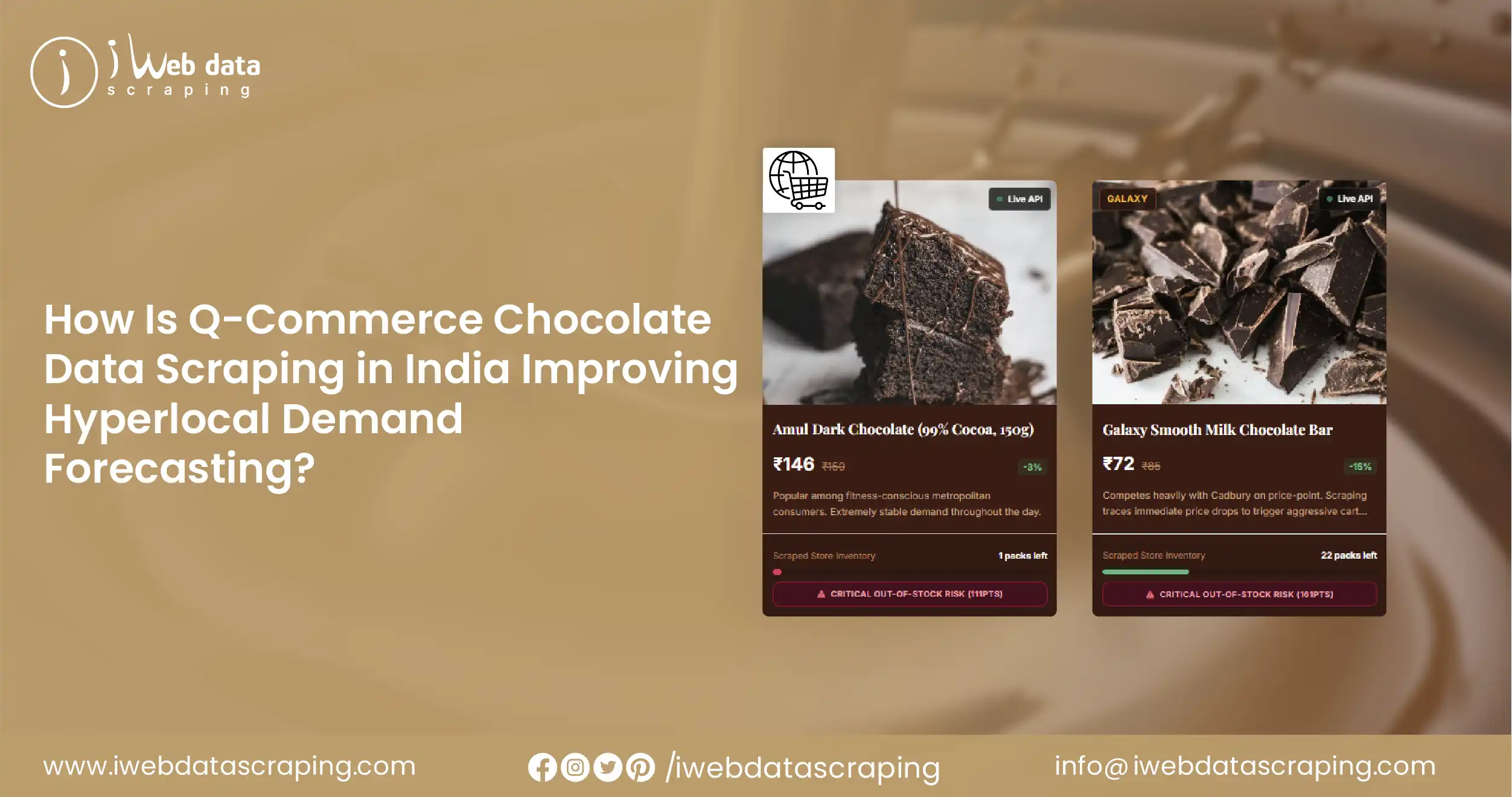
India’s quick commerce ecosystem has dramatically reshaped how consumers purchase chocolates and confectionery products. From late-night cravings to festive gifting and impulse buying, consumers now rely heavily on platforms like Blinkit, Zepto, Swiggy Instamart, BigBasket, and Dunzo for ultra-fast deliveries. As competition intensifies among brands and retailers, businesses are increasingly turning toward Q-Commerce Chocolate Data Scraping in India to gain real-time market visibility and competitive intelligence.
The modern confectionery market generates enormous volumes of dynamic data every hour. Product prices fluctuate frequently, discounts change rapidly, inventory availability differs city-wise, and customer preferences evolve continuously. To understand these changes effectively, companies now depend on Indian chocolate industry data Extraction for collecting structured datasets from multiple quick commerce platforms. Simultaneously, Quick Commerce Chocolate Price Data Tracking helps brands monitor pricing strategies, promotional campaigns, and regional competition in real time.
The Indian chocolate sector is no longer limited to supermarket shelves. Today, consumers expect instant accessibility, hyperlocal availability, and personalized product recommendations. This growing digital dependency has made data intelligence one of the most critical assets for FMCG companies, retailers, distributors, and market research firms.
The Rapid Expansion of India’s Quick Commerce Chocolate Market
Over the last few years, India’s digital grocery market has experienced exceptional growth. Quick commerce platforms have emerged as powerful retail channels capable of delivering chocolates and snacks within minutes. This transformation has significantly changed buying patterns across metro cities, tier-1 markets, and even emerging urban regions.
Consumers increasingly purchase chocolates for several reasons:
- Instant gifting needs
- Festival celebrations
- Personal indulgence
- Kids’ snack purchases
- Corporate gifting
- Seasonal cravings
- Late-night convenience shopping
Because of these evolving consumer behaviors, quick commerce platforms now maintain extensive inventories containing premium chocolates, imported brands, dark chocolates, sugar-free products, mini snack packs, family bundles, and luxury gift hampers.
Managing such a fast-moving ecosystem manually becomes nearly impossible. Brands require automated systems capable of tracking thousands of products across multiple applications and websites simultaneously. This is where advanced scraping technologies become essential.
Why Chocolate Data Scraping Has Become Essential in India?
The chocolate industry operates in a highly competitive environment where pricing, availability, and visibility directly influence customer purchases. Companies can no longer rely solely on traditional market surveys because quick commerce platforms change product listings and offers multiple times each day.
Data scraping allows businesses to extract valuable information such as:
- Product names and variants
- Real-time pricing updates
- Discount percentages
- Delivery timelines
- Customer ratings and reviews
- Product rankings
- Stock availability
- City-specific listings
- Festival promotional offers
This information enables brands to make smarter decisions regarding product launches, pricing optimization, promotional campaigns, and inventory management.
For example, a chocolate manufacturer can monitor how a competitor discounts dark chocolates during weekends in Mumbai while observing premium chocolate bundle promotions in Bengaluru. Such hyperlocal intelligence gives companies a strong strategic advantage.
Understanding Dynamic Pricing in Quick Commerce Platforms
Pricing volatility is one of the defining characteristics of quick commerce. Unlike traditional retail stores, online platforms adjust prices dynamically depending on demand, time, inventory levels, customer preferences, and regional competition.
Brands that fail to monitor these fluctuations risk losing both customers and market share.
Using automated tracking systems, businesses can analyze several important pricing factors:
1. Time-Based Pricing Variations
Chocolate prices often fluctuate during weekends, late-night hours, festivals, and promotional events. Scraping tools continuously capture these changes, helping companies identify optimal pricing windows.
2. Regional Pricing Differences
A premium chocolate gift box may cost differently in Delhi, Mumbai, Hyderabad, or Chennai. Quick commerce platforms frequently apply city-specific pricing strategies based on demand intensity and local competition.
3. Discount and Bundle Monitoring
Platforms regularly introduce flash sales, combo offers, and cashback promotions. Real-time monitoring helps businesses evaluate the effectiveness of these marketing strategies.
Through Indian Chocolate Market Data Intelligence, companies gain detailed visibility into how pricing strategies influence consumer purchasing behavior.
The Role of Hyperlocal Demand Analytics
One of the biggest advantages of quick commerce is its hyperlocal operating model. Customer demand can vary dramatically even within the same city. Neighborhood demographics, purchasing power, and cultural preferences all influence buying patterns.
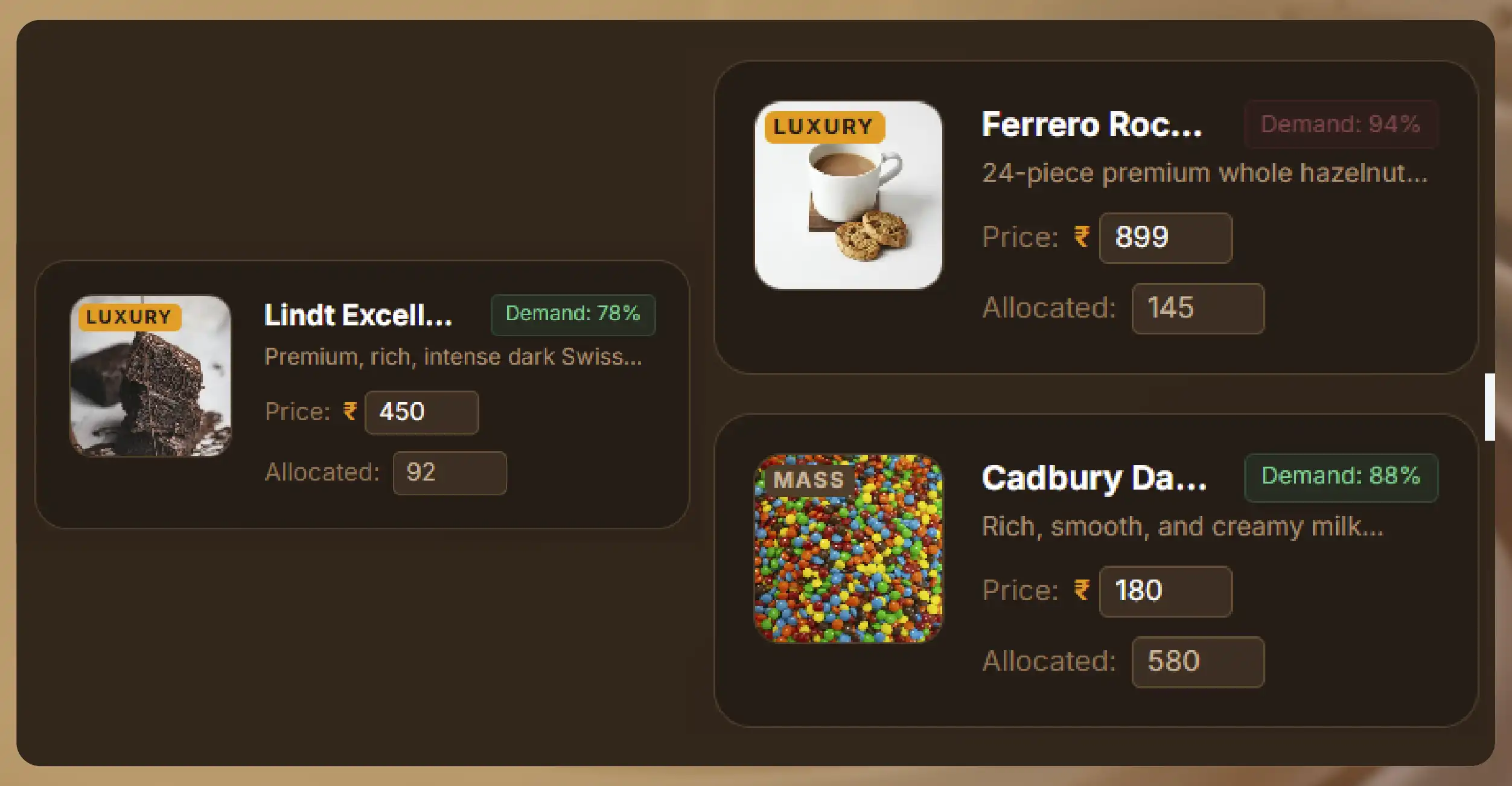
For instance, luxury imported chocolates may perform exceptionally well in affluent urban areas, while smaller snack-sized chocolates dominate demand in densely populated middle-income regions.
By using method to Scrape Hyperlocal Chocolate Demand Analytics in India, businesses can study localized demand trends with greater accuracy. These insights help companies:
- Improve product distribution
- Optimize inventory allocation
- Launch location-specific campaigns
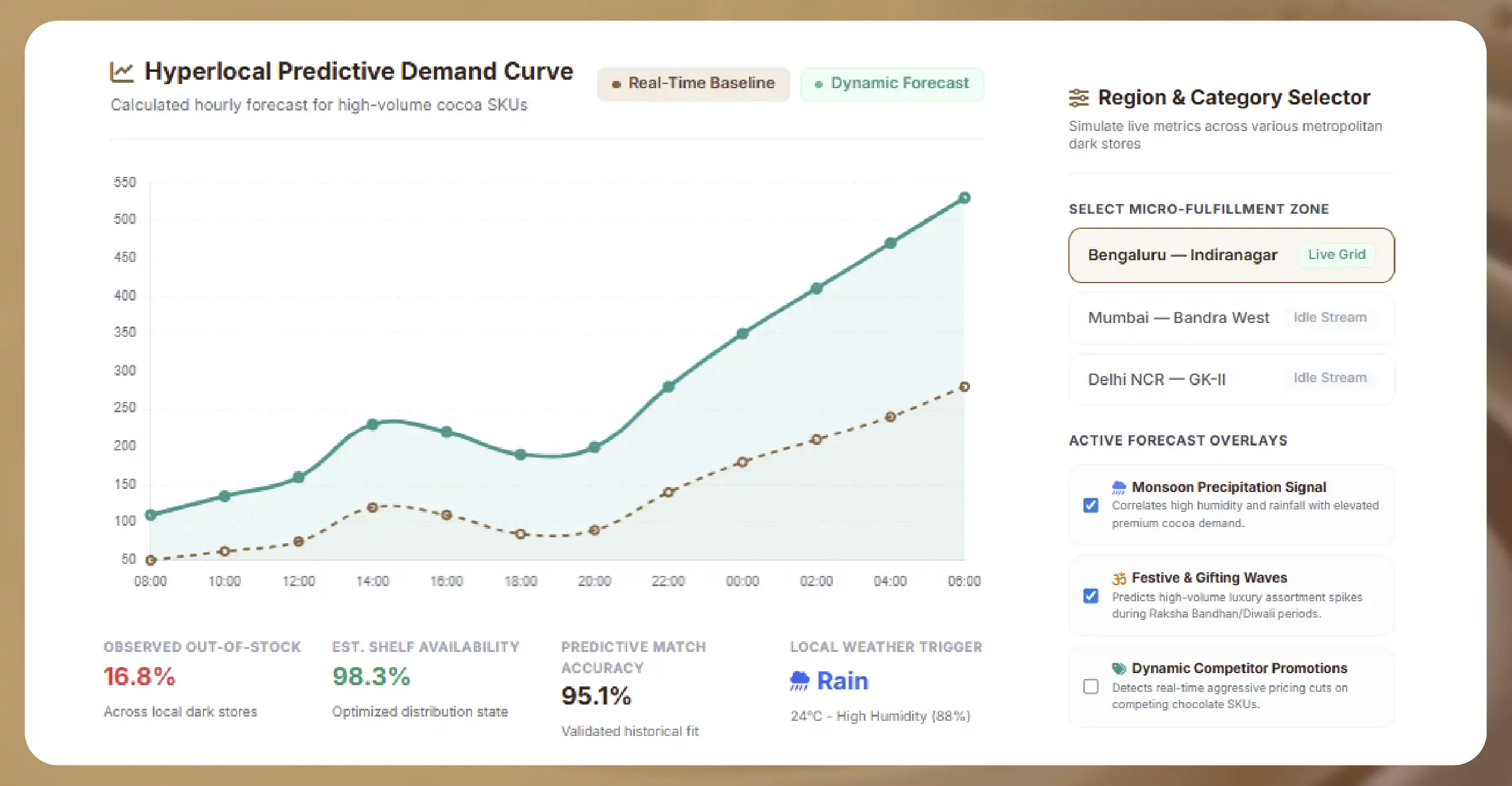
- Predict regional demand spikes
- Reduce stock shortages
Hyperlocal intelligence has become especially valuable during festivals such as Diwali, Raksha Bandhan, Valentine’s Day, and Christmas when chocolate demand rises significantly.
Consumer Behavior Analysis Through Data Scraping
Modern consumers generate valuable behavioral data every time they browse, search, review, or purchase products online. Data scraping systems collect and organize this information into actionable insights.
Brands can identify:
- Most searched chocolate categories
- Fastest-selling products
- Preferred package sizes
- Popular flavor combinations
- Customer review sentiment
- Repeat purchase indicators
This information allows businesses to understand changing consumer preferences and refine their product portfolios accordingly.
For example, the rising popularity of sugar-free chocolates and dark chocolate variants among health-conscious urban consumers can be identified early through data-driven trend analysis.
AI-Powered Automation in Chocolate Data Collection
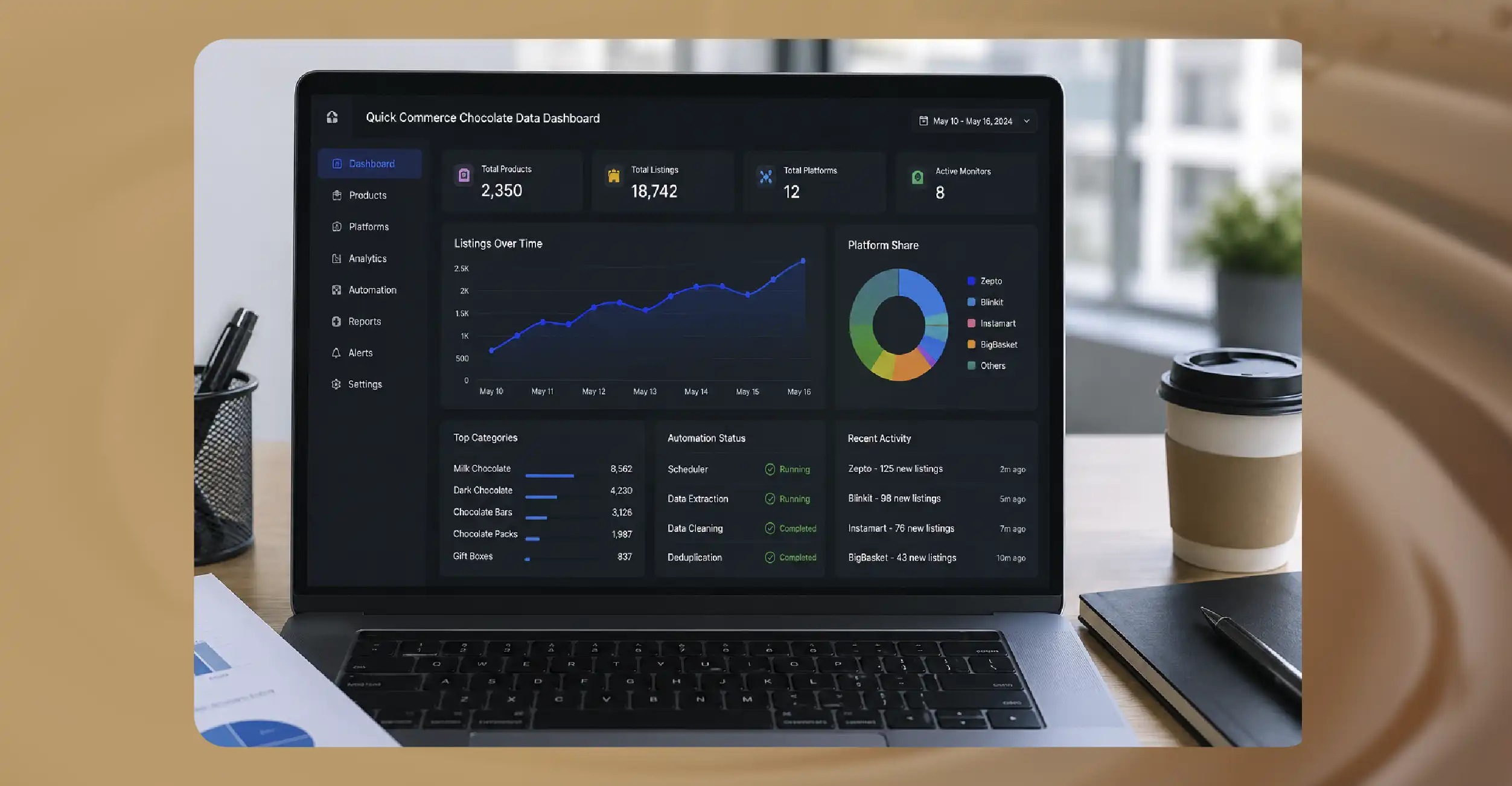
The scale of quick commerce operations requires highly automated extraction systems. Traditional manual methods are too slow and inaccurate to handle real-time monitoring across multiple platforms.
Modern scraping infrastructures integrate AI-driven technologies that support:
- Automated scheduling
- Dynamic website adaptation
- Intelligent data classification
- Real-time monitoring dashboards
- Duplicate data removal
- Data normalization and cleaning
- Multi-platform aggregation
These systems continuously collect fresh information without requiring manual intervention.
Many enterprises also integrate chocolate quick commerce data API India solutions into their internal analytics platforms. APIs allow seamless access to structured datasets, helping businesses automate reporting and forecasting processes.
Competitive Intelligence for Chocolate Brands
Competition within India’s chocolate industry is becoming increasingly aggressive. Brands constantly introduce new flavors, promotional bundles, seasonal packaging, and influencer-driven campaigns to capture consumer attention.
Through advanced scraping solutions, companies can monitor competitor activities in real time.
Some major competitive intelligence applications include:
- Monitoring newly launched products
- Tracking competitor discounts
- Studying regional promotional strategies
- Comparing customer ratings
- Evaluating product visibility rankings
- Identifying high-performing SKUs
This intelligence helps brands respond quickly to market changes and improve their positioning strategies.
Inventory and Stock Availability Monitoring
Inventory management is critical in quick commerce because stock levels change rapidly throughout the day. Out-of-stock situations directly affect customer experience and sales performance.
Automated scraping systems help businesses monitor:
- Product availability status
- Regional stock shortages
- High-demand inventory gaps
- Restocking frequency
- Warehouse distribution patterns
These insights support efficient supply chain planning and minimize revenue losses caused by stockouts.
For example, if a specific chocolate variant repeatedly goes out of stock during evening hours in certain cities, companies can increase inventory allocation in those regions.
Extracting Long-Term Market Trends
Beyond real-time monitoring, scraping systems also support historical trend analysis. Businesses can store and analyze large datasets over extended periods to identify evolving market patterns.
Organizations can Extract chocolate pricing trends in India to study:
- Seasonal demand fluctuations
- Long-term pricing inflation
- Premiumization trends
- Regional market growth
- Consumer affordability patterns
- Discount dependency behavior
These insights help businesses improve long-term forecasting and strategic planning.
Importance of FMCG Data Intelligence in Modern Retail
The convergence of FMCG analytics and quick commerce has created entirely new opportunities for data-driven growth. Businesses increasingly rely on Quick Commerce & FMCG Data Extraction Services to gain unified visibility into digital retail performance.
These services support multiple operational functions including:
- Product Strategy Optimization
- Pricing Intelligence
- Marketing Performance Analysis
- Demand Forecasting
Unlock powerful chocolate market intelligence with our advanced data scraping solutions tailored for India’s fast-growing quick commerce ecosystem.
Challenges Associated with Chocolate Data Scraping
Despite its advantages, quick commerce data extraction involves several technical complexities. Platforms frequently update app structures and implement anti-bot protections to prevent automated access.
Some common challenges include:
- Dynamic page rendering
- Frequent UI modifications
- CAPTCHA restrictions
- Large-scale data normalization
- API rate limitations
- Duplicate product listings
- Multi-language data extraction
Professional scraping infrastructures use advanced automation frameworks to overcome these limitations effectively.
Future of Chocolate Market Intelligence in India
India’s quick commerce industry is expected to expand rapidly in the coming years due to increasing smartphone penetration, rising disposable incomes, and changing urban lifestyles.
Future developments may include:
- AI-powered personalized recommendations
- Predictive inventory systems
- Real-time demand forecasting
- Voice-assisted grocery ordering
- Automated regional pricing optimization
- Hyperlocal marketing intelligence
As competition becomes more data-driven, companies that leverage intelligent analytics systems will gain a significant advantage in the evolving chocolate retail market.
How iWeb Data Scraping Can Help You?
Real-Time Price Monitoring
Our scraping solutions continuously track chocolate pricing fluctuations across quick commerce platforms, helping businesses optimize competitive pricing strategies effectively.
Hyperlocal Demand Insights
We collect region-specific consumer demand intelligence, enabling businesses to understand purchasing behavior and improve localized inventory distribution planning.
Competitor Performance Tracking
Our services monitor competitor products, discounts, ratings, and promotions, providing valuable intelligence for stronger market positioning and strategic decisions.
Automated Inventory Intelligence
We deliver real-time stock availability tracking, helping brands reduce stockouts, improve replenishment efficiency, and optimize supply chain operations seamlessly.
Scalable Data Integration
Our automated scraping infrastructure integrates structured datasets directly into analytics dashboards, supporting faster forecasting, reporting, and business intelligence processes.
Conclusion
India’s quick commerce revolution has fundamentally transformed how chocolates are marketed, distributed, and consumed. Real-time access to pricing, inventory, demand, and customer behavior insights has become essential for FMCG companies, retailers, distributors, and market research organizations.
Businesses investing in advanced scraping technologies gain access to scalable Quick Commerce Dataset solutions that support smarter decision-making and stronger competitive positioning. By utilizing modern Web Scraping Services, organizations can monitor rapidly changing chocolate market dynamics efficiently across multiple cities and platforms. Furthermore, enterprise-grade Web Scraping API Services provide seamless integration of live market intelligence into analytics dashboards, enabling brands to respond faster, optimize operations, and achieve sustainable growth in India’s rapidly expanding digital commerce ecosystem.
Experience top-notch web scraping service and mobile app scraping solutions with iWeb Data Scraping. Our skilled team excels in extracting various data sets, including retail store locations and beyond. Connect with us today to learn how our customized services can address your unique project needs, delivering the highest efficiency and dependability for all your data requirements.