
58.6K+
GROCERY AND FMCG PRODUCT RECORDS TRACKED

Quick Commerce GCC Dashboard delivers actionable retail intelligence through real-time pricing, product availability, competitor benchmarking, and regional market performance analysis.
This case study explores how a leading FMCG brand transformed its quick commerce intelligence operations across the Gulf Cooperation Council (GCC) region through a centralized analytics solution. The organization wanted to improve its understanding of product pricing, availability, assortment distribution, promotions, and competitor performance across multiple online grocery and rapid-delivery platforms.
The project demonstrates how a quick commerce GCC dashboard can help FMCG manufacturers consolidate fragmented marketplace information into a unified business intelligence environment. By collecting and analyzing GCC quick commerce data, the brand established a clearer understanding of regional retail dynamics and changing consumer purchasing patterns.
This case study is designed for:
The client's primary objective was to replace disconnected spreadsheets and manual marketplace monitoring with a reliable intelligence infrastructure. It required continuous visibility into product-level performance across different countries, retailers, and quick commerce platforms.
A leading FMCG organization operating across the Gulf region wanted to strengthen its digital retail intelligence capabilities. Its products were distributed through multiple online grocery marketplaces and quick commerce applications, but the absence of consolidated information restricted its ability to monitor competitive performance consistently.
The organization needed comprehensive visibility into UAE Saudi quick commerce prices to compare its product pricing against competing brands, identify price fluctuations, and understand differences between online retail markets. Additionally, collecting Gulf grocery delivery data became essential for evaluating assortment coverage, promotional activity, delivery-platform performance, and regional product availability.
iWeb Data Intelligence implemented an automated data collection and analytics framework that consolidated product listings, prices, discounts, availability indicators, product specifications, and competitor information from selected digital retail sources.
The solution covered major GCC markets, including the UAE, Saudi Arabia, Qatar, Kuwait, Bahrain, and Oman, with Bahrain and other smaller markets incorporated according to source coverage and platform accessibility.
The client operated in a highly competitive FMCG environment where quick commerce platforms frequently updated product prices, discounts, assortment, and availability. However, its existing monitoring approach could not capture these changes consistently across multiple countries and retailers.
Fragmented Marketplace Information
Product information was distributed across multiple quick commerce applications and online grocery platforms. Different sources displayed inconsistent product names, package sizes, promotional prices, and product identifiers, making comparisons difficult.
Limited Product Availability Visibility
The organization lacked reliable q-commerce availability tracking GCC capabilities. Consequently, teams could not consistently identify unavailable products, regional stock differences, and assortment gaps across monitored platforms.
Inconsistent Pricing Intelligence
Competitor prices changed frequently, while internal teams relied on periodic manual checks. The absence of a centralized GCC retail price dashboard restricted visibility into price movements, promotional differences, and competitive positioning.
Difficulty Comparing Regional Markets
Product pricing and assortment varied across the UAE, Saudi Arabia, Qatar, Kuwait, Bahrain, and Oman. The client struggled to understand these differences through separate reports and disconnected datasets.
Manual Reporting and Operational Delays
Teams spent considerable time collecting product information, cleaning spreadsheets, and preparing competitor comparisons. This delayed the availability of actionable insights and reduced the efficiency of strategic planning.
Limited Historical Performance Analysis
The client could not consistently compare historical product prices, promotional changes, and availability patterns. This made it difficult to evaluate pricing effectiveness and understand recurring market movements.
Competitor Benchmarking Limitations
The organization required a systematic approach to monitor competitor SKUs, pack sizes, discounts, and product positioning. Existing processes lacked the scale and consistency necessary for continuous benchmarking.
To overcome these challenges, the client required an automated data collection infrastructure combined with an interactive analytics dashboard capable of consolidating information across multiple GCC retail environments.
By implementing an automated quick commerce intelligence pipeline, the client replaced fragmented marketplace monitoring with a centralized system for collecting, processing, and analyzing retail information.
The solution continuously captured relevant product-level information and organized it into comparable datasets, enabling teams to understand competitive movements and market performance more effectively.
| Dimension | Manual Monitoring | iWeb Dashboard Solution |
|---|---|---|
| Data collection | Individual application checks | Automated marketplace extraction |
| Price comparison | Manual spreadsheet comparison | Centralized SKU-level benchmarking |
| Availability | Periodic visual checks | Automated availability monitoring |
| Competitor tracking | Limited product comparisons | Multi-brand competitor intelligence |
| Promotions | Disconnected discount records | Structured promotional analysis |
| Historical trends | Limited historical records | Historical price comparisons |
| Regional coverage | Separate country reports | Unified GCC market dashboard |
| Reporting | Manual report preparation | Automated dashboard reporting |
| Decision-making | Delayed insights | Faster business intelligence |
The centralized system provided a consistent analytical foundation for comparing retail performance across markets while reducing repetitive operational work.
The brand in focus is a large FMCG organization operating across multiple consumer product categories in the GCC region. Its product portfolio includes packaged food, beverages, household essentials, personal care products, and everyday consumer goods.
With growing consumer adoption of quick commerce applications, the organization increasingly depended on digital retail channels to strengthen product visibility and expand customer reach.
However, the rapid expansion of online grocery platforms introduced new competitive challenges. Retailers frequently changed product prices, introduced promotional campaigns, modified assortment listings, and updated availability according to local demand and inventory conditions.
The organization recognized that traditional retail reporting could not provide sufficient visibility into these developments.
It therefore decided to establish a centralized digital intelligence framework that would bring together marketplace information from multiple sources.
The objective was not simply to collect prices. The brand wanted to understand the complete digital shelf environment, including product assortment, competitor positioning, discounts, regional availability, and changes in retail performance.
Through this initiative, the organization moved towards a more proactive approach to digital commerce management, supported by structured data, automated monitoring, and actionable analytics.
iWeb Data Intelligence delivered an integrated data extraction and visualization solution designed to monitor quick commerce marketplaces across the GCC region.
The approach combined automated marketplace data collection, product matching, data normalization, historical storage, and dashboard development.
Multi-Platform Data Collection
The first stage involved identifying relevant online grocery and quick commerce sources across the target markets. Automated extraction pipelines collected product listings, displayed prices, discounts, availability indicators, and relevant product attributes.
The monitoring framework was designed to capture changing marketplace information at scheduled intervals, subject to source accessibility and platform restrictions.
Product Identification and Standardization
Product names frequently differed between platforms. The system standardized product titles, brand names, pack sizes, category information, and product identifiers to enable meaningful comparisons.
For example, different listings representing the same beverage product in a 500 ml package could be matched using standardized attributes.
Competitor Price Intelligence
The platform organized competitor pricing information into comparable datasets. It enabled the client to evaluate regular prices, promotional prices, discount percentages, and price differences between competing products.
This helped category managers understand how their products were positioned across digital marketplaces.
Availability and Assortment Monitoring
The solution tracked product availability indicators and listing status across monitored platforms. This enabled teams to identify unavailable products, assortment gaps, and differences in product coverage between markets.
Historical Data Management
Collected records were stored systematically to support historical comparisons. The client could evaluate price changes, promotional frequency, and availability patterns over selected reporting periods.
Interactive Dashboard Development
The final stage involved transforming structured datasets into an interactive dashboard with filters for country, platform, category, brand, product, and reporting period.
The dashboard presented pricing comparisons, availability trends, competitor benchmarking, and promotional intelligence through accessible visual reports.
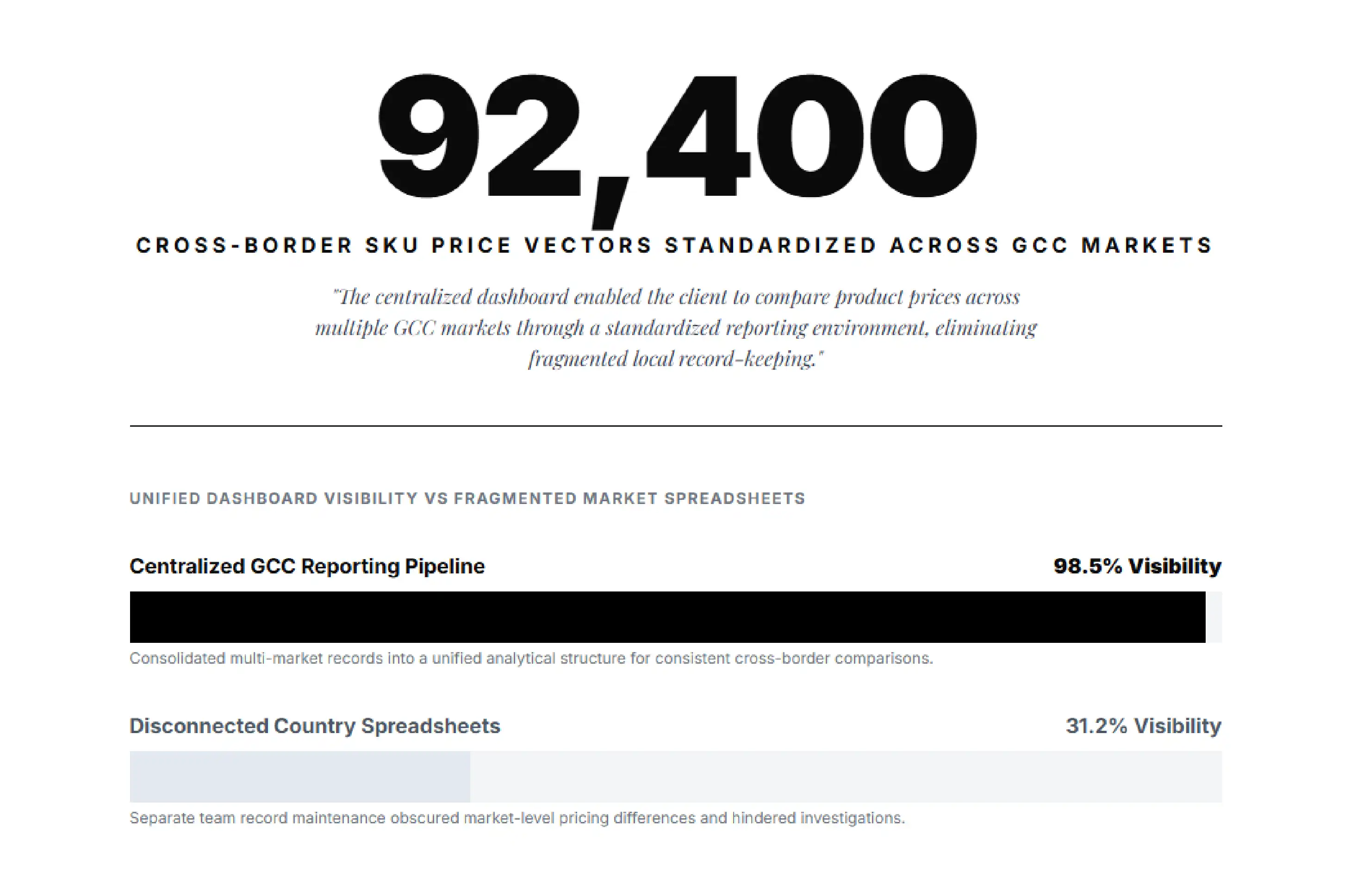
The centralized dashboard enabled the client to compare product prices across multiple GCC markets through a standardized reporting environment.
Previously, different teams maintained separate pricing records, making it difficult to identify market-level differences. The new system consolidated this information into a unified analytical structure.
Commercial teams could evaluate how similar products were priced across countries and identify significant deviations requiring further investigation.
This improved visibility supported more consistent regional pricing assessments and strengthened the organization's ability to understand competitive positioning.
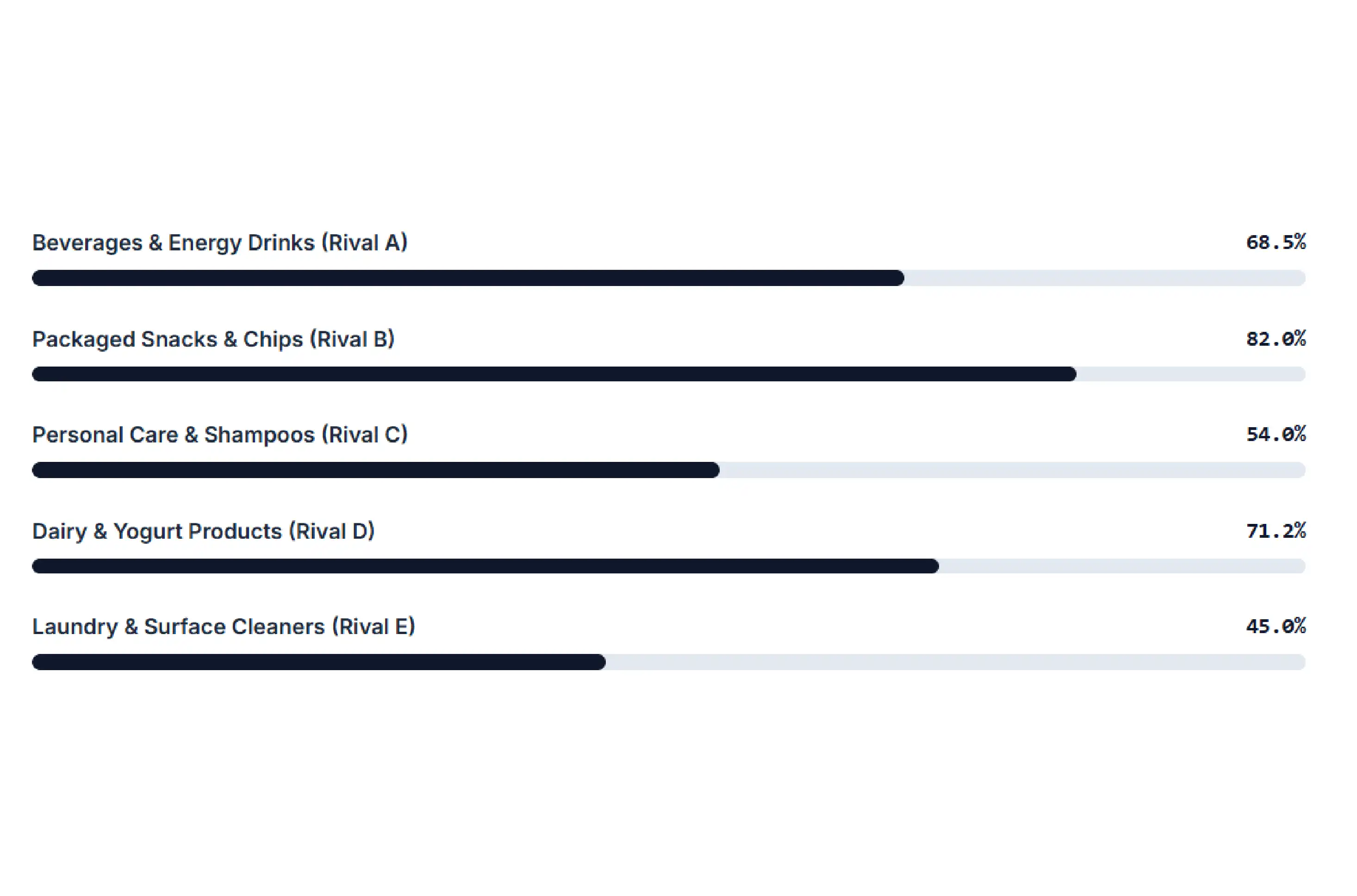
The system enabled systematic comparisons between the client's products and competing FMCG brands.
By analyzing product-level pricing, package sizes, promotional discounts, and category positioning, the organization could identify competitive gaps and evaluate the effectiveness of its existing pricing approach.
The dashboard also helped identify products where competitors consistently offered lower promotional prices.
These insights supported more informed discussions around pricing adjustments, product positioning, and category-level commercial priorities.
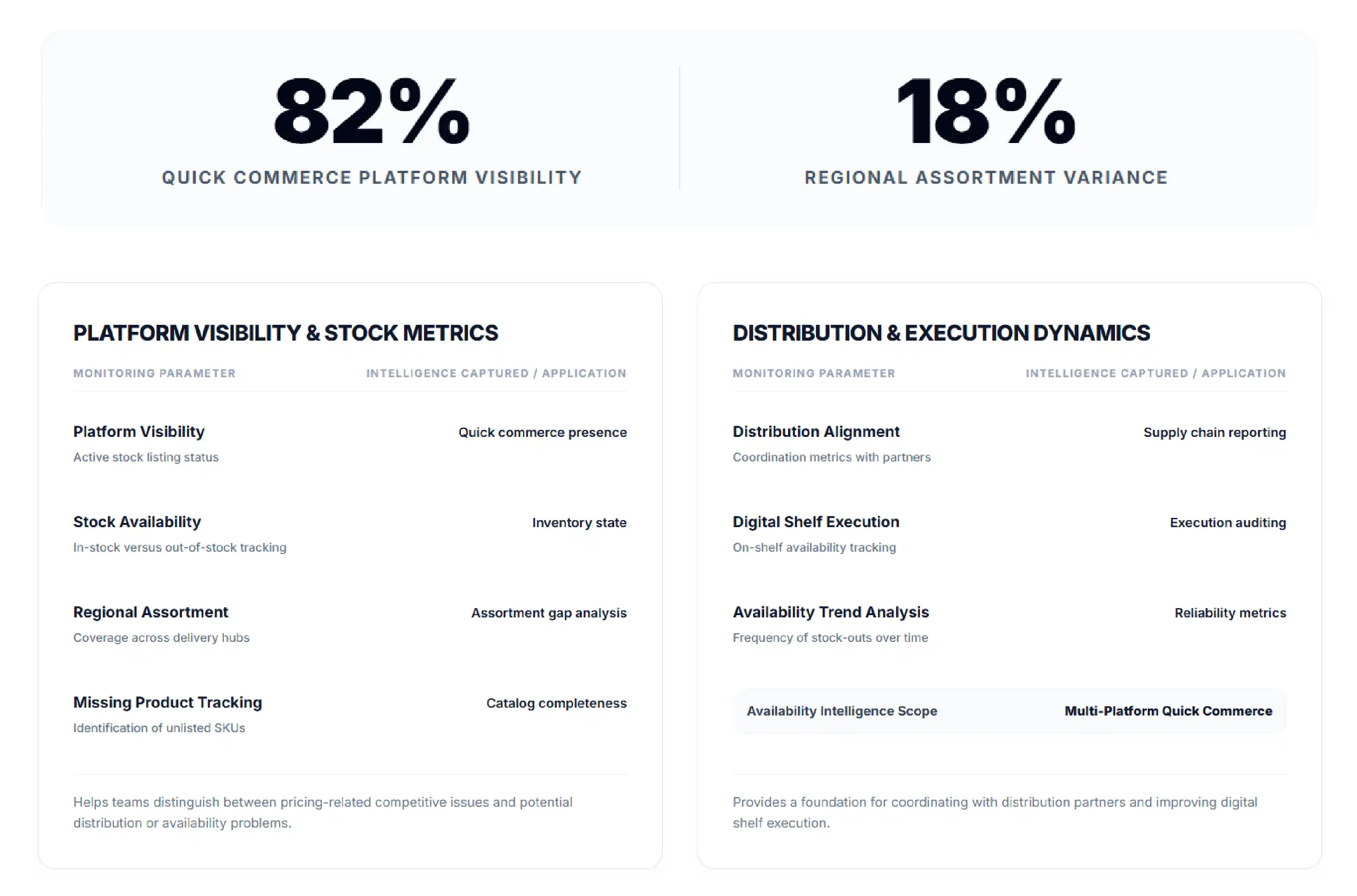
Availability monitoring provided a clearer understanding of product visibility across different quick commerce platforms.
The client could identify products that were listed but unavailable, products missing from selected platforms, and variations in assortment coverage across regional markets.
This information helped teams distinguish between pricing-related competitive issues and potential distribution or availability problems.
It also provided a foundation for coordinating with distribution partners and improving digital shelf execution.
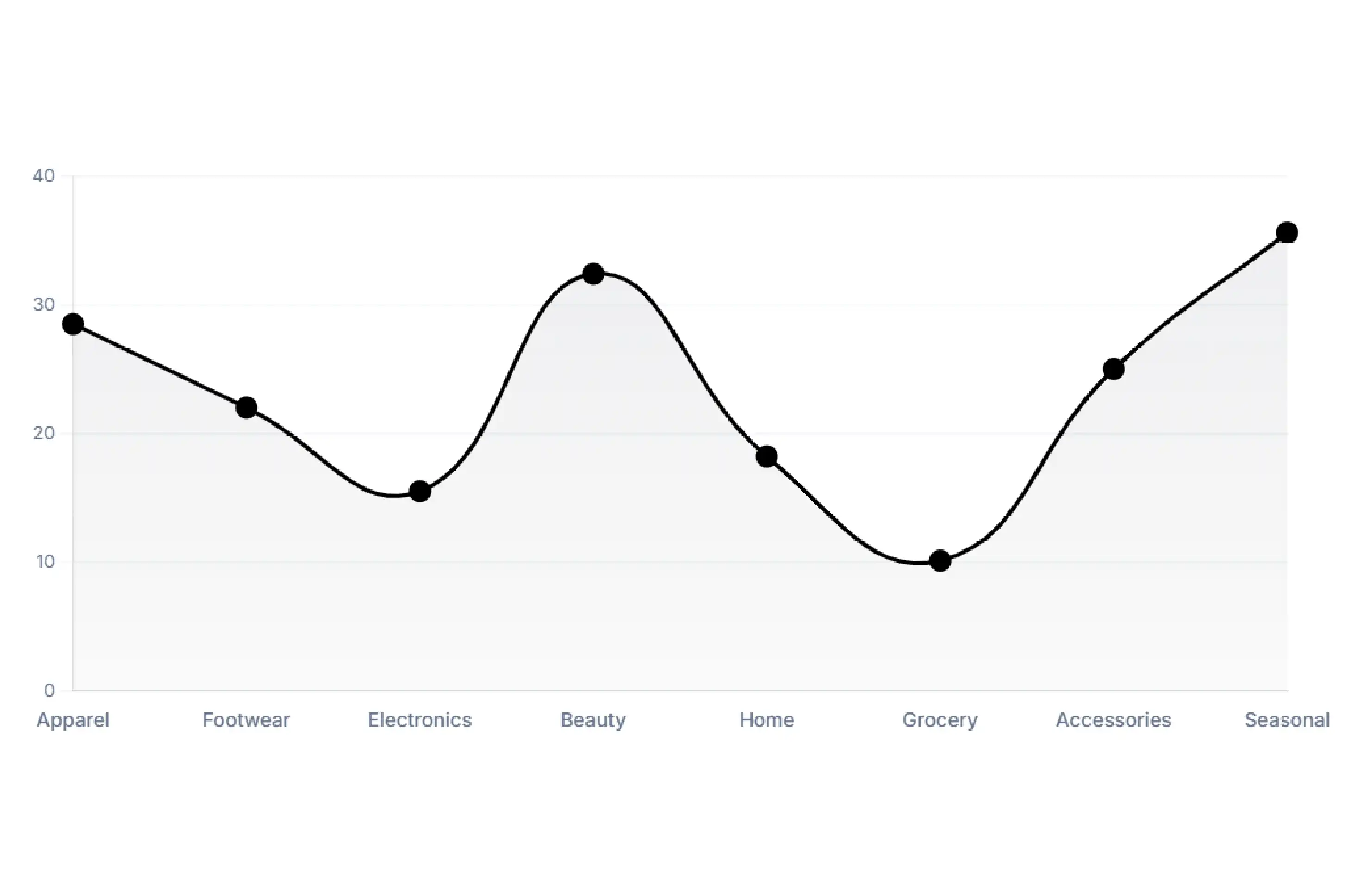
Promotional monitoring allowed the organization to evaluate discount activity across competing brands and marketplaces.
The dashboard captured regular prices, discounted prices, promotional percentages, and observed changes over time.
This enabled the client to understand which product categories experienced frequent promotional activity and where competitors were using aggressive discounting.
The resulting insights supported better campaign planning and more structured evaluation of promotional competitiveness.
The following illustrative dataset demonstrates how the dashboard organizes FMCG product information across different GCC markets.
It includes product categories, marketplace names, regular prices, promotional prices, availability, and country-level observations.
| Country | Platform | Product | Regular Price | Offer Price | Availability |
|---|---|---|---|---|---|
| UAE | Talabat | Cooking Oil 1L | AED 12.50 | AED 10.99 | Available |
| UAE | Noon Minutes | Milk 1L | AED 6.50 | AED 5.75 | Available |
| Saudi Arabia | HungerStation | Rice 5kg | SAR 42.00 | SAR 38.50 | Available |
| Saudi Arabia | Nana | Soft Drink 1.5L | SAR 8.00 | SAR 7.25 | Available |
| Qatar | Snoonu | Laundry Detergent 2kg | QAR 24.00 | QAR 21.50 | Available |
| Kuwait | Talabat | Biscuits 300g | KWD 0.650 | KWD 0.590 | Unavailable |
| Bahrain | Talabat | Shampoo 400ml | BHD 2.10 | BHD 1.85 | Available |
| Oman | Talabat | Tea 500g | OMR 1.80 | OMR 1.60 | Available |
Note: Sample figures are illustrative and do not represent verified live marketplace prices or actual platform availability.
The dataset provides a common structure for comparing products across different platforms and countries. Country-specific currencies are retained to avoid misleading direct price comparisons.
The dashboard can additionally support currency normalization, product-level historical tracking, discount calculations, category comparisons, and platform-specific reporting.
Following the implementation of the centralized quick commerce intelligence framework, the client achieved improvements in marketplace visibility, reporting efficiency, and competitive monitoring.
The following outcomes represent illustrative project performance measures:
iWeb Data Intelligence provides structured data collection and analytics solutions designed to help organizations understand rapidly changing digital marketplaces.
Unified Data Collection
Our automated pipelines consolidate information from multiple online retail sources into a standardized dataset, helping businesses overcome fragmented reporting and improve consistency across their intelligence operations.
Real-Time Market Monitoring
Scheduled data extraction supports continuous observation of product prices, availability, discounts, and listing changes, allowing organizations to identify important marketplace developments more efficiently.
Advanced Data Cleaning
Product matching, normalization, validation, and deduplication processes improve dataset quality and support accurate comparisons across different retailers, product categories, and regional markets.
Scalable Data Infrastructure
Our solutions support growing data requirements through flexible collection and processing frameworks, helping businesses expand their monitoring coverage as new platforms, products, and countries become relevant.
Customized Dashboard Development
We transform structured datasets into interactive dashboards that provide business teams with accessible reporting, historical comparisons, competitor intelligence, and actionable performance indicators.
Business-Focused Intelligence
Our approach focuses on converting raw marketplace information into meaningful insights that support pricing decisions, category planning, distribution analysis, and digital commerce growth.
"The quick commerce intelligence solution delivered by iWeb Data Intelligence significantly improved our understanding of digital retail performance across the GCC region. Previously, our teams relied on fragmented marketplace information and manual reporting processes to monitor product pricing, availability, and competitor activity. The centralized dashboard has provided better visibility into regional market differences and enabled us to access structured information through a single reporting environment. We particularly appreciate the product-level comparisons, historical pricing information, and availability monitoring capabilities. The solution has improved our reporting efficiency and strengthened our ability to make informed commercial decisions. It has also helped our teams identify competitive opportunities and understand changing marketplace conditions more effectively. We are satisfied with the overall implementation, data quality, and flexibility of the solution."
— Head of Digital Commerce and Market Intelligence
The project delivered a centralized quick commerce GCC dashboard that transformed fragmented online grocery information into structured business intelligence for an FMCG organization operating across Gulf markets.
The solution established a unified framework for monitoring product prices, promotional activity, competitor assortment, and availability across selected quick commerce platforms. It also provided a consistent analytical environment for comparing marketplace performance and identifying regional differences.
Access to structured Saudi Arabia quick commerce market data strengthened the organization's understanding of local retail conditions, competitor positioning, and product-level pricing movements. The dashboard also supported the evaluation of quick commerce pricing strategies UAE, helping commercial teams understand promotional differences, competitive price positioning, and changing marketplace conditions.
Implementation of automated data extraction pipelines improved information consistency and reduced dependency on manual monitoring. Historical data storage enabled better evaluation of pricing trends, while interactive reporting improved accessibility for business stakeholders.
A Quick Commerce GCC Dashboard is an analytics solution that consolidates product prices, discounts, availability, assortment, and competitor information from online grocery and rapid-delivery platforms across Gulf markets. It helps businesses monitor digital retail performance through centralized reporting.
The solution can cover the UAE, Saudi Arabia, Qatar, Kuwait, Bahrain, and Oman. Coverage can be extended according to platform accessibility, source availability, product categories, and specific business requirements.
Relevant information includes product names, brands, categories, package sizes, regular prices, promotional prices, discount percentages, product URLs, listing information, and displayed availability indicators, subject to source accessibility.
It enables FMCG companies to monitor competitor pricing, evaluate promotional activity, identify assortment gaps, understand regional differences, and improve digital shelf visibility. Structured data also supports better category planning and commercial decision-making.
Yes. iWeb Data Intelligence can develop customized dashboards with country, platform, category, brand, SKU, and historical reporting filters. Dashboard modules and data collection frequency can be aligned with the organization's analytical requirements.
iWeb Data Intelligence helps businesses collect, structure, and analyze digital retail information through automated data scraping, competitor monitoring, and customized dashboards. Transform fragmented marketplace information into actionable intelligence for better pricing decisions, improved product visibility, and stronger regional market positioning.
Start a projectFields marked * are required. Everything else just helps us scope faster — skip what you don't know yet.