
52.3K+
TOTAL MEAL PLANNING RECORDS PROCESSED

Extracted Recipe & Grocery List Data from a Leading Meal Planning App for structured insights, analytics, and optimization.
This case study is based on a real-world enterprise scenario where a digital intelligence and analytics team leverages large-scale meal planning ecosystem data extraction through advanced methods to Scrape grocery lists from meal planning apps. The objective is to transform unstructured food consumption signals into structured business intelligence for demand forecasting, nutrition behavior analysis, and retail optimization strategies across digital grocery ecosystems.
It is designed for:
The client’s core challenge was simple: meal planning ecosystem data is continuously generated at scale but remains highly fragmented and unstructured across recipes, ingredients, and grocery listings.
Case study analysis highlights how platforms leveraged Recipe & Grocery List Data from a Leading Meal Planning App to understand consumer nutrition behavior and purchasing patterns. Researchers examined user engagement trends, meal preferences, and grocery demand spikes across multiple demographics to improve recommendation accuracy. We applied Meal planning app data scraping techniques to collect real-time menu planning datasets and identify seasonal ingredient usage shifts across regions. This dataset helped analysts map correlations between recipe selection, shopping frequency, and dietary preferences with higher precision. Further processing relied on Recipe ingredient data extraction to standardize ingredient lists, normalize quantities, and enhance cross-platform comparability. This case study demonstrates how structured meal planning datasets can transform digital food ecosystems, enabling businesses to optimize supply chains, personalize recommendations, and forecast demand more accurately while improving user experience and operational efficiency across food tech platforms globally with integrated analytics, scalable pipelines, and real-time insights derived from behavioral data patterns driving strategic business growth sustainably.
The client faced several operational and technical challenges while managing large-scale food and retail datasets. One major issue was the inconsistency and fragmentation in the Meal Planning Recipe Dataset, which made it difficult to standardize recipe formats across multiple sources and platforms.
Another key challenge emerged during Meal Planning App Data Extraction, where dynamic app interfaces, frequent UI changes, and anti-scraping mechanisms disrupted continuous data collection workflows and reduced data accuracy.
Additionally, integrating Grocery and Supermarket Store Datasets posed difficulties due to variations in product naming conventions, pricing updates, and regional availability differences.
The client also struggled with real-time synchronization between recipe data and grocery inventory, leading to delays in actionable insights. Data cleaning and normalization further added complexity, especially when dealing with incomplete ingredient lists and duplicate entries. Overall, these challenges impacted scalability, data reliability, and the ability to generate unified insights for personalized meal planning and demand forecasting systems.
By adopting a method to Scrape recipe and grocery list data from meal planning apps, the client transitioned from scattered manual observation to a unified automated intelligence system. This pipeline continuously captures recipe compositions, ingredient demand signals, and grocery list behaviors across multiple platforms, enabling faster insights, stronger consistency, and scalable decision-making across food retail operations.
| Dimension | Manual Meal Observation Approach | Automated Meal Planning Intelligence System |
|---|---|---|
| Data capture style | Sporadic browsing of recipes and meal suggestions across apps | Continuous ingestion of structured recipe, ingredient, and grocery list data streams |
| Speed of insight generation | Insights generated after delayed manual review cycles | Near real-time detection of demand patterns and recipe activity |
| Data organization quality | Fragmented notes with inconsistent interpretation of meals | Clean, structured datasets with standardized ingredient mapping |
| Demand trend visibility | Trends identified only after noticeable market or user behavior shifts | Early-stage detection of emerging ingredient popularity and seasonal spikes |
| Ingredient intelligence | Limited ability to connect recipes with grocery demand patterns | Direct mapping between recipes, ingredient usage, and retail demand signals |
| Scalability of monitoring | Restricted to a small number of apps or sample datasets | Scalable across multiple meal planning ecosystems simultaneously |
The brand in focus is an emerging food intelligence and grocery analytics organization operating across a rapidly evolving digital meal planning ecosystem. It focuses on transforming large-scale recipe structures and grocery list patterns into actionable intelligence that supports retail forecasting, consumer behavior analysis, and product demand optimization.
As data volume increased, the organization encountered difficulties in interpreting inconsistent recipe formats, fluctuating ingredient naming conventions, and fragmented grocery availability data across platforms. To resolve these challenges, it implemented a structured automation layer powered by meal planning data extraction pipelines.
In a competitive environment where food trends shift quickly and consumer preferences evolve dynamically, the brand relies on real-time intelligence derived from recipe consumption patterns, ingredient demand fluctuations, and cross-platform grocery signals. This transformation has enabled a shift from manual tracking to predictive analytics, significantly improving operational accuracy, forecasting efficiency, and strategic planning across its food intelligence ecosystem.
To address the client’s challenges, we implemented a robust data engineering and automation framework designed for scalability and accuracy. We first deployed Grocery & Supermarket Data Extraction Services to unify fragmented product and pricing data across multiple platforms, ensuring consistent structure and real-time updates.
Next, our team optimized pipelines using Web Scraping Services, enabling high-speed collection of recipe, ingredient, and grocery datasets while handling dynamic website changes and anti-bot mechanisms effectively.
To further enhance efficiency, we integrated Web Scraping API Services, allowing seamless, automated, and scheduled data retrieval with improved reliability and reduced manual intervention.
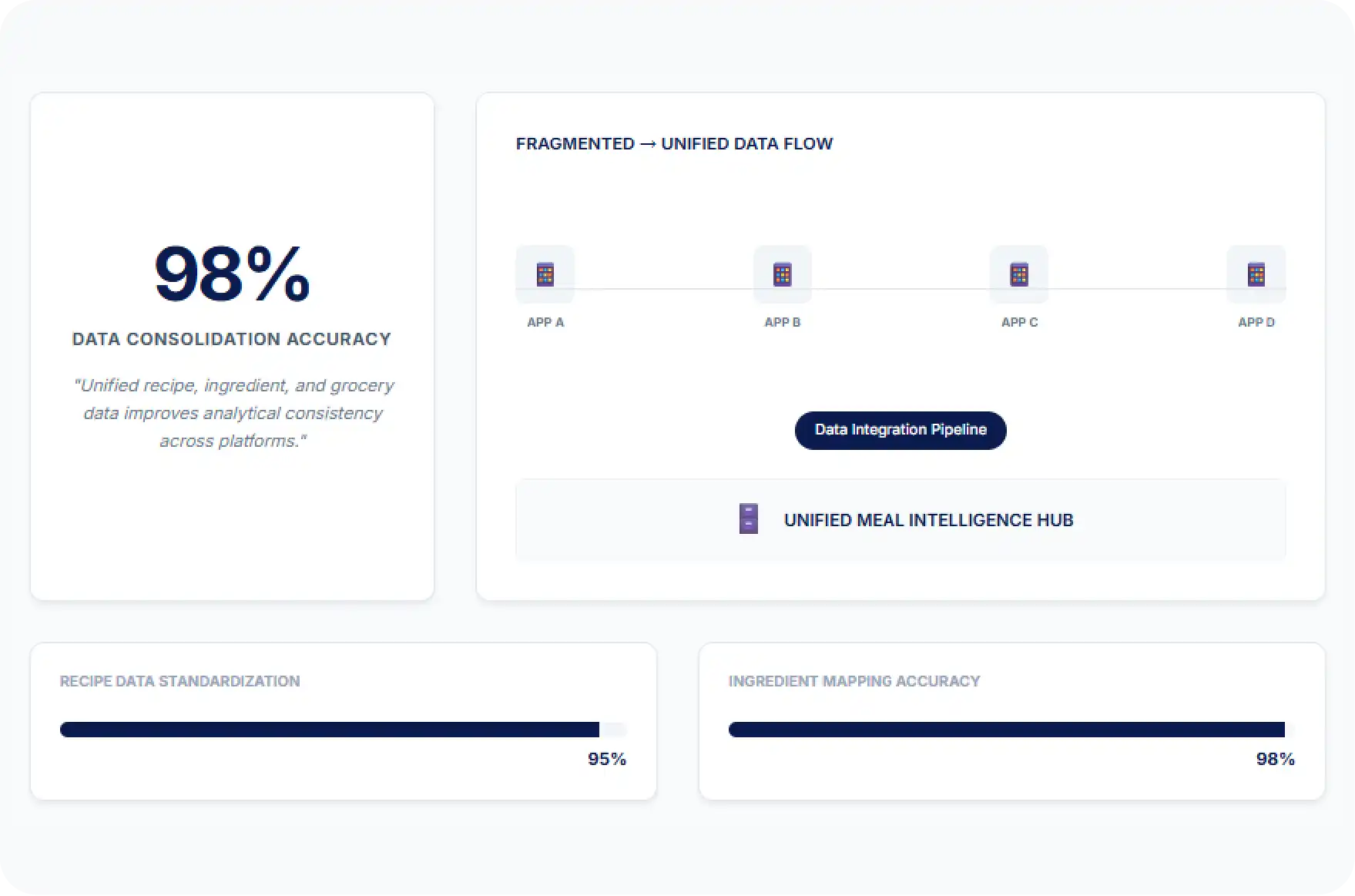
The data pipeline consolidated recipe, ingredient, and grocery list information scattered across multiple meal planning applications into a single structured view. This eliminated data silos and enabled analysts to track consumer meal behavior across platforms with consistent formatting and higher analytical accuracy.
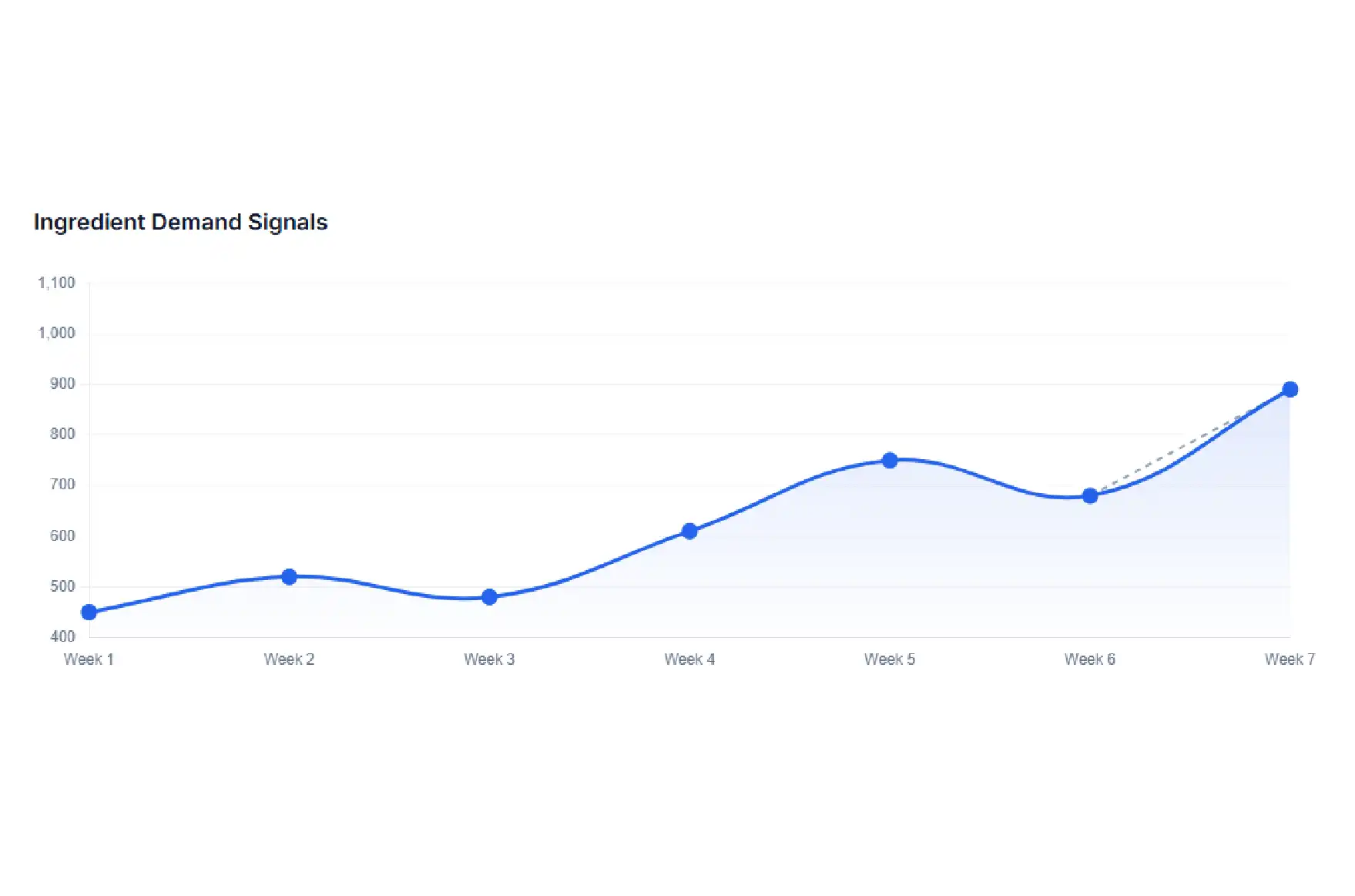
Continuous monitoring of recipe creation patterns and ingredient recurrence helped detect rising demand for specific food items before they reflected in retail sales. This early signal detection allowed stakeholders to anticipate procurement needs and adjust inventory planning proactively.
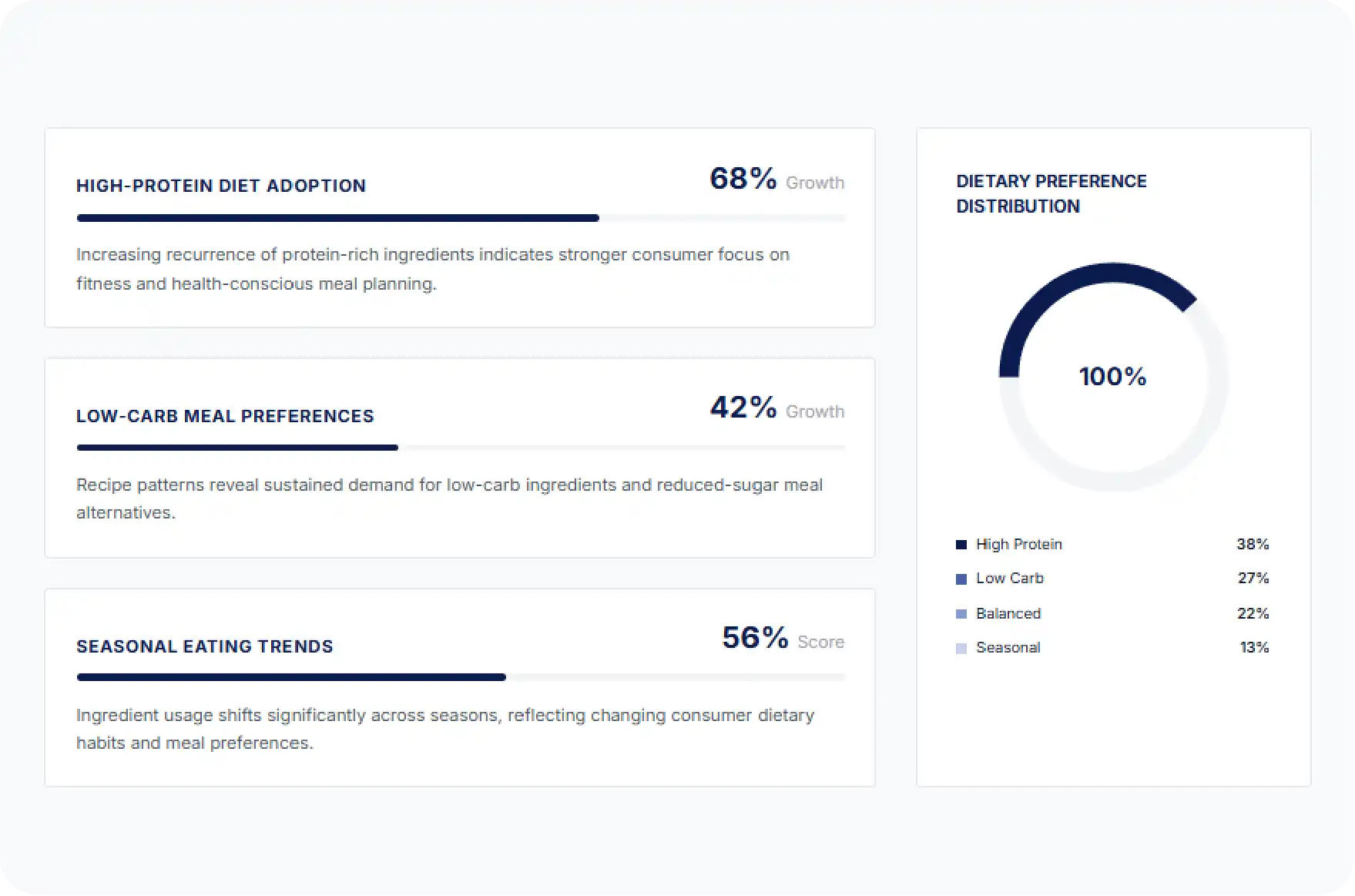
By structuring recipe-level data into standardized ingredient profiles, the system enabled deeper analysis of dietary patterns such as high-protein diets, low-carb preferences, and seasonal eating habits. This improved segmentation of consumer nutrition behavior across different user groups.
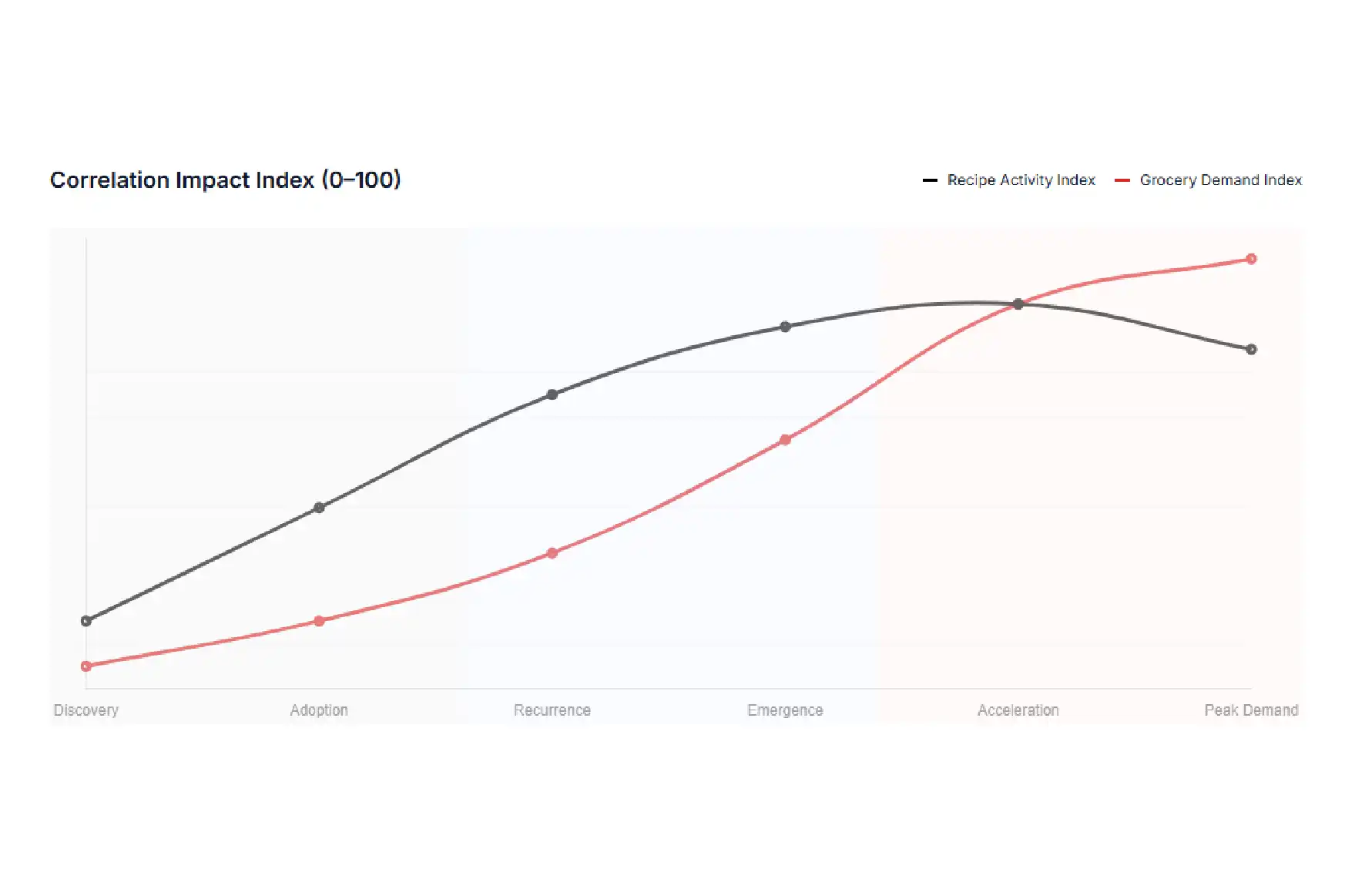
The pipeline enabled direct mapping between recipe popularity and grocery purchase signals, helping identify how digital meal planning behavior translates into real-world retail demand. This correlation improved forecasting accuracy and supported demand-driven supply optimization.
| Recipe Category | Trending Ingredient | Recipe Activity Volume | Grocery Demand Spike (%) | Primary Retail Channel |
|---|---|---|---|---|
| High-Protein Meals | Chicken Breast | 18,400 | +42% | BigBasket |
| Quick Breakfast Bowls | Oats | 22,150 | +36% | Blinkit |
| Healthy Snacks | Greek Yogurt | 14,780 | +28% | Instamart |
| Vegan Salads | Avocado | 16,320 | +31% | Reliance Fresh |
| Comfort Foods | Pasta Sauce | 19,950 | +39% | Zepto |
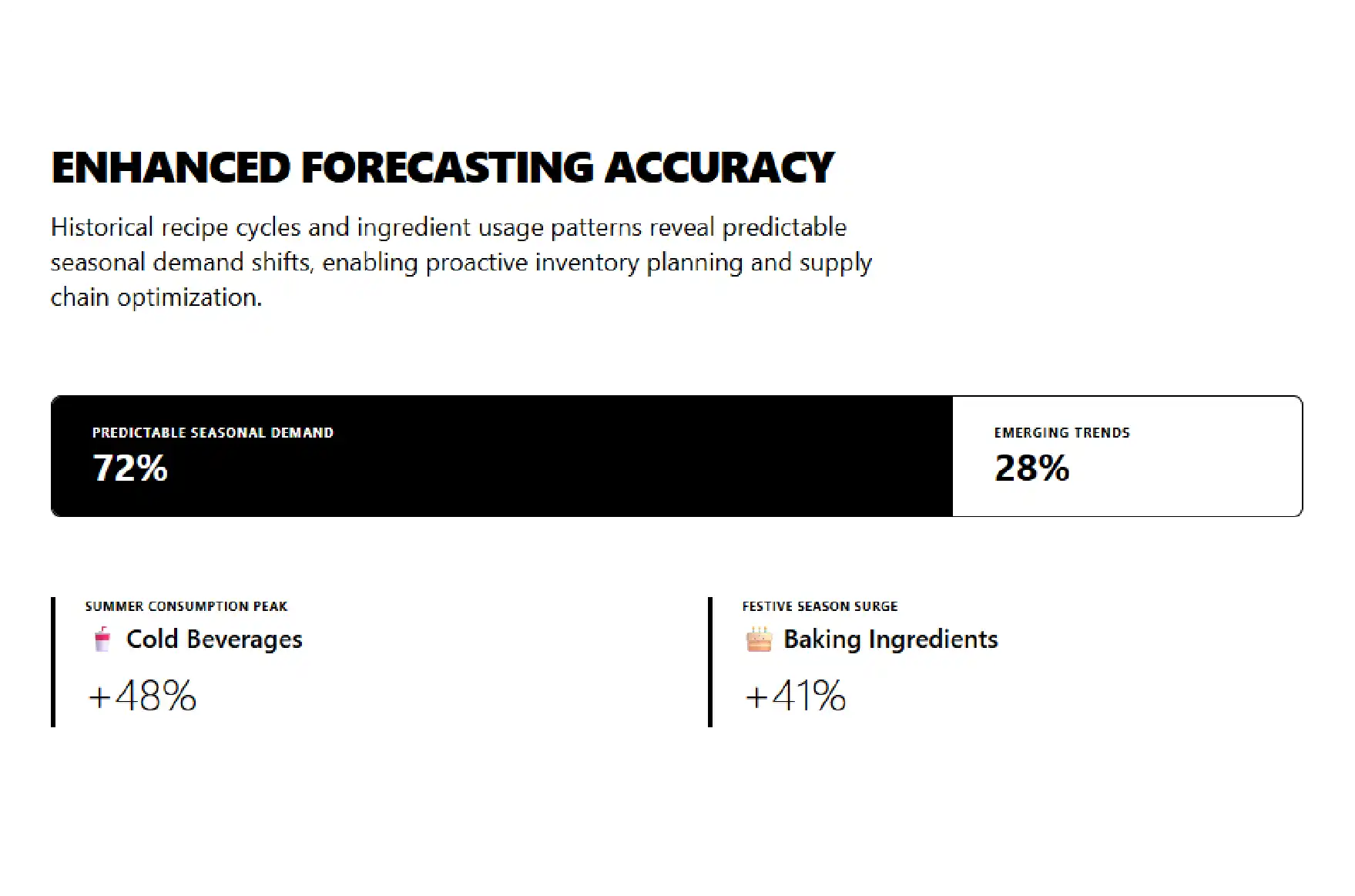
The structured dataset improved the ability to forecast seasonal food demand by analyzing historical recipe cycles and ingredient usage patterns. This helped identify predictable spikes in specific categories such as cold beverages in summer and baking ingredients during festive seasons, enabling better supply chain preparedness and promotional planning.
This expanded dataset demonstrates structured extraction of recipe, ingredient, and grocery pricing information across multiple retail platforms. It enables standardized comparison, real-time pricing analysis, and ingredient-level tracking, improving demand forecasting, meal planning intelligence, and cross-platform grocery optimization for analytics systems.
| Recipe ID | Recipe Name | Ingredient | Quantity | Store Name | Price (INR) |
|---|---|---|---|---|---|
| R101 | Veg Pasta | Tomato Sauce | 200 ml | BigBasket | 45 |
| R102 | Chicken Curry | Chicken | 1 kg | Reliance Fresh | 280 |
| R103 | Fruit Salad | Apple | 2 pcs | Blinkit | 60 |
| R104 | Oat Bowl | Oats | 500 gm | Instamart | 120 |
| R105 | Paneer Wrap | Paneer | 250 gm | Zepto | 95 |
| R106 | Smoothie Bowl | Banana | 3 pcs | BigBasket | 70 |
| R107 | Veg Biryani | Basmati Rice | 1 kg | Reliance Fresh | 160 |
| R108 | Greek Salad | Lettuce | 1 head | Instamart | 85 |
| R109 | Protein Shake | Whey Powder | 500 gm | HealthKart | 899 |
| R110 | Sandwich | Bread | 1 pack | Blinkit | 40 |
After implementing structured meal planning intelligence through continuous scraping of recipe and grocery list data from multiple meal planning applications, the client experienced major improvements in forecasting accuracy, consumer understanding, and retail responsiveness. Real-time access to recipe trends, ingredient movements, and cross-platform grocery signals enabled faster and more reliable decision-making.
Our solutions deliver highly accurate and well-structured datasets by removing inconsistencies from multiple data sources and applying strong standardization processes. This ensures businesses work with clean and unified information, reducing analytical errors while improving overall decision-making efficiency across forecasting, analytics, and operational workflows.
We also enable real-time and near real-time data availability by continuously collecting information from diverse digital sources. This helps organizations stay updated with evolving market conditions, price fluctuations, and consumer behavior shifts, allowing faster reactions and more agile strategic planning in competitive environments.
Our data collection framework is built for scalability, capable of handling both small and extremely large datasets without performance degradation. Whether processing thousands or millions of records, the system maintains stability, speed, and consistent output quality, supporting long-term business growth and expanding data needs.
The processed datasets significantly enhance business intelligence capabilities by enabling deeper analysis and more actionable insights. Organizations can detect hidden patterns, refine strategies, and improve forecasting accuracy, leading to stronger marketing, pricing, and product decisions backed by reliable, data-driven intelligence systems.
In addition, automation reduces manual effort and operational costs by eliminating repetitive data collection tasks. This improves productivity, shortens turnaround time, and allows teams to focus more on strategic initiatives rather than time-consuming data gathering and processing activities.
“Our experience with the data solutions provider has been outstanding. The team delivered highly accurate and structured datasets that significantly improved our analytics capabilities and decision-making process. Their ability to handle complex and large-scale data requirements with consistency and speed exceeded our expectations. The integration process was smooth, and their support team was always responsive and knowledgeable. We were particularly impressed with the reliability and scalability of the delivered solutions, which helped us optimize our operations and reduce manual effort. Overall, their expertise has added immense value to our business intelligence strategy and operational efficiency.”
— Operations Manager
The final outcome of the project was a fully optimized and automated data ecosystem that transformed how the client accessed and utilized information. By integrating structured datasets and real-time extraction pipelines, the client achieved significantly improved data accuracy, faster reporting cycles, and enhanced business intelligence capabilities. Operational efficiency increased as manual data collection was eliminated, allowing teams to focus on strategic decision-making instead of repetitive tasks. The unified dataset enabled better demand forecasting, pricing analysis, and customer behavior insights. Additionally, the scalable infrastructure ensured smooth performance even as data volume grew. Overall, the solution delivered measurable improvements in productivity, cost reduction, and analytics precision, empowering the client to make faster, data-driven decisions with greater confidence and long-term strategic advantage.
Transform fragmented recipe and grocery data into structured, real-time insights for smarter decision-making. Improve forecasting accuracy, inventory planning, and consumer demand understanding with automation. Connect with our experts to build a scalable meal planning intelligence solution for your business.
Start a projectOur solutions can collect structured and unstructured data including product details, pricing, recipes, ingredients, availability, and customer behavior insights from multiple digital platforms with high accuracy and consistency.
We use advanced validation, cleaning, and normalization techniques to remove duplicates, fix inconsistencies, and standardize formats, ensuring that all delivered datasets are reliable and ready for analysis.
Yes, our architecture is built for scalability and can efficiently process and manage large volumes of data without performance issues, ensuring smooth operations even during high-demand scenarios.
Yes, our architecture is built for scalability and can efficiently process and manage large volumes of data without performance issues, ensuring smooth operations even during high-demand scenarios.
Absolutely. Our systems support real-time and scheduled data extraction, allowing businesses to access the latest updates instantly for faster decision-making and improved market responsiveness.
Our services benefit retail, food tech, e-commerce, grocery, and analytics-driven industries by providing actionable insights that improve forecasting, pricing strategies, and customer engagement.