

Introduction
Saudi Arabia is emerging as one of the most promising digital commerce markets in the Middle East. Rapid smartphone adoption, expanding digital payment infrastructure, changing consumer preferences, and government-led digital transformation initiatives are reshaping how businesses sell products and connect with customers. For retailers, manufacturers, marketplace operators, and investors, Saudi ecommerce market intelligence has become essential for understanding this evolving business environment and identifying new growth opportunities.
The increasing availability of KSA ecommerce data enables businesses to evaluate product demand, monitor competitors, analyse pricing strategies, and understand customer purchasing patterns across different online platforms. Marketplaces such as Amazon.sa and Noon have become important destinations for consumers looking for competitive prices, convenient delivery, and extensive product selections.
Collecting Amazon.sa price data helps retailers understand product-level pricing movements, discount strategies, seller competition, and category performance. Similarly, analysing Noon listings provides insights into product assortment, marketplace positioning, promotional activities, and changing consumer demand.
As Saudi Arabia advances its digital economy under Vision 2030, businesses need reliable, frequently updated information to make informed commercial decisions. Ecommerce data intelligence provides the foundation for understanding market developments and building competitive strategies.
1. Understanding Saudi Arabia's Growing Ecommerce Market
Saudi Arabia's ecommerce industry has experienced substantial development as consumers increasingly adopt online shopping for everyday purchases. A young, digitally connected population, strong internet infrastructure, and growing confidence in electronic payments are supporting this transformation.
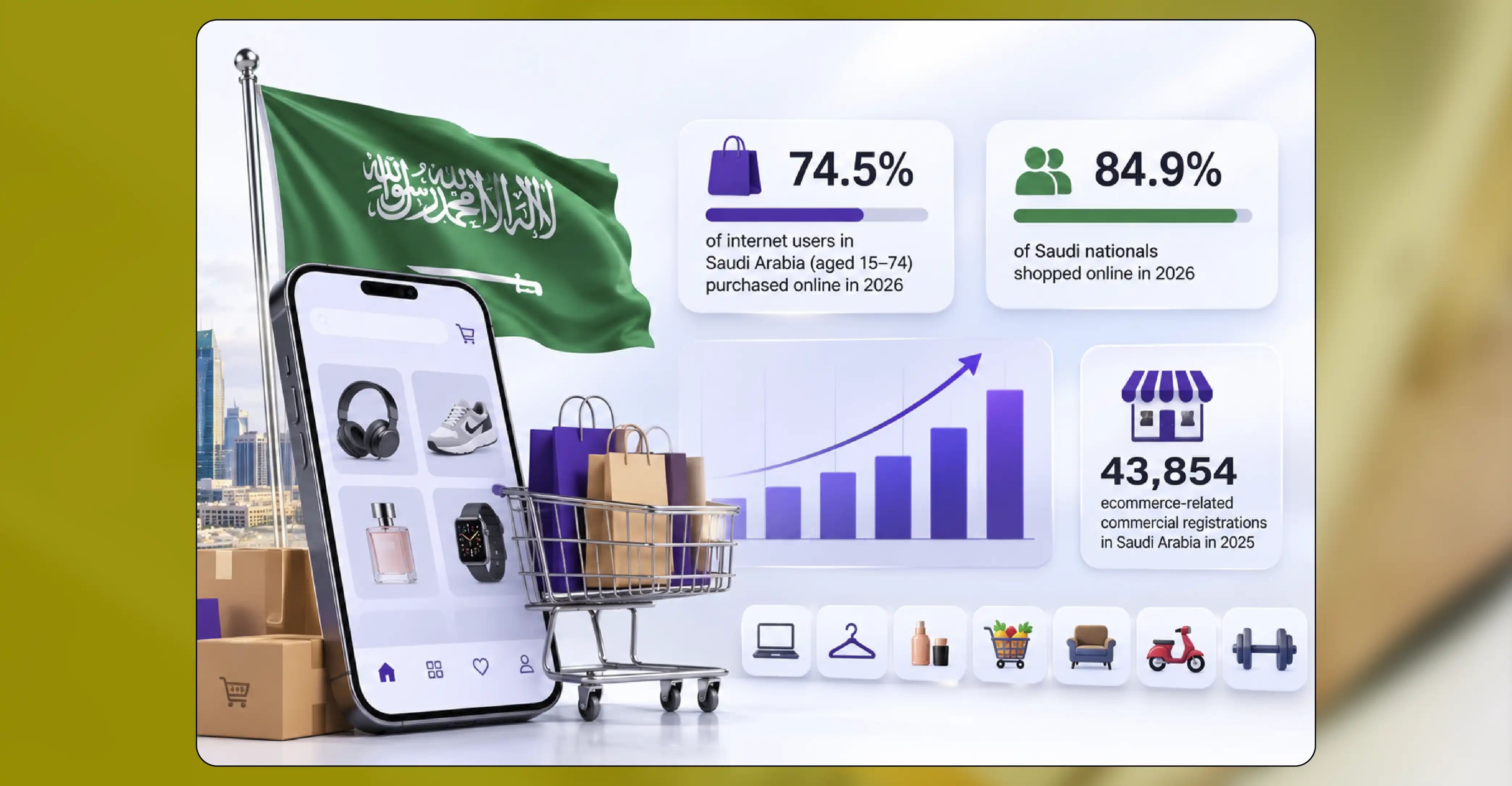
According to the General Authority for Statistics, 74.5% of internet users aged 15–74 purchased goods or services online in 2026. Among Saudi nationals, the percentage reached 84.9%, demonstrating the importance of digital channels in consumer purchasing behaviour.
The market is also attracting new businesses. Saudi Arabia recorded 43,854 commercial registrations related to ecommerce activities in 2025, compared with 40,041 in 2024, indicating continued growth in digital business participation.
These developments create opportunities for companies operating across several categories:
- Electronics and consumer technology.
- Fashion, clothing, and footwear.
- Beauty, skincare, and personal care.
- Grocery and household essentials.
- Furniture and home improvement.
- Food delivery and quick commerce.
- Sports, fitness, and lifestyle products.
Businesses can analyse category-level demand, identify emerging product segments, and understand how consumer preferences differ across regions.
2. Major Ecommerce Marketplaces Driving Competition
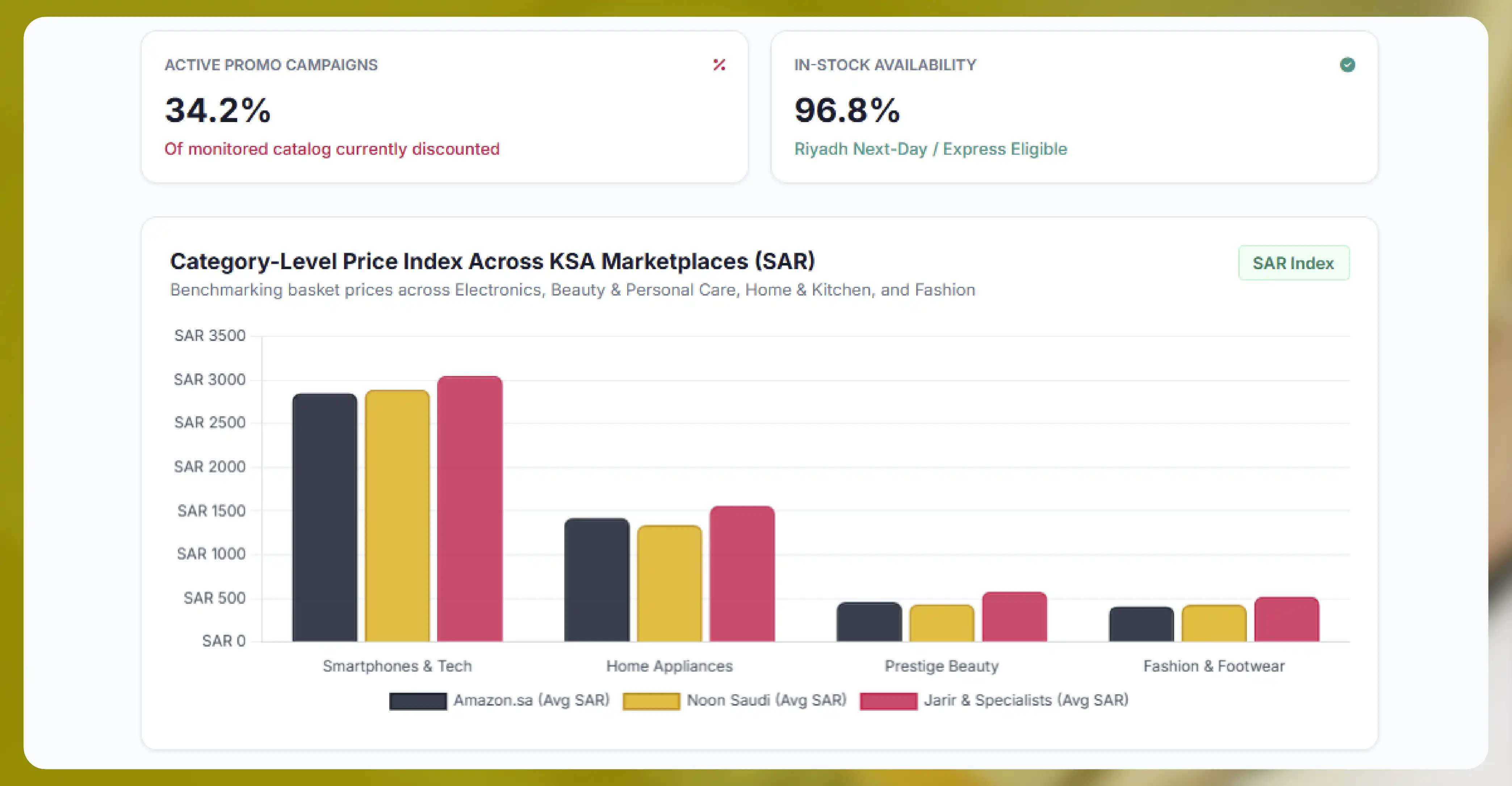
Saudi Arabia's online retail ecosystem includes international marketplaces, regional platforms, and specialised digital retailers. Understanding their competitive positions helps businesses develop effective pricing, assortment, and customer acquisition strategies.
Amazon.sa
Amazon provides consumers with access to electronics, fashion, groceries, home products, beauty items, and numerous other categories. Monitoring its product listings, seller prices, ratings, discounts, and availability helps retailers understand competitive positioning.
Noon
Noon is an important regional ecommerce platform with extensive product categories. Analysing Noon Saudi product data helps businesses examine seller competition, product assortment, promotional campaigns, ratings, and category-level pricing differences.
Jarir and other specialised retailers serve customers looking for particular product categories. Their assortment, pricing, and promotions provide useful benchmarks for understanding category-specific competition.
Comparing these marketplaces allows businesses to identify products with consistent demand, competitive price differences, and opportunities for differentiated positioning.
3. Why Saudi Ecommerce Market Intelligence Matters?
Market intelligence transforms scattered online information into structured business insights. Instead of relying on occasional competitor checks or manually reviewing marketplace listings, companies can systematically collect and analyse information.
Important intelligence areas include:
- Competitor Monitoring: Businesses can track competing sellers, product launches, promotional campaigns, and assortment changes to understand their market positions.
- Product Demand Analysis: Product availability, customer ratings, reviews, and listing activity provide useful indicators of consumer interest.
- Pricing Intelligence: Comparing prices across marketplaces helps businesses identify pricing gaps, competitive products, and promotional opportunities.
- Seller Performance: Monitoring seller counts, ratings, and product visibility helps companies understand marketplace competition.
- Regional Market Analysis: Businesses can compare product availability and pricing across Riyadh, Jeddah, Dammam, and other locations where reliable location-level information is available.
These insights help retailers make decisions based on observable market activity rather than assumptions.
4. Tracking Saudi Online Retail Trends Through Product Data
Understanding Saudi online retail trends requires continuous observation of product listings, customer interactions, pricing changes, and marketplace activity.
Several developments deserve particular attention.
- Mobile-First Shopping: Smartphones are central to digital purchasing. According to GASTAT's 2026 ICT survey, 98.4% of internet users aged 15–74 accessed the internet through mobile phones. This makes mobile shopping experiences and app-based product visibility important competitive factors.
- Fashion and Beauty Demand: Clothing, footwear, cosmetics, and personal care products represent important online shopping categories. Tracking brands, discounts, sizes, and product availability helps businesses understand category competition.
- Digital Grocery Shopping: Consumers increasingly use online channels for food, groceries, and household essentials. Monitoring product prices, delivery availability, and promotional offers provides valuable information for grocery retailers.
- Omnichannel Retail: Consumers combine online research, digital purchases, and physical store visits. Businesses therefore need to understand how online product visibility complements traditional retail operations.
- Value-Based Purchasing: Competitive pricing, attractive discounts, delivery convenience, and product quality influence purchasing decisions. Retailers can use marketplace intelligence to evaluate these factors together.
5. Monitoring Saudi Marketplace Pricing and Competitor Activities
Pricing is one of the most important factors influencing ecommerce competition. Different sellers may offer identical products at different prices depending on inventory levels, promotional strategies, fulfilment arrangements, and competitive positioning.
Collecting Saudi marketplace pricing information allows businesses to monitor these differences systematically.
A comprehensive pricing dataset can include:
| Data Attribute | Business Application |
|---|---|
| Product name | Product identification |
| Brand | Brand-level comparison |
| Product ID | Listing-level tracking |
| Current price | Competitive price monitoring |
| Original price | Discount evaluation |
| Seller name | Seller benchmarking |
| Product rating | Customer satisfaction analysis |
| Review count | Customer engagement assessment |
| Availability | Inventory monitoring |
| Product URL | Listing verification |
For example, a consumer electronics retailer can compare the prices of smartphones across multiple marketplace sellers. By tracking these prices regularly, the retailer can identify discount patterns, understand competitor positioning, and adjust its own pricing strategy.
Historical pricing information is equally important. A single price observation cannot explain whether a product is becoming more expensive, experiencing promotional reductions, or maintaining a stable price.
Time-series datasets help businesses identify these patterns and evaluate pricing decisions over longer periods.
6. The Role of Quick Commerce in Saudi Arabia
Quick commerce is becoming an important part of the Kingdom's digital retail ecosystem. Consumers increasingly expect convenient access to groceries, beverages, household essentials, and personal care products through digital ordering platforms.
Quick commerce intelligence helps businesses understand:
- Product availability across delivery locations.
- Grocery prices and promotional offers.
- Delivery charges and minimum order values.
- Brand assortment and product substitutions.
- Competitor discounts and promotional campaigns.
- Differences in product availability across cities.
Companies can also analyse how quick commerce platforms position essential products compared with conventional ecommerce marketplaces.
This information is particularly valuable for FMCG manufacturers, grocery retailers, distributors, and consumer brands seeking to expand their digital presence.
7. How Web Scraping Builds Reliable Ecommerce Datasets?
Manual data collection becomes difficult when businesses need to monitor thousands of products across multiple platforms. Product information changes frequently, and checking every listing individually requires considerable time and resources.
Web scraping helps automate the collection of publicly accessible marketplace information, subject to applicable platform terms, access restrictions, and privacy requirements.
A typical ecommerce data collection process involves five stages.
1. Source Identification
Identify relevant marketplaces, product categories, brands, and competitors.
2. Data Extraction
Collect available product details, prices, seller information, ratings, and stock indicators.
3. Data Cleaning
Remove duplicates, standardise product names, and correct inconsistent fields.
4. Data Integration
Organise information into structured datasets for business applications.
5. Continuous Monitoring
Schedule appropriate collection cycles to identify changes in prices, listings, and availability.
The resulting datasets can be delivered in CSV, JSON, Excel, or database-ready formats, depending on business requirements.
8. Industries Benefiting from Saudi Ecommerce Intelligence
Ecommerce intelligence is relevant to businesses across multiple industries.
| Industry | Application of Ecommerce Data |
|---|---|
| Retail and E-commerce | Competitor and product benchmarking |
| FMCG | Brand demand and pricing analysis |
| Electronics | Product-level price comparison |
| Fashion | Brand assortment and discount tracking |
| Grocery | Essential product price monitoring |
| Beauty and Cosmetics | Product launches and seller analysis |
| Market Research | Category growth and competitive analysis |
| Manufacturers | Distribution and marketplace visibility |
Manufacturers can identify retailers selling their products, evaluate pricing consistency, and examine the competitive presence of alternative brands.
Investors and market research organisations can also use structured datasets to understand category development and marketplace competition.
9. Important Metrics to Track in the Saudi Ecommerce Market
Businesses should define measurable indicators before developing their ecommerce intelligence strategy.
Some important metrics include:
- Average selling price by category.
- Discount percentage and promotional frequency.
- Number of sellers per product.
- Product availability rate.
- Brand assortment across marketplaces.
- Rating and review distribution.
- New product listing frequency.
- Price differences between competing platforms.
- Regional product availability.
- Historical price movement.
Combining these indicators creates a broader picture of marketplace activity.
For example, a business analysing beauty products can compare brand assortment, average prices, promotional frequency, and customer ratings to identify opportunities for introducing new products or improving existing offers.
How iWeb Data Scraping Can Help You?
iWeb Data Scraping helps businesses transform publicly accessible marketplace information into organised, analysis-ready datasets for competitive intelligence and strategic decision-making.
1. Marketplace Data Collection
iWeb Data Scraping can collect structured product information from relevant Saudi ecommerce marketplaces. Businesses can access product names, brands, prices, sellers, ratings, reviews, and availability indicators for detailed competitive analysis.
2. Competitor Price Monitoring
iWeb can help businesses monitor competitor prices, promotional offers, discounts, and historical price movements. These insights support competitive pricing decisions, improve product positioning, and help retailers respond to marketplace changes.
3. Product Assortment Analysis
iWeb can extract product assortment information across selected categories and marketplaces. Businesses can identify popular brands, compare product variations, evaluate seller presence, and discover assortment gaps that may create opportunities for expansion.
4. Quick Commerce Intelligence
iWeb can help collect grocery prices, product availability, promotional information, and delivery-related data from relevant digital platforms. These datasets support FMCG benchmarking, grocery competition analysis, and quick commerce market research.
5. Customised Ecommerce Datasets
iWeb provides tailored data extraction solutions according to business requirements. Structured datasets can be delivered through flexible formats, APIs, or recurring data feeds to support dashboards, analytics systems, and business intelligence applications.
Conclusion
Saudi Arabia's ecommerce ecosystem is creating significant opportunities for retailers, manufacturers, distributors, and digital businesses. Increasing online shopping adoption, expanding marketplace competition, digital payment growth, and changing consumer expectations are making reliable market information increasingly important.
Businesses investing in Saudi ecommerce market intelligence can better understand competitor activities, evaluate product demand, monitor marketplace prices, and identify emerging retail opportunities. Combining marketplace monitoring with Saudi Arabia quick commerce market data also provides a broader understanding of changing purchasing patterns across traditional ecommerce and rapid-delivery platforms.
With iWeb Data Scraping, businesses can transform publicly accessible marketplace information into structured, actionable datasets that support competitive benchmarking, pricing intelligence, product assortment planning, and strategic decision-making.
Frequently Asked Questions (FAQs)
Saudi ecommerce market intelligence involves collecting and analysing online retail information, including product prices, seller details, customer ratings, product availability, promotional activities, and marketplace trends to understand competition and consumer behaviour.
Amazon.sa and Noon are important marketplaces for Saudi ecommerce research. Businesses can also analyse specialised retailers, grocery platforms, and category-specific online stores to develop a broader understanding of digital retail competition.
Businesses can collect product names, brands, prices, discounts, seller information, ratings, reviews, product availability, listing URLs, and other publicly accessible product attributes, depending on platform access and data availability.
Price monitoring helps retailers compare competitor prices, identify discount patterns, understand promotional strategies, evaluate pricing gaps, and make informed decisions about product positioning and competitive pricing.
iWeb Data Scraping provides customised data extraction solutions to collect, organise, and deliver ecommerce information. Businesses can use these datasets for competitor benchmarking, marketplace pricing analysis, product tracking, quick commerce research, and business intelligence applications.