


Introduction
The affordable housing sector has become one of the fastest-growing segments in the real estate industry. Governments, developers, investors, financial institutions, and urban planners increasingly rely on verified project information to evaluate market demand, track construction progress, analyze inventory availability, and make informed decisions. As housing policies continue to evolve, obtaining structured and real-time project information has become a strategic necessity. This is where the need to Scrape Affordable-housing projects Data enables organizations to build reliable databases from official portals and property platforms.
Businesses can leverage method to Scrape Maharashtra RERA affordable housing data to monitor project registrations, approvals, developer details, project status, possession timelines, and unit availability. Similarly, organizations that Extract affordable housing units data gain valuable insights into housing supply, pricing trends, occupancy rates, and inventory movement across different regions.
Why Affordable Housing Data Matters?
Affordable housing initiatives generate enormous amounts of publicly available information through regulatory authorities, developer portals, and government housing programs. However, manually collecting this information from thousands of projects is both time-consuming and inefficient.
Automated data extraction simplifies this process by continuously gathering structured information from multiple trusted sources. The resulting datasets help developers compare projects, identify demand hotspots, evaluate pricing trends, and monitor government-backed housing schemes.
Real estate consultants also use these datasets to provide clients with investment recommendations based on verified project performance instead of assumptions.
Growing Importance of RERA-Based Project Information
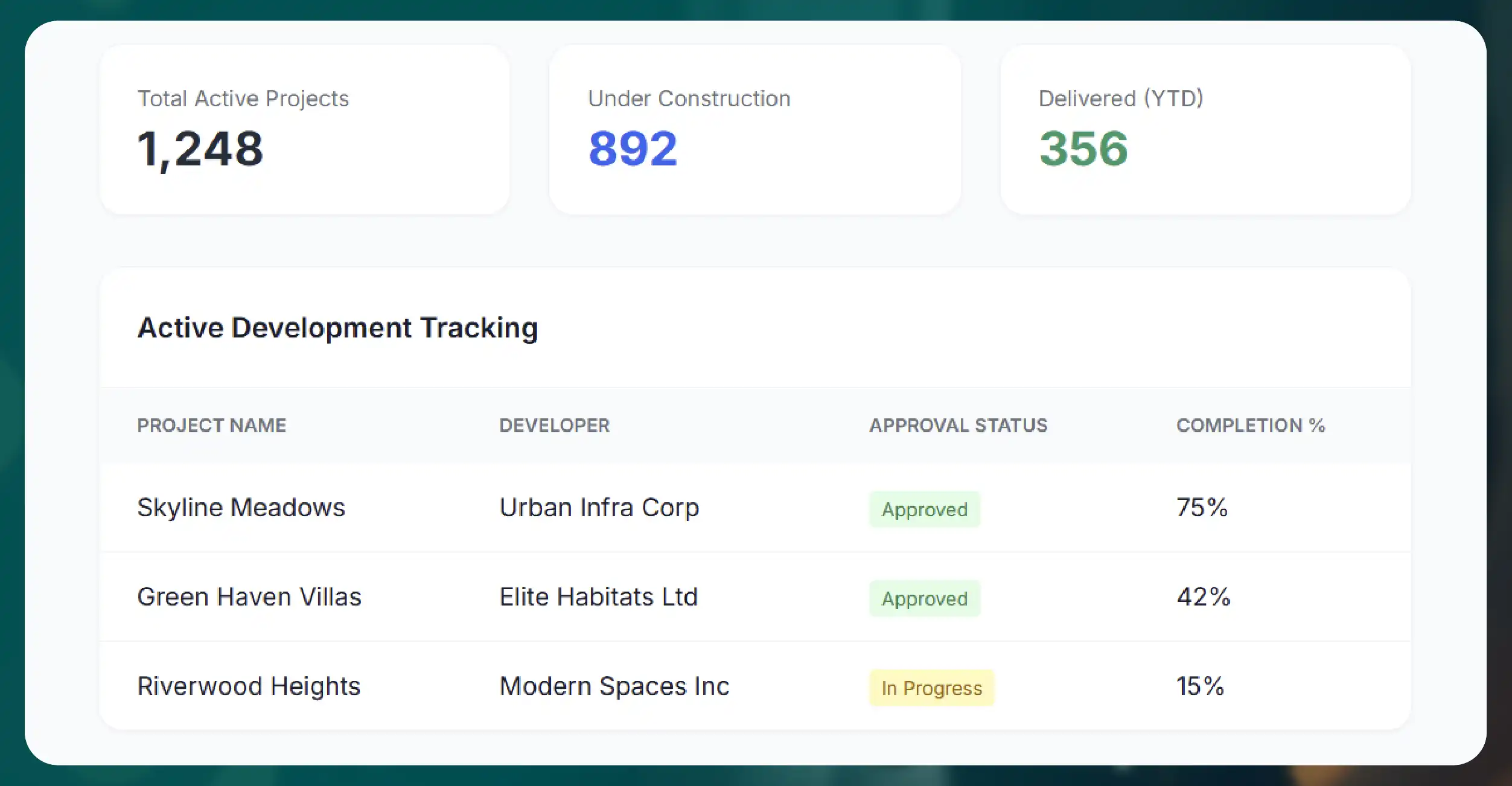
The implementation of the Real Estate Regulatory Authority (RERA) has significantly improved transparency across India's real estate sector. Registered projects now include standardized information regarding approvals, construction status, project specifications, developer details, and inventory updates.
This standardized structure allows organizations to automate data extraction and create comprehensive project intelligence systems.
Companies analyzing affordable housing markets often integrate data from multiple RERA portals into centralized dashboards, making regional comparisons much easier.
Such information also assists financial institutions while evaluating project financing risks and home loan approvals.
Building a Comprehensive Project Intelligence Platform
Affordable housing data extends beyond simple project names and addresses. A comprehensive database typically includes:
- Project registration numbers
- Developer information
- Construction stages
- Project launch dates
- Expected completion dates
- Possession timelines
- Apartment configurations
- Unit sizes
- Pricing information
- Government subsidy eligibility
- Project amenities
- Booking status
- Approval documentation
- Legal registrations
- Geographical coordinates
- Nearby infrastructure
These attributes enable stakeholders to create advanced market intelligence reports for planning and investment.
Importance of Maintaining a Reliable RERA Project Address Database
One of the most valuable assets generated through automated extraction is a well-maintained RERA project address database. Accurate location information enables businesses to map housing developments geographically while identifying emerging residential clusters.
Developers use address intelligence to evaluate competition within specific localities, while investors assess neighborhood growth based on ongoing affordable housing activity.
Location intelligence further supports infrastructure planning by identifying transportation connectivity, schools, hospitals, employment centers, and commercial developments surrounding residential projects.
Tracking Housing Inventory Availability
Affordable housing demand fluctuates depending on government incentives, financing availability, regional employment growth, and urban expansion.
By continuously monitoring project inventory, organizations can identify:
- Available units
- Recently booked inventory
- Sold-out projects
- New project launches
- Inventory turnover
- Demand acceleration
- Pricing movements
This information supports more accurate forecasting for developers, lenders, and policymakers.
Monitoring Booked and Available Housing Units
Inventory movement provides one of the strongest indicators of project performance. By automating project monitoring, businesses can Scrape RERA booked vs unbooked units from Maharashtra and observe real-time changes in housing demand.
Tracking booking status helps developers understand customer preferences while enabling government agencies to evaluate the success of affordable housing initiatives.
Banks and housing finance companies also benefit by identifying projects with healthy sales momentum before approving large-scale financing.
Creating a Unified Real Estate Project Database
Large organizations rarely analyze individual projects in isolation. Instead, they aggregate thousands of projects into centralized systems that simplify reporting, analytics, and visualization.
A consolidated Real estate project database from Maharashtra enables analysts to compare projects across districts, cities, developers, construction stages, and housing categories.
Such databases become powerful business assets for consulting firms, investment companies, insurance providers, and government planning departments.
The ability to search projects using standardized attributes dramatically improves operational efficiency.
Key Data Fields Commonly Extracted
Affordable housing datasets typically contain hundreds of structured attributes collected from official records.
Common fields include developer name, project registration number, project type, approval status, construction progress, land area, building count, apartment configurations, carpet area, possession schedule, sanctioned units, available inventory, booked inventory, pricing information, payment plans, legal approvals, environmental clearances, project images, amenities, contact information, and project documentation.
These standardized datasets eliminate inconsistencies associated with manual research.
Role of Automation in Affordable Housing Analytics

Housing markets evolve continuously as new projects launch and existing developments progress through different construction phases.
Automated extraction systems regularly revisit official portals to capture newly updated information without requiring manual intervention.
This continuous synchronization ensures that business intelligence dashboards always reflect the latest available project information.
Automation also minimizes human errors while improving scalability across thousands of projects.
Supporting Government Housing Programs
Government agencies responsible for affordable housing require comprehensive visibility into project execution and beneficiary allocation.
Structured project data helps authorities monitor approved developments, construction milestones, subsidy implementation, occupancy rates, and regional housing shortages.
Policy decisions become significantly more data-driven when authorities can access standardized housing intelligence instead of fragmented records.
Enhancing Investment Decisions
Institutional investors increasingly rely on structured project intelligence before allocating capital toward residential developments.
Historical project performance, developer credibility, inventory absorption rates, construction timelines, and regulatory compliance all contribute to investment risk assessment.
Access to accurate housing datasets allows investors to compare multiple opportunities objectively while reducing uncertainty.
Investment firms also build predictive models that estimate future demand based on historical project activity.
Improving Developer Competitiveness
Developers operate in highly competitive housing markets where pricing, project positioning, amenities, and delivery timelines directly influence sales.
By analyzing competitor projects, developers identify underserved locations, preferred apartment configurations, and pricing gaps.
Competitive benchmarking enables smarter project planning while reducing market entry risks.
Real-time monitoring further supports dynamic pricing strategies based on surrounding project performance.
Enabling Advanced Geographic Analysis
Modern GIS platforms integrate affordable housing datasets with demographic, transportation, employment, and infrastructure information.
This spatial analysis helps planners identify housing gaps while prioritizing future residential development.
Urban planning departments can evaluate how new housing projects align with road networks, metro connectivity, educational institutions, healthcare facilities, and commercial hubs.
Such integrated analysis supports balanced regional growth.
Leveraging Real Estate Property Dataset for Market Research
Organizations conducting large-scale housing research frequently depend on a structured Real Estate Property Dataset that combines regulatory information with market intelligence.
These datasets simplify statistical analysis by providing standardized fields across thousands of projects. Analysts can identify construction trends, pricing evolution, inventory availability, project completion rates, and regional development patterns.
Researchers also use these datasets for forecasting housing demand and evaluating the long-term impact of government housing policies.
Data Quality and Validation
Accurate housing intelligence depends on consistent data validation processes.
Automated extraction systems validate registration numbers, project identifiers, location coordinates, numerical values, and document consistency before storing records.
Duplicate detection, schema validation, missing value identification, and timestamp verification further improve dataset reliability.
Organizations implementing robust validation workflows achieve significantly higher analytical accuracy.
Business Applications Across Industries
Affordable housing datasets support numerous industries beyond traditional real estate.
- Financial institutions assess lending risks.
- Insurance companies evaluate property exposure.
- Construction firms monitor market expansion.
- Urban planners identify development priorities.
- Technology companies build property search platforms.
- Consulting firms generate investment reports.
- Academic researchers analyze housing affordability.
- Government agencies monitor policy effectiveness.
Each stakeholder benefits from timely access to verified project information.
Future of Affordable Housing Data Intelligence
Artificial intelligence, predictive analytics, and machine learning continue transforming how affordable housing information is analyzed.
Rather than simply collecting project records, organizations increasingly develop predictive models that estimate construction delays, pricing shifts, inventory absorption, and future housing demand.
Integration with satellite imagery, demographic statistics, economic indicators, and mobility datasets further enhances forecasting accuracy.
As digital governance expands, structured housing intelligence will become even more valuable for decision-makers.
How iWeb Data Scraping Can Help You?
Comprehensive Affordable Housing Data Collection
Our data scraping services automatically collect affordable housing project information from multiple trusted sources, delivering structured, accurate, and regularly updated datasets that support market research, investment planning, regulatory compliance, and competitive intelligence initiatives.
Real-Time Project Monitoring
We continuously monitor project registrations, construction progress, pricing changes, inventory availability, developer updates, and possession timelines, ensuring your organization always works with the latest verified housing market information.
Customized Data Delivery
Our solutions deliver data in formats such as CSV, JSON, Excel, APIs, databases, or cloud storage, enabling seamless integration with your existing analytics platforms, dashboards, and enterprise applications.
High-Quality Verified Datasets
Advanced validation processes eliminate duplicates, standardize records, verify project details, and maintain consistent data quality, providing reliable datasets that improve reporting accuracy and support confident business decision-making.
Scalable Data Intelligence Solutions
Whether tracking hundreds or millions of property records, our scalable scraping infrastructure supports large-volume extraction, automated updates, and customized workflows tailored to evolving real estate business requirements.
Conclusion
Affordable housing markets generate enormous volumes of valuable information that can drive better investment, planning, compliance, and policy decisions when transformed into structured datasets. Automated Real Estate Property Data Extraction empowers organizations to eliminate manual research while building scalable, continuously updated housing intelligence platforms.
Businesses leveraging Real Estate Data Intelligence Services gain faster access to verified project information, inventory updates, pricing insights, and regional development trends that improve operational efficiency and strategic planning. Combined with modern Web Scraping API Services, organizations can automate large-scale data collection, integrate real-time updates into analytics platforms, and maintain highly accurate affordable housing databases that support smarter decisions across the entire real estate ecosystem.
FAQs
Scraping affordable housing project data helps businesses monitor project launches, construction progress, pricing, unit availability, developer information, and regulatory updates. This structured data supports market research, investment analysis, competitive benchmarking, and informed business decisions.
Data typically includes project registration numbers, developer details, project addresses, construction status, possession dates, apartment configurations, sanctioned units, booked and unbooked inventory, pricing information, approvals, amenities, and contact details.
The ideal update frequency depends on business needs. Daily or weekly data extraction is recommended to capture new project registrations, inventory changes, construction progress, pricing updates, and other modifications published on official RERA portals.
Real estate developers, investment firms, banks, housing finance companies, government agencies, property consultants, insurance providers, market research firms, and proptech companies all benefit from accurate and structured affordable housing datasets.
Web scraping APIs automate the extraction of large volumes of housing project information from multiple sources, ensuring faster collection, higher accuracy, real-time updates, reduced manual effort, and seamless integration with business intelligence and analytics platforms.