Newsletter / April 2026 Edition
INSIGHTS & TRENDS

Scrape Airline Price Trends US & Europe Routes to Analyze Weekly Fare Movements and Pricing Patterns

📅 April, 2026 👤 iWeb Data Team ⏱ 8 Min Read
main

Uncovering News & Updates with iWeb Data Scraping

Scrape Airline Price Trends US & Europe Routes for real-time fare tracking, pricing intelligence, and travel demand analysis insights

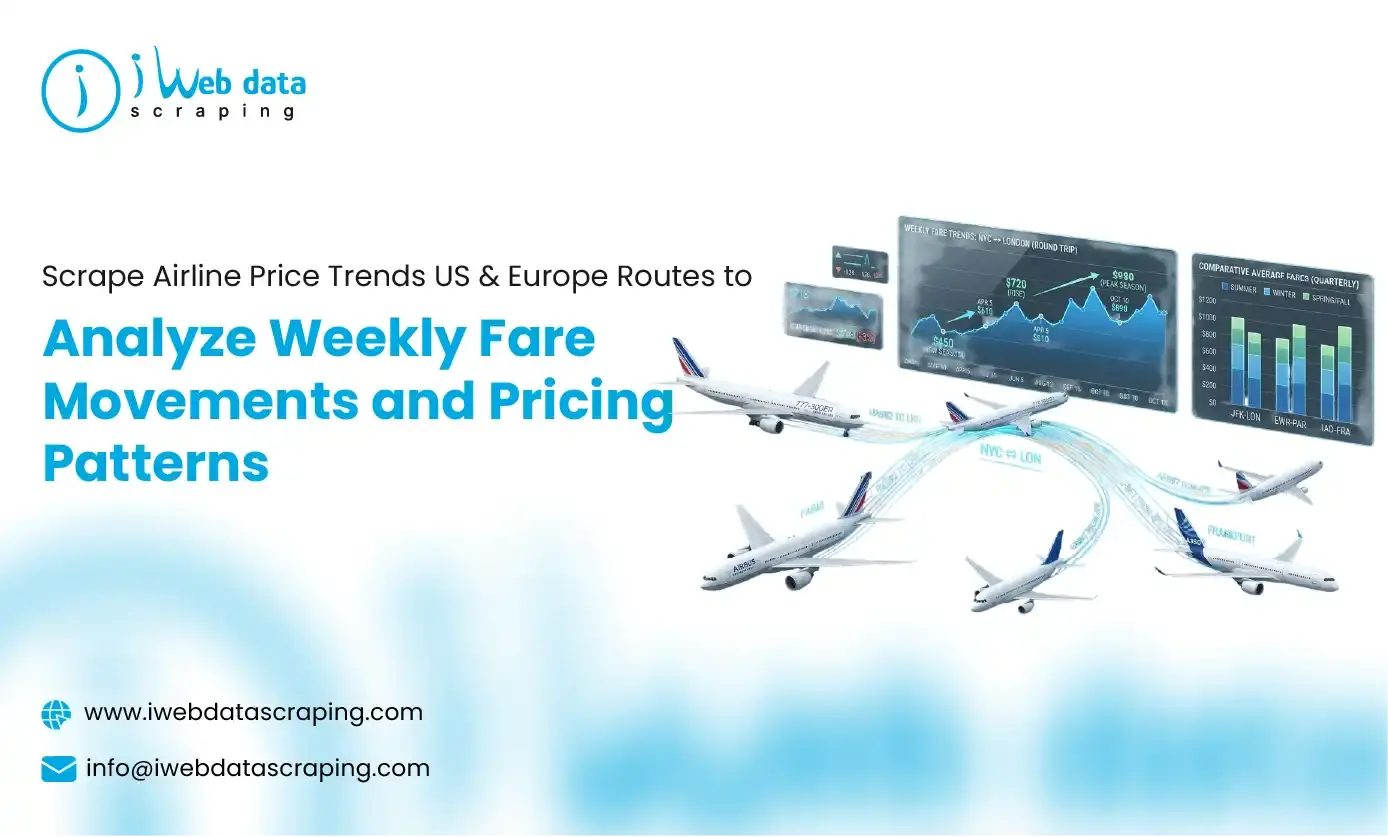
Airline pricing across major routes in the United States and Europe has become increasingly dynamic in 2026, influenced by demand volatility, fuel costs, and advanced pricing algorithms. Travelers and businesses alike are paying closer attention to fare movements, especially as weekly fluctuations and seasonal pricing differences significantly impact travel budgets. Many analysts now Scrape Airline Price Trends US & Europe Routes to gain real-time visibility into how fares evolve across popular corridors such as New York–London or Paris–Chicago. Understanding these patterns is essential for optimizing booking strategies and forecasting travel expenses effectively.

Weekly Fare Changes Across Key Routes

Airline ticket prices no longer follow predictable monthly cycles; instead, they shift rapidly on a weekly—and sometimes daily—basis. This shift is largely driven by real-time demand, competitor pricing, and seat inventory.

Key Weekly Pricing Observations:

  • Fares typically rise mid-week (Tuesday–Thursday) due to business travel demand
  • Weekend prices often fluctuate based on leisure traveler bookings
  • Last-minute bookings see sharp price increases, especially on transatlantic routes
  • Airlines frequently adjust fares multiple times within a week

With advanced analytics, companies are now Tracking weekly airline Routes fare data US & Europe to identify optimal booking windows and detect early signs of fare surges. This data-driven approach helps both travelers and travel platforms make smarter purchasing decisions.

Peak vs Off-Peak Pricing Trends

One of the most critical factors influencing airline pricing is seasonality. The difference between peak and off-peak travel periods can result in significant fare variations across US and European routes.

Peak Season Trends:

  • Summer (June–August) and holiday seasons experience the highest fares
  • Increased demand leads to limited seat availability and higher prices
  • Premium routes such as London–New York see sharp price spikes

Off-Peak Season Trends:

  • Lower demand during late winter and early spring results in reduced fares
  • Airlines offer promotions and discounts to stimulate bookings
  • Greater availability leads to more competitive pricing

Travel analysts conducting peak vs off-peak flight pricing analysis have found that fares can vary by up to 40–60% depending on travel timing. This makes timing one of the most important factors in securing cost-effective airline tickets.

Data Intelligence in Airline Pricing

Modern airline pricing strategies rely heavily on data intelligence and automation. By leveraging large-scale data extraction and analytics, businesses can decode complex pricing behaviors across airlines and routes.

Tools and platforms now Airline Fare Price Trends Extract to monitor fare changes, identify discount patterns, and compare pricing across multiple airlines in real time. This enables travel companies, aggregators, and analysts to understand competitive positioning and adjust their offerings accordingly.

From tracking weekly fare volatility to analyzing seasonal pricing shifts, data-driven insights are transforming how the travel industry operates. Businesses can now forecast demand, optimize pricing strategies, and deliver better value to customers using accurate and timely data.

Conclusion

Airline price trends across US and Europe routes in 2026 highlight the growing complexity of fare dynamics. Weekly price fluctuations and the stark contrast between peak and off-peak seasons make it essential for travelers and businesses to stay informed. By leveraging real-time data insights and advanced analytics, stakeholders can navigate pricing volatility more effectively and make smarter travel decisions. In an industry where prices change rapidly, those equipped with the right data will always have the competitive edge.

Let’s Talk About Product

What's Next?

We start by signing a Non-Disclosure Agreement (NDA) to protect your ideas.

Our team will analyze your needs to understand what you want.

You'll get a clear and detailed project outline showing how we'll work together.

We'll take care of the project, allowing you to focus on growing your business.