How Can Businesses Scrape Amazon Out of Stock Data for Stockout Prediction to Prevent Inventory
Gaps?
Introduction
In today’s highly competitive eCommerce environment, inventory planning has become
one of the most critical elements of successful retail operations. Marketplaces like Amazon
handle millions of product listings, and even a slight disruption in inventory can cause lost
sales, frustrated customers, and weakened brand reputation. Businesses must proactively identify
potential supply gaps before they impact operations. One powerful strategy involves data-driven
monitoring systems that help Scrape Amazon Out of Stock Data for Stockout Prediction so
retailers can anticipate demand fluctuations and supply disruptions early.
Modern retail analytics relies on extracting large-scale product availability
signals from marketplaces. With advanced data pipelines capable of Scraping Amazon Product
Availability to Predict Stockouts, businesses can detect early warning signs such as declining
stock levels, delivery delays, and repeated out-of-stock alerts. These signals help companies
forecast potential supply chain gaps weeks in advance.
Retail intelligence platforms now integrate Real-Time Amazon Stock Monitoring,
allowing brands, resellers, and manufacturers to observe product availability trends across
categories, sellers, and geographies. By combining these insights with demand analytics,
businesses can forecast supply shortages nearly 30 days before they occur, giving them enough
time to restock, adjust pricing, or reroute logistics.
Why Stockout Prediction Matters in the Amazon Ecosystem?
Stockouts can significantly impact both sellers and customers. When a product goes
out of stock, businesses not only lose direct sales but also risk losing search ranking and
customer trust. Predicting stockouts early helps companies maintain operational continuity.
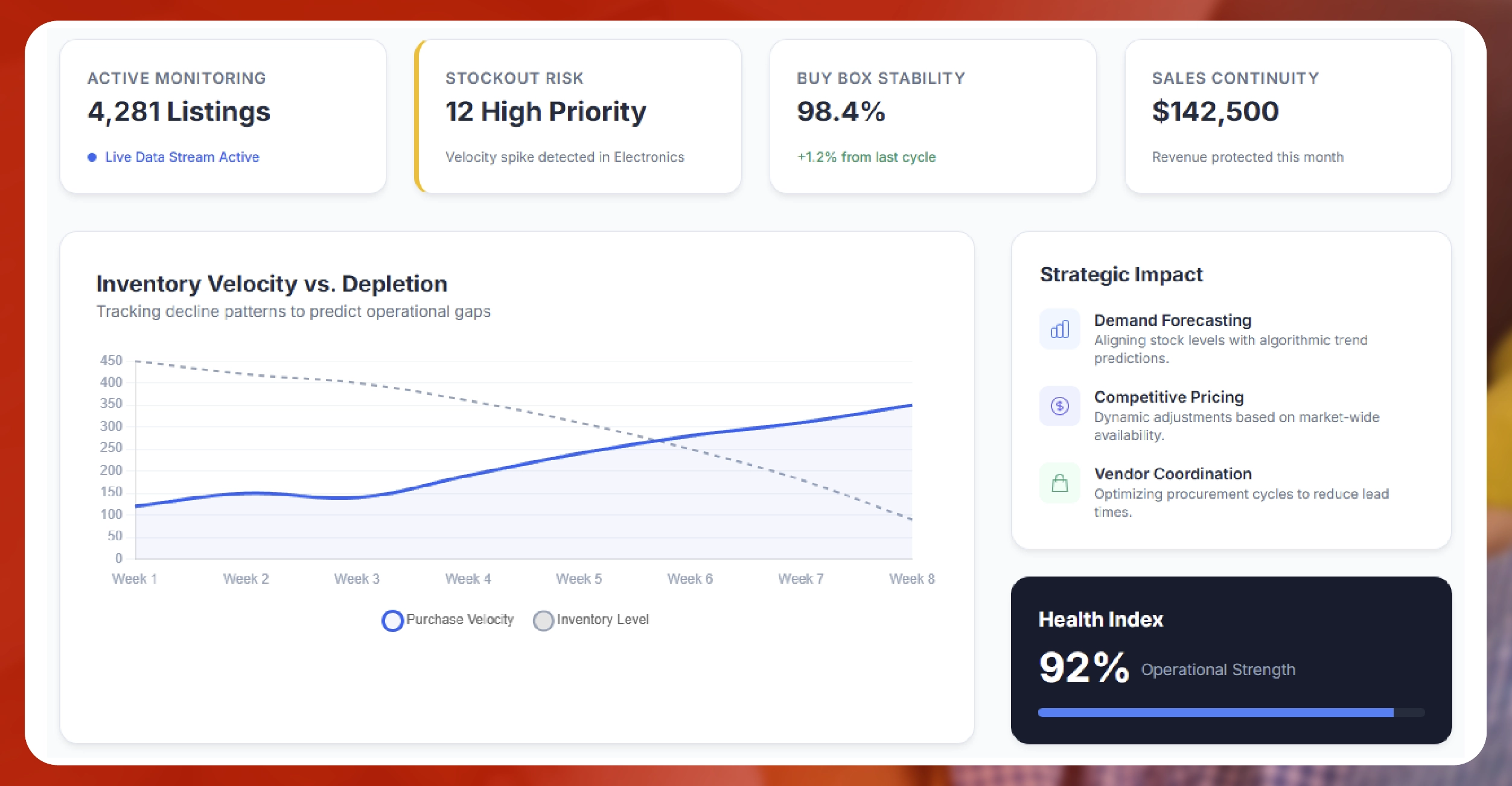
By leveraging Amazon Inventory Data Scraping for Stockout Prediction, companies can
monitor thousands of product listings simultaneously and identify patterns indicating upcoming
shortages. These patterns include declining stock counts, rapid purchase velocity, and repeated
seller inventory depletion.
Stockout prediction also supports:
- Demand forecasting
- Competitive pricing strategies
- Supply chain planning
- Vendor coordination
- Customer satisfaction improvement
Retailers who actively monitor stock availability are able to maintain consistent
product supply and reduce operational disruptions.
Key Data Points Collected from Amazon
Stockout prediction models rely heavily on structured marketplace data. Extracting
accurate and consistent product-level data is essential for generating reliable forecasts.
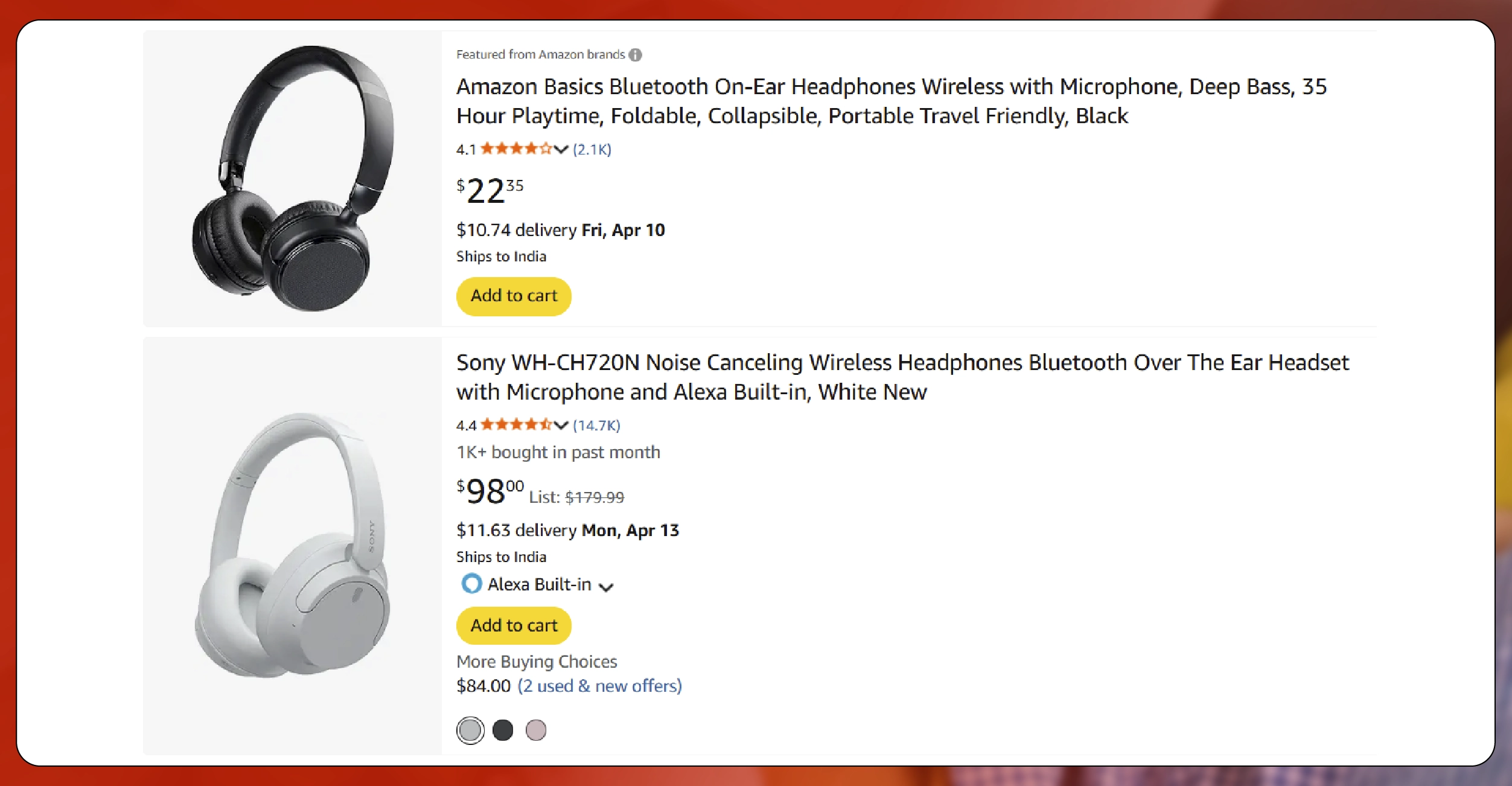
Companies use automated systems for Amazon Product Stock Availability data Tracking,
enabling them to capture critical metrics such as:
- Product availability status
- Seller inventory updates
- Delivery time changes
- Buy Box seller shifts
- Customer demand signals
- Price fluctuations
When these signals are collected consistently over time, predictive algorithms can
identify abnormal changes that indicate upcoming inventory shortages.
This structured dataset becomes an essential resource for supply chain planning and
competitive analysis.
Predicting Supply Gaps 30 Days in Advance
Predictive analytics plays a central role in identifying stock shortages before they
impact sales. Advanced data platforms use historical trends, demand velocity, and seller
behavior signals to forecast inventory depletion.
Through Amazon Inventory Data Scraping for Supply predicting, companies can analyze
patterns such as:
- Daily sales velocity
- Inventory turnover rates
- Seasonal demand spikes
- Promotional campaign effects
- Supplier restocking intervals
When these patterns are modeled using machine learning algorithms, businesses can
predict inventory shortages weeks before they happen.
For example, if a product historically sells 500 units per week and the current
inventory drops below 200 units with delayed restocking, predictive systems will flag a
potential stockout within 10–14 days. This allows sellers to replenish inventory before the
shortage becomes visible to customers.
Competitive Insights from Out-of-Stock Data
Out-of-stock signals not only reveal internal supply gaps but also provide valuable
competitive intelligence. Monitoring competitor inventory levels helps brands identify
opportunities to increase sales.
Using Amazon Out of Stock Product Data Intelligence, businesses can detect
situations where competing sellers run out of inventory. When this happens, companies can
increase advertising visibility or adjust pricing to capture the sudden surge in demand.
For example:
- If a competitor's best-selling item becomes unavailable
- If multiple sellers run out of stock simultaneously
- If delivery times increase dramatically
These signals indicate demand pressure in the market and create opportunities for
other sellers to increase market share.
Building Large-Scale Amazon Product Datasets
Data collection is the foundation of stockout prediction. Large datasets allow
businesses to analyze trends across categories, regions, and time periods.
Organizations build comprehensive Amazon
Product Datasets containing information
such as:
- Product titles and categories
- Seller inventory updates
- Stock availability signals
- Product pricing history
- Customer ratings and reviews
- Seller competition levels
These datasets enable brands to understand supply chain dynamics across multiple
products simultaneously. The larger the dataset, the more accurate the predictive model becomes.
The Role of Automated Data Pipelines
Manually tracking product availability on Amazon is nearly impossible due to the
platform's massive scale. Automated pipelines allow businesses to collect real-time information
from thousands of listings simultaneously.
Professional Amazon data extraction
Services enable businesses to build reliable
data infrastructures capable of processing large volumes of marketplace signals. These
services
automate:
- Product page monitoring
- Inventory status tracking
- Seller availability changes
- Delivery time monitoring
- Category demand analysis
Automation ensures consistent data collection and eliminates the errors associated
with manual monitoring.
Expanding Intelligence Beyond Amazon
Many retailers operate across multiple marketplaces such as Walmart, eBay, Shopify
stores, and regional platforms. Monitoring stock availability across these channels helps
businesses gain a broader understanding of market demand.
Organizations that Extract Popular E-Commerce Website Data can compare product
availability trends across marketplaces and identify global supply disruptions.
For example:
- A product going out of stock simultaneously on Amazon and Walmart may signal a supplier
shortage.
- Sudden demand spikes across multiple platforms could indicate viral product popularity.
Multi-platform monitoring allows retailers to make faster inventory decisions.
Benefits of eCommerce Data Scraping Services
Retailers increasingly rely on professional eCommerce Data Scraping Services to
gather and process marketplace data efficiently. These services provide scalable
infrastructure
for collecting, processing, and analyzing eCommerce data.
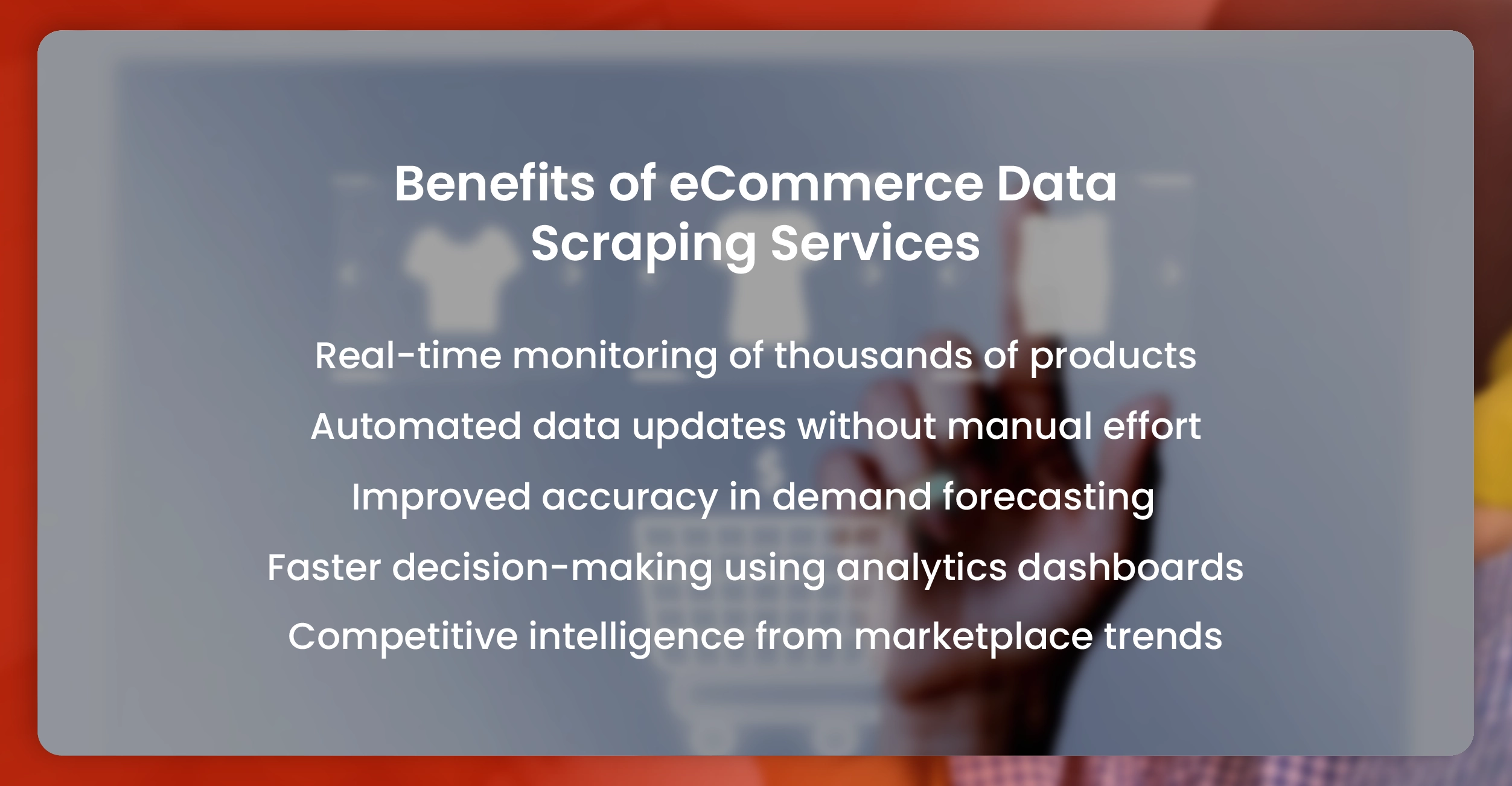
Key benefits include:
- Real-time monitoring of thousands of products
- Automated data updates without manual effort
- Improved accuracy in demand forecasting
- Faster decision-making using analytics dashboards
- Competitive intelligence from marketplace trends
By integrating scraped data with business intelligence platforms, organizations can
transform raw marketplace signals into actionable insights.
Stay ahead of inventory shortages by using our Amazon data
scraping solutions to predict stockouts and protect your sales.
Real-World Applications of Stockout Prediction
Stockout prediction powered by data scraping is used across multiple industries,
including consumer electronics, fashion, beauty, groceries, and home appliances.
Some practical applications include:
- Retail Supply Chain Optimization
Brands predict shortages and coordinate
replenishment before inventory runs out.
- Marketplace Seller Strategy
Sellers identify competitor stockouts and
increase advertising to capture additional sales.
- Demand Forecasting
Companies use availability trends to estimate
upcoming product demand.
- Pricing Optimization
Retailers adjust prices dynamically when competitor
inventory becomes limited.
- Category Market Analysis
Market researchers track supply gaps to analyze
industry trends.
These applications demonstrate how stock monitoring can directly impact revenue and
operational efficiency.
Future of AI-Driven Stock Monitoring
Artificial intelligence and machine learning are rapidly transforming how inventory
predictions are generated. Modern analytics platforms combine scraped marketplace data with
predictive models that continuously learn from new data patterns.
In the future, stock monitoring systems will integrate:
- AI-powered demand forecasting
- Predictive supply chain optimization
- Automated restocking alerts
- Cross-marketplace inventory monitoring
- Real-time seller competition analysis
As datasets grow larger and algorithms become more advanced, the accuracy of
stockout predictions will continue to improve.
Businesses that adopt predictive inventory monitoring early will gain a major
competitive advantage in the eCommerce landscape.
How iWeb Data Scraping Can Help You?
1. Real-Time Product Availability Monitoring
Our data scraping services continuously track Amazon product availability, helping
businesses identify early stock fluctuations. This real-time monitoring enables proactive
inventory decisions, ensuring sellers can respond quickly to potential stockouts.
2. Early Stockout Prediction Insights
By analyzing historical inventory patterns and demand signals, our scraping
solutions provide predictive insights. Businesses can detect possible supply shortages up to 30
days in advance and plan timely restocking strategies.
3. Competitive Inventory Intelligence
Our systems monitor competitor listings and stock levels across multiple sellers.
This helps brands identify market supply gaps, adjust pricing strategies, and capture additional
demand when competing products go out of stock.
4. Large-Scale Product Data Collection
We extract structured datasets including availability status, delivery estimates,
seller details, and pricing information. These comprehensive datasets help businesses analyze
inventory performance and optimize supply chain planning.
5. Scalable Automated Data Pipelines
Our advanced scraping infrastructure automates large-scale data extraction across
thousands of Amazon listings. Businesses receive reliable, updated data feeds that integrate
seamlessly with analytics platforms for better forecasting and decision-making.
Conclusion
Predicting stock shortages before they occur is one of the most valuable
capabilities in modern eCommerce analytics. By collecting large-scale product availability data,
businesses can anticipate supply gaps, optimize inventory strategies, and maintain consistent
product availability for customers.
Organizations using advanced monitoring systems can track inventory trends, demand
patterns, and competitor activity simultaneously. Integrating datasets such as Ecommerce Product
Ratings and Review Dataset further enhances demand forecasting by linking customer
sentiment
with inventory trends.
These insights become even more powerful when combined with broader eCommerce Data
Intelligence platforms that integrate pricing, reviews, availability, and demand signals
into
unified dashboards.
Finally, scalable Web Scraping API Services
ensure
businesses can continuously
collect accurate marketplace data and transform it into predictive insights that protect
revenue
and strengthen supply chain resilience.
Experience top-notch web scraping service
and mobile app scraping solutions with iWeb Data
Scraping. Our skilled team excels in extracting various data sets, including retail store locations and beyond. Connect with us
today to learn how our customized services can address your unique project needs, delivering the
highest efficiency and dependability for all your data requirements.