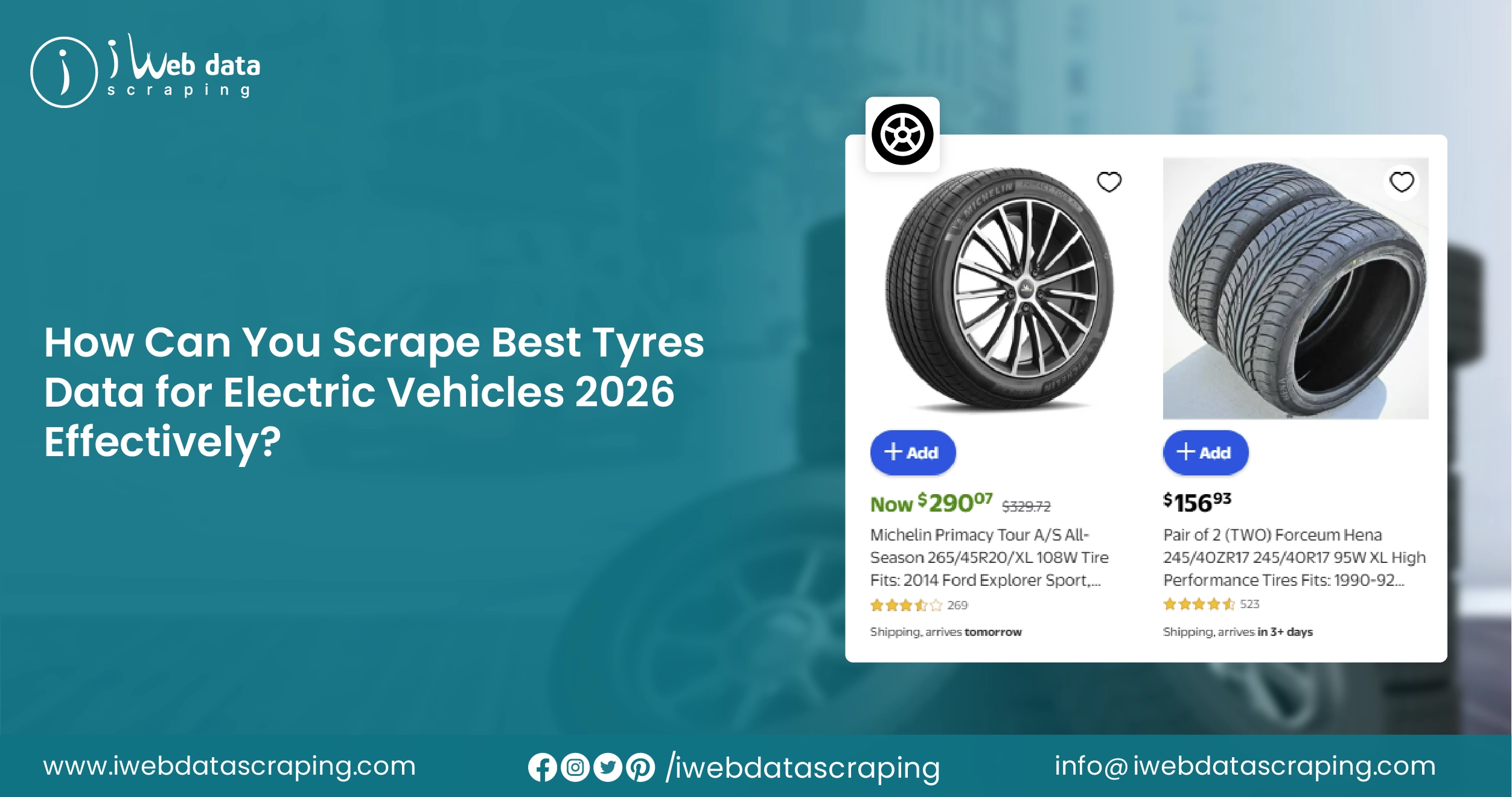
How Can You Scrape Best Tyres Data for Electric Vehicles 2026 Effectively?
Introduction
The rapid rise of electric vehicles (EVs) has transformed not only the automotive
industry but also the tyre market. EVs demand specialized tyres that can handle higher torque,
increased vehicle weight, and the need for improved efficiency. As competition grows among
manufacturers and retailers, businesses are turning to advanced data extraction techniques to
stay ahead. The need to Scrape Best Tyres Data for Electric Vehicles 2026 has become a critical
strategy for companies aiming to gain insights into pricing, availability, and product
specifications across global e-commerce platforms.
In today’s competitive landscape, Electric Vehicle Tyre Comparison by Price
Performance and Size is essential for manufacturers, retailers, and analysts who want to make
informed decisions. By collecting structured data from multiple sources, organizations can
benchmark tyre performance and identify the most cost-effective options.
Additionally, businesses are leveraging tools to Extract Top EV Tyres Data 2026,
enabling them to analyze trends, monitor competitors, and optimize inventory planning. This blog
explores how tyre data scraping works, the key data fields involved, and why it is essential for
the EV ecosystem.
Understanding the Importance of EV Tyre Data Scraping
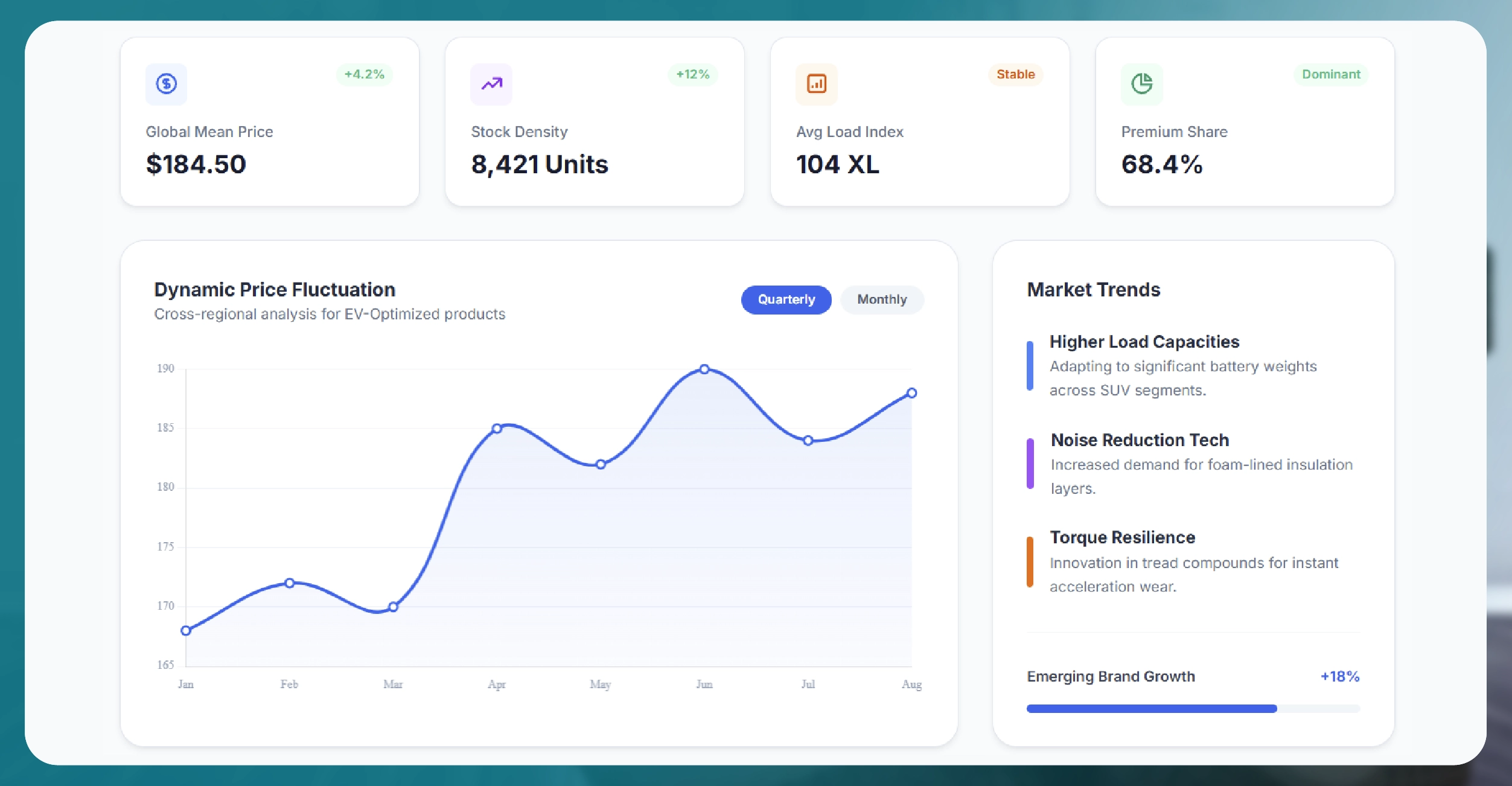
Electric vehicles require tyres that are specifically engineered to handle their
unique dynamics. Unlike traditional vehicles, EVs exert more pressure on tyres due to battery
weight and instant torque. As a result, tyre manufacturers are innovating rapidly, and keeping
track of these changes manually is nearly impossible.
Data scraping enables companies to:
- Monitor tyre prices across regions
- Track stock availability in real-time
- Compare specifications such as size, load index, and speed rating
- Analyze seasonal demand patterns
- Identify emerging brands and trends
With accurate and up-to-date data, businesses can make strategic decisions that
improve profitability and customer satisfaction.
Key Data Fields for EV Tyre Data Collection
To effectively analyze the EV tyre market, it is important to collect detailed and
structured data. Below are the essential data fields used in tyre data scraping:
- Date – Date of Data Collection
This field captures when the data was
collected, ensuring that insights are time-sensitive and relevant. It helps in tracking
price fluctuations and seasonal changes.
- Country – Country of the E-Retail Website
Understanding geographical
differences is crucial. Tyre prices, availability, and demand can vary significantly between
countries due to regulations, taxes, and climate conditions.
- Website – E-Retail Platform Name
Identifying the source platform allows
businesses to compare pricing strategies across marketplaces and evaluate platform-specific
trends.
- Brand – Brand of the Tyre
Brand analysis helps in identifying market
leaders and emerging competitors. It also enables comparison of premium versus budget tyre
segments.
- Tyre Size – Complete Tyre Dimensions
This includes width, aspect ratio,
diameter, load index, and speed rating. Tyre size compatibility is critical for EV
performance and safety.
- Seasonality – Tyre Season Type
Tyres are categorized as summer, winter,
or all-season. This classification helps businesses align their inventory with seasonal
demand patterns.
- Tyre Price Incl Tax LCY
This field represents the final price paid by
consumers, including taxes, in local currency. It is essential for understanding real market
pricing.
- Tyre Price Excl Tax LCY
By excluding taxes, this field allows businesses
to analyze base pricing and compare margins across regions.
- Stock / Inventory – Available Quantity
Real-time inventory data helps in
demand forecasting and supply chain optimization. It also indicates product popularity.
- URL – Direct Product Page Link
The product URL ensures traceability and
allows users to verify data or access additional product details.
Benefits of EV Tyre Data Scraping
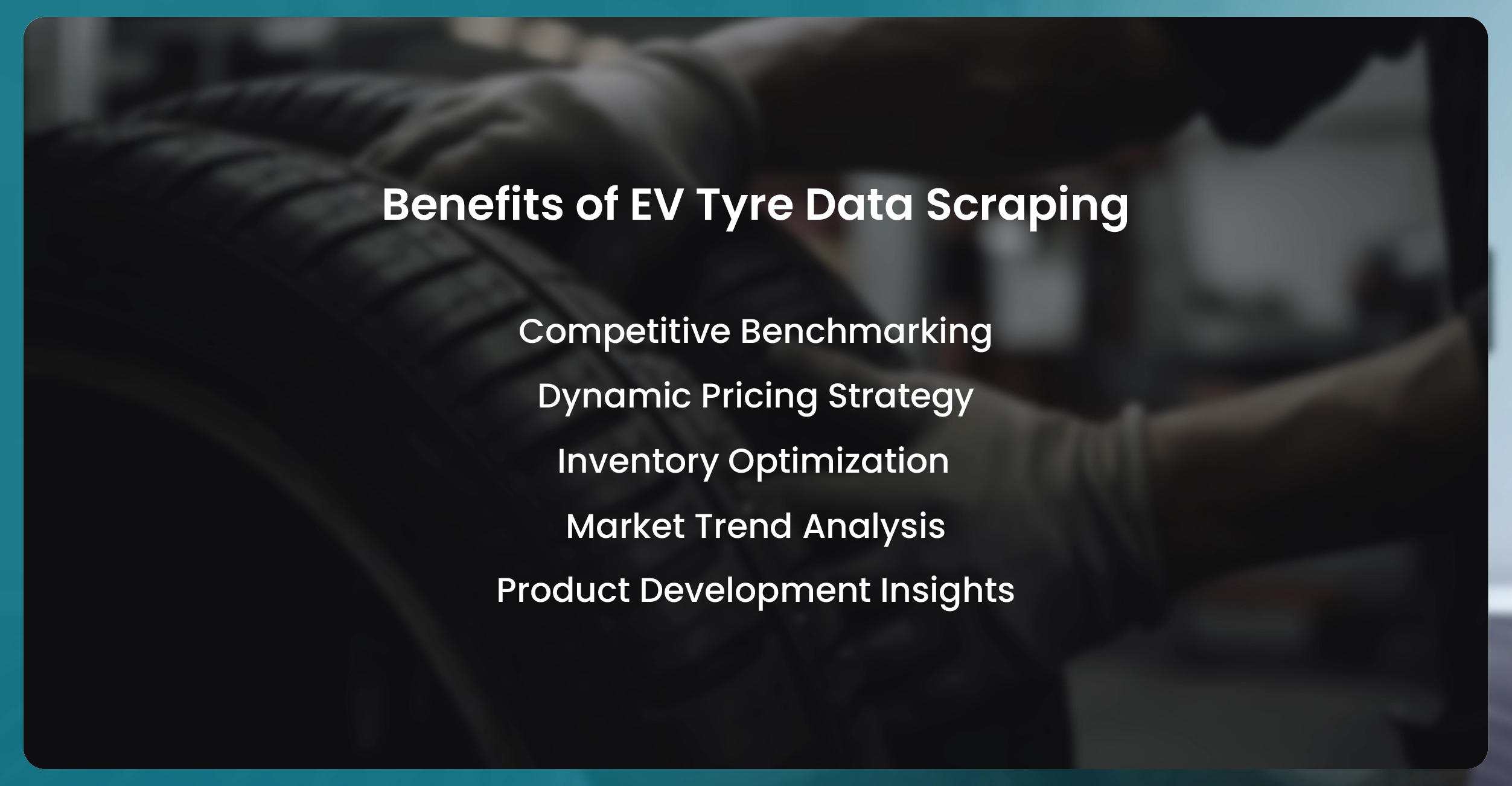
Competitive Benchmarking
Businesses can Compare Electric Vehicle Tyres by Brand Price and Features,
gaining
insights into competitor strategies and identifying gaps in the market.
Dynamic Pricing Strategy
Real-time data enables companies to adjust their pricing based on competitor
movements, ensuring competitiveness and profitability.
Inventory Optimization
Tracking stock levels across platforms helps businesses maintain optimal
inventory
and avoid overstocking or stockouts.
Market Trend Analysis
Historical data allows analysts to identify trends in tyre demand, pricing, and
consumer preferences.
Product Development Insights
Manufacturers can use data to understand which tyre sizes and features are in
demand, guiding future product innovation.
Unlock powerful EV tyre market insights today—contact us to
get
customized, real-time data scraping solutions tailored to your business
needs!
Role of Advanced Scraping Tools
Modern tools and technologies have made data scraping more efficient and
scalable. A
Best Tyres Data for Electric Vehicles 2026 Scraper can automate the entire process,
collecting
data from multiple websites and delivering it in structured formats such as CSV or JSON.
These tools offer:
- Automated data extraction
- Real-time updates
- Multi-country support
- Data normalization and cleaning
- API integration for seamless workflows
Use Cases of EV Tyre Data
- Price Analysis
Businesses can perform Best Electric Vehicle Tyre
Price
Analysis to understand pricing trends and identify cost-effective options for consumers.
- Demand Forecasting
By analyzing historical data, companies can
predict
future demand and plan their inventory accordingly.
- Retail Strategy Optimization
Retailers can optimize their product
listings, pricing, and promotions based on competitor insights.
- Customer Insights
Understanding which tyres are popular among
consumers
helps businesses tailor their offerings to meet customer needs.
Real-Time Monitoring and Intelligence
In a fast-moving market, real-time insights are crucial. EV Tyre Price
Monitoring
allows businesses to track changes in pricing and availability as they happen. This ensures
that
companies can respond quickly to market dynamics.
Interestingly, the techniques used for tyre data scraping are similar to those
used
in Web Scraping Electronics Product
Data,
highlighting the versatility of data extraction
technologies across industries.
Challenges in Tyre Data Scraping
While data scraping offers numerous benefits, it also comes with challenges:
- Website Structure Changes: Frequent updates to website layouts can disrupt scraping
processes.
- Data Accuracy: Ensuring clean and accurate data requires robust validation mechanisms.
- Legal Compliance: Businesses must adhere to data privacy and usage regulations.
- Scalability: Handling large volumes of data across multiple regions requires advanced
infrastructure.
Overcoming these challenges requires the use of reliable tools and experienced
data
engineering teams.
Future of EV Tyre Data Analytics
As the EV market continues to grow, the demand for high-quality tyre data will
increase. Future trends include:
- Integration of AI and machine learning for predictive analytics
- Enhanced data visualization tools for better insights
- Increased adoption of APIs for real-time data access
- Expansion of data coverage across emerging markets
Companies that invest in data-driven strategies will be better positioned to
capitalize on these opportunities.
How iWeb Data Scraping Can Help You?
1. Real-Time Market Insights
We provide up-to-date tyre pricing, stock availability, and product data to help
you
stay ahead of competitors.
2. Accurate Price Monitoring
Track price changes across multiple e-commerce platforms to optimize your
pricing
strategy and maximize profitability.
3. Comprehensive Data Coverage
Our services collect structured data across countries, brands, tyre sizes, and
seasonal categories for deeper analysis.
4. Competitor & Trend Analysis
Gain valuable insights into competitor offerings, popular tyre models, and
emerging
market trends.
5. Scalable & Custom Solutions
We offer tailored scraping solutions with API integration, ensuring seamless
data
delivery that fits your business needs.
Conclusion
The EV revolution is reshaping the tyre industry, making data more valuable than
ever. By leveraging advanced scraping techniques, businesses can gain a comprehensive view
of
the market, from pricing and inventory to product specifications and trends.
Incorporating solutions like Tyre
Pricing Intelligence Services enables
organizations to transform raw data into actionable insights. Additionally, adopting Web
Scraping API Services ensures seamless integration and real-time data access,
while
professional
Web Scraping Services provide the expertise
needed
to
manage
complex data extraction projects.
Ultimately, scraping EV tyre data is not just about collecting information—it’s
about unlocking strategic value, improving decision-making, and staying ahead in a
competitive
market.
Experience top-notch web scraping
service
and mobile app scraping solutions with iWeb
Data
Scraping. Our skilled team excels in extracting various data sets, including retail store locations and beyond. Connect with us
today to learn how our customized services can address your unique project needs, delivering
the
highest efficiency and dependability for all your data requirements.