

Introduction
Businesses today rely on accurate location intelligence to understand markets, identify expansion opportunities, evaluate competitors, and monitor commercial property availability. From retail chains and logistics companies to real estate investors and urban planners, organizations increasingly depend on structured business location data to make strategic decisions. Modern web data extraction enables enterprises to collect information from mapping platforms, commercial property portals, business directories, and public sources at scale, transforming scattered online information into actionable business intelligence.
Organizations looking to Scrape Business Location, POI and Commercial Real Estate Data gain access to valuable insights about commercial properties, nearby businesses, customer hotspots, infrastructure, and competitive landscapes. Businesses can also Extract commercial real estate data from LoopNet to monitor listings, pricing trends, lease availability, building specifications, and investment opportunities. Meanwhile, a comprehensive Google Maps business dataset provides valuable business profiles, operating hours, ratings, contact details, categories, reviews, and geographic coordinates that support advanced market research.
Location intelligence has evolved far beyond simple maps. Today, enterprises integrate business listings, points of interest (POI), demographic information, transportation networks, and commercial property databases into unified analytics platforms that drive informed decision-making across multiple industries.
Why Business Location Data Matters More Than Ever?
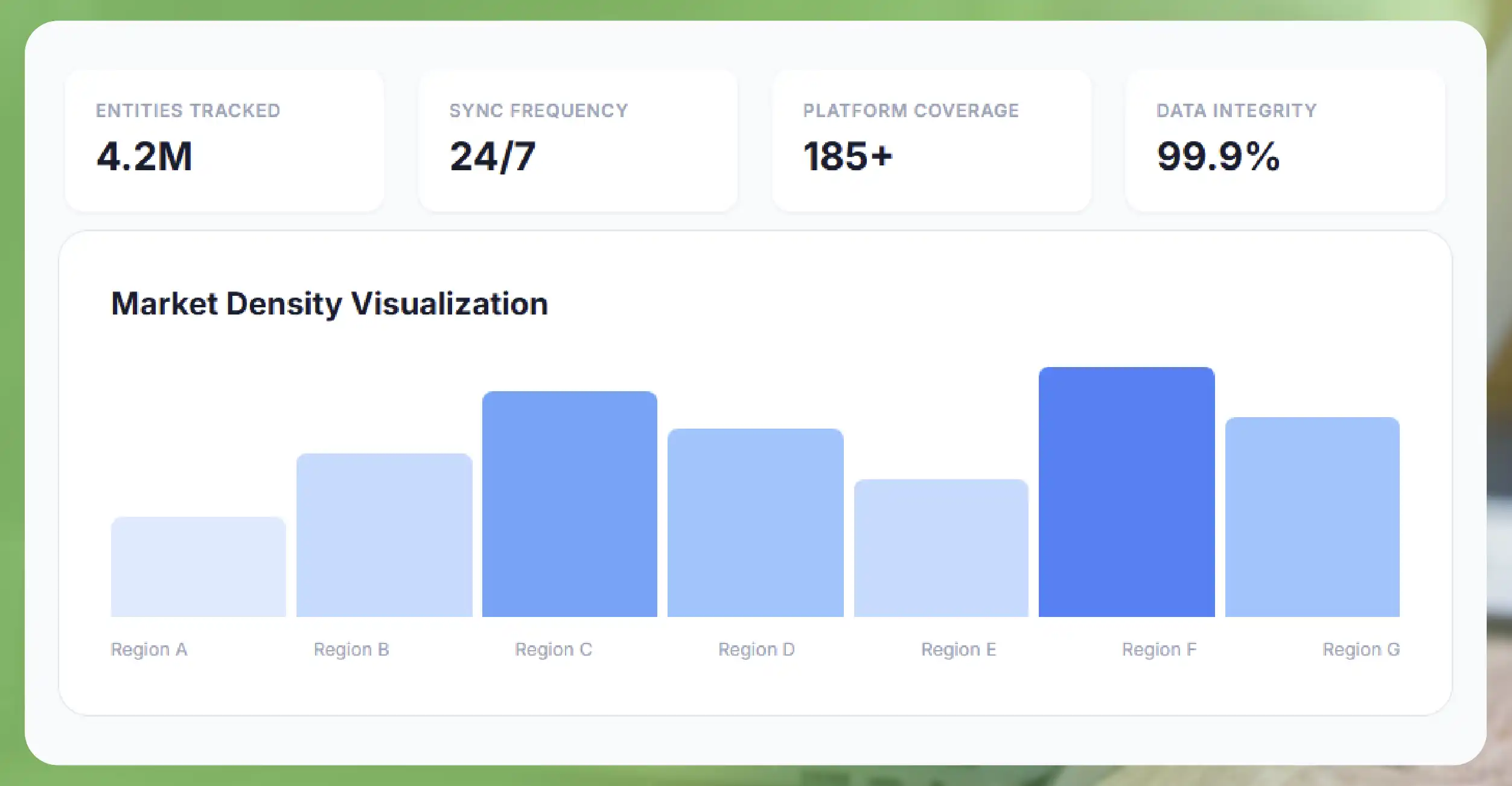
Every physical business leaves behind a digital footprint. Restaurants, retail stores, warehouses, shopping malls, hospitals, schools, office buildings, hotels, and industrial facilities continuously update their online presence across maps, business directories, and commercial real estate platforms.
Collecting this information manually is time-consuming and impractical. Automated web scraping allows organizations to gather millions of location records efficiently while maintaining updated datasets for analysis.
Business location data supports market expansion, franchise planning, competitor benchmarking, logistics optimization, customer accessibility studies, investment analysis, territory mapping, urban development, and commercial property research.
Organizations can evaluate market density, identify underserved neighborhoods, analyze nearby competitors, and optimize site selection using continuously updated location intelligence.
Understanding POI Data in Business Intelligence
Points of Interest (POI) represent physical locations that hold commercial, social, educational, healthcare, transportation, entertainment, or governmental significance.
Examples include:
- Retail outlets
- Restaurants
- Hotels
- Hospitals
- Banks
- Schools
- Airports
- Fuel stations
- Shopping malls
- Warehouses
- Industrial parks
- Business districts
POI datasets typically include business names, addresses, latitude, longitude, categories, operating hours, customer ratings, reviews, images, contact information, websites, and geographic boundaries.
Businesses use this information to understand local ecosystems, customer accessibility, traffic patterns, and commercial opportunities.
Commercial Real Estate Data Creates Investment Opportunities
Commercial property information provides investors with detailed knowledge about office buildings, industrial facilities, retail centers, warehouses, hotels, multifamily developments, land parcels, and mixed-use properties.
Modern commercial real estate datasets often include:
- Property address
- Building size
- Lease availability
- Rental pricing
- Sale pricing
- Property type
- Year built
- Amenities
- Occupancy status
- Ownership information
- Broker details
- Listing updates
- Historical transactions
Organizations performing Crexi commercial property data scraping obtain continuously updated listing information that supports investment research, acquisition planning, competitive benchmarking, and commercial market monitoring.
Mapping Competitors Through Location Intelligence
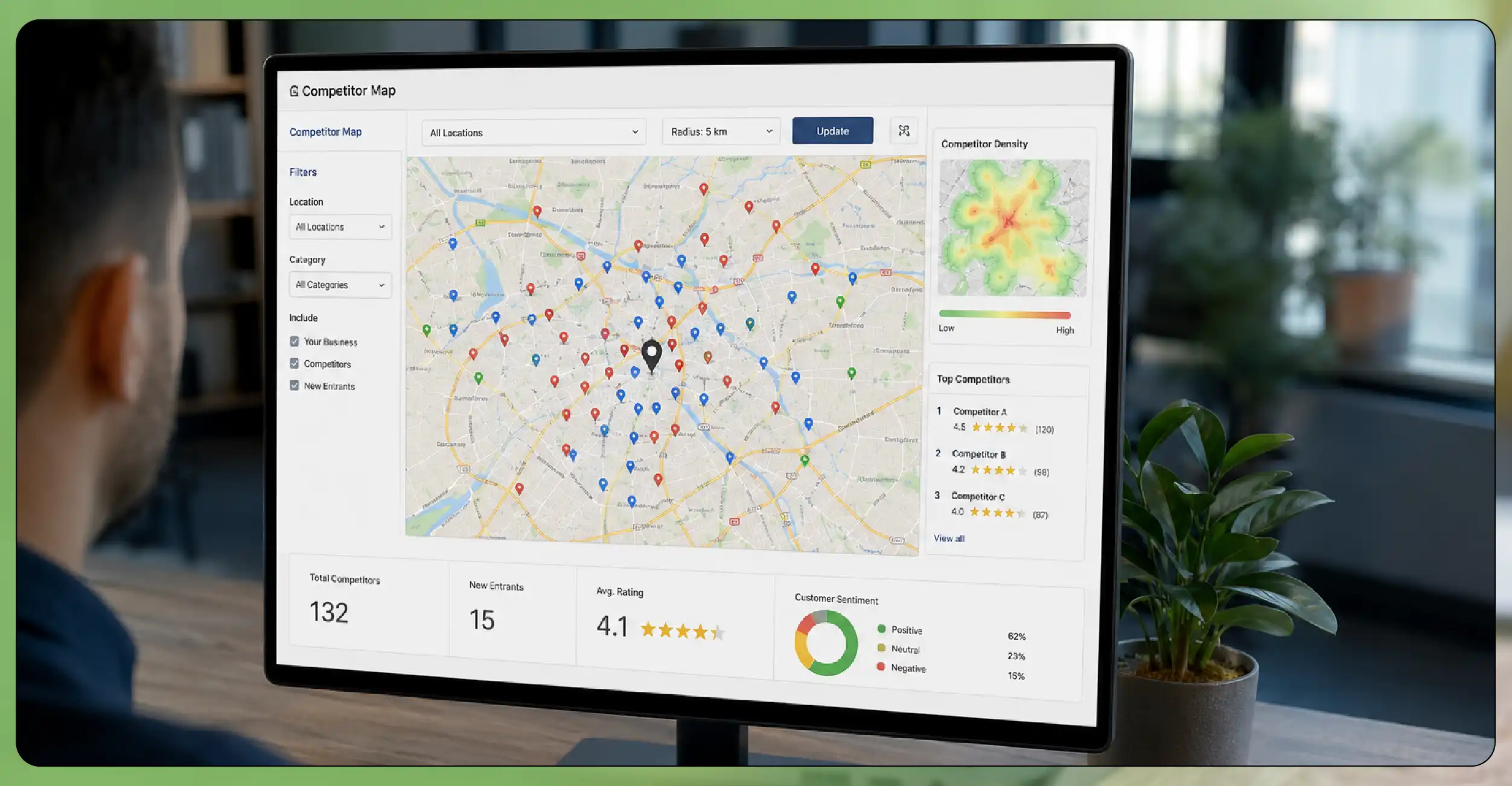
Competitive analysis becomes significantly stronger when combined with geographic intelligence.
Instead of simply identifying competitors, organizations can visualize where competitors operate, how densely they are distributed, what customer reviews indicate, and how new market entrants affect regional competition.
Businesses also leverage POI data extraction for market intelligence to identify market saturation, evaluate customer accessibility, understand neighborhood demographics, and detect emerging commercial districts before competitors.
Location-based competitor monitoring helps retailers optimize expansion strategies while reducing investment risks.
Retail Site Selection Using Business Location Data
Selecting a profitable retail location involves much more than finding available commercial space.
Organizations analyze nearby businesses, parking availability, customer traffic, complementary retailers, transportation hubs, educational institutions, residential density, and competitor presence.
Advanced Location & Places Data Extraction enables retailers to compare thousands of potential locations using standardized geographic datasets.
Retail chains evaluate customer convenience, commercial clusters, accessibility, and neighborhood characteristics before opening new stores.
This data-driven approach minimizes location risks while improving long-term profitability.
Commercial Property Monitoring Across Multiple Markets
Commercial property listings constantly change as buildings become available, prices fluctuate, tenants relocate, and new developments enter the market.
Automated systems continuously Scrape Commercial Property Listings Data from commercial real estate marketplaces, allowing investors and brokers to receive updated property information without manually checking multiple websites.
Historical listing archives further support long-term market trend analysis by tracking pricing movements, listing durations, occupancy changes, and regional demand.
These insights improve acquisition timing and investment decision-making.
Business Expansion Through Nearby Location Analysis
Successful expansion depends heavily on understanding surrounding commercial ecosystems.
Organizations evaluate restaurants, supermarkets, banks, schools, healthcare facilities, transportation access, shopping centers, entertainment venues, and residential neighborhoods surrounding potential locations.
Using Nearby Businesses Location Data Intelligence, companies identify areas with strong customer activity, complementary businesses, and healthy commercial growth.
This intelligence helps businesses prioritize expansion into locations with higher revenue potential while avoiding oversaturated markets.
Industries Benefiting from Business Location Data
Business location intelligence serves numerous industries beyond traditional commercial real estate.
- Retail companies optimize store placement.
- Restaurant chains identify underserved neighborhoods.
- Banks plan new branch locations.
- Healthcare providers evaluate service accessibility.
- Insurance companies assess geographic risks.
- Delivery companies optimize service zones.
- Logistics providers improve warehouse placement.
- Telecommunications companies analyze infrastructure expansion.
- Government agencies support urban planning initiatives.
- Market research firms produce regional business reports.
- Investment firms evaluate commercial opportunities.
The versatility of location intelligence continues to expand across nearly every industry.
Combining Real Estate Data with Geographic Intelligence
Commercial property data becomes significantly more valuable when combined with geographic information.
Organizations correlate property listings with nearby businesses, transportation infrastructure, demographics, consumer spending, economic indicators, and local development projects.
This integrated approach enables deeper investment analysis while improving predictive market models.
Businesses delivering Real Estate Data Intelligence Services often combine multiple structured datasets into unified intelligence platforms that provide comprehensive market visibility.
Rather than analyzing isolated properties, decision-makers understand entire commercial ecosystems.
Data Quality Drives Better Decisions
Accurate location intelligence requires continuous updates because businesses relocate, properties change ownership, listings expire, and new commercial developments emerge regularly.
Professional scraping workflows include validation, duplicate removal, address normalization, coordinate verification, category standardization, and scheduled updates.
High-quality datasets reduce decision-making errors while improving forecasting accuracy.
Organizations maintaining reliable business location databases gain stronger competitive advantages through timely, consistent market intelligence.
Integrating Location Data into Business Analytics
Modern organizations rarely use scraped data in isolation.
Business location datasets integrate with CRM platforms, GIS software, business intelligence dashboards, mapping systems, forecasting tools, customer analytics platforms, and investment models.
Interactive dashboards enable executives to visualize competitor distribution, commercial property availability, demographic clusters, customer accessibility, and regional performance using dynamic maps and reports.
Combining location intelligence with predictive analytics allows businesses to anticipate future growth opportunities instead of reacting after markets become saturated.
How iWeb Data Scraping Can Help You?
Comprehensive Location Coverage
Our automated scraping solutions collect verified business locations, POIs, commercial property listings, mapping information, and directory records from multiple trusted platforms, ensuring enterprises receive comprehensive geographic intelligence for confident business planning.
Real-Time Commercial Property Monitoring
We continuously monitor commercial property marketplaces for listing updates, pricing changes, lease availability, ownership modifications, and newly available investment opportunities, enabling businesses to respond quickly to evolving market conditions.
Customized Data Delivery
Our services deliver structured datasets tailored to business requirements, including CSV, JSON, Excel, APIs, cloud storage, and database integrations, allowing seamless compatibility with existing analytics and reporting systems.
Accurate Data Validation
We perform rigorous quality assurance through address standardization, duplicate elimination, coordinate verification, category mapping, and regular dataset updates, ensuring reliable information that supports accurate market intelligence and strategic decision-making across industries.
Scalable Enterprise Data Solutions
Whether monitoring one city or multiple countries, our scalable infrastructure efficiently processes millions of records while maintaining speed, consistency, accuracy, and compliance for enterprise-grade business intelligence initiatives.
Conclusion
Business location intelligence has become one of the most valuable assets for organizations seeking competitive advantage in today's data-driven economy. Companies that combine business listings, POI datasets, mapping platforms, and commercial real estate information gain deeper market visibility, stronger investment confidence, and better operational planning.
Professional data extraction transforms scattered online information into structured business intelligence that supports expansion planning, competitor monitoring, investment analysis, logistics optimization, and customer accessibility studies. Organizations leveraging comprehensive location datasets make faster, smarter, and more profitable decisions across evolving commercial markets.
Our expertise in Real Estate Property Datasets empowers businesses to build reliable, accurate, and scalable location intelligence solutions for informed decision-making.
Our advanced Real Estate Property Data Extraction services help organizations collect structured property information from multiple online sources with high accuracy.
Our Web Scraping API Services enable seamless access to real-time location and commercial real estate data for integration into analytics platforms and business applications.
Frequently Asked Questions
Business location and POI data scraping is the automated collection of business listings, addresses, coordinates, contact details, categories, ratings, reviews, and geographic information from online platforms for market research and business intelligence.
Retail, real estate, logistics, banking, insurance, healthcare, urban planning, investment firms, consulting companies, and market research organizations use commercial real estate data to improve strategic planning and competitive analysis.
Commercial property datasets typically include property addresses, listing prices, lease details, building specifications, property types, broker information, availability status, ownership details, amenities, and historical listing changes.
Since businesses frequently open, close, relocate, or update information, organizations typically refresh datasets daily, weekly, or monthly depending on business objectives and market dynamics.
Yes. Structured datasets can be integrated into GIS software, CRM systems, mapping applications, cloud databases, analytics dashboards, visualization platforms, and enterprise reporting tools for advanced decision-making.