
52.4M+
TOTAL PRODUCT RECORDS PROCESSED

Scrape Co-op Grocery Pricing and Inventory Data for Real-Time Retail Insights and Smarter Business Decisions Today
This case study is based on a real-world enterprise scenario where a retail intelligence and analytics organization leveraged advanced grocery data extraction systems to transform large-scale supermarket information into actionable business intelligence using Co-op retail datasets.
It is designed for:
The client's primary challenge was straightforward: Co-op generates vast amounts of grocery pricing, product, inventory, and promotional data daily, but much of this information remained fragmented across locations, categories, and delivery channels. Their objective was to transform scattered retail signals into a centralized intelligence platform supporting faster business decisions, stronger competitive positioning, and improved forecasting accuracy.
A recent retail intelligence initiative demonstrated how businesses leveraged large-scale Co-op grocery datasets to improve pricing transparency, inventory visibility, and competitive intelligence across supermarket operations.
Advanced extraction systems enabled organizations to continuously Scrape Co-op stock availability data across multiple store locations and delivery platforms, helping identify inventory fluctuations and replenishment trends efficiently.
Retail analysts utilized automated pipelines to Extract grocery SKU data from Co-op, capturing product attributes, categories, pricing variations, promotional activity, and assortment changes at scale.
The platform processed millions of product records daily, transforming unstructured retail information into structured datasets suitable for forecasting, benchmarking, and pricing analysis.
Insights generated from these datasets allowed stakeholders to monitor market movements, identify demand shifts, optimize promotional strategies, and improve category management decisions.
Interactive dashboards provided real-time visibility into grocery performance metrics, enabling faster responses to market changes and improving overall operational agility.
Ultimately, the initiative demonstrated how scalable retail intelligence systems can transform fragmented supermarket information into structured business intelligence that drives measurable commercial outcomes.
The client encountered significant difficulties while monitoring large volumes of grocery pricing, inventory, and promotional data across multiple Co-op locations and digital channels.
One major challenge involved maintaining real time Co-op price monitoring across hundreds of product categories where prices changed frequently due to promotions, seasonal demand, and regional pricing strategies.
The organization also lacked a centralized Real-time Co-op grocery intelligence API capable of continuously collecting, validating, and structuring retail data from multiple sources into a unified intelligence platform.
Another challenge involved inconsistent inventory visibility. Product availability often varied between stores and delivery regions, making accurate stock monitoring difficult.
The client struggled to maintain a reliable Grocery Dataset from Co-op that could support advanced analytics, demand forecasting, assortment optimization, and competitive intelligence initiatives.
Manual collection methods were slow, resource-intensive, and incapable of handling large-scale retail data streams.
Furthermore, fragmented reporting systems delayed insight generation, limiting the company's ability to respond quickly to pricing shifts, inventory shortages, and emerging consumer demand patterns.
To overcome these limitations, the client required a scalable grocery intelligence solution capable of automating data extraction, normalization, and real-time analytics.
By implementing automated Co-op retail data extraction systems, the client replaced fragmented manual monitoring processes with a scalable intelligence framework capable of continuously tracking pricing, inventory, assortment, and promotional activity.
| Dimension | Manual Tracking | Automated Co-op Intelligence System |
|---|---|---|
| Data Collection | Manual store reviews and website checks | Automated multi-store data extraction |
| Pricing Visibility | Periodic monitoring | Continuous real-time updates |
| Inventory Tracking | Limited manual verification | Automated stock availability monitoring |
| SKU Intelligence | Partial product coverage | Comprehensive SKU-level tracking |
| Promotion Analysis | Reactive campaign reviews | Continuous promotion monitoring |
| Scalability | Limited store coverage | Nationwide retail intelligence coverage |
The organization featured in this case study operates within the grocery retail intelligence sector, helping businesses transform supermarket information into actionable insights.
Its primary objective is to monitor product pricing, inventory movement, category performance, and promotional effectiveness across major grocery ecosystems.
As monitoring requirements expanded, the company faced increasing challenges associated with product assortment complexity, regional pricing variations, inventory fluctuations, and rapidly changing consumer demand.
To address these issues, the organization adopted an automated retail intelligence framework powered by scalable grocery data extraction pipelines.
Operating within a highly competitive supermarket landscape, the business requires continuous visibility into pricing dynamics, stock availability, and product assortment changes to maintain strategic agility and support data-driven decision-making.
We implemented a comprehensive retail intelligence platform that transformed raw Co-op grocery information into structured business insights through automated extraction pipelines, cloud-based processing infrastructure, and advanced retail analytics frameworks.
The platform continuously captured product information, pricing updates, inventory changes, promotional activity, and category-level performance signals across multiple store locations.
Data cleansing mechanisms removed duplicate records, standardized product attributes, and enriched datasets with metadata including timestamps, category mappings, and promotional indicators.
The solution incorporated Coop.co Grocery and Supermarket Data Extraction Services to streamline large-scale retail monitoring and ensure consistent data collection across grocery ecosystems.
Additionally, we integrated Grocery and Supermarket Store Datasets into centralized reporting environments, enabling stakeholders to analyze assortment trends, inventory movement, pricing dynamics, and promotional effectiveness from a unified intelligence layer.
Advanced analytics modules further supported category benchmarking, stock monitoring, competitor analysis, and forecasting initiatives, significantly reducing manual effort while improving decision accuracy.
Continuous monitoring enabled the client to gain real-time visibility into pricing behavior across thousands of grocery products.
Instead of relying on periodic manual reviews, stakeholders could instantly identify pricing fluctuations, promotional adjustments, and category-level pricing trends. This significantly improved pricing intelligence and competitive benchmarking capabilities.
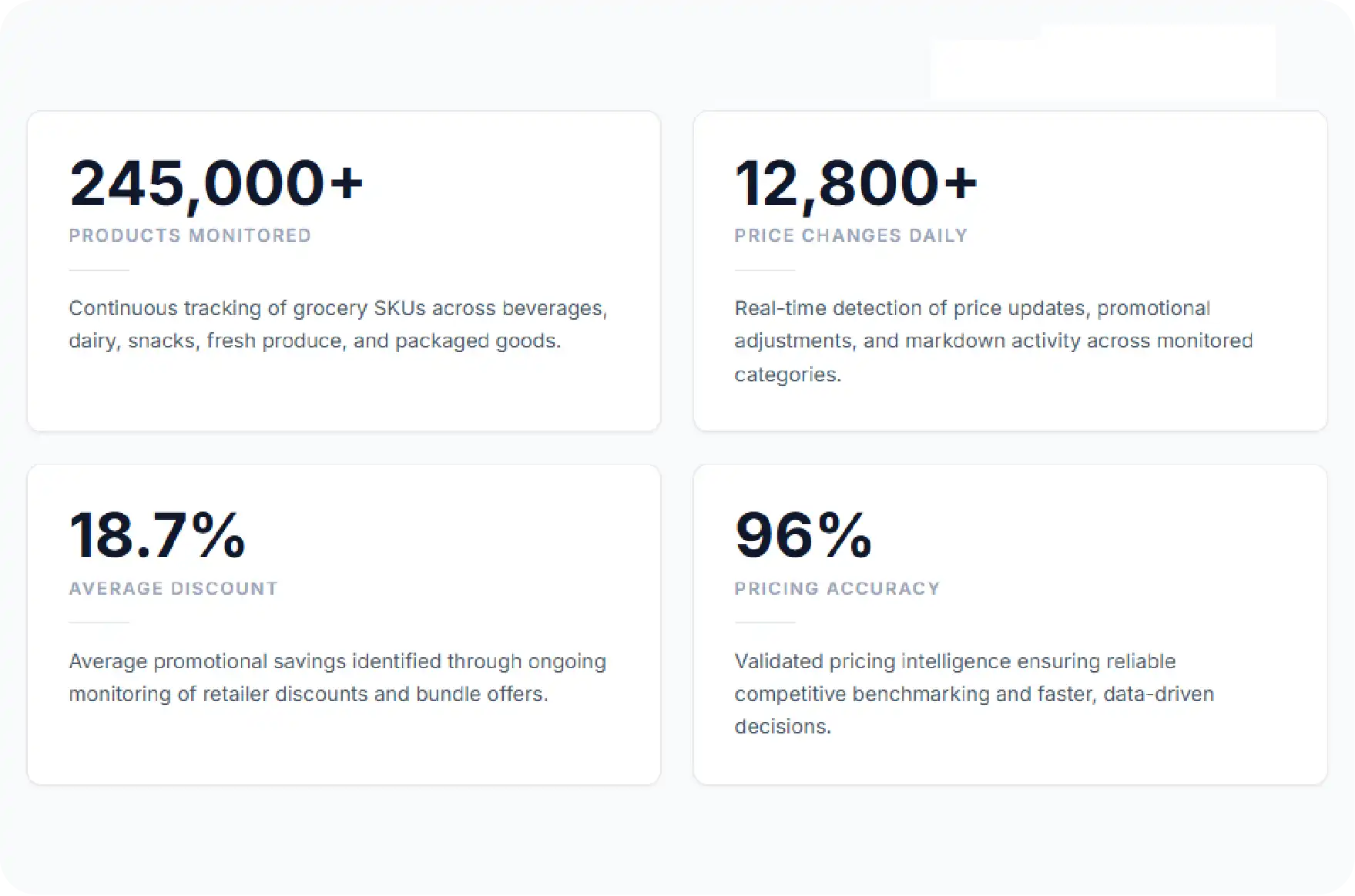
Automated extraction pipelines provided consistent visibility into product availability across multiple store locations.
The organization could quickly identify stock shortages, replenishment patterns, and inventory fluctuations, enabling proactive operational planning and reducing inventory-related blind spots.
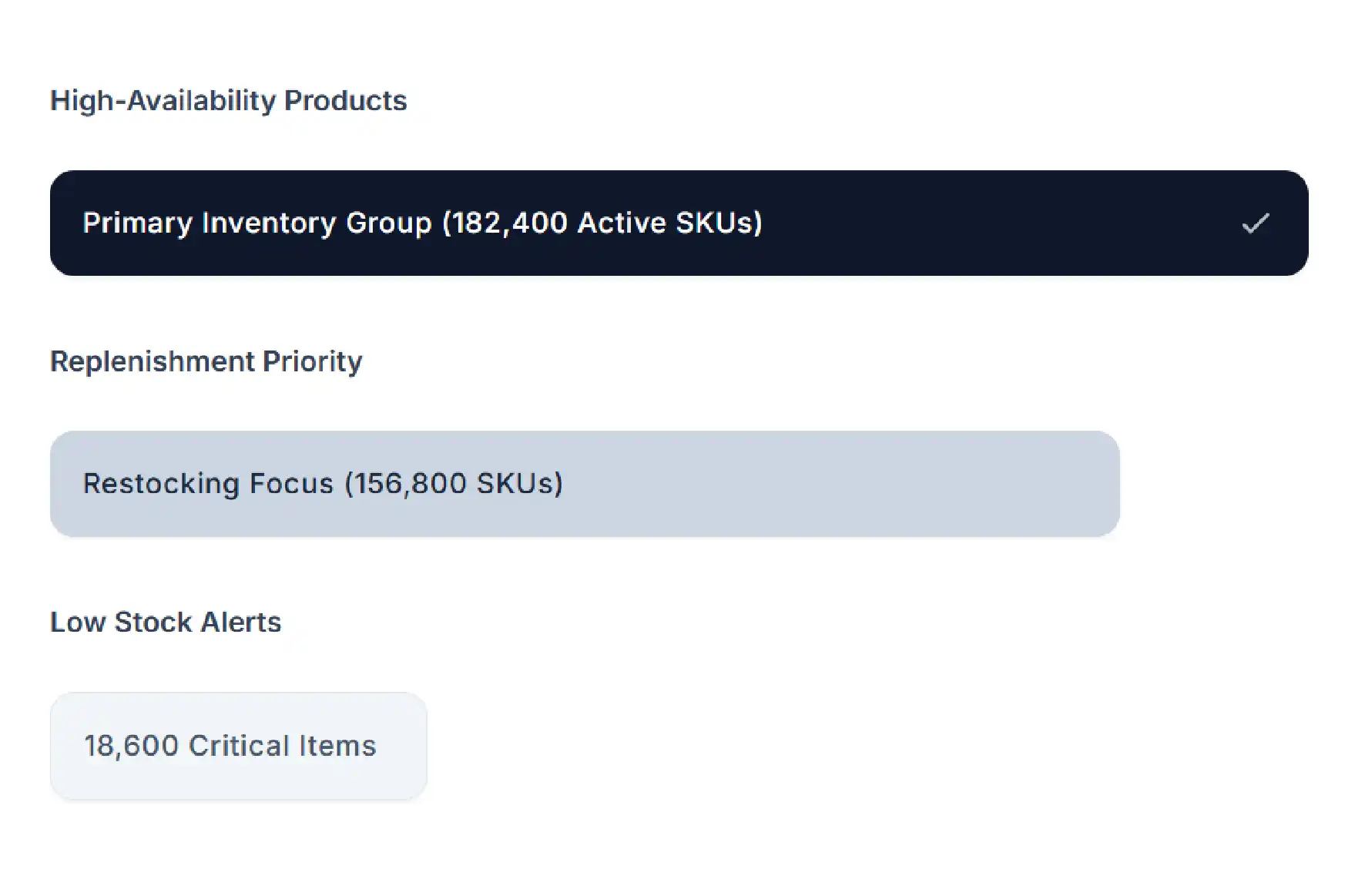
The platform converted complex retail information into structured datasets that supported category analysis, assortment optimization, and forecasting initiatives.
| Metric | Insight Captured | Business Impact |
|---|---|---|
| Product Availability | Stock visibility by location | Improved inventory planning |
| SKU Tracking | Product-level monitoring | Better assortment optimization |
| Price Changes | Pricing movement analysis | Competitive benchmarking |
| Promotion Activity | Discount tracking | Enhanced campaign evaluation |
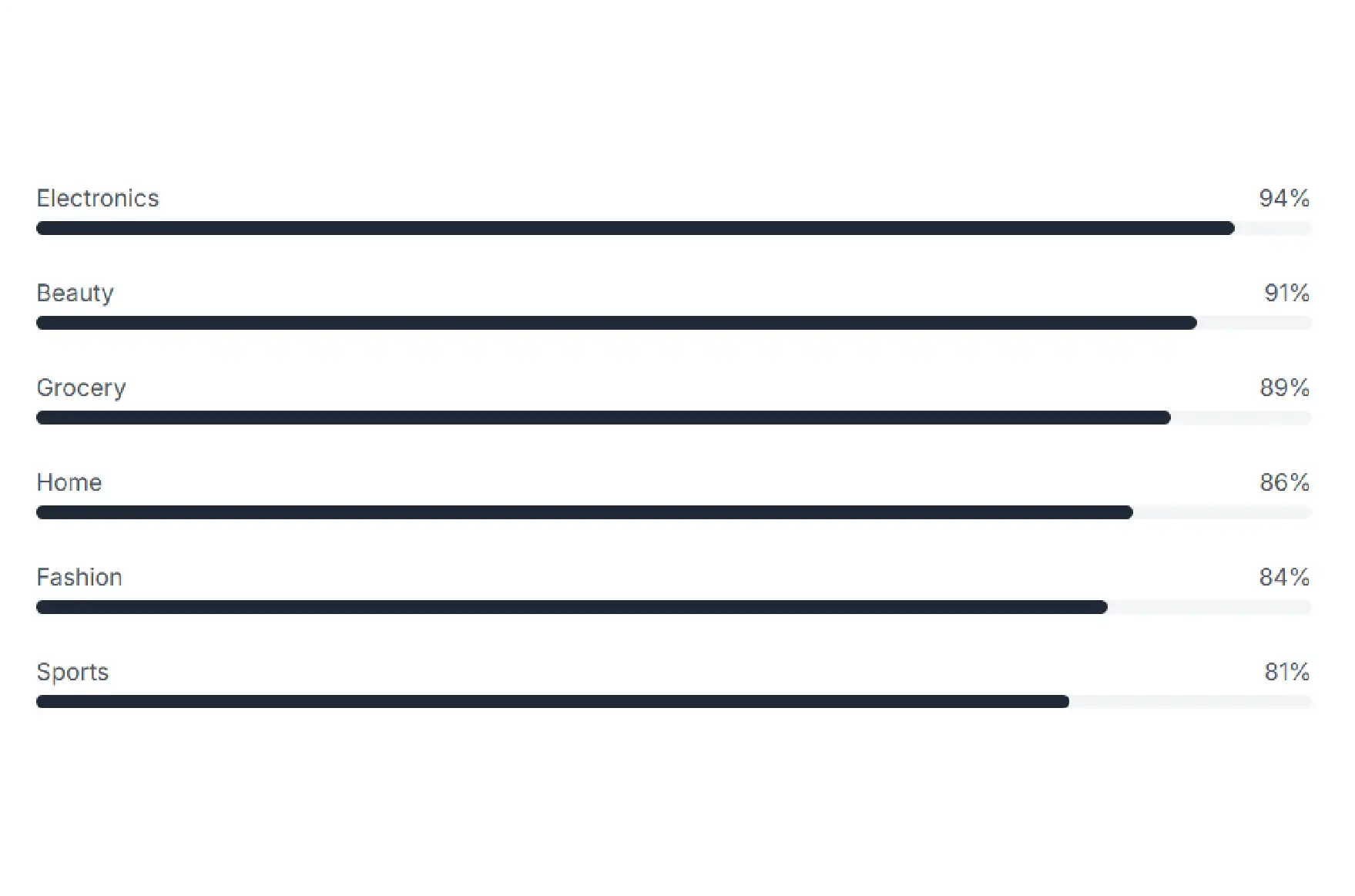
The automated framework enabled continuous monitoring across large grocery networks simultaneously.
Unlike manual tracking systems, the solution maintained consistent coverage regardless of data volume, supporting nationwide retail intelligence initiatives and improving responsiveness to market changes.
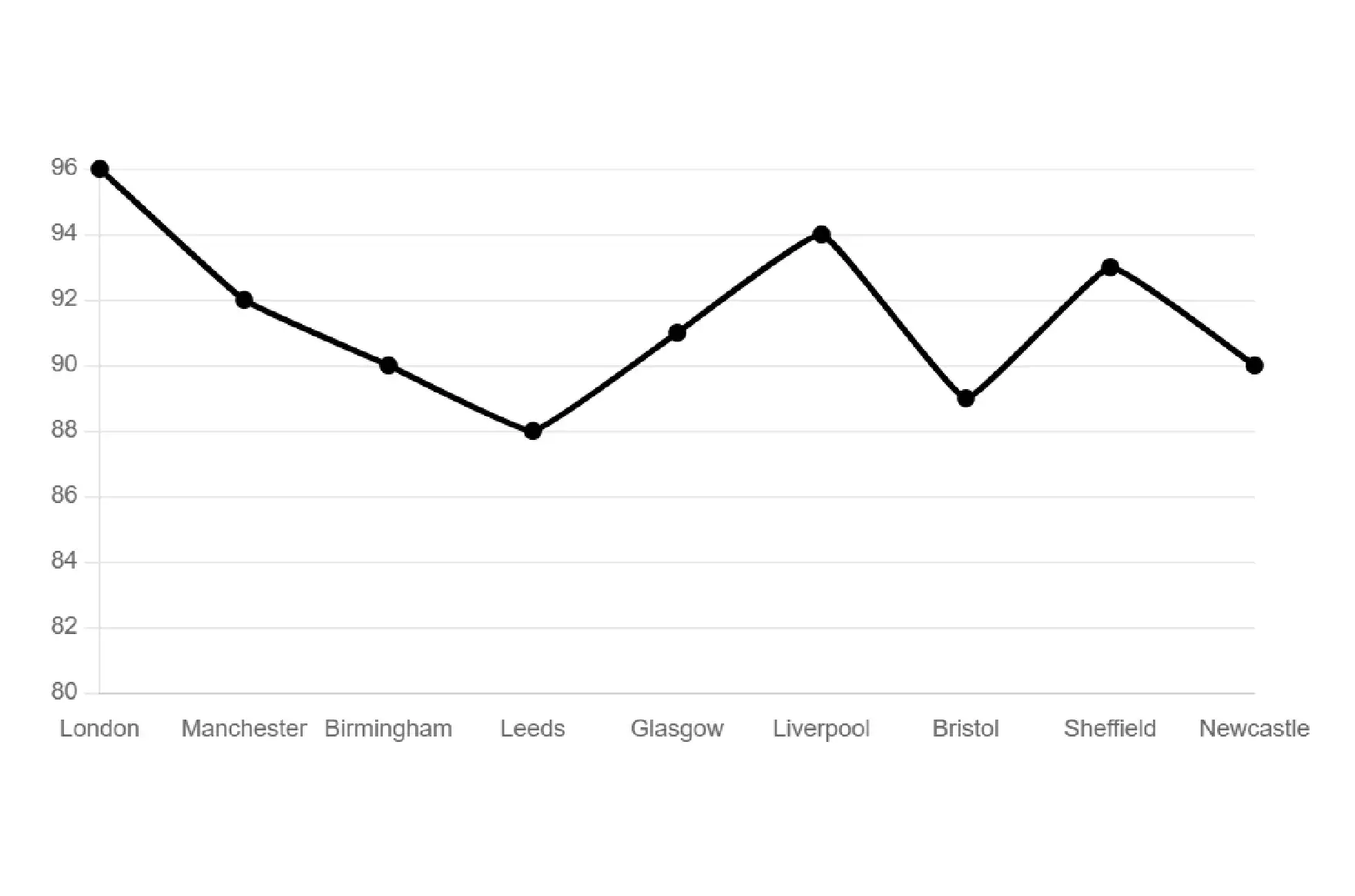
The dataset snapshot below illustrates how pricing, inventory availability, promotions, and category performance vary across multiple Co-op grocery products and store regions. The structured dataset enables businesses to monitor assortment changes, stock fluctuations, pricing movements, and promotional effectiveness in real time.
| Product Name | Category | Store Region | Availability | Current Price (£) | Price Change | Promotion Status | Weekly Views | Store Coverage |
|---|---|---|---|---|---|---|---|---|
| Whole Milk 2L | Dairy | London | In Stock | 2.15 | +2.1% | Active | 18,450 | 1,420 |
| Semi-Skimmed Milk 1L | Dairy | Manchester | In Stock | 1.35 | +1.7% | Active | 14,280 | 1,365 |
| White Bread Loaf | Bakery | Birmingham | In Stock | 1.20 | +1.4% | Active | 12,940 | 1,298 |
| Brown Bread Loaf | Bakery | Leeds | In Stock | 1.25 | +0.9% | Inactive | 11,360 | 1,184 |
| Apples Pack 6 | Produce | Glasgow | Limited Stock | 2.80 | -0.8% | Active | 10,890 | 1,112 |
| Bananas 1kg | Produce | Liverpool | In Stock | 1.95 | +0.6% | Active | 15,760 | 1,305 |
| Chicken Breast 500g | Meat | London | In Stock | 5.90 | +3.5% | Active | 22,110 | 1,478 |
| Beef Mince 750g | Meat | Bristol | Limited Stock | 6.45 | +2.8% | Inactive | 16,540 | 1,210 |
| Eggs 12 Pack | Dairy | Sheffield | In Stock | 3.10 | +1.2% | Active | 19,870 | 1,387 |
| Greek Yogurt 500g | Dairy | Newcastle | In Stock | 2.95 | -0.4% | Active | 9,860 | 1,095 |
| Breakfast Cereal 500g | Grocery | Edinburgh | In Stock | 4.25 | +3.5% | Active | 17,340 | 1,598 |
| Pasta 1kg | Grocery | London | In Stock | 1.85 | +0.7% | Active | 13,920 | 1,472 |
| Rice 2kg | Grocery | Manchester | In Stock | 3.95 | +1.9% | Active | 12,680 | 1,415 |
| Olive Oil 1L | Grocery | Birmingham | Limited Stock | 7.80 | +4.2% | Inactive | 8,720 | 985 |
| Orange Juice 1L | Beverages | Leeds | In Stock | 2.40 | +1.1% | Active | 11,530 | 1,264 |
| Mineral Water 6 Pack | Beverages | Glasgow | In Stock | 2.20 | -0.3% | Active | 14,970 | 1,328 |
| Frozen Pizza | Frozen Foods | Liverpool | In Stock | 4.80 | +2.4% | Active | 10,650 | 1,156 |
| Frozen Vegetables | Frozen Foods | Bristol | In Stock | 2.95 | +0.8% | Active | 9,740 | 1,082 |
| Laundry Detergent | Household | Sheffield | In Stock | 8.95 | +2.6% | Active | 7,890 | 1,045 |
| Dishwashing Liquid | Household | Newcastle | In Stock | 2.10 | +0.5% | Inactive | 6,780 | 998 |
Following implementation of the automated grocery intelligence platform, the client achieved substantial improvements across pricing analytics, inventory visibility, and retail decision-making processes.
Our retail intelligence solutions unify grocery data collection across stores, delivery channels, and product categories, eliminating fragmented information silos and creating reliable datasets for advanced analytics.
The platform supports continuous market monitoring, helping businesses stay informed about pricing movements, inventory fluctuations, and promotional activity as they occur.
Advanced data quality processes remove duplicate entries, validate product information, and standardize records to ensure highly accurate datasets for reporting and forecasting.
Our scalable architecture supports growing retail datasets without sacrificing performance, making it suitable for enterprise-scale grocery intelligence initiatives.
Finally, the solution transforms raw supermarket information into actionable insights that support better pricing decisions, inventory planning, category management, and long-term strategic growth.
We are extremely pleased with the grocery intelligence solution delivered by iWeb Data Scraping. The platform significantly improved our visibility into product pricing, inventory availability, and promotional activity across multiple store locations. Automated data collection replaced several manual processes, dramatically improving operational efficiency and reporting accuracy.
The quality of insights generated through the system has enhanced our forecasting capabilities, strengthened our competitive intelligence efforts, and improved category management decisions. The scalability, reliability, and real-time visibility provided by the platform exceeded expectations and continue to support our long-term retail analytics objectives.
— Director of Retail Intelligence
The final outcome was a fully automated grocery intelligence ecosystem capable of transforming large-scale retail information into structured, actionable business insights.
The client gained significantly faster access to pricing intelligence, inventory visibility, promotional analytics, and category performance metrics across thousands of grocery products and locations.
Implementation of Web Scraping API Services enabled continuous extraction and processing of retail datasets while maintaining high accuracy, reliability, and scalability.
The deployment of Web Scraping Services further strengthened operational efficiency by automating previously manual monitoring workflows and reducing reporting delays substantially.
Additionally, integration of Grocery & Supermarket Data Extraction Services created a centralized intelligence framework supporting forecasting, assortment optimization, pricing analysis, and strategic decision-making across retail operations.
Overall, the project delivered measurable business value through improved operational visibility, enhanced competitive intelligence, stronger forecasting capabilities, and sustainable data-driven growth.
Our advanced grocery data extraction and analytics solutions help organizations transform pricing, inventory, promotion, and assortment information into structured intelligence that drives faster decisions, stronger forecasting, and improved competitive performance across the retail ecosystem.
Start a projectProduct pricing, inventory availability, promotions, SKU attributes, category information, and assortment changes can all be collected and structured for retail intelligence purposes.
It provides continuous visibility into price changes, promotional activity, and competitor strategies, helping businesses make informed pricing decisions faster.
Yes. The platform continuously monitors stock availability, inventory fluctuations, and replenishment patterns across multiple stores and delivery regions.
Absolutely. The architecture is designed to process millions of product records while maintaining performance, reliability, and data quality.
Retail operations, category management, pricing teams, supply chain departments, market intelligence groups, and data science teams all benefit from structured grocery datasets.