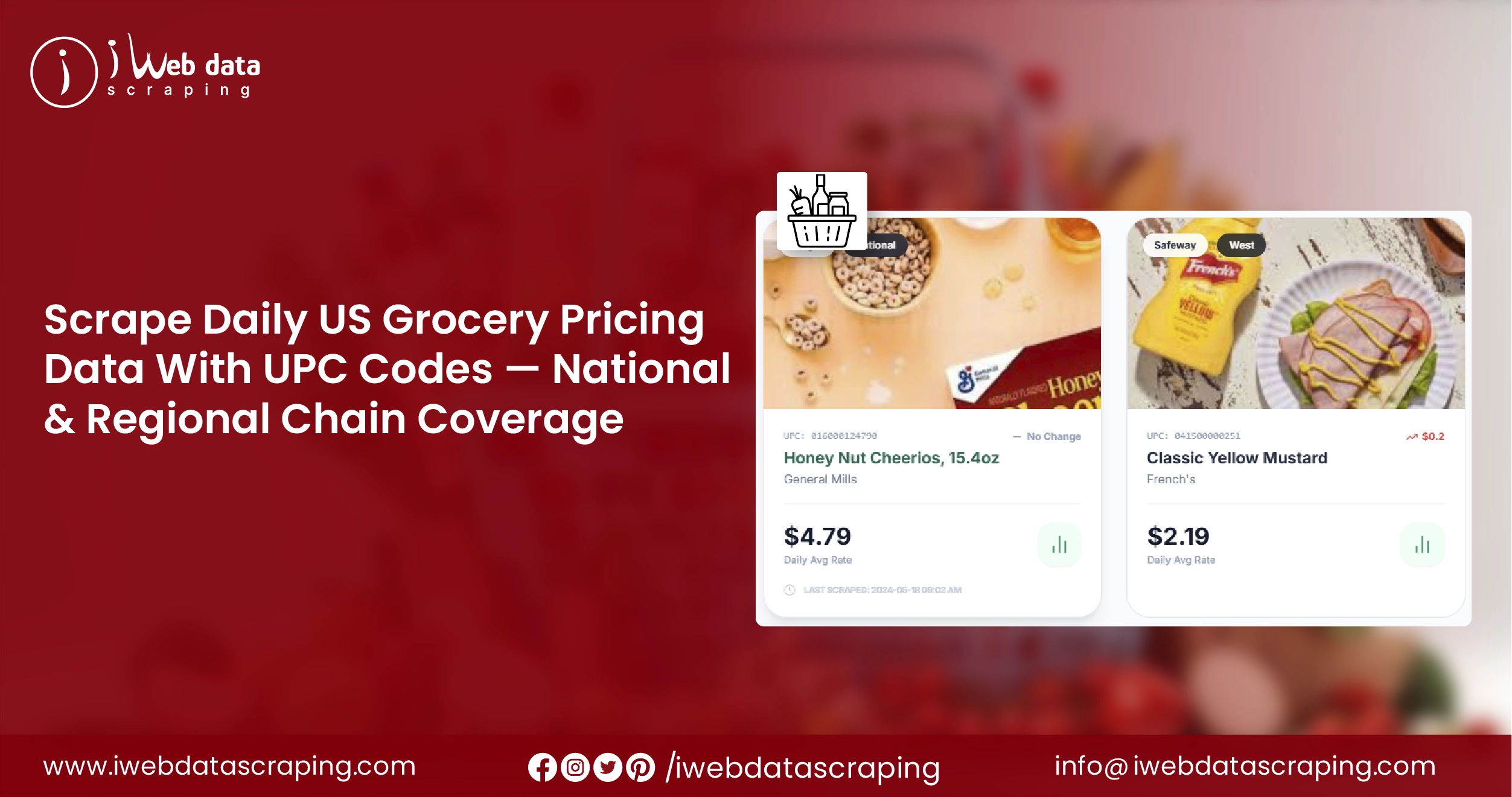
Scrape Daily US Grocery Pricing Data With UPC Codes — National & Regional Chain Coverage
Introduction
In a rapidly evolving retail ecosystem, businesses are increasingly relying on data intelligence to stay competitive. One of the most valuable assets in this space is pricing data, especially in the grocery sector where margins are tight and competition is fierce. Companies today Scrape Daily US Grocery Pricing Data With UPC Codes to gain real-time insights into how products are priced across different retailers. This approach, combined with UPC-based grocery product pricing data Extraction, enables accurate product matching and eliminates inconsistencies in datasets. Moreover, organizations leverage US Grocery price comparison data with UPC codes to benchmark pricing strategies across competitors and regions effectively.
Why UPC Codes Are Critical for Grocery Data Accuracy?
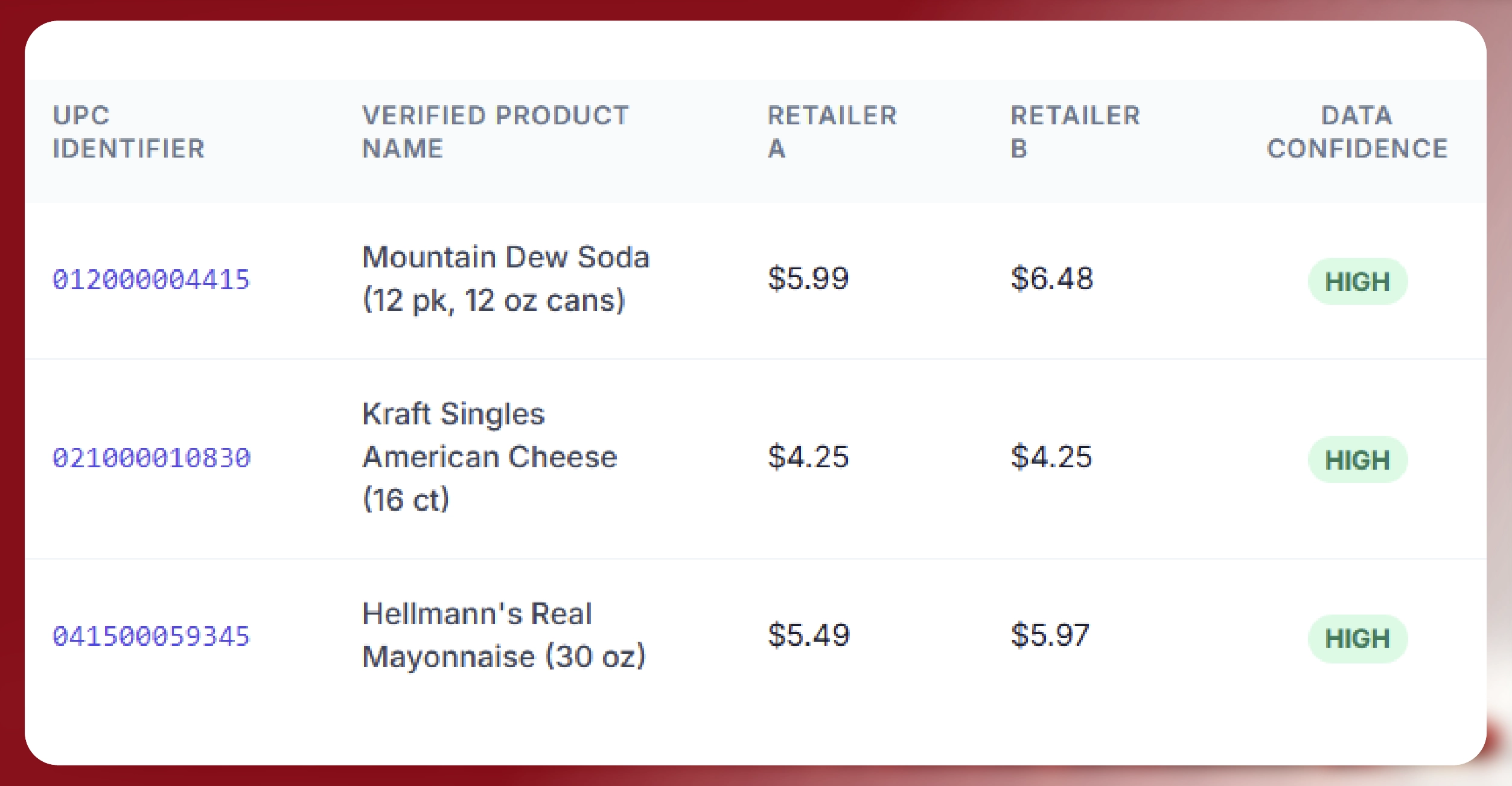
UPC (Universal Product Code) serves as a standardized identifier that ensures each product is uniquely recognized regardless of how it is listed across various grocery platforms. When businesses rely on UPC-based grocery product pricing data Extraction, they can confidently match identical products across multiple retailers without confusion.
This precision is especially important when comparing prices at scale. Without UPC codes, differences in product naming, packaging descriptions, or abbreviations can lead to mismatched data. UPC integration solves this issue and enhances the reliability of analytics models.
The Need for Daily Grocery Price Monitoring
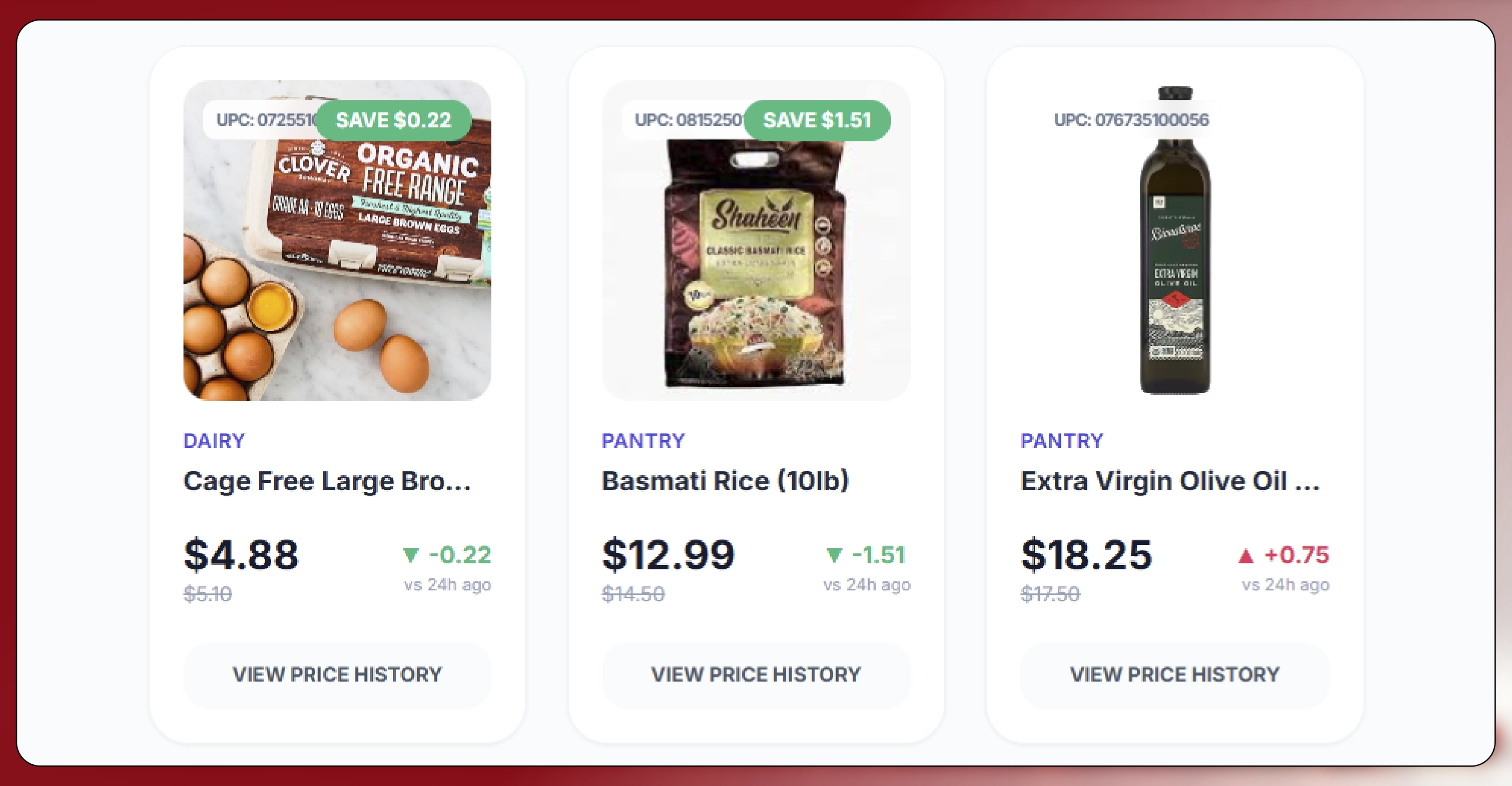
Retail grocery pricing is highly dynamic and influenced by multiple factors such as supply chain fluctuations, seasonal demand, and promotional campaigns. Organizations that Scrape Daily US Grocery Pricing Data With UPC Codes gain the advantage of tracking these changes in near real-time.
Daily monitoring allows businesses to:
- Detect sudden price drops or increases
- Analyze promotional effectiveness
- Track competitor pricing strategies
- Adjust their own pricing dynamically
This continuous flow of data ensures that decision-makers are always working with the most current information available.
Comparing National and Regional Grocery Chains
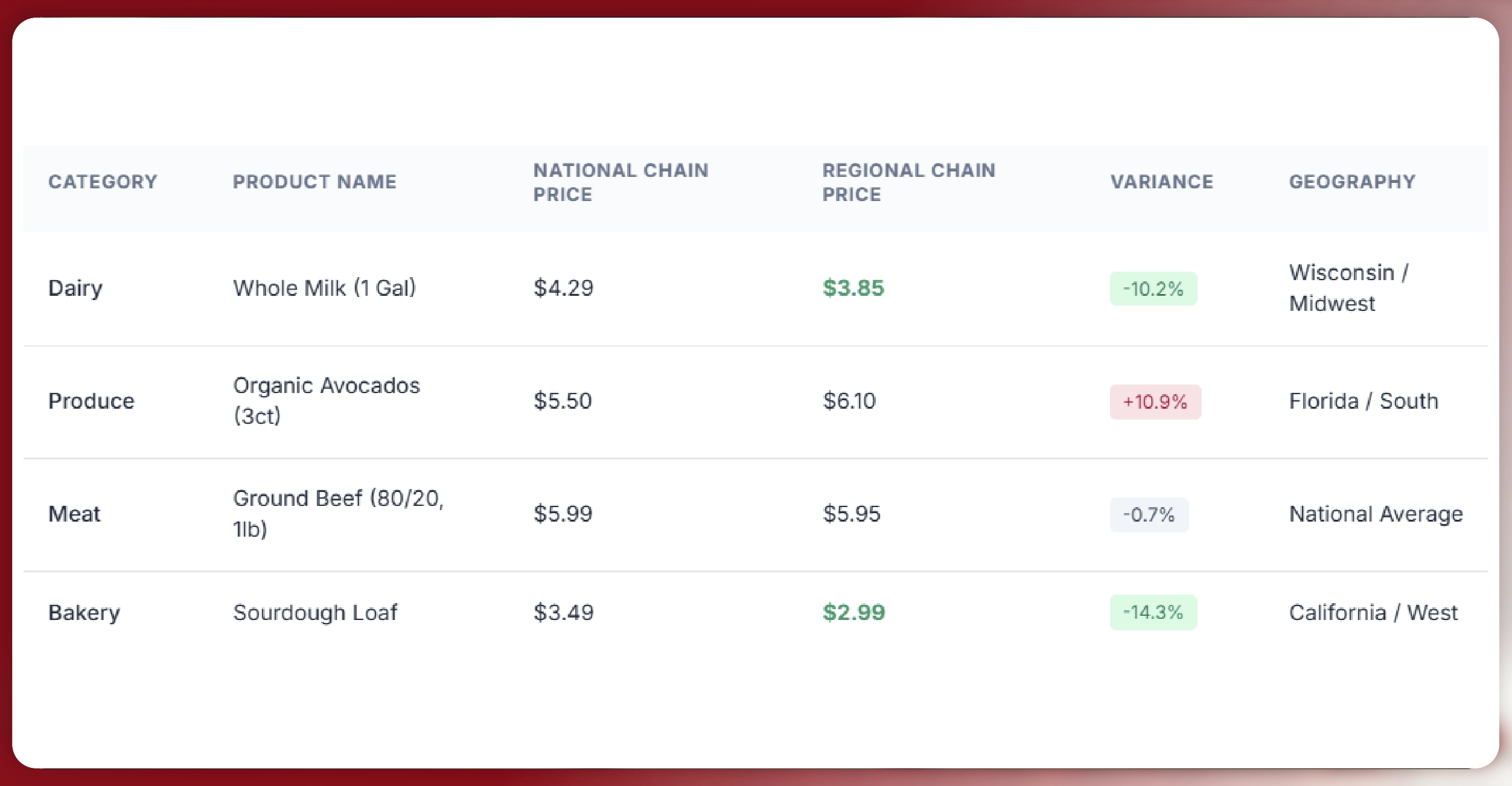
The US grocery market is divided between large national chains and smaller regional retailers. Each operates under different pricing strategies, making it essential to analyze both segments.
When companies focus on Web scraping Grocery national vs regional chain prices, they uncover valuable insights into how pricing varies based on geography and competition. This approach also supports National & Regional wise grocery price comparison, enabling businesses to understand regional pricing trends and tailor their strategies accordingly.
For example, a national retailer may maintain consistent pricing across states, while a regional store might adjust prices based on local demand or supply conditions. Understanding these nuances is key to effective market positioning.
How Web Scraping Enables Grocery Price Intelligence?
Web scraping plays a central role in collecting large-scale grocery pricing data. Automated tools extract information such as product names, UPC codes, prices, discounts, and availability from multiple online sources.
By implementing Web scraping Grocery national vs regional chain prices, businesses can gather comprehensive datasets that reflect the full competitive landscape. These datasets are then processed and analyzed to generate actionable insights.
Building Structured Price Comparison Datasets
A well-structured dataset is essential for meaningful analysis. Companies build datasets by combining scraped data with standardized identifiers like UPC codes. This process results in highly accurate and comparable data.
Organizations rely on Supermarket Price Comparison Data by UPC to evaluate pricing trends across different retailers and regions. These datasets typically include:
- Product identifiers (UPC codes)
- Retailer names
- Pricing details
- Discount information
- Location-based variations
Such structured data forms the foundation for advanced analytics and reporting systems.
Business Applications of Grocery Pricing Data
The insights derived from grocery pricing data have wide-ranging applications across industries.
Retailers use US Grocery price comparison data with UPC codes to refine their pricing strategies and remain competitive. At the same time, brands analyze how their products are positioned across different stores and regions.
Additionally, Price Comparison Services help businesses access ready-to-use insights without investing heavily in infrastructure. These services provide dashboards, reports, and APIs that simplify data consumption and decision-making.
Get started today with our data scraping services and unlock real-time grocery pricing insights to stay ahead of the competition.
Strategic Value of Grocery Datasets
Data has become a strategic asset in the modern retail environment. Companies that leverage Grocery and Supermarket Store Datasets gain a deeper understanding of market trends, consumer behavior, and competitive dynamics.
These datasets support:
- Market research and analysis
- Demand forecasting
- Inventory optimization
- Pricing strategy development
By integrating these datasets into their analytics systems, organizations can make more informed and timely decisions.
Challenges in Grocery Data Extraction
Despite its benefits, grocery data scraping comes with several challenges. Websites frequently update their layouts, making it necessary to adapt scraping systems continuously. Additionally, anti-bot measures can restrict access to data, requiring sophisticated solutions to overcome them.
Another challenge is maintaining data accuracy across regions. Prices may vary by location, making National & Regional wise grocery price comparison more complex but also more valuable.
The Growing Importance of Automation and APIs
As the demand for real-time data increases, automation is becoming essential. Businesses are moving toward API-based solutions that deliver live data streams directly into their systems.
This shift is supported by Price Comparison Services that offer scalable and efficient data delivery methods. APIs eliminate the need for manual data collection and ensure consistent access to updated information.
Future Trends in Grocery Price Intelligence
The future of grocery pricing intelligence lies in advanced technologies such as artificial intelligence and machine learning. These technologies enhance data extraction accuracy and enable predictive analytics.
Companies that Scrape Daily US Grocery Pricing Data With UPC Codes will increasingly integrate this data with AI models to forecast demand, optimize pricing, and improve customer experiences.
How iWeb Data Scraping Can Help You?
Real-Time Price Monitoring
Our data scraping services deliver real-time grocery pricing updates, helping you track competitor price changes and optimize pricing strategies effectively.
Accurate UPC-Based Data Matching
We ensure precise product matching using UPC codes, eliminating inconsistencies and enabling reliable comparisons across multiple grocery retailers and regions.
National and Regional Coverage Insights
Our solutions provide comprehensive coverage across national and regional chains, helping you understand localized pricing trends and market dynamics clearly.
Scalable and Automated Data Extraction
We offer fully automated scraping systems that scale effortlessly, collecting large volumes of grocery data daily without manual intervention or delays.
Actionable Analytics and Custom Datasets
Our services deliver clean, structured datasets and insights, empowering businesses to make data-driven decisions, improve competitiveness, and enhance profitability.
Conclusion
In conclusion, the ability to track and analyze grocery pricing data using UPC codes across national and regional chains is transforming the retail industry. Businesses that invest in these capabilities gain a competitive edge through better insights, smarter pricing strategies, and improved operational efficiency.
Modern organizations are turning to Grocery & Supermarket Data Extraction Services to streamline their data collection processes and ensure high-quality datasets. At the same time, Web Scraping Services play a crucial role in enabling large-scale data extraction, while Web Scraping API Services provide seamless access to real-time data streams.
As the industry continues to evolve, leveraging these technologies will be essential for staying ahead in the competitive grocery market.
Experience top-notch web scraping service and mobile app scraping solutions with iWeb Data Scraping. Our skilled team excels in extracting various data sets, including retail store locations and beyond. Connect with us today to learn how our customized services can address your unique project needs, delivering the highest efficiency and dependability for all your data requirements.