
52.6K+
TOTAL KANOPY CONTENT RECORDS PROCESSED

Scrape Educational & Documentary Content From Kanopy to Power Academic Research, Content Discovery, Trend Analysis, and Intelligence
This case study represents a real-world enterprise scenario where a digital content intelligence team uses large-scale streaming platform data extraction methods to transform Kanopy’s educational media ecosystem into structured datasets for content discovery, audience analysis, and academic media intelligence.
It is designed for:
The client’s main challenge was managing the rapidly expanding volume of educational videos, documentaries, filmmaker information, categories, and availability signals across Kanopy’s digital catalog. Although Kanopy provides valuable learning-oriented content, extracting meaningful insights from thousands of titles required a scalable data intelligence framework.
The organization needed to Scrape educational & documentary content From Kanopy to identify content trends, analyze subject distribution, and understand how different educational resources perform across categories.
They also required a reliable system to Extract Kanopy streaming data including title metadata, genres, release information, ratings, and availability details to create a unified content intelligence layer.
The project focused on building an advanced streaming analytics framework that helped organizations understand educational media consumption patterns through structured Kanopy data collection. The solution enabled teams to analyze documentary popularity, academic topics, and content availability through automated extraction workflows.
By implementing systems to Track educational content on Kanopy, analysts gained visibility into changing learning preferences, trending documentary subjects, and content category movements across the platform.
The extracted datasets supported Kanopy documentary film analytics by organizing information such as documentary themes, production details, genres, and audience engagement indicators into structured analytical formats.
The initiative helped content teams improve catalog planning, identify high-demand educational subjects, and optimize digital learning strategies. Machine learning models and analytics dashboards transformed raw streaming information into actionable insights for content recommendation, audience segmentation, and strategic planning.
The final intelligence system reduced manual research efforts and provided continuous visibility into the educational streaming ecosystem.
The client operated in a rapidly changing educational streaming environment where thousands of documentary films, lectures, and learning resources were added and updated frequently. Traditional methods of reviewing streaming catalogs manually were inefficient and unable to provide timely insights.
A major challenge was the absence of detailed Genre-wise content analysis From Kanopy, making it difficult to understand which educational categories, documentary themes, and learning topics were gaining stronger audience interest.
The organization also struggled to monitor catalog expansion because they needed a structured process to Scrape newly added content on Kanopy and identify recent additions, content refresh cycles, and emerging educational trends.
Other challenges included:
To solve these issues, the client required an automated content intelligence pipeline capable of collecting, cleaning, categorizing, and analyzing large-scale Kanopy streaming data efficiently.
By adopting an automated Kanopy data intelligence workflow, the client replaced manual catalog research with a scalable system that continuously captures educational content information, organizes metadata, and generates actionable insights.
| Dimension | Traditional Catalog Monitoring | Client Data Intelligence System |
|---|---|---|
| Data Collection | Manual browsing of titles and categories | Automated Kanopy catalog extraction |
| Update Tracking | Periodic manual checks | Continuous content monitoring |
| Data Organization | Scattered spreadsheets and notes | Structured datasets with standardized fields |
| Content Analysis | Limited category comparison | Multi-level genre and topic analysis |
| Trend Detection | Identified after demand changes | Early discovery of content movements |
| Reporting | Time-consuming manual reports | Automated analytics dashboards |
The brand in focus is an educational media analytics organization focused on understanding digital learning content ecosystems and streaming-based educational resources. The organization works with large-scale video catalogs to identify content patterns, audience interests, and emerging learning trends.
As the demand for online education and documentary-based learning increased, the organization faced difficulties analyzing large collections of streaming content efficiently. The growing number of titles, categories, and metadata fields required an automated approach for accurate monitoring.
To overcome these limitations, the company implemented a structured Kanopy content intelligence framework powered by automated extraction, data processing, and analytical modeling.
The system enabled the organization to move from manual content discovery toward proactive educational media intelligence, allowing faster identification of valuable learning resources, content gaps, and audience preferences.
We delivered an end-to-end content analytics solution that converted Kanopy streaming catalog information into structured business intelligence through automated extraction pipelines, data cleaning, and advanced classification techniques.
The system collected content metadata, documentary details, categories, availability information, and engagement-related signals. Raw information was processed to remove duplicates, standardize formats, and create analytics-ready datasets.
Using Kanopy Data scraping API, we developed a scalable extraction framework that enabled continuous collection of streaming content records while maintaining accuracy and consistency.
The solution also incorporated Custom Mobile App Data Scraping Services to support broader digital content monitoring requirements and improve visibility across mobile-based learning platforms.
The final platform enabled content comparison, genre tracking, catalog analysis, and educational media trend identification through interactive dashboards and reporting systems.
The implementation of automated Kanopy content extraction enabled the client to understand how educational topics evolved over time. Instead of manually reviewing thousands of titles, the system continuously analyzed subject areas, documentary themes, and content availability patterns.
This helped teams identify growing academic interests and align content strategies with changing learner preferences.
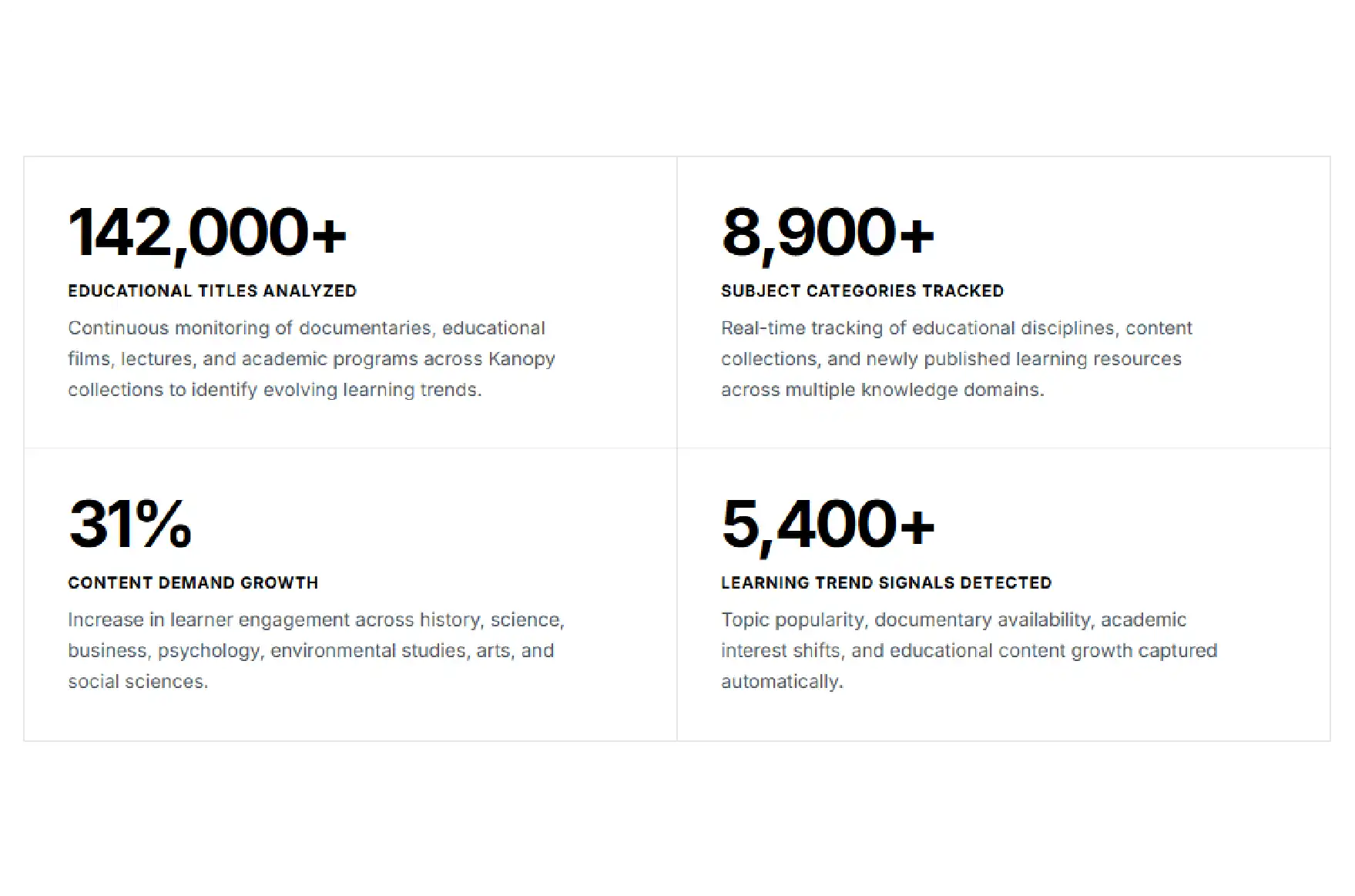
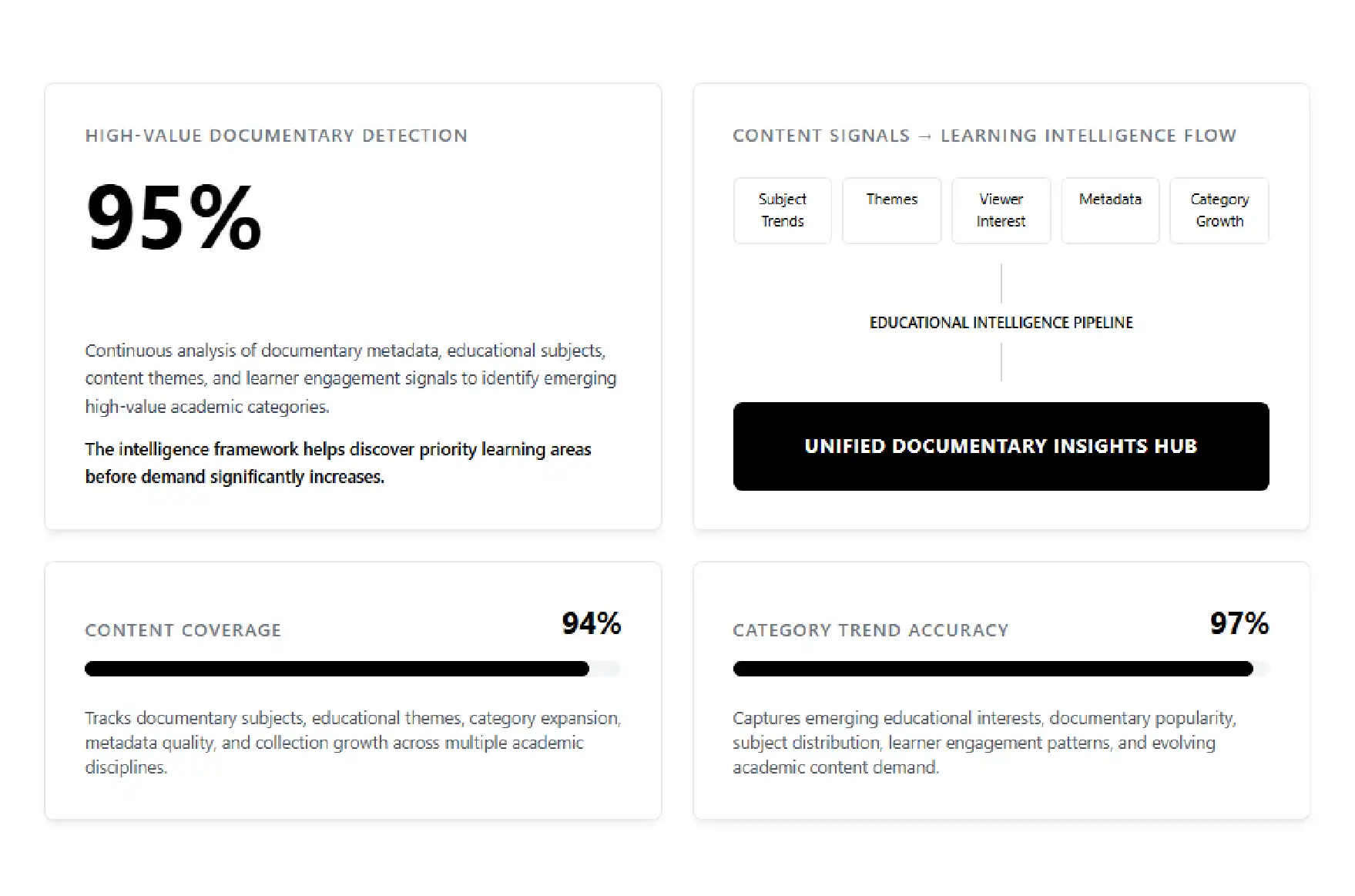
The analytics framework helped identify documentary categories receiving higher attention by analyzing content themes, subject distribution, and metadata signals.
This allowed the client to prioritize important educational areas and improve catalog evaluation processes.
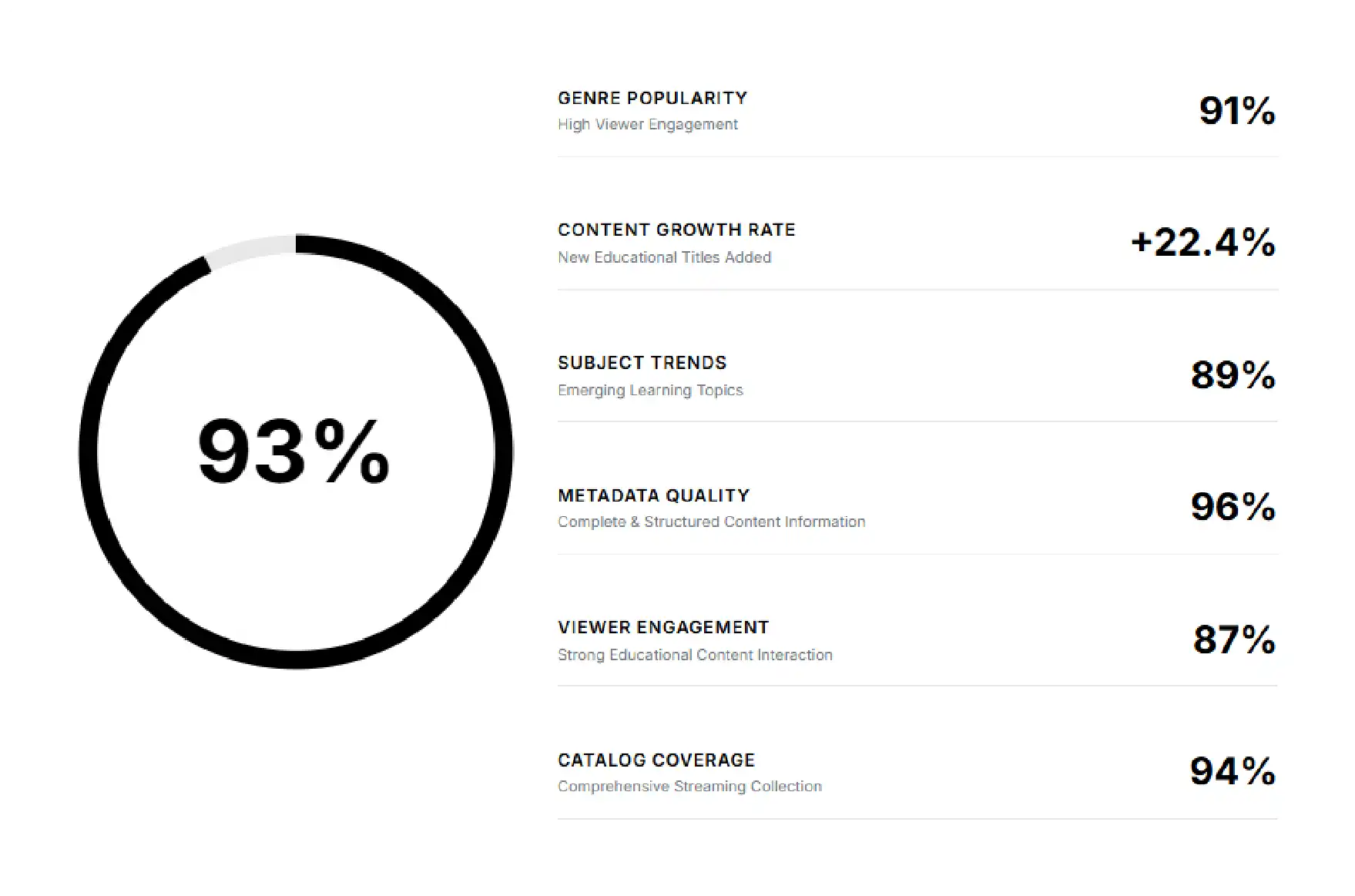
The transformation of streaming catalog information into structured datasets enabled deeper analysis of educational media performance.
| Metric | Insight Captured | Business Impact |
|---|---|---|
| Genre Popularity | Most viewed educational categories | Better content planning |
| Content Growth Rate | New title additions over time | Improved catalog tracking |
| Subject Trends | Rising learning topics | Faster strategy adjustment |
| Metadata Quality | Complete title information | Enhanced analytics accuracy |
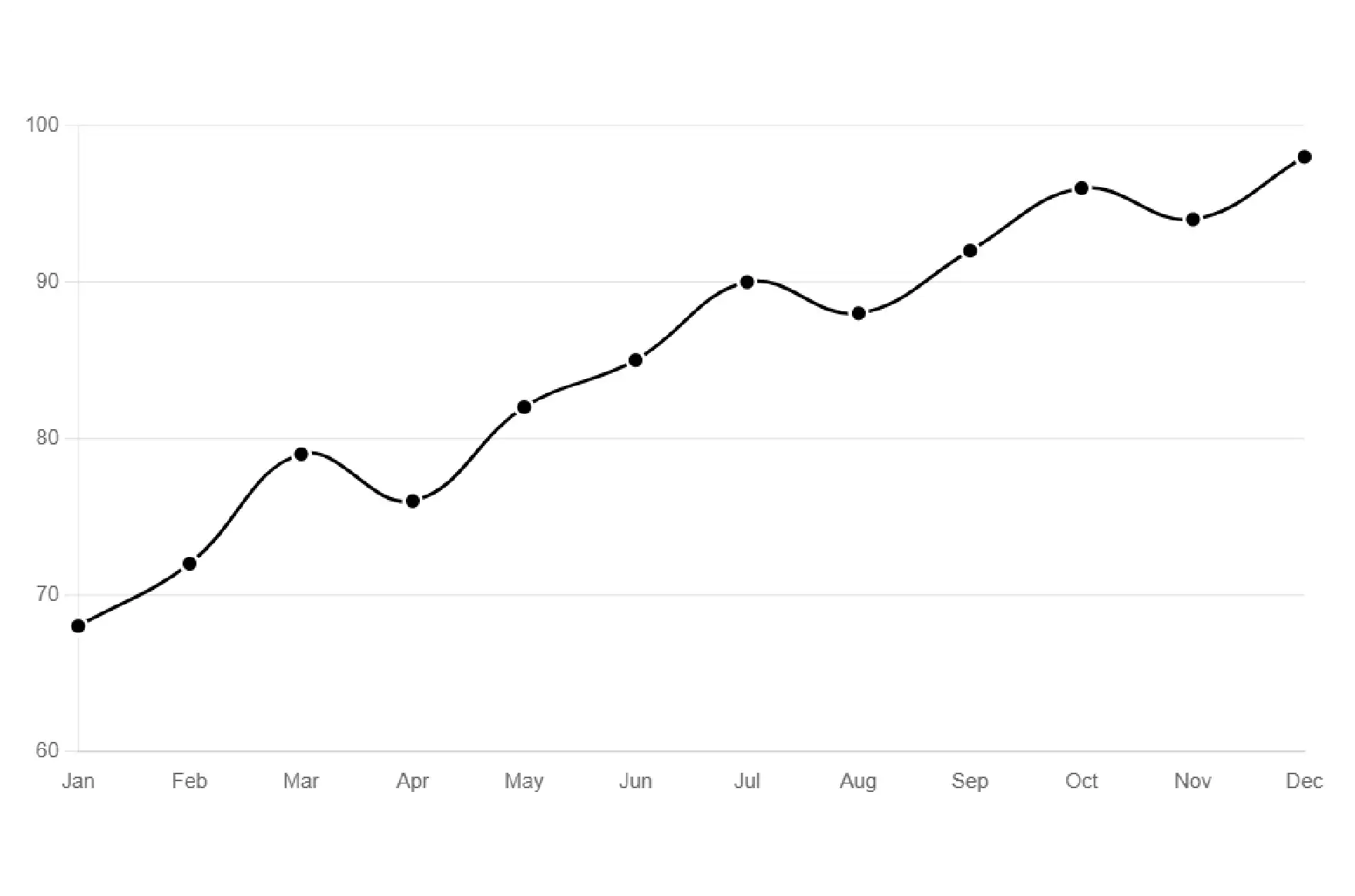
The automated system enabled large-scale monitoring of Kanopy’s expanding educational ecosystem. The organization gained consistent access to updated content information without depending on manual reviews.
This improved research efficiency, reduced operational workload, and supported long-term digital learning analytics initiatives.
The dataset snapshot highlights educational streaming content performance across different documentary categories. It shows how audience interest, content themes, and viewing signals vary across subjects. Environmental Studies and Technology categories demonstrate stronger engagement patterns, while Historical Archives show steady demand from research-focused audiences.
| Content Title | Category | Engagement Rate | Sentiment | Views | Top Keyword |
|---|---|---|---|---|---|
| Climate Change Explained | Environmental Science | 8.7% | Positive | 142K | Sustainability |
| Digital Future | Technology | 7.9% | Positive | 118K | Innovation |
| World History Collection | History | 6.5% | Neutral | 94K | Civilization |
| Medical Discoveries | Health Science | 7.2% | Positive | 105K | Research |
After implementing structured Kanopy content intelligence, the client achieved stronger visibility into educational media trends, documentary performance, and audience content preferences through automated catalog monitoring and analytics-driven insights.
Our solution enables organizations to transform complex streaming catalogs into structured and analytics-ready datasets by collecting, cleaning, and organizing educational content information from multiple digital sources.
The system helps businesses monitor content availability, identify emerging educational trends, and evaluate documentary performance through continuous data collection and intelligent processing workflows.
By removing duplicate records, standardizing metadata, and improving dataset quality, the platform ensures reliable information for reporting, research, and strategic planning.
The framework supports scalable content intelligence operations by handling growing streaming datasets while maintaining speed, accuracy, and consistency.
It also enables organizations to understand audience preferences, evaluate content gaps, and make evidence-based decisions using real-time digital media insights.
We are highly impressed with the streaming intelligence solution delivered by the team. The platform helped us organize large volumes of educational content data and convert scattered information into meaningful insights. Their automated approach improved our ability to monitor documentary trends, analyze content categories, and understand audience preferences more effectively.
The accuracy and speed of the data pipeline significantly reduced our manual research workload. The reporting dashboards provided clear visibility into content performance and helped our team make faster strategic decisions.
The solution has improved our content planning process and provided a stronger foundation for future educational media analytics initiatives.
— Director of Content Intelligence
The final outcome was a scalable educational streaming analytics platform that converted raw Kanopy catalog information into structured intelligence for content research, performance analysis, and strategic decision-making.
The client gained improved visibility into documentary trends, educational categories, content availability, and audience interests through automated data processing workflows.
Implementation of Digital Shelf Analytics Solutions helped the organization analyze digital content performance, identify catalog opportunities, and improve content evaluation strategies across educational media collections.
The integration of Web Scraping API Services enabled continuous and reliable extraction of streaming data, allowing the system to process updated content information efficiently.
The deployment of Web Scraping Services provided scalable infrastructure support for handling increasing volumes of streaming metadata while maintaining data quality and processing speed.
Overall, the project delivered improved operational efficiency, stronger content intelligence capabilities, and a reliable foundation for future digital learning analytics growth.
Our advanced data extraction and analytics solutions help organizations convert streaming content information into structured insights for better discovery, trend tracking, and data-driven content decisions.
Start a projectOur solutions can collect educational content information including titles, categories, genres, descriptions, release details, availability information, and other metadata required for content analytics and research.
Automated extraction converts large content catalogs into structured datasets, making it easier to analyze trends, compare categories, identify popular topics, and improve content planning decisions.
Yes, the system can continuously track catalog changes and identify newly available content, allowing organizations to stay updated with streaming library expansions.
Yes, the infrastructure is designed for scalability and can handle large streaming datasets while maintaining accuracy, speed, and consistent data processing performance.
Educational institutions, media companies, research organizations, content providers, and digital learning platforms can use these insights to improve content strategies and audience engagement.