Introduction
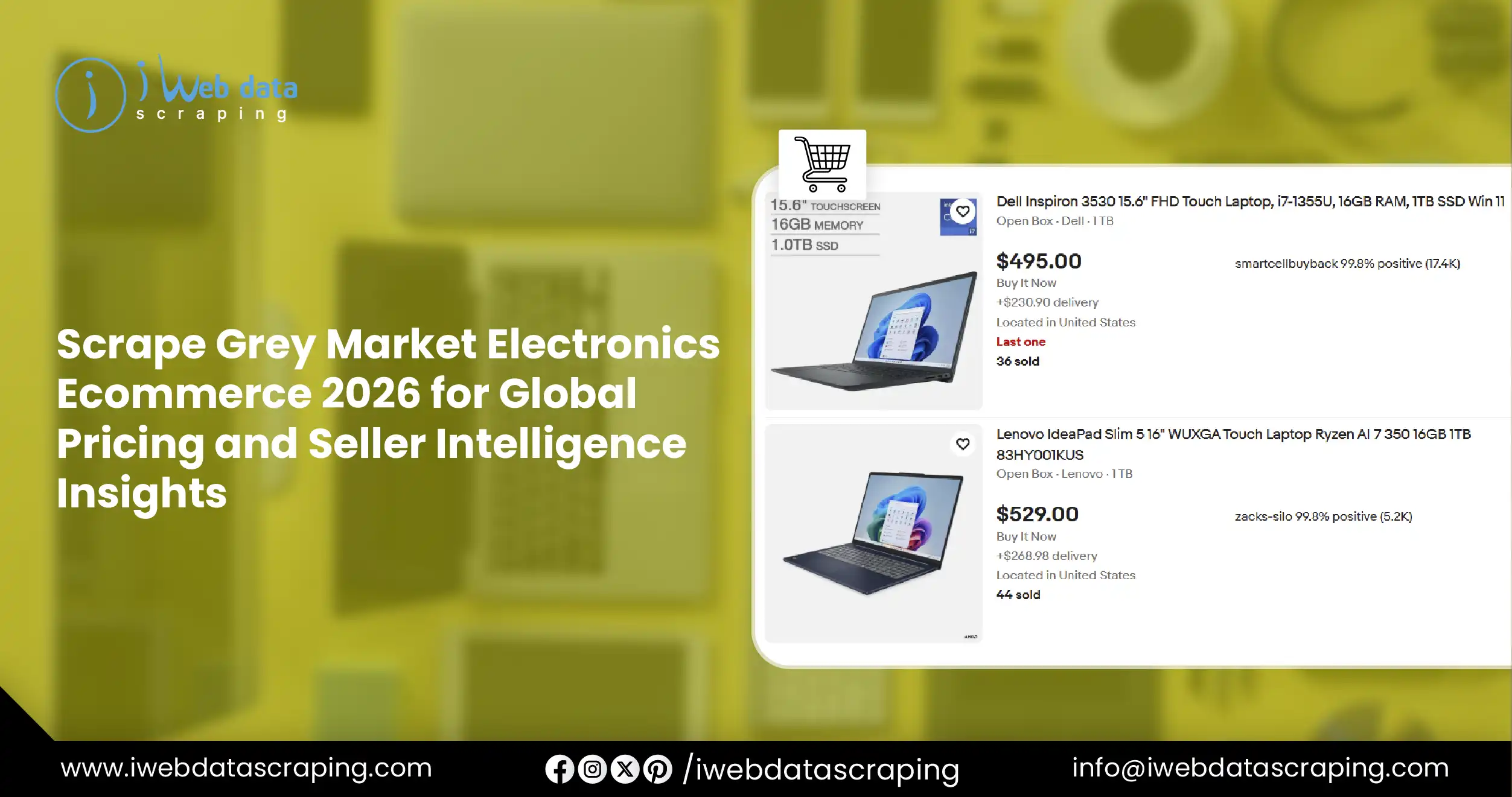
The global electronics marketplace in 2026 is increasingly influenced by parallel import networks, unauthorized resellers, and fragmented cross-border pricing systems. These forces are reshaping how brands control pricing integrity across Amazon, eBay, and regional platforms. The strategy to Scrape Grey Market Electronics Ecommerce enables brands to identify pricing leaks, unauthorized listings, and seller-driven discounting that bypass official distribution controls, making it a critical intelligence layer for competitive monitoring.
The rise of grey market activity is not random; it is structured, data-driven, and highly adaptive. Sellers continuously exploit regional pricing gaps, liquidation channels, and marketplace algorithm weaknesses. Understanding this ecosystem requires deeper visibility into seller behavior, SKU matching, and cross-platform pricing trends that are otherwise invisible without structured intelligence systems.
The eBay grey market electronics pricing intelligence plays a major role in identifying how auction-based and fixed-price listings distort global electronics pricing. eBay’s open marketplace structure allows rapid seller entry, enabling grey market operators to undercut regulated retail channels significantly.
Grey market sellers often synchronize listings across multiple platforms, adjusting pricing in real time based on demand surges, regional supply gaps, and competitor activity. This dynamic creates a constantly shifting pricing battlefield where traditional MSRP enforcement becomes ineffective.
Comparative Market Pressure and Pricing Distortion
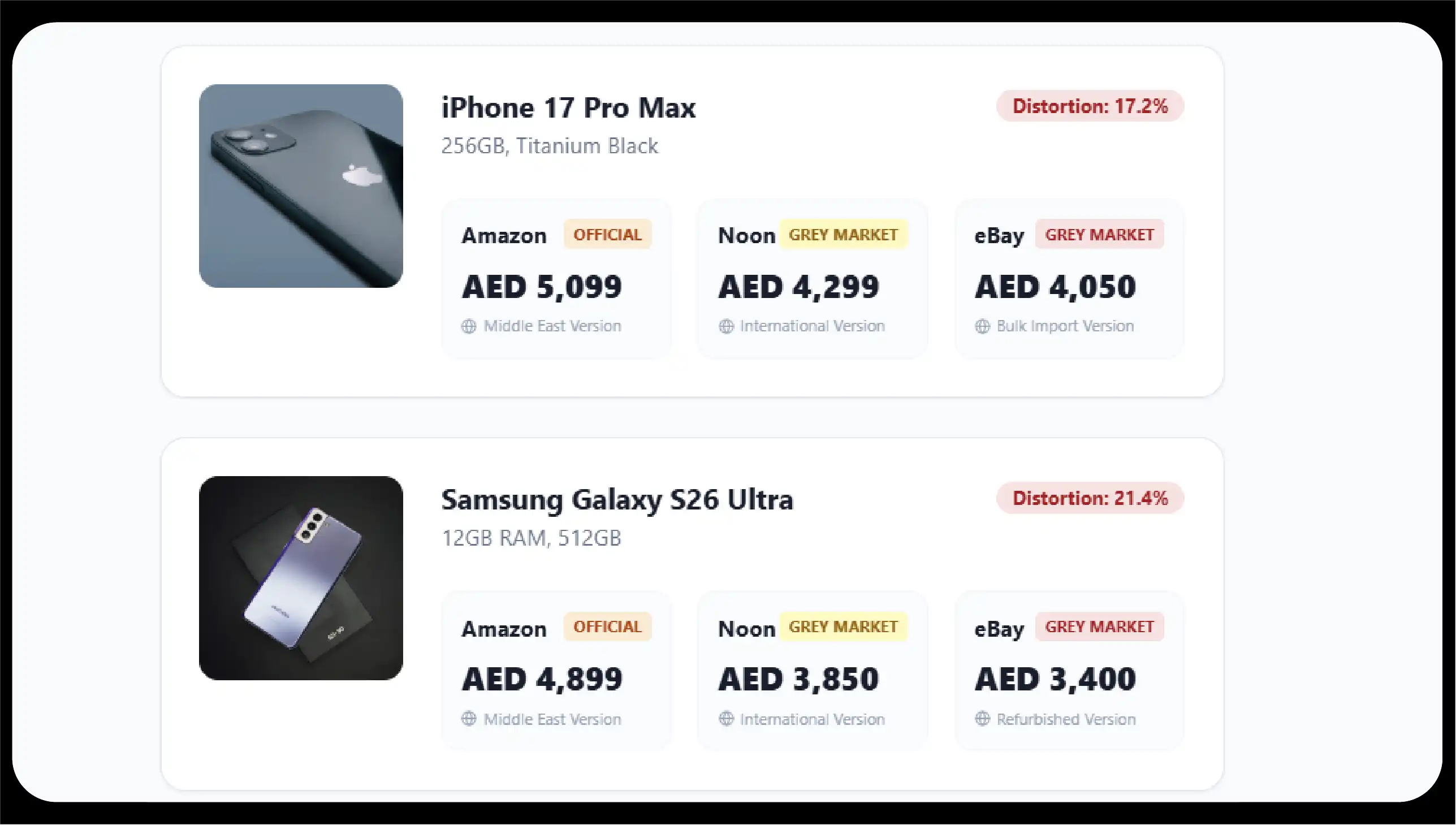
The most impactful trend in 2026 is the divergence in pricing between global marketplaces. Unauthorized sellers leverage regional arbitrage, bulk imports, and warranty ambiguity to reduce prices aggressively.
Amazon vs eBay vs Noon grey market pricing comparison highlights how pricing discrepancies widen across regions, especially in electronics categories such as smartphones, laptops, and accessories where demand elasticity is high.
These differences are not only due to market demand but also due to inconsistent enforcement of seller policies across platforms, enabling grey market sellers to thrive in less regulated environments.
Core Mechanisms of Grey Market Undercutting
Grey market sellers rely on five core mechanisms:
- Cross-border sourcing from low-cost markets
- Bulk liquidation of surplus inventory
- Misrepresentation of refurbished goods
- Multi-account seller strategies
- MAP (Minimum Advertised Price) violations
These mechanisms are most effectively identified through structured monitoring systems that continuously track pricing shifts across marketplaces. Without such systems, brands lose visibility into where and how their products are being undercut.
Data Intelligence for Marketplace Surveillance
Modern brands increasingly rely on structured pipelines to track unauthorized activity at scale. These systems extract SKU-level pricing, seller identities, and historical pricing trends.
A key approach is to scrape grey market electronics pricing marketplaces, allowing analysts to detect pricing anomalies and seller clustering patterns across global platforms.
This data-driven approach helps brands identify recurring undercut patterns and geographic hotspots of grey market activity.
Table 1: Cross-Platform Grey Market Pricing Comparison (2026 Dataset)
| Flagship Smartphone |
999 |
820 |
790 |
18–21% |
| Laptop (Gaming) |
1499 |
1180 |
1120 |
20–25% |
| Wireless Earbuds |
199 |
140 |
135 |
28–32% |
| Smartwatch |
349 |
255 |
240 |
26–31% |
| DSLR Camera |
1299 |
1020 |
980 |
21–24% |
| Tablet Device |
699 |
540 |
515 |
22–27% |
| Bluetooth Speaker |
129 |
89 |
85 |
30–35% |
| Accessories Bundle |
59 |
34 |
30 |
40–48% |
Regional Seller Intelligence and Behavioral Clustering
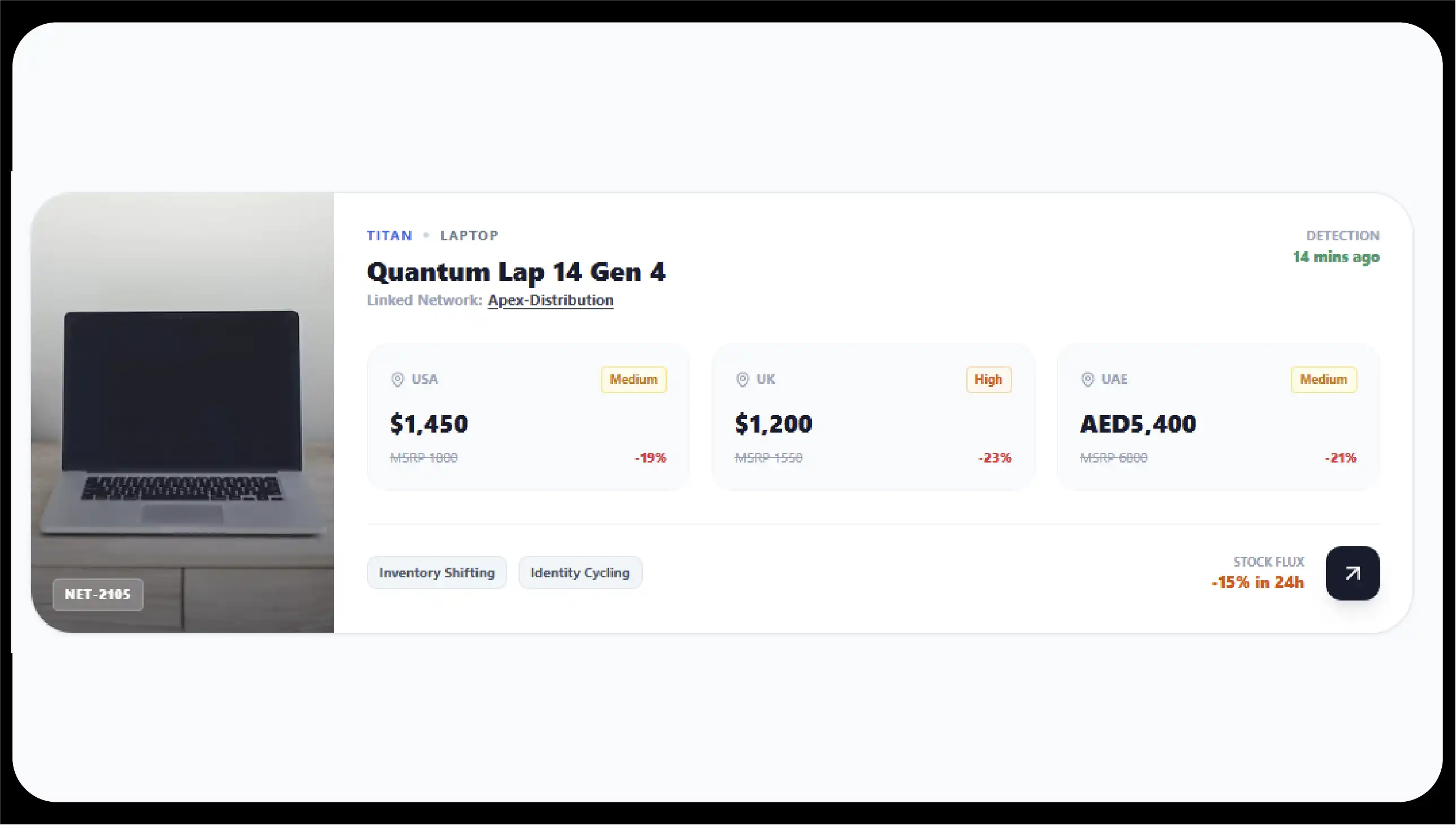
A major challenge in 2026 is tracking sellers operating across multiple geographies. Many unauthorized sellers target the USA, UK, and UAE markets due to pricing disparities and high consumer demand.
The role to scrape E-Commerce grey market electronics sellers USA, UK & UAE is essential for mapping cross-border seller activity and identifying recurring seller networks operating under multiple identities.
These sellers frequently shift inventory sources and rebrand listings to avoid detection while maintaining consistent undercut pricing strategies.
Marketplace Enforcement Gaps and Algorithm Exploitation
Marketplace algorithms prioritize price competitiveness, which inadvertently benefits grey market sellers. These sellers often manipulate listing structures, bundle configurations, and shipping origins to gain algorithmic advantage.
Amazon’s ecosystem is particularly vulnerable due to third-party dominance in many electronics categories.
Amazon third party electronics grey market monitoring is critical because third-party sellers often control Buy Box pricing, directly influencing customer purchase behavior even when official listings exist.
Regional Platform Dynamics in the Middle East
The Middle Eastern e-commerce ecosystem, particularly Noon, shows distinct pricing behavior due to import-heavy supply chains and regional distributor dependencies.
Noon grey market electronics seller analysis helps identify how UAE-based sellers exploit import routes from Asia and Europe to undercut official retail pricing while maintaining rapid inventory turnover cycles.
These patterns are especially strong in mobile devices and consumer electronics categories where demand is highly competitive.
Marketplace-Level Pricing Intelligence Systems
Advanced pricing intelligence systems continuously monitor SKU-level changes across multiple platforms to identify irregular pricing behavior.
The role to scrape grey market electronics marketplace pricing enables automated detection of undercut cycles, seller duplication, and sudden price drops that indicate grey market entry points.
These systems rely heavily on structured data pipelines that normalize product listings across platforms for accurate comparison.
Table 2: Grey Market Seller Behavior Analysis (2026)
| Parallel Import Seller |
22% |
Amazon |
Cross-border wholesale |
High |
| Liquidation Seller |
35% |
eBay |
Overstock clearance |
Medium |
| Refurbished Mislabel Seller |
40% |
eBay |
Returned goods |
Very High |
| Multi-Account Network |
28% |
Amazon/eBay |
Mixed sourcing |
Very High |
| Regional Arbitrage Seller |
25% |
Noon |
UAE/Asia imports |
Medium |
| Drop-shipping Grey Seller |
18% |
Amazon |
Distributor leakage |
High |
| Unauthorized Brand Reseller |
30% |
All platforms |
Unknown channels |
Very High |
| Marketplace Aggregator |
15% |
Amazon |
Retail arbitrage |
Medium |
Role of Structured Product Data in Market Transparency
Brands increasingly rely on structured datasets to monitor pricing, seller identity, and product variations across marketplaces.
Amazon Electronics Product Data Scraping allows extraction of structured product attributes, pricing history, and seller competition data to identify anomalies in real time.
This helps brands maintain visibility over unauthorized pricing fluctuations and enforce more consistent pricing policies.
Middle East Price Monitoring and Data Extraction
The UAE and Gulf markets are particularly sensitive to import-based pricing fluctuations, making structured monitoring essential.
The strategy to Extract Noon.com Electronics Price Data enables brands to track real-time price shifts, seller entry patterns, and cross-border arbitrage behavior that directly impacts retail pricing stability.
This visibility is critical for maintaining pricing parity across regional distribution networks.
Strategic Impact of Grey Market Intelligence
Grey market pricing intelligence is no longer optional in 2026—it is essential for protecting brand equity and maintaining global pricing consistency. Without structured visibility, brands lose control over how their products are represented across marketplaces.
The ability to track unauthorized sellers, pricing deviations, and cross-market arbitrage is now a foundational requirement for competitive strategy in electronics ecommerce.
Conclusion
The grey market electronics ecosystem continues to evolve rapidly, driven by global arbitrage, fragmented enforcement, and algorithm-driven marketplace competition. To counter these challenges, brands require structured intelligence systems that can detect pricing anomalies and unauthorized seller behavior at scale.
Web Scraping Electronics Product Data provides the foundational layer for extracting structured marketplace intelligence across global platforms. When combined with automation and analytics, organizations can transform raw marketplace signals into actionable insights.
Ultimately, Web Scraping Electronics Product Data enables brands to regain visibility into pricing distortions and unauthorized seller activity across global marketplaces. This structured intelligence helps reduce grey market leakage by identifying cross-platform arbitrage patterns and abnormal discounting behaviors. It also strengthens competitive monitoring by providing consistent SKU-level visibility across Amazon, eBay, and regional platforms. The Web Scraping API Services support scalable and automated data collection, allowing real-time tracking of pricing shifts and seller dynamics.
Experience top-notch web scraping service and mobile app scraping solutions with iWeb Data Scraping. Our skilled team excels in extracting various data sets, including retail store locations and beyond. Connect with us today to learn how our customized services can address your unique project needs, delivering the highest efficiency and dependability for all your data requirements.