
Introduction
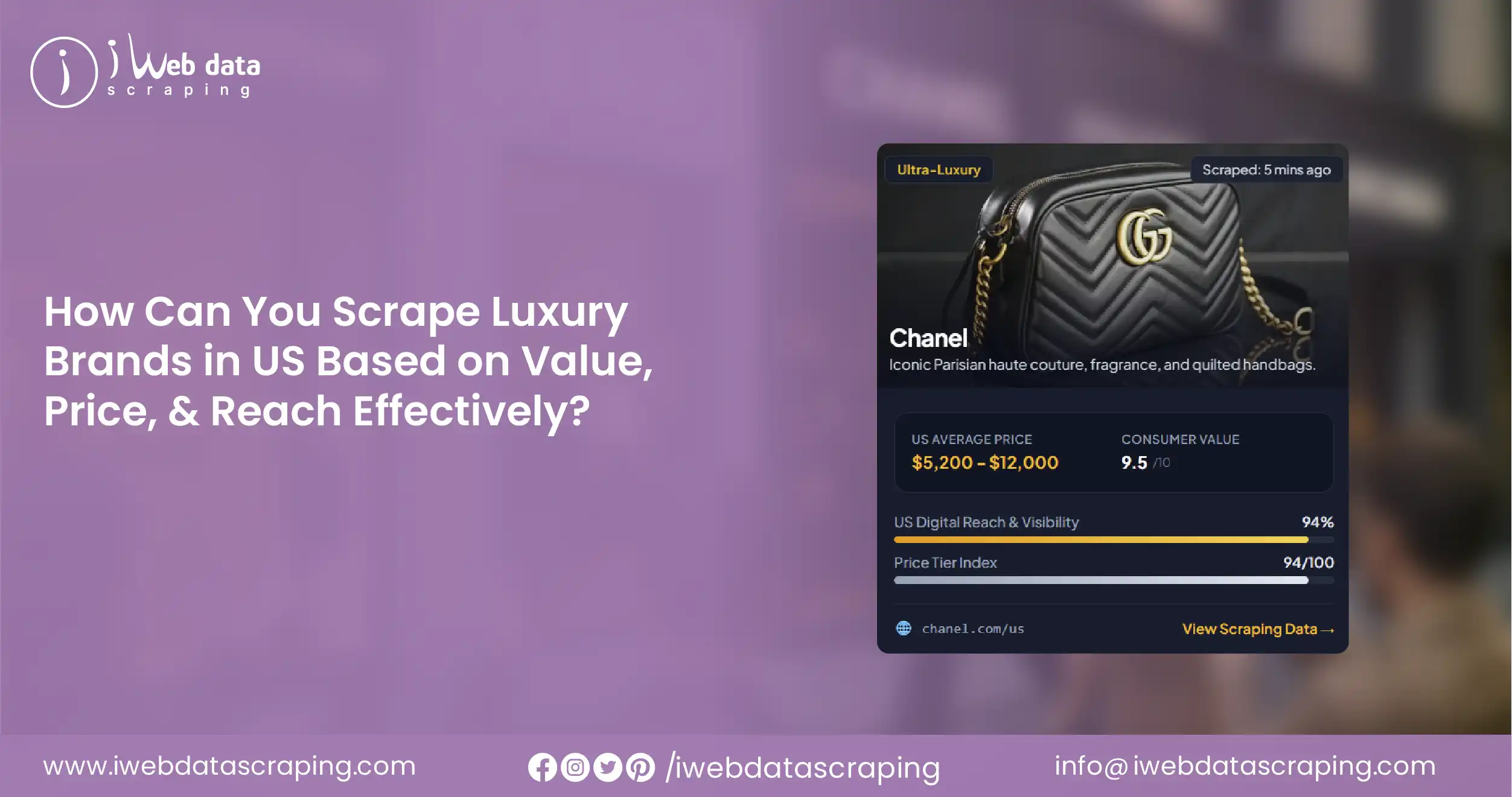
The luxury retail industry in the United States is evolving rapidly as brands compete on exclusivity, customer experience, pricing, and market expansion. Businesses, investors, retailers, and market analysts require accurate, real-time intelligence to understand how premium brands perform across different regions and customer segments. Scrape Luxury Brands in US Based on Value, Price, & Reach to gather comprehensive datasets that reveal pricing strategies, product availability, promotional activities, and geographic reach.
Modern enterprises increasingly rely on Luxury brand market analysis In USA to evaluate consumer preferences, identify emerging market opportunities, and measure brand performance against competitors. By leveraging structured datasets, organizations can make informed business decisions while improving marketing strategies and inventory planning.
Another valuable application is the ability to Extract Top luxury brands by value, allowing companies to compare premium labels based on product assortment, pricing consistency, customer engagement, and overall market presence. This intelligence supports strategic planning, competitive positioning, and long-term business growth.
Why Luxury Brand Intelligence Matters?
Luxury consumers expect premium quality, exceptional service, and exclusive collections. Brands continuously adjust pricing, introduce limited-edition products, and expand into new markets to maintain their competitive advantage. Without accurate market intelligence, businesses may struggle to understand rapidly changing consumer behavior and pricing dynamics.
Web data scraping helps organizations collect structured information from multiple luxury retail platforms, enabling comprehensive analysis of products, prices, promotions, availability, and brand positioning.
Businesses can transform this data into actionable insights for forecasting demand, optimizing pricing, improving customer engagement, and identifying emerging luxury shopping trends across the United States.
Understanding Value, Price, and Market Reach
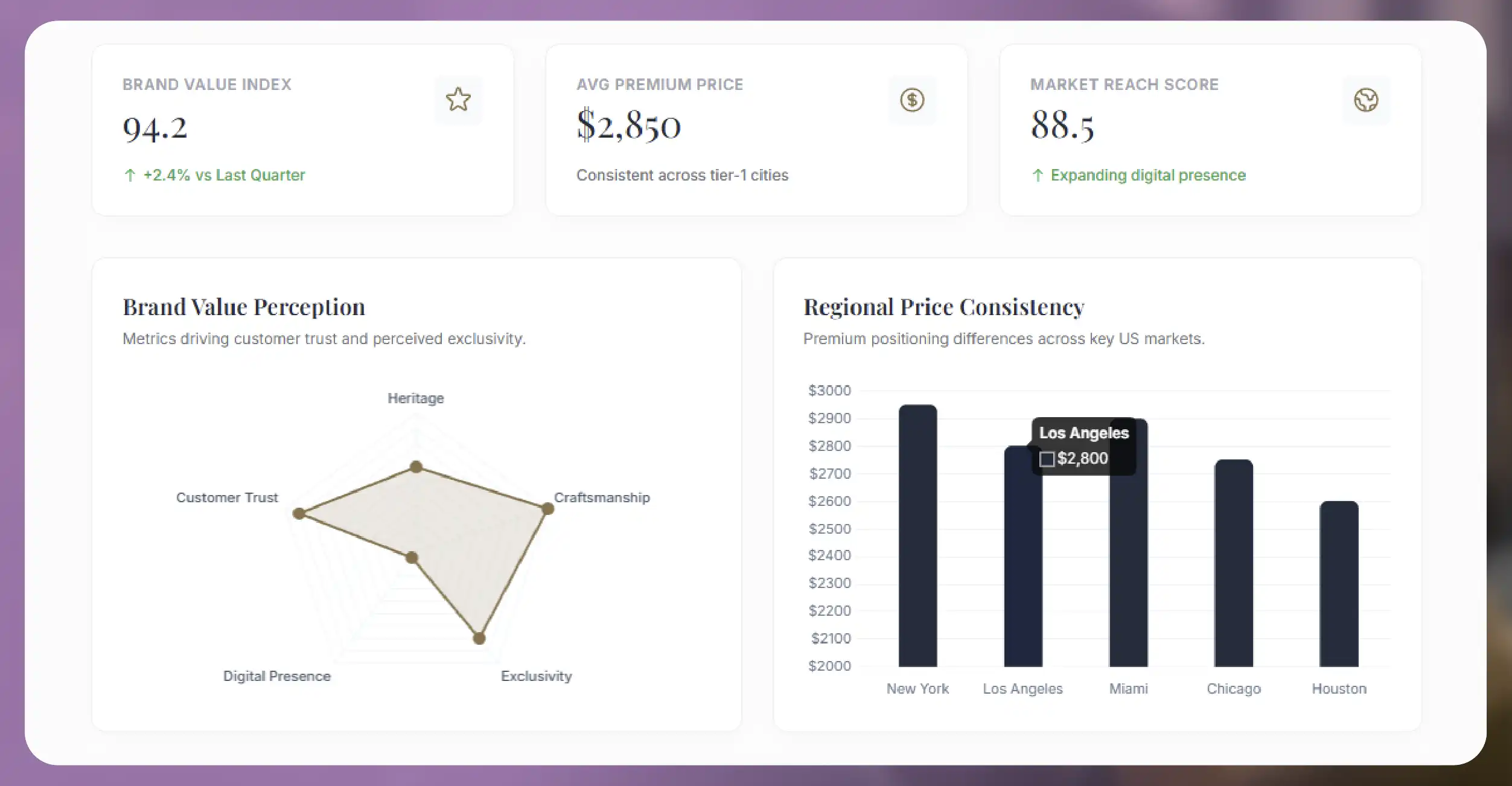
Luxury brands compete using more than product quality. Their overall value is determined by customer perception, exclusivity, pricing consistency, distribution networks, and digital presence.
Brand value reflects customer trust, heritage, craftsmanship, and perceived exclusivity. High-value brands often maintain premium pricing while delivering exceptional customer experiences across physical stores and digital channels.
Price analysis helps organizations understand premium positioning, promotional frequency, regional price differences, and seasonal pricing strategies.
Market reach measures how effectively brands expand across cities, online marketplaces, flagship stores, luxury malls, and authorized retail partners.
Combining these metrics provides a complete picture of brand competitiveness within the US luxury retail market.
Importance of Product Price Intelligence
Luxury retailers regularly update prices based on seasonal launches, exclusive collaborations, inventory levels, and economic conditions. Monitoring these changes helps businesses identify pricing trends before competitors.
Luxury product price Monitoring in USA enables organizations to analyze price fluctuations across handbags, watches, jewelry, footwear, apparel, fragrances, and accessories. Historical pricing data also supports forecasting future pricing movements while identifying premium pricing opportunities.
Businesses can evaluate discount strategies, compare regional pricing differences, and understand customer purchasing behavior through continuous monitoring.
Location Intelligence for Luxury Retail
Physical stores remain an essential part of luxury shopping experiences despite the growth of eCommerce.
Luxury store location Data Scraping provides valuable information about flagship stores, boutique locations, shopping districts, luxury malls, operating hours, customer ratings, and regional market expansion.
Retailers can use location intelligence to evaluate market saturation, identify expansion opportunities, benchmark store coverage, and optimize distribution strategies across metropolitan markets.
Geographic analysis also reveals underserved luxury markets with strong growth potential.
Competitive Benchmarking Across Premium Brands
Competition within the luxury sector extends beyond pricing. Brands compete through product innovation, exclusivity, customer loyalty, digital engagement, and brand perception.
Using US Luxury brand competitor benchmarking, organizations can compare competitors across numerous performance indicators, including:
- Product assortment
- Pricing consistency
- New collection launches
- Promotional campaigns
- Customer reviews
- Geographic expansion
- Online visibility
- Inventory availability
These insights help businesses identify competitive gaps and develop more effective retail strategies.
Evaluating Market Reach Across the United States
Luxury brands continue expanding into new regions through flagship stores, premium shopping centers, digital marketplaces, and omnichannel experiences.
Luxury brand market reach analysis in US helps organizations understand regional penetration, customer accessibility, demographic preferences, and retail expansion opportunities.
Businesses can identify high-growth metropolitan markets while analyzing customer demand across urban, suburban, and emerging luxury retail destinations.
Market reach data also supports franchise planning, investment decisions, and long-term expansion strategies.
Key Data Points Businesses Can Extract
Comprehensive luxury brand datasets often include:
- Product names
- Categories
- Collection details
- Prices
- Discounts
- Availability status
- Product descriptions
- Images
- Materials
- Colors
- Sizes
- Customer ratings
- Reviews
- Store locations
- Geographic coverage
- Promotional campaigns
- New arrivals
- Best sellers
- Limited editions
- Brand rankings
These structured datasets create a strong foundation for advanced business intelligence and predictive analytics.
Business Applications of Luxury Brand Data
Luxury market intelligence serves multiple industries beyond fashion retail.
- Retail companies optimize pricing strategies using historical market trends.
- Investment firms evaluate premium brand performance before making financial decisions.
- Market research organizations analyze customer preferences and emerging purchasing behavior.
- Consulting firms benchmark luxury retailers across multiple performance indicators.
- Manufacturers identify product demand and innovation opportunities.
- eCommerce platforms improve assortment planning using competitive product intelligence.
- Digital marketing agencies personalize campaigns based on luxury consumer behavior and pricing trends.
Role of Fashion Data Scraping
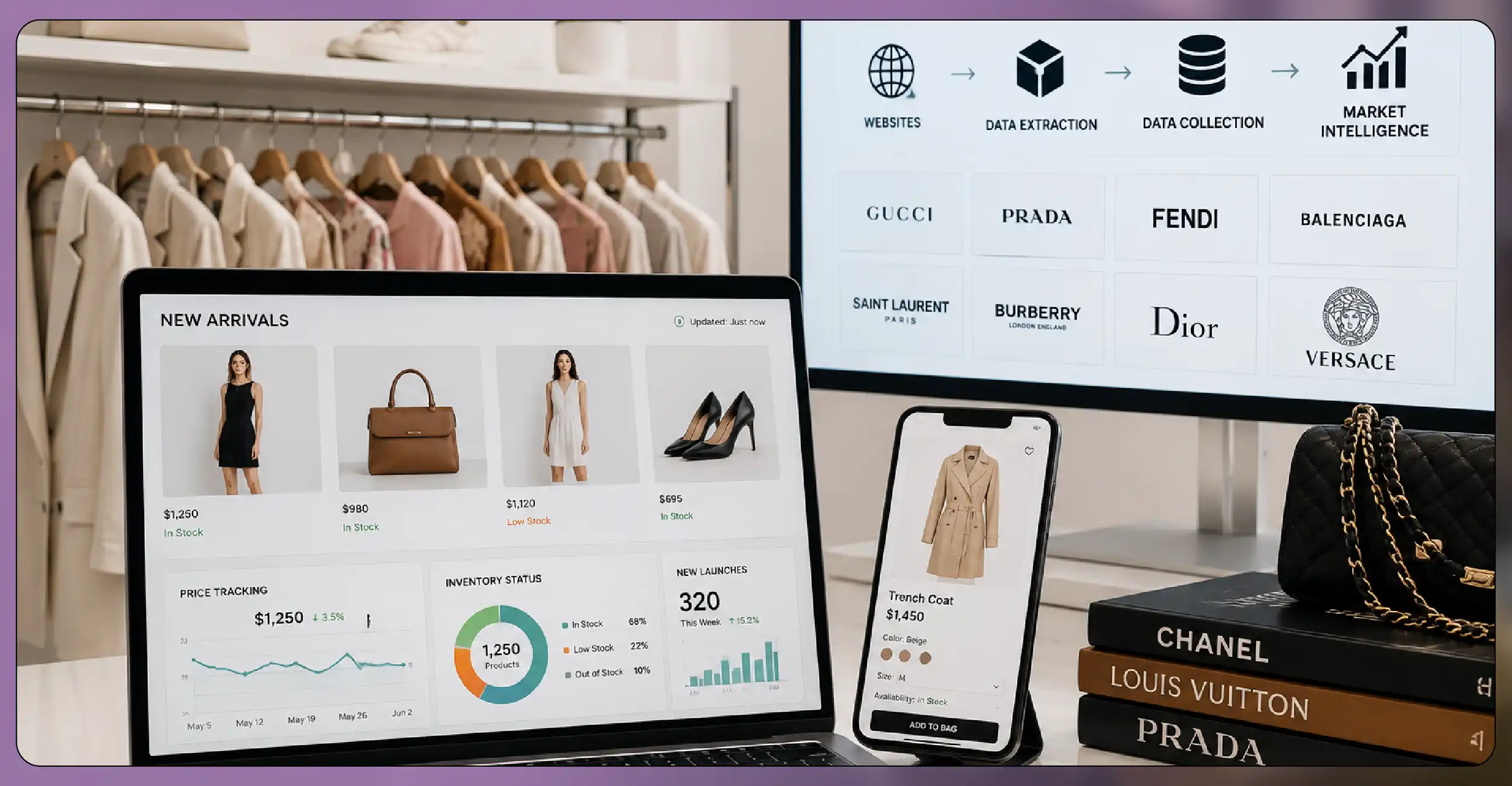
Fashion retailers launch thousands of new products annually across multiple collections. Tracking these launches manually is nearly impossible.
Fashion Product Data Scraping Service enables organizations to automate the collection of fashion product information from luxury websites, helping businesses monitor catalog updates, pricing changes, inventory availability, and customer engagement in real time.
This automation improves operational efficiency while ensuring consistent access to high-quality market intelligence.
Jewelry Market Intelligence
Luxury jewelry remains one of the fastest-growing premium retail segments in the United States. Brands frequently introduce exclusive collections featuring diamonds, gemstones, precious metals, and designer collaborations.
Jewelry Data Scraping Services allow businesses to monitor jewelry collections, pricing strategies, availability, seasonal launches, and customer demand. These insights support assortment planning, competitive analysis, and pricing optimization while helping retailers stay informed about evolving consumer preferences.
How iWeb Data Scraping Can Help You?
Comprehensive Luxury Market Coverage
Our advanced data scraping solutions collect structured information from leading luxury retail platforms, delivering accurate insights into pricing, product catalogs, promotions, availability, customer reviews, and market trends for informed business decisions.
Real-Time Competitive Intelligence
We continuously monitor competitor activities, enabling businesses to track new product launches, pricing updates, promotional campaigns, assortment changes, and inventory fluctuations while responding quickly to evolving luxury market conditions.
Customized Data Delivery
Our services provide tailored datasets in formats such as CSV, JSON, Excel, APIs, or cloud storage, allowing seamless integration with analytics platforms, dashboards, CRM systems, and business intelligence workflows.
Scalable Enterprise Solutions
Whether monitoring dozens or thousands of luxury products, our scalable infrastructure supports high-volume data extraction with automated scheduling, ensuring consistent, reliable, and up-to-date market intelligence across multiple brands and regions.
Actionable Business Insights
Beyond collecting data, we transform raw information into meaningful insights that help businesses optimize pricing, improve inventory planning, identify growth opportunities, strengthen competitive positioning, and enhance strategic decision-making.
Conclusion
As competition within the US luxury retail market continues to intensify, businesses need accurate, timely, and comprehensive market intelligence to remain competitive. Data scraping enables organizations to analyze pricing trends, benchmark competitors, monitor store expansion, and understand evolving consumer preferences with greater precision.
Whether your objective is to optimize pricing strategies, evaluate brand performance, or identify new growth opportunities, structured luxury market data provides the foundation for smarter business decisions.
Businesses can leverage Extract Gucci Fashion & Apparel Data to monitor product catalogs, pricing strategies, seasonal launches, and customer demand with greater accuracy.
Similarly, Louis Vuitton Data Scraping Solutions provide valuable insights into premium pricing, inventory trends, product availability, and competitive positioning across the US luxury market.
Additionally, Hermes Data Scraping Solutions enable organizations to analyze exclusive collections, monitor market expansion, and uncover valuable intelligence that supports informed strategic decisions.
By leveraging advanced data scraping technologies, organizations can stay ahead of market changes, improve operational efficiency, and achieve sustainable success in the ever-evolving luxury marketplace.
Frequently Asked Questions (FAQs)
Scraping luxury brand data helps businesses monitor pricing, analyze competitors, track product launches, evaluate market trends, and make data-driven decisions that improve competitiveness and profitability.
Businesses can extract product names, prices, descriptions, categories, images, availability, customer reviews, store locations, promotions, collection details, ratings, and inventory information.
Retailers, market research firms, investment companies, consulting agencies, eCommerce businesses, pricing analysts, luxury manufacturers, and digital marketing firms all benefit from comprehensive luxury market intelligence.
The ideal frequency depends on business needs, but daily or real-time updates are recommended for monitoring pricing changes, promotions, inventory availability, and competitor activities effectively.
Data scraping automates the collection of competitor information, enabling businesses to compare pricing, product assortments, market reach, promotional strategies, customer engagement, and overall brand performance across the luxury retail landscape.