

Introduction
The rental housing market has become increasingly digital, with renters relying on online platforms to discover apartments, compare prices, evaluate amenities, and identify properties that match their budgets and preferred locations. For real estate companies, property managers, investors, proptech platforms, and market researchers, these listings represent a valuable source of structured market intelligence.
Scrape Rent.com Apartment Listings via API to systematically collect apartment information from Rent.com and transform continuously changing listing information into structured, analysis-ready datasets. Instead of manually reviewing hundreds or thousands of properties, organizations can automate data collection and monitor rental markets at scale.
Apartment listing data extraction From Rent.com can capture important information such as property names, addresses, rental prices, apartment types, bedroom and bathroom counts, square footage, amenities, descriptions, availability, property images, ratings, and other publicly displayed attributes.
Apartment pricing & availability data from Rent.com can further help businesses understand rental trends, identify price differences between neighborhoods, monitor inventory levels, and evaluate how properties change over time.
Why Rental Listing Data Matters?
Rental markets are highly dynamic. Apartment prices can change according to demand, seasonality, location, property characteristics, incentives, and inventory. Availability can also change rapidly as units are leased, added, or removed.
Traditional research methods often depend on manually visiting property websites and recording information in spreadsheets. This approach becomes inefficient when hundreds of properties across multiple cities must be monitored regularly.
Automated extraction creates a more scalable alternative. A structured dataset allows businesses to compare properties using consistent fields while reducing repetitive research work. Historical records can also reveal changes that may not be obvious when looking at individual listings.
For example, a real estate analyst could monitor rental prices across several metropolitan areas and determine which locations are experiencing faster price growth. A property management company could compare its listings against competing properties based on rent, amenities, size, and availability.
What Information Can Be Collected?
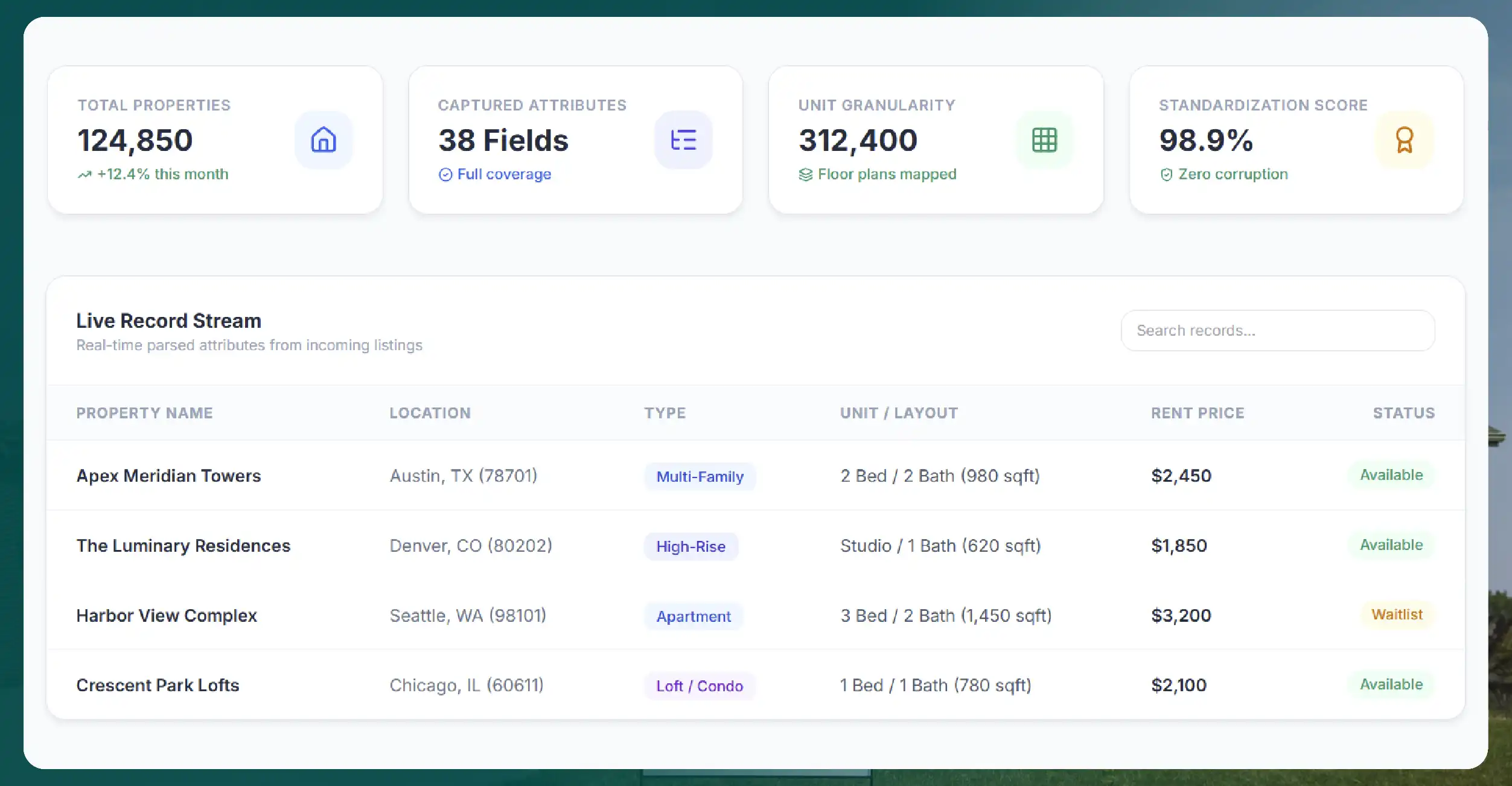
A comprehensive rental dataset can contain numerous attributes depending on the information publicly available through the target platform. Common fields include property name, property address, city, state, ZIP code, latitude and longitude, property type, unit type, bedroom count, bathroom count, square footage, rental price, price range, availability date, amenities, descriptions, images, ratings, and listing URLs.
Rent.com rental property data scraping can also support the collection of property-level and unit-level information where those details are publicly presented. Separating property information from individual unit information is particularly useful because one apartment community may advertise several floor plans with different prices and availability dates.
Additional fields can help create richer datasets. These may include pet policies, parking options, laundry facilities, furnished or unfurnished status, lease terms, special offers, utilities, community features, and accessibility-related information.
The objective is not simply to collect more records. The objective is to create clean, standardized, and reusable information that can support meaningful analysis.
How an API-Based Approach Works?
An API-based workflow generally begins by identifying the required listing fields, geographic coverage, collection frequency, and output format. The system then requests relevant data, processes the returned information, standardizes fields, and stores the results in a database or analytics environment.
Rent.com rental pricing intelligence becomes more valuable when data is collected repeatedly rather than only once. A single snapshot can show current market conditions, while historical snapshots can reveal pricing movement, inventory changes, and emerging trends.
A typical workflow may include URL or property discovery, data retrieval, parsing, validation, normalization, deduplication, enrichment, storage, and scheduled updates.
Businesses can configure collection schedules according to their objectives. A daily process may be appropriate for active pricing monitoring, while weekly or monthly collection can work for broader market research.
API-driven infrastructure can also make downstream integration easier. Structured records can be delivered into CSV, JSON, Excel, PostgreSQL, cloud storage, data warehouses, dashboards, or internal applications.
Building Reliable Rental Datasets
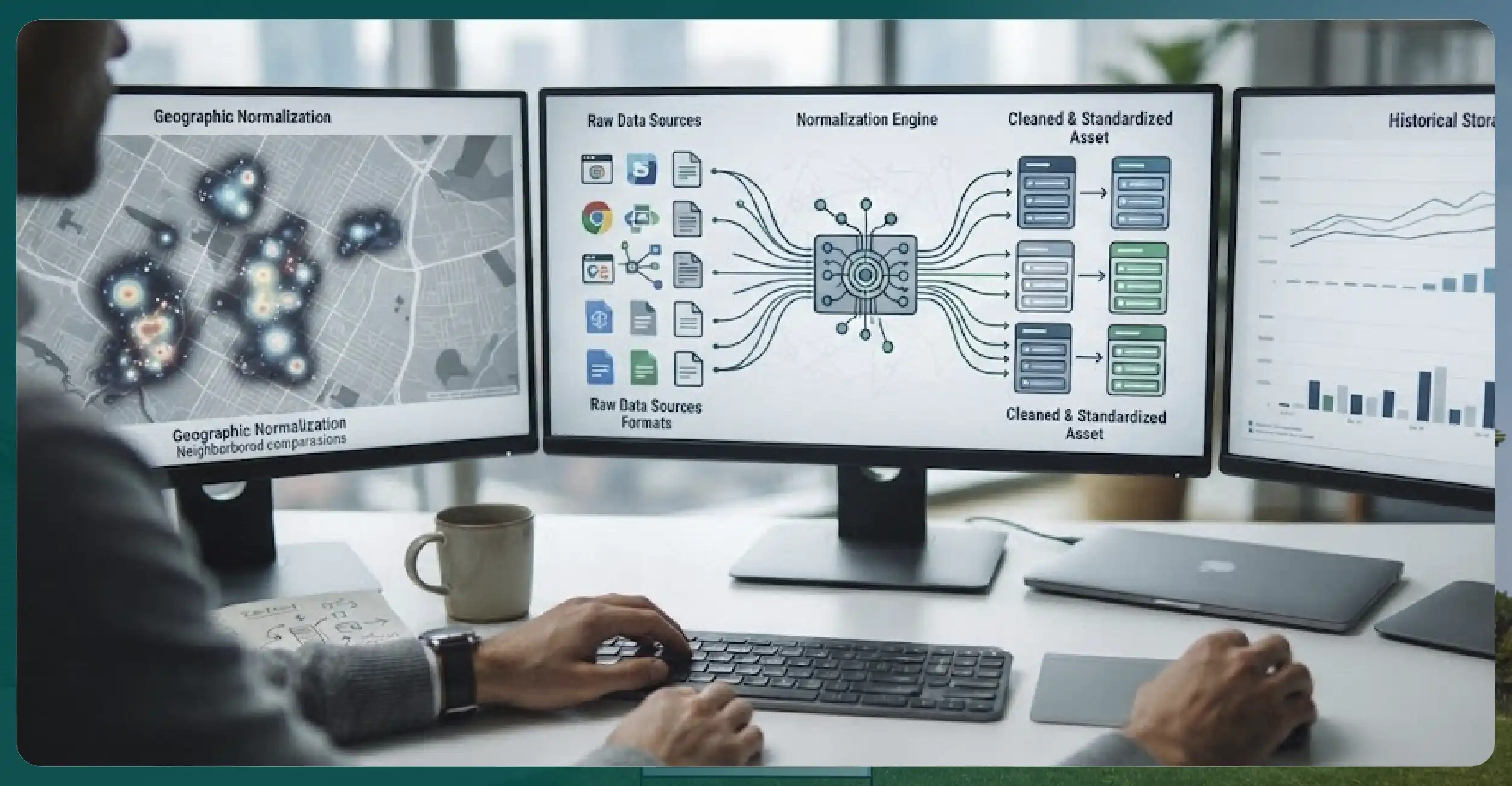
Raw listing information often contains inconsistencies. Prices may appear in different formats, addresses may use abbreviations, amenities may be represented with different terminology, and duplicate properties may appear across collection cycles.
Data normalization addresses these challenges by converting information into consistent formats. For example, bedroom counts can be stored numerically, square footage can use standardized units, and prices can be converted into consistent numeric fields.
Rent.com scraper API solutions can incorporate validation rules to identify incomplete or suspicious records. Duplicate detection can prevent the same property from being counted repeatedly, while historical storage preserves previous versions of listings for trend analysis.
Location normalization is another important consideration. Standardized city, state, ZIP code, and geographic coordinates make it easier to compare neighborhoods and build location-based dashboards.
A well-designed dataset therefore becomes much more valuable than a simple collection of scraped pages. It becomes a reusable real estate information asset.
Rental Market Research and Competitive Analysis
Rental listing datasets can support a wide range of business applications. Real estate investors can analyze asking rents across markets before evaluating potential investments. Property managers can benchmark their communities against nearby competitors.
Developers can investigate rental demand and identify neighborhoods where pricing and inventory patterns suggest potential opportunities. Market research firms can use historical listing information to produce reports covering rental affordability, property supply, and local competition.
Real Estate Property Datasets can also support machine learning and predictive analytics. Historical prices, property characteristics, location attributes, and availability patterns can become inputs for models designed to estimate rental values or identify changing market conditions.
For proptech businesses, structured listing information can power comparison tools, rental discovery applications, investment dashboards, recommendation engines, and market intelligence products.
Monitoring Prices, Inventory, and Availability
One of the strongest advantages of automated collection is continuous monitoring. Rental markets can change quickly, and periodic manual research may miss short-term movements.
A monitoring system can compare current listings with historical records to identify price increases, reductions, newly added properties, removed listings, and changes in availability.
Businesses can establish alerts when prices cross defined thresholds or when inventory changes significantly within a particular market. This creates a proactive approach to market intelligence.
For example, an analyst monitoring a neighborhood could identify that average advertised rent increased over several months while available units declined. Another analysis might reveal that properties offering specific amenities consistently command higher asking prices.
These insights can help decision-makers move beyond individual listings and understand broader market behavior.
Scaling Data Collection Across Markets
Large real estate projects often require information from numerous cities and property categories. Scaling requires reliable infrastructure capable of handling large volumes while maintaining consistent data quality.
Geographic segmentation can organize collection by city, ZIP code, neighborhood, or metropolitan market. Property-level identifiers can help connect historical records and prevent duplicate entries.
Real Estate Property Data Extraction can also be integrated with other data sources, including demographic information, geographic datasets, property records, neighborhood statistics, and market indicators.
This creates opportunities for richer analysis. Instead of evaluating rental price alone, businesses can study rent relative to apartment size, neighborhood characteristics, amenities, transportation access, and competitive inventory.
The resulting intelligence can provide a more complete understanding of local rental markets.
Data Quality and Responsible Collection
Quality should remain central to every automated data project. A dataset containing thousands of inaccurate or outdated records can produce misleading conclusions.
Validation should therefore be performed during and after collection. Missing values, unexpected formats, duplicate records, invalid prices, and incomplete property details should be identified before information reaches business dashboards.
Collection processes should also respect applicable laws, platform terms, access restrictions, and privacy requirements. Businesses should focus on publicly available information and establish responsible data governance practices.
A robust pipeline should include monitoring, logging, error handling, retry mechanisms, and periodic quality checks. These capabilities help maintain stable data collection as websites and data structures evolve.
Turning Listings Into Actionable Intelligence
The real value of rental data emerges when collected information becomes actionable. A spreadsheet of apartment listings provides basic visibility, but a continuously updated analytical dataset can support strategic decision-making.
Businesses can calculate average asking rent, median rent, price per square foot, inventory growth, availability trends, amenity frequency, and neighborhood-level differences. Historical records can reveal whether changes are temporary or part of a longer trend.
Dashboards can make these insights accessible to executives, analysts, investment teams, and property managers. Filters can allow users to examine specific markets, price ranges, property types, bedroom counts, and availability periods.
Real Estate Data Intelligence Services can combine automated collection, data cleaning, enrichment, historical storage, analytics, and reporting into a complete intelligence workflow.
How iWeb Data Scraping Can Help You?
Automated Market Coverage
iWeb Data Scraping can automate large-scale apartment collection across selected markets, reducing manual research while delivering consistently structured property information for faster rental market analysis and comparison.
Historical Price Monitoring
Historical datasets help businesses compare current and previous rental prices, identify market movements, detect pricing changes, and understand seasonal patterns that influence apartment demand and competitive positioning.
Structured Property Intelligence
Collected listings can be transformed into standardized datasets containing property details, pricing, amenities, availability, locations, and other fields, making complex rental information easier to analyze and operationalize.
Competitive Benchmarking
Businesses can compare competing properties by location, rent, apartment size, amenities, and availability, helping property managers and investors understand market positioning and identify opportunities for stronger pricing strategies.
Scalable Data Delivery
iWeb Data Scraping can deliver processed information through customized formats and systems, enabling organizations to integrate rental datasets into dashboards, databases, analytical platforms, applications, and internal workflows.
Conclusion
Rental marketplaces contain a constantly changing stream of information that can help businesses understand property pricing, inventory, competition, and market opportunities. Automating this information collection makes it possible to move from occasional manual research toward continuous, structured rental intelligence.
Real Estate Property Data Extraction can support investment research, property management, competitive benchmarking, market analysis, and technology-driven rental applications. With accurate collection, normalization, historical tracking, and scalable delivery, businesses can transform individual listings into meaningful market intelligence.
Real Estate Data Intelligence Services can further connect listing information with analytical workflows, helping organizations uncover pricing trends, inventory changes, location opportunities, and competitive patterns.
Web Scraping API Services provide the infrastructure needed to collect and process large volumes of publicly available listing information efficiently while supporting customized datasets and recurring delivery requirements.
When implemented with strong data-quality controls and responsible collection practices, an automated rental data workflow can become a powerful foundation for smarter decisions in an increasingly digital property market.
FAQs
Depending on publicly available information, datasets can include property names, addresses, rental prices, bedrooms, bathrooms, square footage, amenities, availability, descriptions, images, and other listing attributes.
An API-oriented workflow can make recurring data collection, processing, integration, and delivery more systematic, particularly when businesses need structured information across large numbers of properties or markets.
The ideal frequency depends on the business objective. Daily collection can support active pricing and availability monitoring, while weekly or monthly schedules may suit broader market research.
Yes. Repeated snapshots can be stored over time and compared to identify price changes, newly listed properties, removed listings, availability shifts, and broader rental-market trends.
Businesses can use structured datasets for competitive analysis, investment research, rental price benchmarking, market reports, property discovery platforms, forecasting, dashboards, and other real estate analytics applications.