How Can Scrape Store-Level Grocery Historical & Promotional Pricing Data Improve Retail Pricing Intelligence?
Introduction
Australia's grocery retail market has become increasingly competitive, with retailers adjusting prices, promotions, and product availability frequently across individual store locations. Businesses seeking comprehensive pricing intelligence require accurate, location-specific datasets that reveal not only current prices but also historical pricing trends and promotional cycles. Scrape Store-Level Grocery Historical & Promotional Pricing Data to enable retailers, brands, suppliers, analysts, and pricing teams to capture valuable insights from leading grocery chains including Woolworths, Coles, Aldi, and IGA.
Modern grocery intelligence extends beyond collecting today's shelf prices. Companies now require Store-level pricing analytics to understand regional pricing variations, identify discount patterns, compare competitors, and optimize merchandising strategies. Organizations also increasingly Extract promotional pricing Data to evaluate campaign effectiveness, forecast promotional behavior, and improve pricing decisions using reliable historical datasets.
Why Store-Level Grocery Pricing Intelligence Matters?
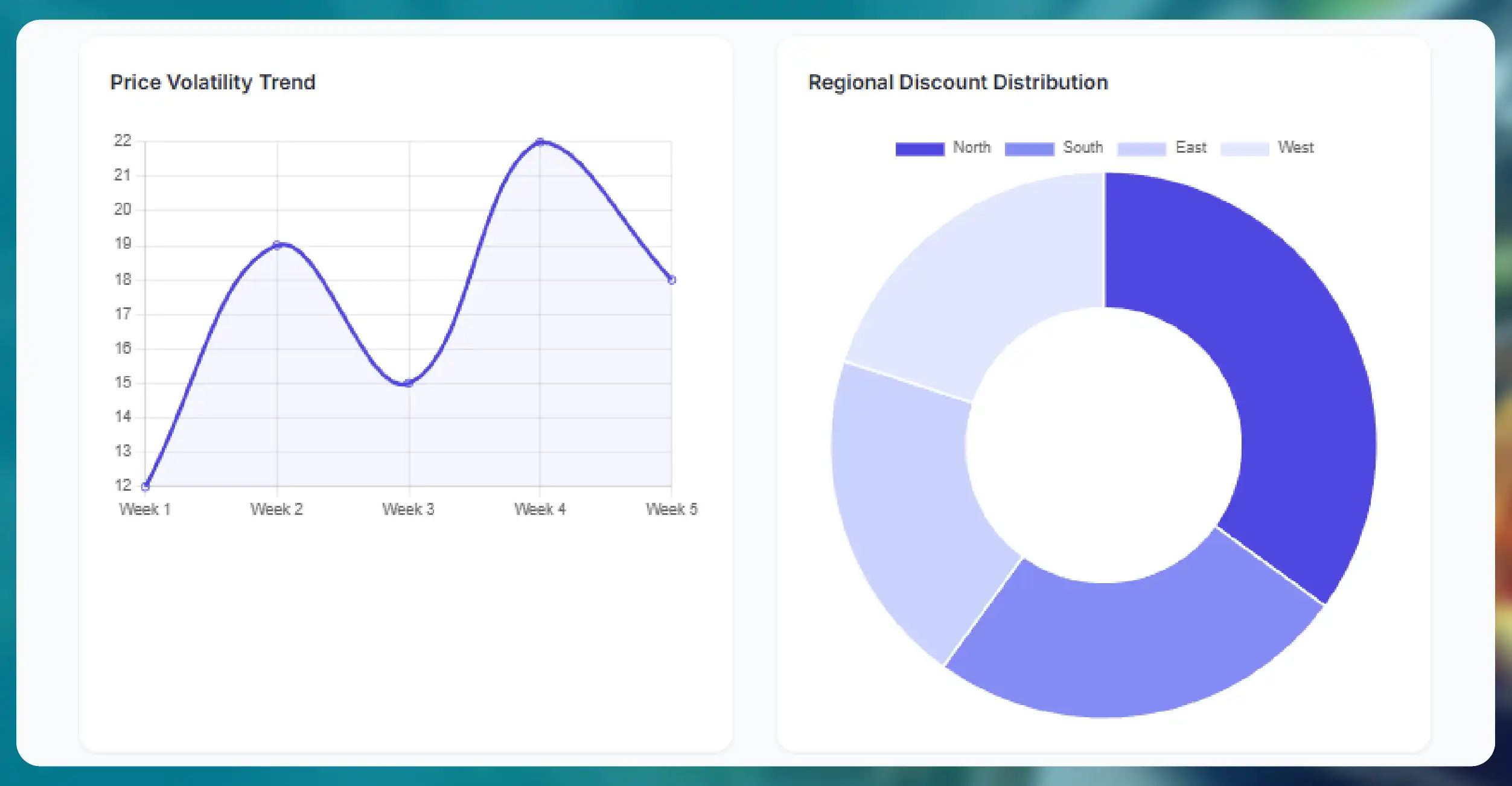
Australian grocery retailers frequently customize prices according to store location, regional demand, inventory levels, local competition, supplier agreements, and seasonal events. Consequently, identical products may display different prices across suburbs or cities.
Store-level intelligence helps businesses answer critical questions such as:
- Which stores consistently offer the lowest prices?
- How often do promotional campaigns repeat?
- Which regions receive deeper discounts?
- Which products experience the highest price volatility?
- How quickly do retailers respond to competitor price changes?
Instead of relying on random manual observations, businesses can automate collection processes to generate continuous, high-quality pricing intelligence.
The Growing Importance of Historical Grocery Pricing
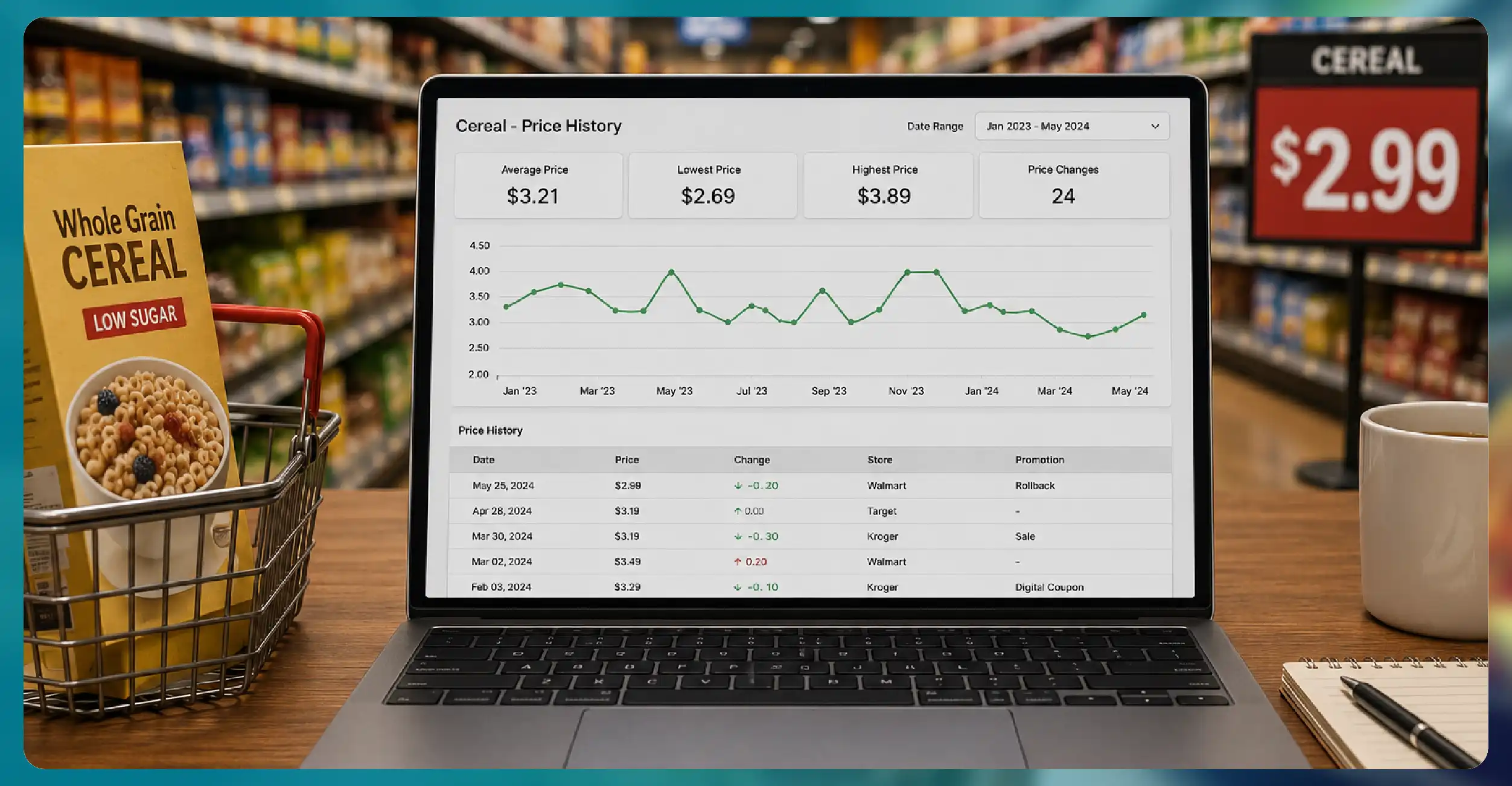
Real-time prices provide only part of the competitive picture. Long-term datasets reveal pricing behavior that cannot be identified through daily snapshots alone.
Historical Grocery price tracking allows organizations to measure pricing consistency over weeks, months, or years. Historical records enable analysts to identify seasonal demand fluctuations, inflationary trends, supplier cost impacts, and retailer pricing strategies.
For example, a cereal brand can evaluate whether promotional discounts occur every four weeks or only during major shopping events. Beverage manufacturers can determine how often price reductions appear before holidays, while category managers can compare annual promotional frequency across retailers.
Historical pricing creates the foundation for predictive pricing analytics.
Store-Level Pricing Creates Regional Competitive Intelligence
Australia's grocery market demonstrates considerable regional pricing differences.
A product available in Sydney may carry a different price than the identical SKU in Melbourne, Brisbane, Perth, Adelaide, or regional communities. Even stores within the same metropolitan area often apply localized pricing strategies.
Store-wise price monitoring enables organizations to understand these differences with remarkable precision.
Retailers may alter pricing based on:
- Local competition
- Customer purchasing behavior
- Store demographics
- Distribution costs
- Inventory availability
- Regional demand
- Seasonal purchasing patterns
Capturing this information allows businesses to build accurate regional pricing models.
Promotional Pricing Reveals Consumer Buying Patterns
Promotions remain one of the strongest drivers of grocery purchasing decisions.
Retailers continuously launch campaigns including:
- Multi-buy offers
- Percentage discounts
- Temporary price reductions
- Digital coupons
- Loyalty member pricing
- Bundle offers
- Clearance events
- Weekly catalog specials
Monitoring these promotions helps brands understand how frequently discounts occur and how deeply products are reduced.
Instead of recording only sale prices, organizations capture:
- Regular shelf price
- Promotional price
- Promotion duration
- Promotion start date
- Promotion end date
- Promotion percentage
- Discount amount
- Offer type
These variables help businesses evaluate promotional effectiveness over time.
Understanding Promo Cadence Across Australian Supermarkets
One of the most valuable pricing metrics is promotional cadence.
Promo cadence measures how often products return to promotional pricing throughout the year.
Businesses can evaluate:
- Weekly promotional frequency
- Monthly promotional cycles
- Seasonal campaigns
- Holiday discount periods
- Brand-specific promotions
- Category-wide promotional intensity
This information assists manufacturers when planning advertising campaigns, inventory replenishment, and product launches.
UPC-Level Product Intelligence
Modern grocery datasets collect information at the UPC or barcode level, enabling precise product identification.
Instead of general product names, UPC-based tracking captures unique products regardless of packaging changes.
Typical product fields include:
| UPC/EAN |
Product barcode |
| Product Name |
Full product description |
| Brand |
Manufacturer |
| Category |
Grocery category |
| Pack Size |
Product quantity |
| Unit Price |
Price per unit |
| Shelf Price |
Current retail price |
| Promotional Price |
Discounted price |
| Store Name |
Individual location |
| Store Address |
Physical outlet |
| Collection Date |
Timestamp |
UPC-level datasets eliminate duplicate records while improving pricing accuracy.
Ready to transform grocery pricing into actionable intelligence? Contact us today for customized store-level data scraping solutions and real-time competitive insights tailored to your business needs.
Benefits of Grocery Price History Datasets
A comprehensive Grocery price history dataset enables organizations to perform advanced pricing analysis unavailable through manual collection.
Historical datasets support:
- Inflation analysis
- Retail benchmarking
- Forecasting models
- Dynamic pricing strategies
- Competitive monitoring
- Promotional optimization
- Category performance analysis
- Consumer demand forecasting
Long-term pricing archives become increasingly valuable as additional historical records accumulate.
Extract Grocery Pricing Through Automated APIs
Manual pricing research cannot scale across thousands of products and hundreds of store locations.
Organizations increasingly deploy automated systems to Extract grocery pricing API data that continuously updates pricing intelligence without manual intervention.
Automated API-based workflows provide:
- Scheduled updates
- Large-scale collection
- Structured JSON outputs
- Database integration
- Dashboard compatibility
- Faster processing
- Reduced operational costs
- Higher accuracy
Automation ensures businesses always work with current pricing information.
Essential Data Elements Collected
A comprehensive grocery pricing solution typically captures:
| Product Name |
Product identification |
| UPC |
Unique matching |
| Brand |
Competitive analysis |
| Category |
Market segmentation |
| Shelf Price |
Current pricing |
| Promotional Price |
Discount analysis |
| Discount Percentage |
Promotion measurement |
| Unit Price |
Price comparison |
| Availability |
Inventory monitoring |
| Store Location |
Regional analysis |
| Timestamp |
Historical tracking |
| Promotion Status |
Campaign monitoring |
These structured datasets power business intelligence platforms across multiple industries.
Applications Across Multiple Industries
Store-level grocery pricing intelligence supports numerous business functions.
Consumer Packaged Goods (CPG)
Manufacturers monitor retailer compliance, pricing consistency, and promotional execution across stores.
Retail Chains
Retailers benchmark pricing against competitors to remain competitive while protecting margins.
Market Research Firms
Researchers generate industry reports using verified historical pricing trends.
Pricing Consultants
Consultants build pricing recommendations using long-term promotional intelligence.
Investment Firms
Investors evaluate retailer competitiveness through pricing behavior.
Supply Chain Teams
Inventory planning improves when promotional demand becomes predictable.
Advantages of Automated Grocery Data Collection
Automated grocery pricing collection offers several operational benefits.
First, it significantly improves collection frequency. Instead of weekly manual checks, businesses receive hourly or daily updates.
Second, automation dramatically increases dataset coverage. Thousands of products across hundreds of stores can be monitored simultaneously.
Third, consistent data collection minimizes human error while improving historical continuity.
Finally, structured exports integrate directly into dashboards, analytics platforms, machine learning systems, and forecasting models.
Supporting Dynamic Pricing Strategies
Retail pricing has evolved into a highly dynamic environment.
Retailers now adjust prices based on:
- Competitor actions
- Inventory levels
- Seasonal demand
- Customer purchasing trends
- Supplier costs
- Promotional calendars
Continuous monitoring allows businesses to react quickly while identifying opportunities before competitors.
Historical datasets further improve predictive pricing models that forecast future promotions and expected price movements.
Why Australian Grocery Monitoring Requires Store-Level Precision?
National average prices often hide meaningful regional differences.
A single supermarket chain may operate hundreds of stores with localized pricing strategies.
Monitoring individual stores enables businesses to understand:
- Local competitive positioning
- Regional discount intensity
- Neighborhood purchasing behavior
- Geographic pricing patterns
- Store-specific promotional execution
This level of granularity produces substantially more valuable business intelligence than national averages alone.
How iWeb Data Scraping Can Help Businesses?
Comprehensive Store Coverage
We collect pricing intelligence across Woolworths, Coles, Aldi, and IGA while monitoring thousands of grocery products across numerous individual store locations throughout Australia.
Historical Pricing Archive
Our continuously updated database preserves long-term pricing records, enabling businesses to analyze seasonal trends, promotional frequency, and multi-year pricing behavior.
Promotional Intelligence
We capture every promotional event including temporary discounts, catalogue specials, loyalty pricing, bundle offers, and multi-buy campaigns for deeper competitive analysis.
Custom Data Delivery
Datasets are available in CSV, JSON, Excel, SQL, API, or cloud integrations compatible with modern analytics and BI platforms.
Enterprise Data Quality
Our automated validation systems ensure accurate, standardized, deduplicated, and continuously refreshed pricing intelligence for enterprise-scale decision-making.
Conclusion
Australian grocery pricing continues to evolve rapidly as retailers compete through localized pricing strategies and frequent promotional campaigns. Businesses seeking sustainable competitive advantages require reliable historical pricing intelligence, store-level comparisons, and automated monitoring solutions rather than isolated snapshots.
Comprehensive grocery intelligence combines current prices, promotional history, UPC-level product matching, regional comparisons, and predictive analytics into a unified decision-support platform. Our Price Monitoring Services deliver scalable pricing intelligence that empowers retailers, manufacturers, analysts, and research organizations with actionable market insights.
Our Web Scraping API Services support automated data collection for enterprise applications requiring continuous grocery intelligence.
We also provide comprehensive Grocery and Supermarket Store Datasets that integrate seamlessly into analytics platforms, dashboards, forecasting systems, and business intelligence solutions.
Our specialized Grocery & Supermarket Data Extraction Services help organizations transform raw grocery information into meaningful competitive intelligence for smarter pricing, merchandising, and strategic planning.
Experience top-notch web scraping service and mobile app scraping solutions with iWeb Data Scraping. Our skilled team excels in extracting various data sets, including retail store locations and beyond. Connect with us today to learn how our customized services can address your unique project needs, delivering the highest efficiency and dependability for all your data requirements.