How Does Scraping eMAG Marketplace Data Drive Cross-Border E-commerce Intelligence?
Introduction
Cross-border e-commerce is no longer a growth experiment—it is a structured expansion strategy. As marketplaces across Central and Eastern Europe mature, sellers need deeper visibility into pricing, competition, and customer behavior. This is where Scraping eMAG Marketplace Data for Cross-Border strategy becomes critical for data-driven international growth.
Through structured eMAG Ecommerce Data Extraction for Cross-Border, businesses gain access to marketplace-level intelligence that reveals how products perform across different regions. When companies Extract eMAG Cross-Border Ecommerce Data, they unlock insights into regional pricing gaps, seller competition, discount cycles, stock fluctuations, and category demand shifts. These insights help transform cross-border selling from reactive decision-making into strategic execution.
The Cross-Border Opportunity on eMAG
eMAG operates across multiple European markets, enabling sellers to list products in neighboring countries through its cross-border program. While this creates scale opportunities, it also introduces complexity. Pricing varies by region. Consumer expectations differ. Promotional intensity fluctuates. Local competitors may dominate certain categories.
Without structured data collection, sellers risk entering saturated segments, mispricing products, or ignoring profitable niches. Marketplace intelligence allows businesses to evaluate country-level performance before making operational commitments.
What Marketplace Data Reveals?
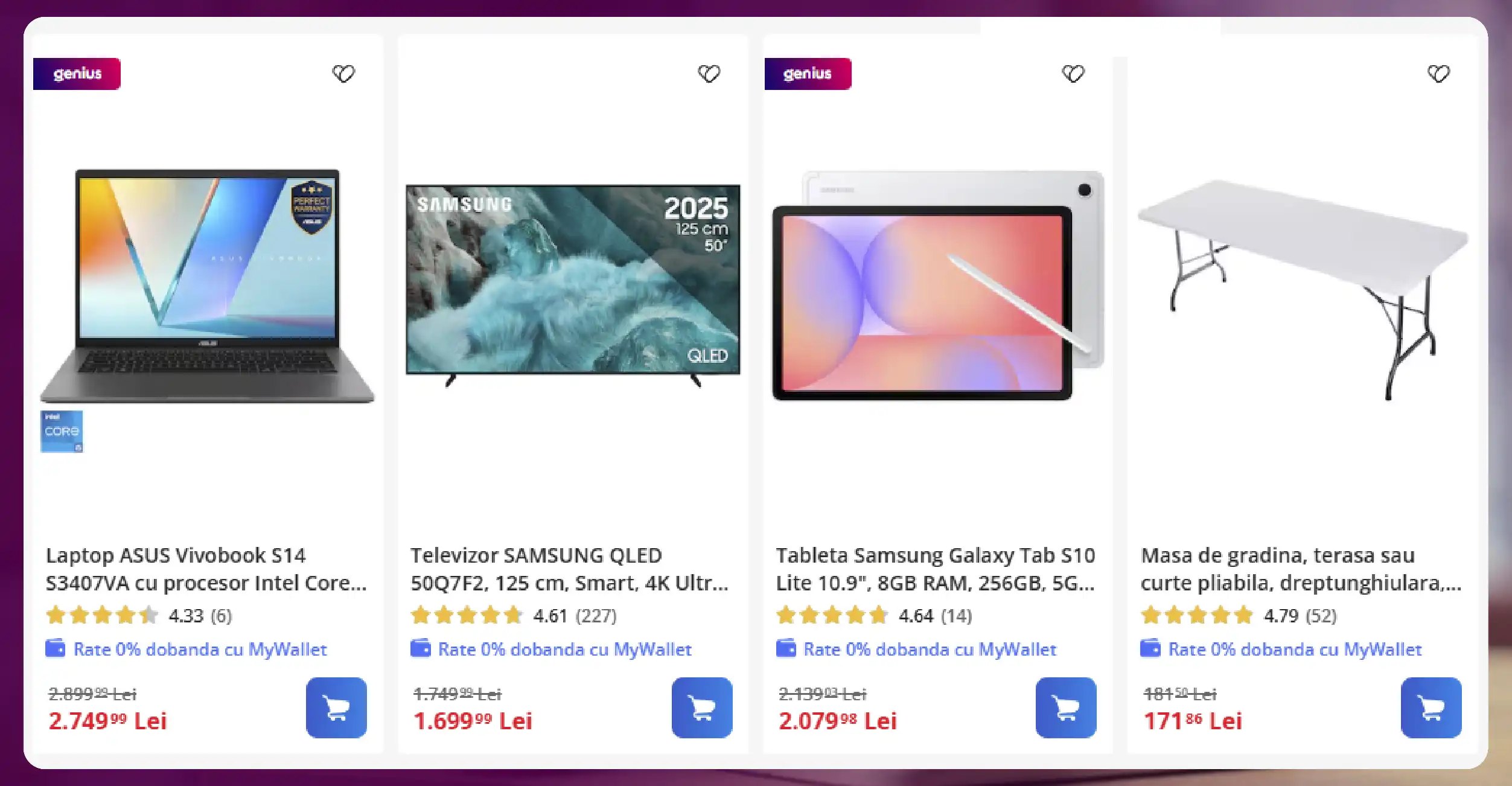
A well-designed extraction framework gathers product-level, seller-level, and pricing-level data that supports comparative analysis.
Product information includes titles, brands, descriptions, specifications, SKUs, and category structures. This enables businesses to map identical products across multiple country domains and compare positioning strategies.
Pricing data is central to cross-border success. With reliable eMAG Cross-Border Product Price Monitoring, sellers can track country-specific price variations, discount timing, flash sales, and bundle offers. Understanding these patterns helps protect margins while staying competitive.
Competitive benchmarking is equally important. Through structured eMAG Cross-Border Ecommerce Competitive Analysis, businesses can measure seller density within categories, identify top-performing competitors, analyze assortment depth, and detect emerging brands. This creates transparency in an otherwise fragmented competitive landscape.
Large-Scale Listing Intelligence
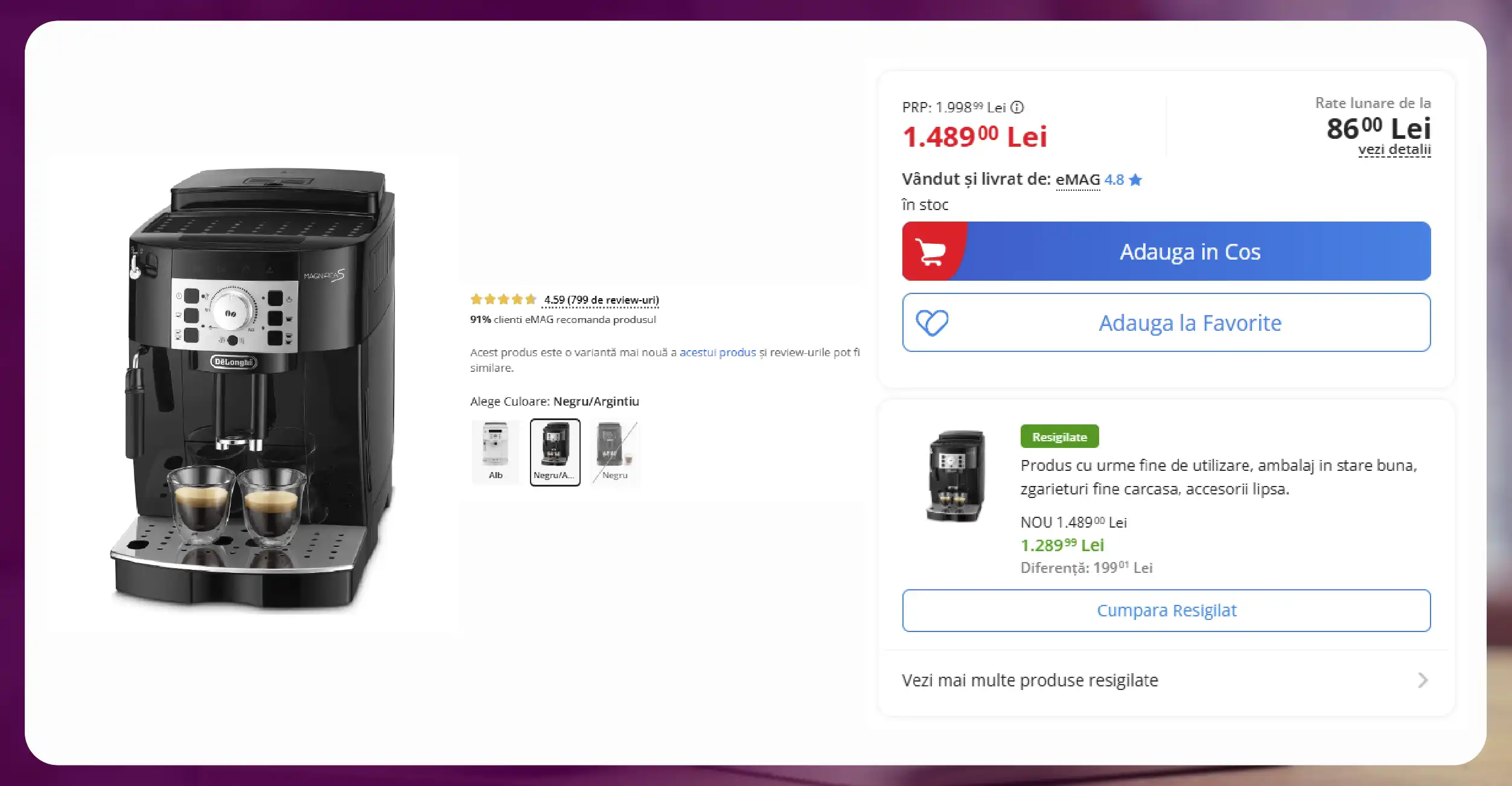
eMAG hosts millions of listings across electronics, appliances, fashion, and home categories. Monitoring this ecosystem manually is unrealistic. Automated Web Scraping eMAG Product Listings Data enables structured collection of listing updates, stock changes, ranking shifts, and newly launched products.
This continuous data flow helps sellers:
- Identify trending SKUs early
- Detect stockouts among competitors
- Monitor product lifecycle stages
- Respond to aggressive pricing strategies
Real-time monitoring creates agility in fast-moving cross-border environments.
Country-Level Market Intelligence
Each regional marketplace behaves differently. Consumer price sensitivity in Romania may not match demand elasticity in Hungary. Language localization and cultural buying patterns further influence performance.
For example, businesses targeting Hungary rely on eMAG.hu Data Scraping Services to analyze localized pricing strategies, Hungarian-language content optimization, region-specific discount campaigns, and domestic brand competition. Market-specific intelligence reduces entry risk and improves listing optimization accuracy.
Building Structured Product Intelligence
Raw data must be cleaned and standardized to deliver meaningful insights. Well-structured Emag Product Datasets support cross-country SKU alignment, historical price tracking, brand performance analysis, and category-level benchmarking.
When standardized across currencies and VAT structures, datasets allow accurate profitability modeling and competitive comparison.
Strategic Business Applications
Cross-border marketplace data supports multiple strategic objectives.
- Pricing optimization becomes data-driven rather than assumption-based. Sellers can dynamically adjust pricing based on regional competitor activity and discount cycles.
- Market entry evaluation becomes analytical. Businesses can identify low-saturation categories, measure competitor intensity, and detect high-demand segments before expanding inventory.
- Inventory planning improves through historical trend analysis. Seasonal spikes, promotional cycles, and replenishment patterns become predictable rather than reactive.
- Seller performance monitoring reveals which competitors consistently rank high, maintain strong ratings, and use aggressive promotion tactics.
Expanding Intelligence Beyond a Single Platform
Cross-border success often requires broader benchmarking. Companies that Extract Popular E-Commerce Website Data alongside eMAG insights gain a clearer view of regional pricing alignment and competitive positioning across multiple marketplaces.
Multi-platform analysis helps businesses:
- Align international pricing
- Identify arbitrage opportunities
- Compare category depth
- Evaluate brand penetration differences
This wider visibility strengthens cross-border strategy.
Technology Behind Marketplace Data Collection
Professional eCommerce Data Scraping Services deploy intelligent crawling frameworks that handle dynamic content, pagination, anti-bot systems, and structured parsing. Automated pipelines ensure regular refresh cycles, data validation, and normalization.
Scalable infrastructure enables continuous extraction without compromising data accuracy. Integrated dashboards transform structured datasets into decision-ready analytics.
From Raw Data to Strategic Intelligence
Data alone does not create advantage—analysis does. When marketplace information is integrated into analytics systems, businesses can apply:
- Price elasticity modeling
- Promotion effectiveness measurement
- Category growth forecasting
- Seller share analysis
- Demand prediction models
These analytical layers convert extracted data into competitive leverage.
Automation further enhances responsiveness. Real-time monitoring systems generate alerts when competitors reduce prices, launch discounts, or go out of stock. This immediate visibility allows faster tactical decisions.
Unlock cross-border growth with actionable eMAG marketplace insights—partner with us to turn data into competitive advantage today.
Addressing Operational Challenges
Cross-border extraction environments present technical and operational challenges. Marketplace structures frequently change. JavaScript-rendered pages complicate parsing. Multi-language listings require normalization. Currency fluctuations affect price comparison accuracy.
Advanced systems use adaptive crawling methods, headless browsing technologies, and structured validation processes to maintain data consistency and reliability.
Responsible data handling is equally important. Businesses must respect platform policies, maintain ethical collection practices, and ensure compliance with GDPR regulations when processing user-generated content.
The Future of Cross-Border Marketplace Intelligence
As international e-commerce accelerates, data-driven strategies will become mandatory. AI-powered repricing tools, automated localization insights, and predictive demand forecasting models will dominate cross-border operations.
Companies that invest early in structured marketplace intelligence gain sustainable advantages in pricing precision, category expansion, and operational efficiency.
How iWeb Data Scraping Can Help You?
1. Real-Time Price Monitoring
Our services enable businesses to track eMAG product prices across regions in real time, helping sellers adjust pricing dynamically and stay competitive in cross-border marketplaces.
2. Competitive Intelligence
We provide detailed insights into competitor listings, promotions, stock levels, and seller strategies, allowing businesses to benchmark performance and identify opportunities for growth.
3. Comprehensive Product Datasets
Our scraping solutions collect structured data on product titles, SKUs, descriptions, categories, brands, and images, providing a complete dataset for analysis and informed decision-making.
4. Market Expansion Insights
By analyzing extracted data, businesses can identify high-demand products, low-competition categories, and regional consumer preferences, enabling smarter cross-border market entry strategies.
5. Automation and Scalability
Our services use automated and scalable pipelines to deliver regular updates, handle large volumes of listings, and ensure continuous access to reliable, actionable data for business intelligence.
Conclusion
Cross-border expansion on eMAG requires clarity, speed, and strategic insight. Extracting marketplace data provides visibility into pricing dynamics, seller competition, demand trends, and promotional intensity across regions.
Incorporating an Ecommerce Product Ratings and Review Dataset strengthens sentiment analysis and helps refine product positioning strategies. When integrated into comprehensive eCommerce Data Intelligence frameworks, extracted insights empower smarter pricing decisions and confident market expansion. Leveraging scalable Web Scraping API Services ensures continuous, automated access to actionable intelligence—transforming cross-border growth into a measurable and sustainable strategy.
Experience top-notch web scraping service and mobile app scraping solutions with iWeb Data Scraping. Our skilled team excels in extracting various data sets, including retail store locations and beyond. Connect with us today to learn how our customized services can address your unique project needs, delivering the highest efficiency and dependability for all your data requirements.