
52.8K+
PRODUCT RECORDS PROCESSED

Scraping Trendyol Data Collection delivers scalable product, pricing, seller, availability, and competitive marketplace intelligence for smarter e-commerce decisions.
This case study is designed for e-commerce intelligence teams, marketplace sellers, retailers, brands, and data analysts seeking scalable scraping Trendyol data collection to understand products, pricing, sellers, ratings, availability, and competitive movements across the marketplace.
It is particularly relevant for organizations requiring Trendyol product data extraction to build structured product catalogs, compare assortment depth, monitor listing changes, evaluate category performance, and support marketplace intelligence initiatives.
The client operated across multiple e-commerce categories and needed continuous visibility into rapidly changing marketplace conditions. Its existing process depended heavily on manual product searches, spreadsheets, and periodic competitor checks, making it difficult to maintain accurate and timely marketplace intelligence.
The primary objective was to create a centralized data collection framework capable of capturing product-level information at scale while transforming raw marketplace records into structured datasets suitable for pricing analysis, seller benchmarking, assortment monitoring, and business reporting.
The project focused on developing a scalable marketplace intelligence framework for collecting and analyzing product information from Trendyol. The client required continuous Trendyol price data extraction to monitor listed prices, promotional changes, discount percentages, and price movements across competing products.
The implementation also introduced Trendyol marketplace data analytics capabilities by transforming raw product and seller records into structured datasets for category-level analysis, competitive intelligence, pricing strategy, and assortment evaluation.
The solution captured product names, brands, categories, seller information, prices, discounts, ratings, review counts, availability, product URLs, images, and other relevant attributes. Automated processing normalized these fields and created consistent records across large volumes of listings.
The resulting intelligence layer helped the client identify pricing gaps, evaluate seller competitiveness, monitor product availability, detect assortment changes, and understand marketplace dynamics more efficiently. Automated collection substantially reduced manual research while improving the frequency, consistency, and usability of marketplace data.
The client faced significant challenges in monitoring a rapidly changing marketplace containing thousands of products, sellers, promotions, and price variations. Manual research could not provide the frequency or scale required for reliable competitive analysis.
One major requirement was Trendyol seller benchmarking, as the client needed to compare seller prices, ratings, review volumes, product coverage, and marketplace positioning across competing listings.
The organization also lacked reliable Trendyol competitive pricing tracking, making it difficult to identify price changes, promotional movements, discount gaps, and competitor pricing strategies quickly.
Another challenge involved maintaining accurate Trendyol product availability data scrape outputs because stock status and listing visibility could change frequently across different products and sellers.
The client also struggled with inconsistent product information, duplicate listings, fragmented category structures, and varying seller attributes. Spreadsheet-based workflows created additional problems because updating thousands of records manually was time-consuming and prone to errors.
They therefore required an automated system capable of collecting marketplace information continuously, standardizing product records, identifying changes, and delivering analysis-ready datasets for business intelligence applications.
By implementing an automated Trendyol marketplace intelligence pipeline, the client replaced fragmented manual monitoring with structured data collection covering products, sellers, pricing, availability, ratings, discounts, and category information.
| Dimension | Manual Marketplace Tracking | Client Data Scraping System |
|---|---|---|
| Data collection | Individual product searches | Automated multi-listing extraction |
| Product coverage | Limited product samples | Large-scale catalog coverage |
| Price monitoring | Periodic spreadsheet updates | Automated recurring price capture |
| Seller analysis | Manual comparison | Structured seller-level benchmarking |
| Availability tracking | Occasional checks | Continuous stock-status monitoring |
| Discount tracking | Manual recording | Automated discount and promotion capture |
| Data structure | Unstandardized spreadsheets | Normalized product-level datasets |
| Duplicate handling | Manual identification | Automated duplicate detection |
| Category analysis | Limited visibility | Structured category-level analytics |
| Change detection | Reactive | Automated identification of listing changes |
| Reporting speed | Hours or days | Automated data processing and reporting |
| Scalability | Limited by analyst capacity | Expandable across thousands of listings |
The brand in focus is a digital commerce intelligence organization that relies on marketplace data to understand product positioning, seller competition, pricing movements, assortment changes, and availability patterns.
As its monitoring requirements expanded, the organization faced growing difficulties in maintaining accurate marketplace datasets. Product catalogs changed frequently, sellers modified prices, promotional campaigns appeared and disappeared, and availability shifted across listings.
The business required a solution that could transform these constantly changing marketplace signals into structured intelligence. Instead of depending on isolated manual checks, the organization adopted an automated data extraction framework designed to support continuous product monitoring.
The resulting system gave analysts a broader view of marketplace activity and created a reliable foundation for competitive pricing analysis, product intelligence, seller evaluation, and category-level performance monitoring.
We developed an end-to-end marketplace intelligence solution using a scalable Trendyol Scraper architecture designed to collect product and seller information from relevant marketplace pages and transform it into structured records.
The system captured product titles, brands, categories, seller names, product URLs, current prices, previous prices where available, discount information, ratings, review counts, availability indicators, images, and other relevant marketplace attributes.
We implemented Trendyol Pricing Data Scraping workflows to continuously monitor pricing movements across selected products and competing listings. Automated comparison logic helped identify price differences, discount variations, and significant changes between monitoring cycles.
The extraction pipeline incorporated validation, normalization, deduplication, and field-level quality checks. Product records were standardized so that analysts could compare similar listings across categories and sellers without manually cleaning every dataset.
The solution also supported historical data storage, enabling the client to evaluate price movements over time rather than relying only on current marketplace snapshots.
Structured outputs were delivered in analytics-ready formats suitable for dashboards, business intelligence platforms, databases, and downstream analytical workflows.
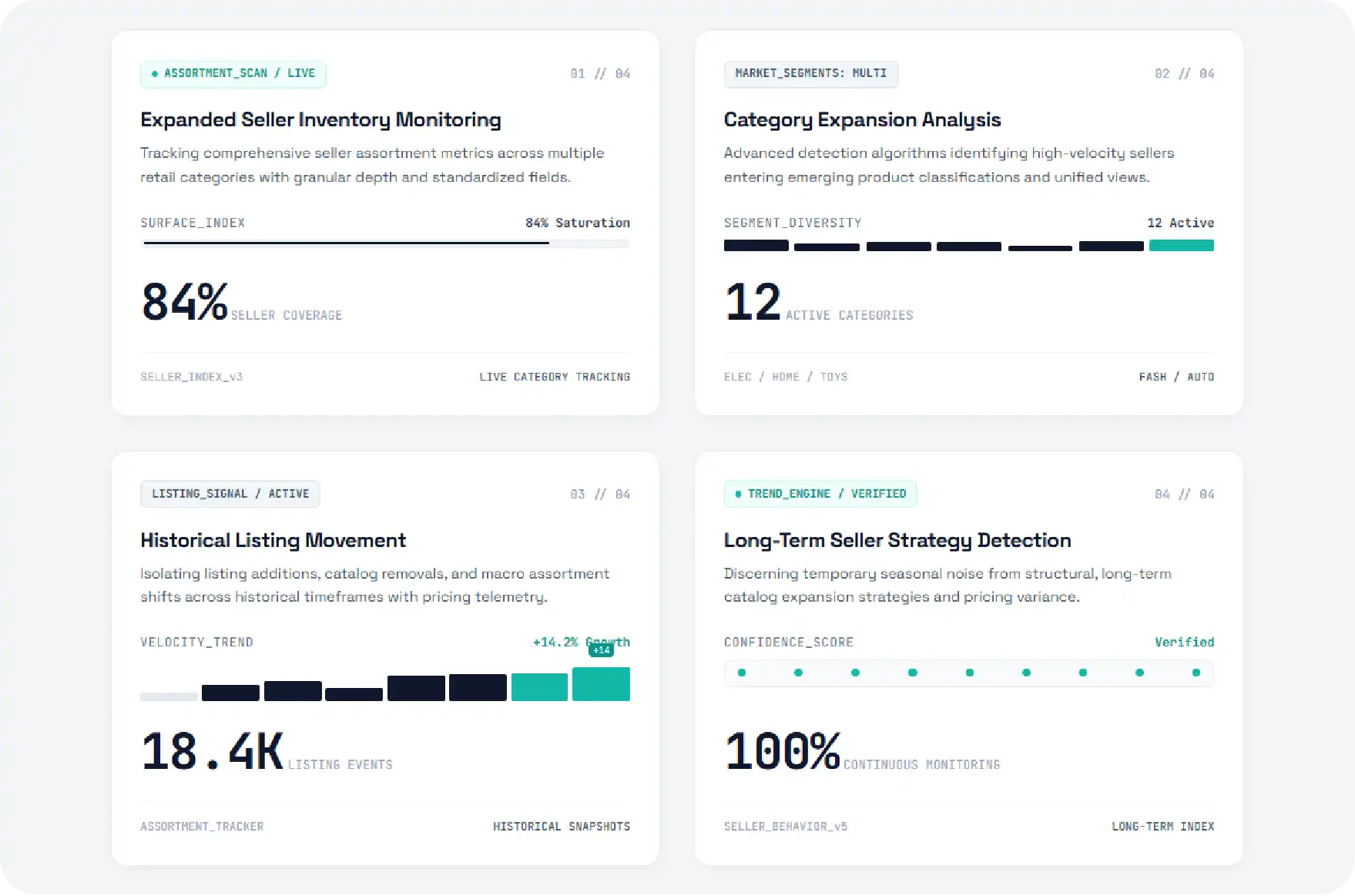
The implementation provided the client with substantially broader visibility into marketplace listings. Instead of reviewing selected products manually, analysts could evaluate large collections of products using standardized fields.
Product-level records included pricing, seller information, category, ratings, reviews, availability, and promotional attributes. This created a unified view of marketplace activity and reduced information gaps during competitive research.
The broader dataset also allowed analysts to identify products with unusual price movements, rapidly changing availability, and significant differences between competing sellers.
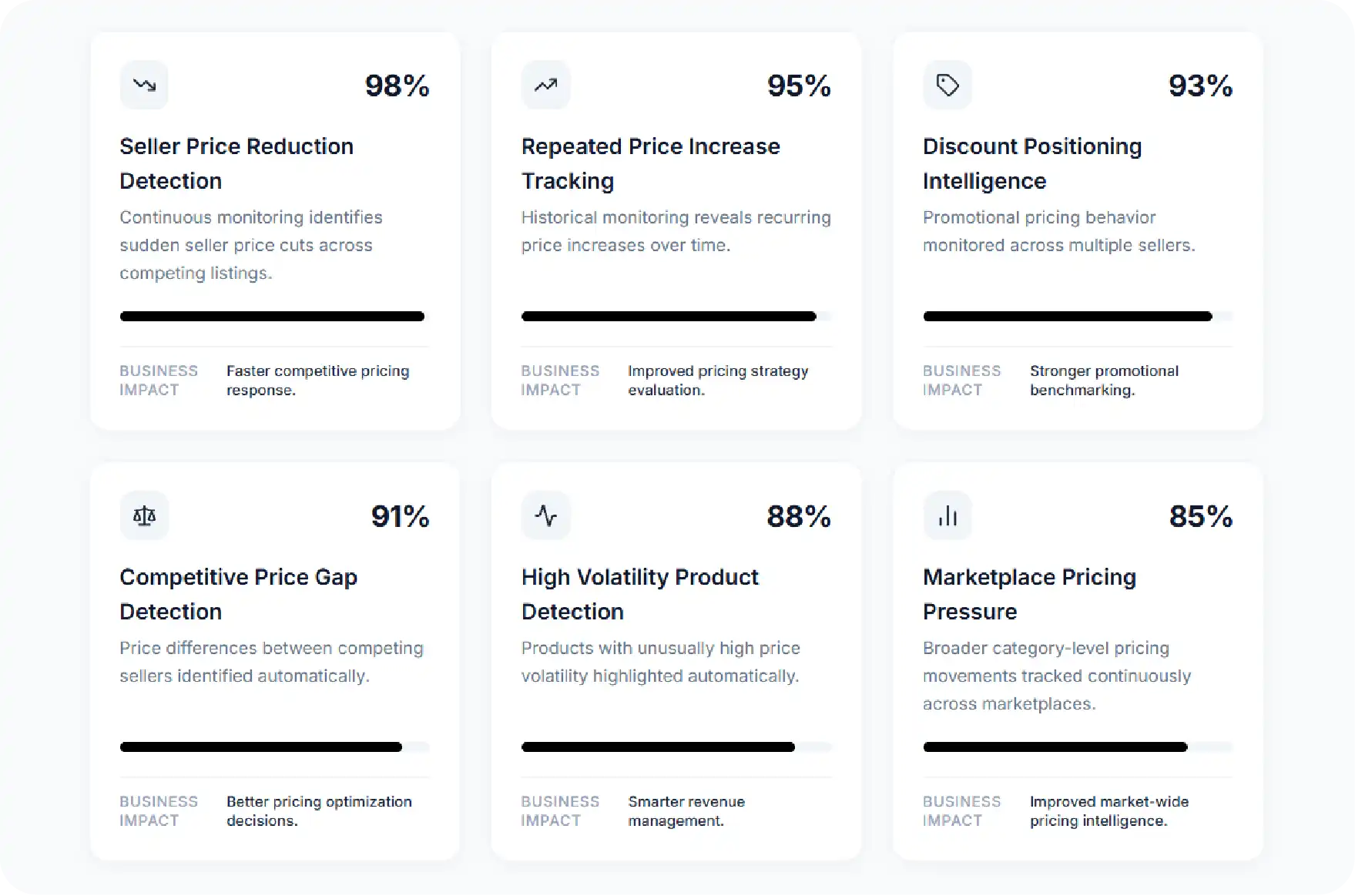
Automated collection significantly improved the speed of competitive pricing analysis. Price records were captured at predefined intervals and compared with previous observations to identify meaningful changes.
Analysts could detect products experiencing price increases, reductions, promotional discounts, or changing seller offers without manually searching individual listings.
This helped the client respond faster to competitor pricing movements and identify opportunities for price optimization across priority categories.
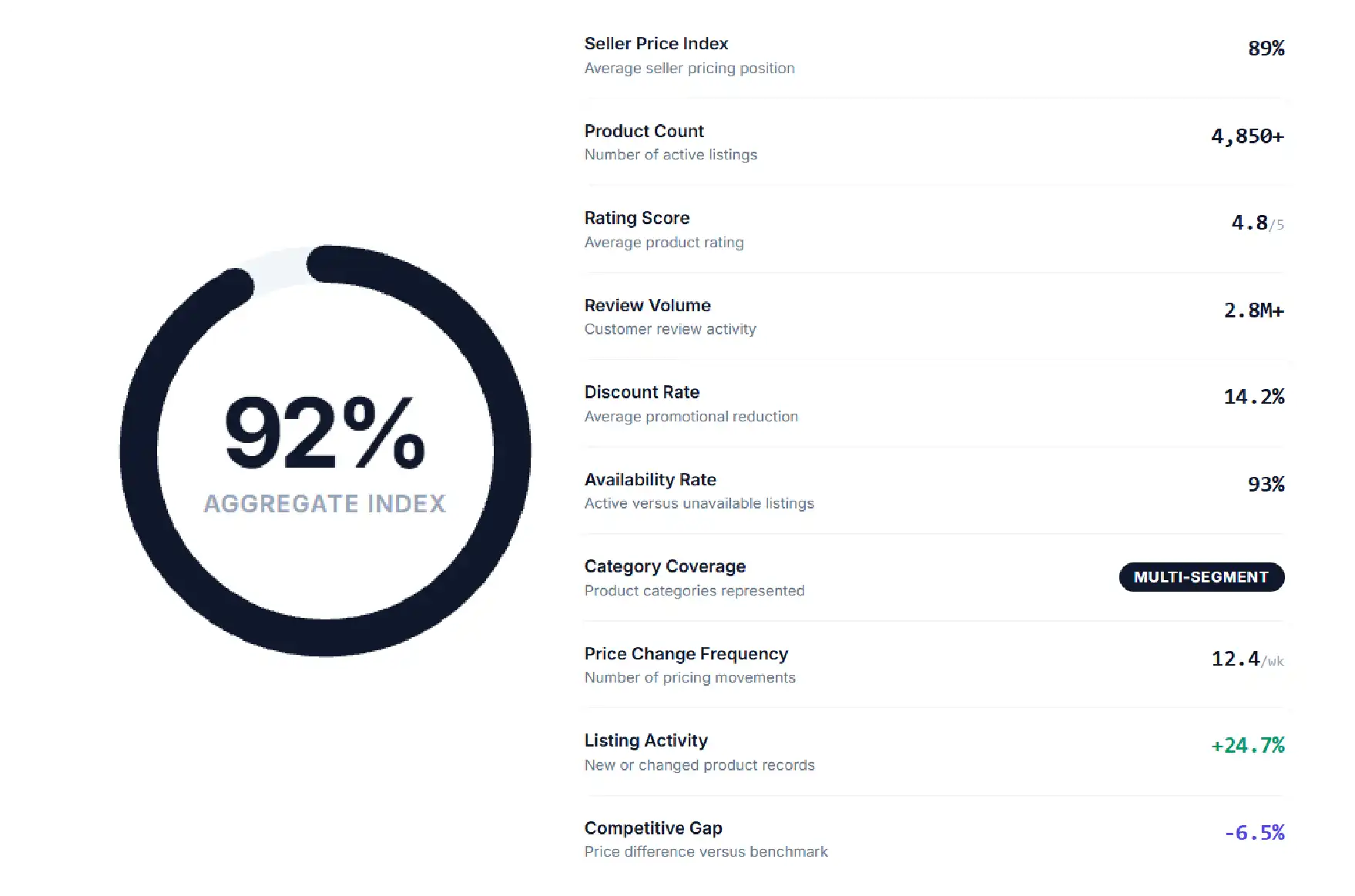
The system transformed seller information into comparable marketplace metrics. Seller-level datasets enabled analysts to evaluate pricing behavior, product coverage, ratings, reviews, and listing activity.
This made it easier to identify highly competitive sellers, premium-priced sellers, discount-oriented sellers, and sellers with extensive product portfolios.
| Metric | Insight Captured | Business Impact |
|---|---|---|
| Seller Price Index | Average seller pricing position | Competitive positioning |
| Product Count | Number of active listings | Seller assortment comparison |
| Rating Score | Average product rating | Seller quality assessment |
| Review Volume | Customer review activity | Marketplace credibility analysis |
| Discount Rate | Average promotional reduction | Promotion benchmarking |
| Availability Rate | Active versus unavailable listings | Supply visibility |
| Category Coverage | Product categories represented | Portfolio benchmarking |
| Price Change Frequency | Number of pricing movements | Seller strategy monitoring |
| Listing Activity | New or changed product records | Seller activity detection |
| Competitive Gap | Price difference versus benchmark | Pricing opportunity identification |
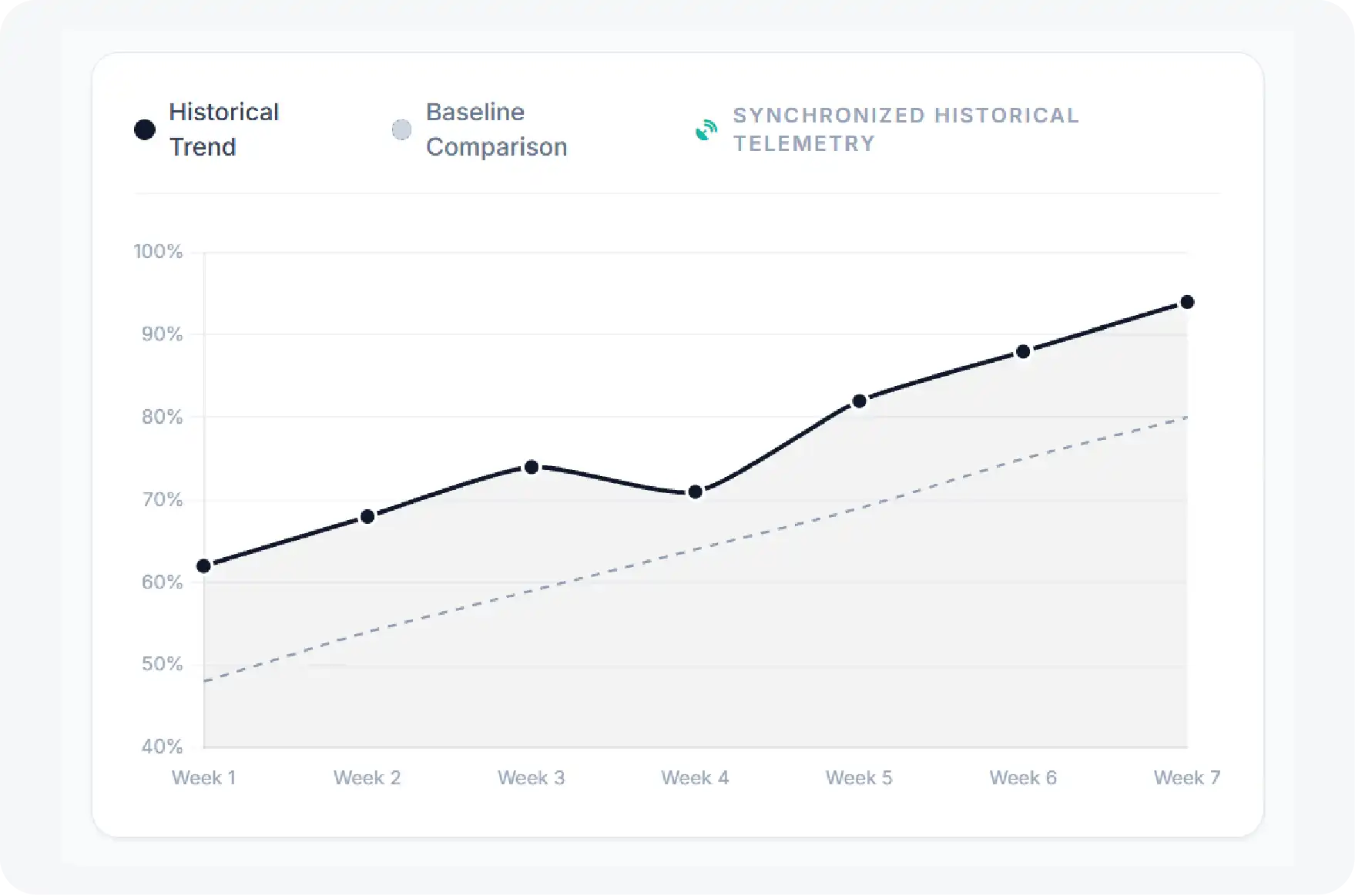
The automated framework enabled the client to monitor large product collections without increasing manual research requirements proportionally.
Availability information helped identify products that became unavailable, returned to stock, or experienced listing changes. Combined with pricing and seller information, these signals provided a stronger understanding of marketplace supply conditions.
The client could also segment datasets by category, brand, seller, price range, discount level, rating, and availability status, making the resulting intelligence more useful for targeted analysis.
The dataset snapshot illustrates how marketplace information can be organized into structured product-level records. It combines product identification, seller details, pricing, discounts, ratings, reviews, and availability into a unified analytical format.
| Product Name | Category | Seller | Price | Discount | Rating | Reviews | Availability | Brand |
|---|---|---|---|---|---|---|---|---|
| Wireless Earbuds Pro | Electronics | Tech Store | 2499 | 22 | 4.6 | 18420 | Available | SoundMax |
| Running Shoes X1 | Sports | Active Hub | 3199 | 28 | 4.5 | 12680 | Available | SportFlex |
| Cotton Casual Shirt | Fashion | Trend House | 899 | 35 | 4.4 | 9320 | Available | UrbanWear |
| Smart Fitness Watch | Electronics | Digital World | 4299 | 18 | 4.3 | 7640 | Limited | FitCore |
| Ceramic Dinner Set | Home | Home Select | 1599 | 25 | 4.7 | 5180 | Available | CasaLiving |
| Moisturizing Face Cream | Beauty | Beauty Market | 749 | 15 | 4.5 | 11450 | Available | SkinPure |
| Backpack 25L | Bags | Travel Point | 1299 | 30 | 4.4 | 6820 | Limited | PackPro |
| Gaming Keyboard | Electronics | Game Zone | 2899 | 20 | 4.6 | 8430 | Available | KeyMaster |
After implementing structured marketplace data collection, the client achieved stronger visibility into product pricing, seller behavior, product availability, and category-level competition.
Our approach combines scalable collection, structured processing, automated validation, and analytics-ready delivery to help businesses convert marketplace information into reliable intelligence.
The solution reduces manual research by automating repetitive product and seller monitoring tasks while maintaining consistent datasets across large marketplace inventories.
It also supports competitive intelligence by allowing businesses to compare pricing, discounts, seller activity, ratings, availability, and assortment changes through standardized records.
Another advantage is historical visibility. Instead of analyzing only the current marketplace state, businesses can maintain historical datasets to evaluate pricing trends, promotional patterns, assortment evolution, and seller behavior over time.
Our data pipelines can also be adapted to different categories, product volumes, monitoring frequencies, and analytical requirements, providing a flexible foundation for marketplace intelligence programs.
"We were impressed by how quickly the solution transformed our marketplace monitoring process. Previously, our analysts spent significant time checking products, prices, sellers, and availability manually. The structured data pipeline gave us a much broader view of marketplace activity while significantly reducing repetitive research. Pricing comparisons became faster, seller benchmarking became easier, and our reporting process became much more consistent. The quality of the extracted datasets and the reliability of recurring updates have helped our team make better-informed marketplace decisions."
— Head of E-Commerce Intelligence
The final outcome was a scalable marketplace intelligence system that converted continuously changing Trendyol product and seller information into structured, analysis-ready datasets.
Implementation of Real-Time Web Scraping enabled the client to maintain faster visibility into product pricing, seller activity, availability changes, discounts, ratings, and marketplace assortment movements.
The system also incorporated Product Data Enrichment, adding standardized attributes and contextual fields that improved product comparison, categorization, seller analysis, and downstream reporting.
The automated framework reduced manual research requirements while improving data consistency and analytical coverage. Historical records allowed the organization to identify pricing patterns and marketplace changes over time, while structured seller datasets supported deeper competitive benchmarking.
Overall, the project established a reliable foundation for marketplace intelligence, pricing optimization, product monitoring, seller benchmarking, and strategic e-commerce decision-making at scale.
Relevant product datasets can include product names, brands, categories, prices, discounts, sellers, ratings, review counts, availability, images, URLs, and other publicly available marketplace attributes.
Structured pricing datasets allow businesses to compare competing products, identify price gaps, monitor discounts, detect pricing changes, and evaluate marketplace positioning across selected categories.
Yes. Seller names and relevant publicly available seller-level attributes can be structured alongside product records, enabling comparisons of pricing, product coverage, ratings, reviews, and marketplace activity.
Yes. Recurring data collection can create historical records that help businesses analyze pricing movements, availability changes, promotional activity, assortment evolution, and seller behavior over time.
Yes. A scalable architecture can process large volumes of marketplace records while applying automated normalization, validation, deduplication, and structured output generation for analytics and reporting.
Unlock accurate product, pricing, seller, and availability insights with scalable Scraping Trendyol Data Collection solutions. Contact our team today to build a customized marketplace intelligence pipeline for your business.
Start a projectFields marked * are required. Everything else just helps us scope faster — skip what you don't know yet.