

Introduction
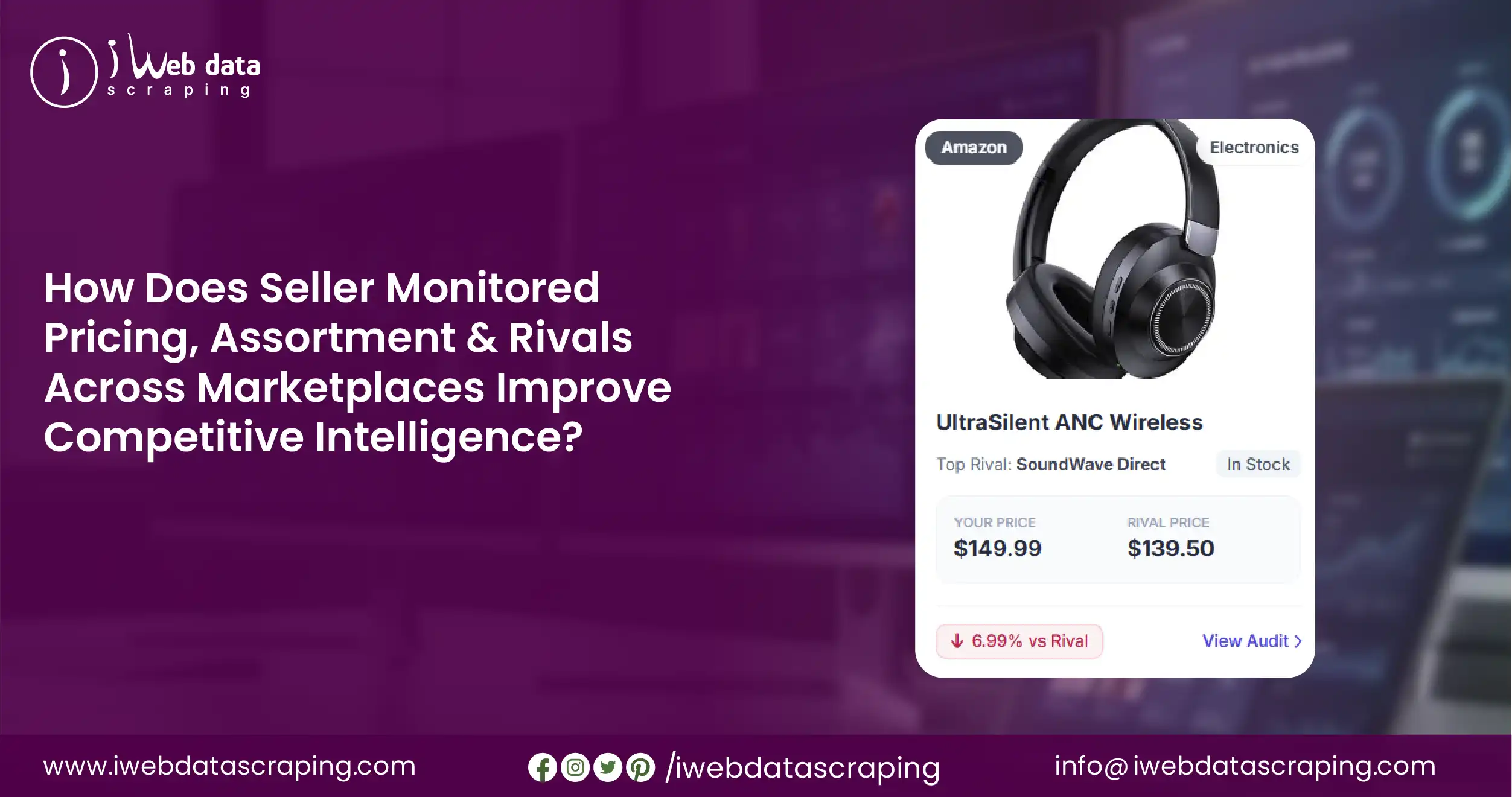
The rapid growth of online marketplaces has transformed how consumers discover and purchase products. From global platforms like Amazon and Walmart Marketplace to regional marketplaces and niche eCommerce websites, businesses now compete in an environment where prices, inventory, and product catalogs change every hour. Sellers that rely on occasional manual checks often struggle to keep pace with competitors that continuously optimize their pricing and assortment strategies.
Seller Monitored Pricing, Assortment & Rivals Across Marketplaces has therefore become an essential component of modern eCommerce intelligence. Businesses require complete visibility into competitor activities to understand pricing trends, seller performance, assortment expansion, and promotional strategies before these changes impact their own sales.
Organizations investing in Marketplace pricing and competitor intelligence can identify pricing gaps, benchmark their products against rivals, and make faster pricing decisions backed by real market data.
At the same time, Product assortment monitoring allows brands and retailers to track SKU additions, discontinued products, category expansion, exclusive launches, and inventory availability across multiple marketplaces, helping them maintain a stronger competitive position.
Understanding Marketplace Competition
Marketplace competition is far more dynamic than traditional retail. Thousands of sellers may offer similar products, while prices fluctuate several times throughout the day based on demand, promotions, stock availability, and competitor actions. Consumers can compare products instantly, making even small pricing differences influential in purchasing decisions.
Beyond pricing, customers evaluate delivery promises, product availability, seller ratings, customer reviews, return policies, and listing quality before making purchases. As a result, businesses need comprehensive marketplace intelligence rather than isolated pricing information. Monitoring these variables together provides a clearer understanding of why competitors succeed and where new opportunities exist.
Why Continuous Marketplace Monitoring Matters?
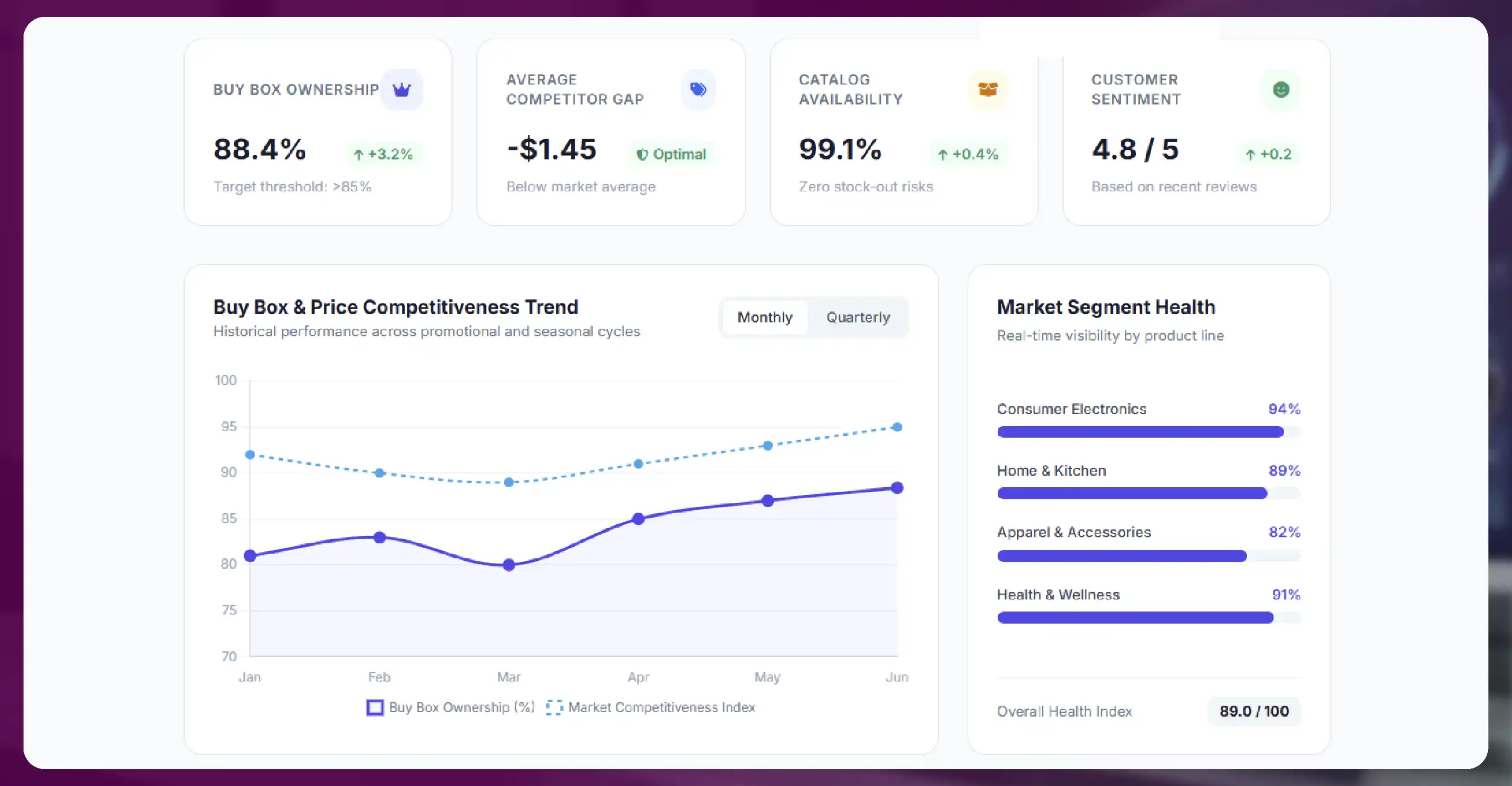
Monitoring marketplaces continuously enables businesses to respond quickly to market changes instead of reacting after losing customers. Daily visibility into pricing, inventory levels, promotional campaigns, seller rankings, Buy Box ownership, product availability, and customer engagement provides valuable insights into competitive behavior.
Historical marketplace data also helps organizations recognize recurring seasonal trends, promotional cycles, and pricing strategies. Rather than relying on assumptions, businesses can make confident decisions based on measurable marketplace activity. This proactive approach improves pricing strategies, inventory planning, merchandising, and overall profitability while reducing the risk of losing market share.
Monitoring Seller Pricing Across Multiple Marketplaces
Price remains one of the strongest purchasing factors in online retail. Even small pricing differences can significantly influence conversion rates, especially when multiple sellers offer nearly identical products. Businesses performing competitor price monitoring across marketplaces gain continuous visibility into daily price changes, flash sales, promotional discounts, coupon campaigns, bundle offers, regional pricing differences, Buy Box ownership, and third-party seller strategies.
Instead of manually checking thousands of listings, automated monitoring provides accurate historical pricing data that reveals long-term competitor behavior. These insights help organizations optimize their own pricing strategies, avoid unnecessary price wars, protect profit margins, and respond quickly to market fluctuations.
Product Assortment Intelligence Creates Competitive Advantage
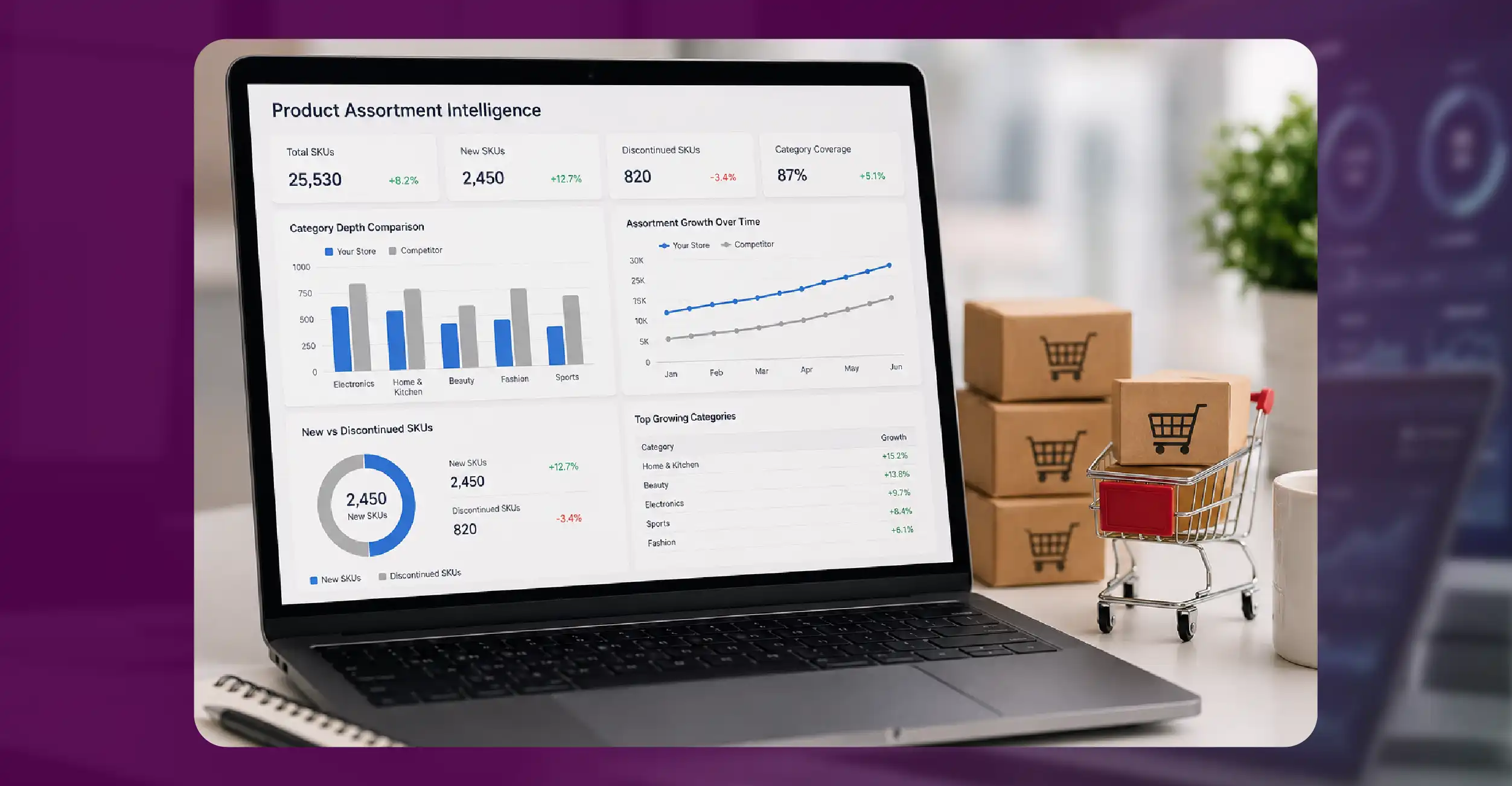
Pricing alone does not determine marketplace success. Product assortment, inventory availability, and category depth often have a greater influence on customer purchasing decisions. Companies with broader assortments and better product availability typically capture more traffic and higher conversion rates.
Businesses that invest in assortment intelligence gain visibility into competitor category expansion, newly launched SKUs, discontinued products, seasonal collections, exclusive marketplace offerings, private-label growth, and overall portfolio development. Understanding these assortment changes allows organizations to identify emerging product opportunities, close catalog gaps, and strengthen merchandising strategies before competitors establish market dominance.
Monitoring Rivals Beyond Pricing
Successful marketplace intelligence extends beyond simply tracking prices. Comprehensive monitoring includes seller rankings, product descriptions, listing quality, product images, rich media content, customer ratings, reviews, inventory availability, shipping promises, fulfillment methods, sponsored placements, and category rankings.
When these datasets are analyzed together, businesses gain deeper insight into why certain competitors consistently outperform others. They can identify whether stronger performance is driven by better pricing, improved product presentation, higher customer satisfaction, faster delivery, or broader assortment. These insights support more effective optimization strategies across the entire marketplace presence.
Centralizing Marketplace Intelligence
Many brands sell across multiple online marketplaces simultaneously, making manual comparison increasingly difficult. A centralized marketplace intelligence dashboard consolidates pricing, assortment, inventory, promotions, seller activity, and customer engagement into a single reporting environment.
| Marketplace Metric | Amazon | Walmart | eBay |
|---|---|---|---|
| Average Selling Price | Yes | Yes | Yes |
| Active Sellers | Yes | Yes | Yes |
| SKU Availability | Yes | Yes | Yes |
| Promotions | Yes | Yes | Yes |
| Customer Ratings | Yes | Yes | Yes |
| Reviews | Yes | Yes | Yes |
| Category Position | Yes | Yes | Yes |
Such dashboards enable pricing managers, merchandising teams, and executives to compare marketplace performance quickly while identifying opportunities for growth, expansion, and optimization.
Automating Marketplace Data Collection
Manual marketplace monitoring becomes impractical when businesses manage thousands of products across dozens of marketplaces. Automation enables organizations to scrape marketplace pricing and product data continuously with greater speed, consistency, and accuracy.
Automated extraction captures product names, brands, SKUs, seller information, current and historical prices, stock availability, ratings, reviews, product specifications, images, promotions, category hierarchy, and shipping information. This structured data can be integrated into business intelligence platforms, pricing engines, forecasting systems, and analytics dashboards, allowing organizations to make informed decisions based on continuously updated marketplace information.
Marketplace Product Assortment Analytics
Advanced marketplace product assortment analytics help businesses understand how products are distributed across multiple marketplaces. Instead of reviewing thousands of individual listings, organizations gain high-level visibility into category coverage, brand representation, assortment gaps, regional product differences, exclusive marketplace listings, premium and economy product mix, and SKU overlap.
These insights enable businesses to optimize product portfolios, improve sourcing strategies, identify emerging product categories, and allocate inventory more effectively. Better assortment planning ultimately leads to stronger customer satisfaction and improved marketplace performance.
Historical Product Catalog Benchmarking
Historical product data provides valuable context for long-term market analysis. Businesses frequently require to Extract one-time product catalog capture services when entering new markets, evaluating competitors, conducting investment research, benchmarking seasonal assortments, or analyzing category growth.
Complete historical snapshots preserve marketplace conditions at a specific point in time, allowing organizations to compare catalog evolution, identify assortment trends, and evaluate competitor expansion over months or years. This information supports strategic planning and long-term business forecasting.
Leveraging Advanced Web Scraping Technologies
Modern marketplace intelligence depends on scalable extraction technologies capable of collecting millions of product records accurately and efficiently. Enterprise-grade Web Scraping API Services simplify large-scale data collection by automating extraction workflows, managing scheduling, handling anti-bot protections, validating collected data, and integrating structured datasets into existing business systems.
These technologies significantly reduce manual effort while improving data accuracy, enabling businesses to focus on analytics and strategic decision-making rather than data collection.
Challenges in Marketplace Intelligence
Although marketplace monitoring offers tremendous value, collecting high-quality data consistently presents technical challenges. Marketplaces frequently modify website structures, implement anti-scraping protections, personalize search results, and update product pages dynamically. Maintaining reliable data pipelines therefore requires continuous optimization, intelligent crawling strategies, robust validation processes, and scalable infrastructure.
Organizations that invest in professional Web Scraping Services benefit from accurate, timely, and reliable marketplace intelligence while minimizing operational complexity and ensuring uninterrupted access to competitive market data.
How iWeb Data Scraping Can Help You?
Comprehensive Marketplace Intelligence
iWeb Data Scraping continuously monitors seller pricing, promotions, inventory availability, assortment changes, customer reviews, and competitor activities across leading marketplaces, providing reliable datasets that support strategic pricing, merchandising, and competitive analysis.
Customized Data Extraction Solutions
Our solutions are tailored to your business objectives, enabling customized marketplace monitoring across multiple platforms while delivering structured datasets in CSV, JSON, Excel, API integrations, cloud storage, or enterprise databases for seamless analytics.
Scalable Enterprise Data Collection
Using advanced automation infrastructure, we collect millions of marketplace records efficiently while maintaining high data quality, reliable scheduling, intelligent validation, and continuous monitoring for organizations operating at enterprise scale.
Actionable Business Intelligence
Beyond raw marketplace data, we provide enriched analytics that highlight pricing trends, assortment gaps, emerging competitors, promotional activities, inventory movements, and category opportunities, enabling organizations to make faster and more informed business decisions.
Reliable Long-Term Monitoring
Our continuous marketplace intelligence solutions provide ongoing visibility into competitor behavior, helping businesses anticipate market changes, improve operational efficiency, optimize pricing strategies, and maintain a sustainable competitive advantage over time.
Conclusion
Success in today's competitive eCommerce landscape depends on more than offering attractive prices. Businesses must understand competitor behavior, catalog expansion, promotional activity, customer preferences, and inventory trends across every marketplace where they operate.
Leveraging Assortment intelligence helps organizations identify assortment gaps, monitor product portfolio expansion, and improve merchandising decisions with greater confidence.
Similarly, Real-time web scraping provides continuous access to fresh marketplace data, allowing businesses to react quickly to pricing changes, inventory shifts, and emerging competitive trends.
Reliable Dynamic pricing data further empowers companies to optimize pricing strategies, improve profitability, enhance customer experiences, and maintain a sustainable competitive advantage in today's rapidly evolving digital marketplace.
Frequently Asked Questions
Seller monitored pricing is the continuous tracking of competitor prices, discounts, promotions, and pricing changes across multiple online marketplaces to help businesses remain competitive and maximize profitability.
Product assortment monitoring helps businesses track new product launches, discontinued items, category expansion, SKU availability, and assortment gaps, enabling better merchandising and inventory planning.
Organizations can monitor Amazon, Walmart Marketplace, eBay, Etsy, Flipkart, Lazada, Shopee, Mercado Libre, Noon, and numerous regional or industry-specific online marketplaces.
Marketplace monitoring can capture product prices, seller details, inventory availability, customer reviews, ratings, product specifications, images, promotions, shipping information, category rankings, and historical pricing trends.
Automated marketplace intelligence provides accurate, real-time competitive data that supports pricing optimization, assortment planning, inventory management, market research, forecasting, and overall strategic decision-making.