

Introduction
India's online food delivery industry has become increasingly competitive, with restaurants, cloud kitchens, food aggregators, and market research companies relying on accurate digital information to understand customer preferences and market movements. Swiggy has emerged as an important platform for observing restaurant performance, menu trends, pricing strategies, and consumer engagement across different cities. Analyzing this information can help businesses make informed decisions about product positioning, competitive benchmarking, and customer acquisition.
Swiggy data scraping services enable businesses to collect structured information from publicly accessible platform pages, helping them monitor restaurant listings, menu changes, delivery charges, discounts, and availability. By gathering Swiggy restaurant data, companies can evaluate restaurant coverage, cuisine distribution, popular outlets, and competitive positioning across specific locations. Similarly, Swiggy menu data extraction provides visibility into dish names, categories, descriptions, portion sizes, and listed prices.
For food brands, restaurant chains, technology companies, and market researchers, this information creates opportunities to understand how India's food delivery ecosystem operates. From monitoring Swiggy price tracking trends to evaluating Swiggy ratings and reviews data, structured datasets can reveal valuable insights into customer expectations, restaurant competitiveness, and changing food preferences.
This blog explores how Swiggy data scraping works, what information businesses can collect, its major applications, and how iWeb Data Intelligence can support food delivery market research through customized data extraction solutions.
1. Understanding Swiggy Data Scraping
Swiggy data scraping is the process of collecting publicly accessible information from relevant platform pages and converting it into organized, structured datasets. Instead of manually checking hundreds or thousands of restaurant listings, businesses can use automated data collection workflows to gather information consistently.
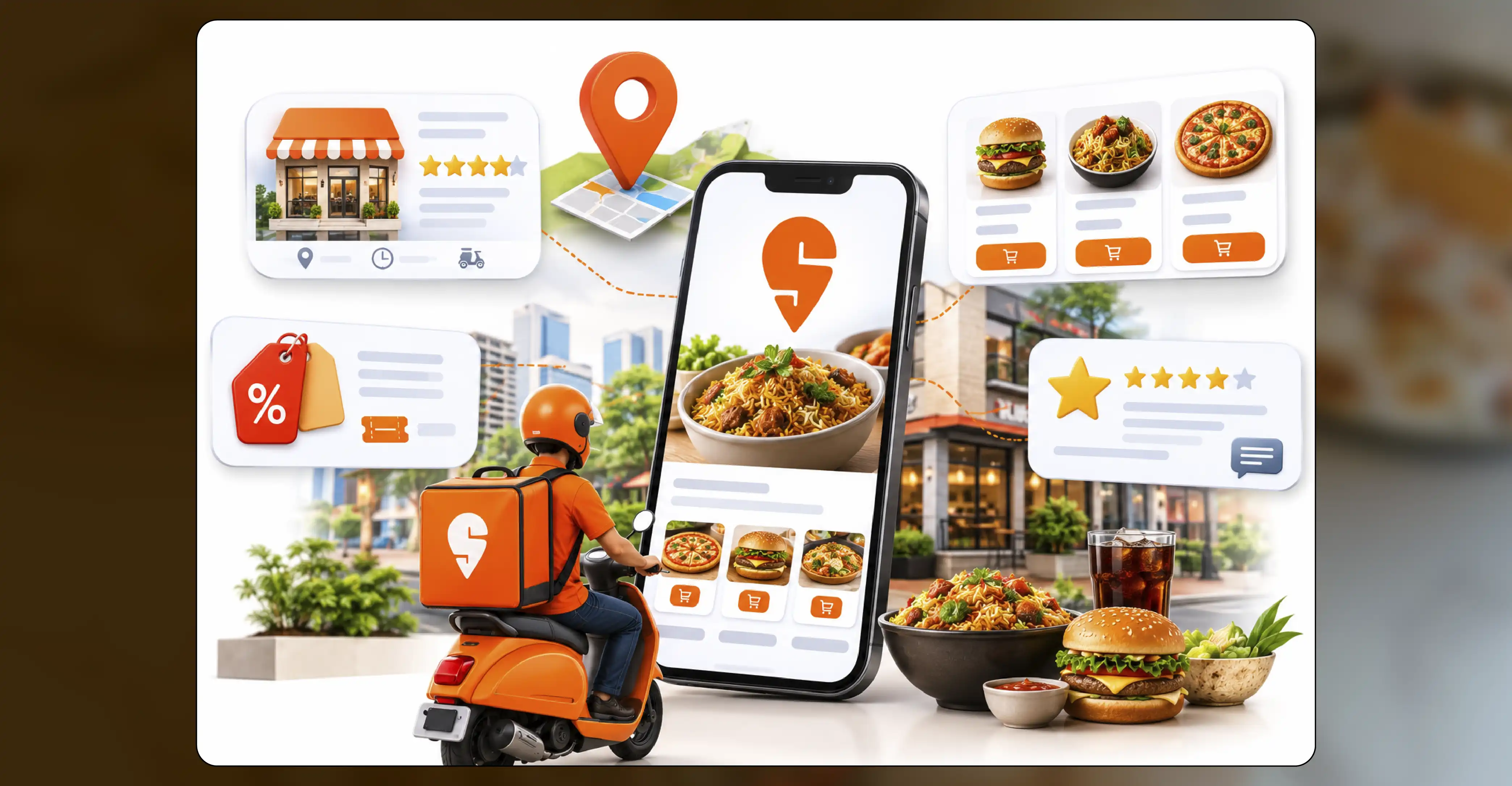
The collected information can include restaurant names, locations, cuisine categories, menu items, prices, ratings, reviews, promotional offers, delivery estimates, and availability indicators, depending on what is publicly accessible and technically supported.
The process generally involves identifying the required data fields, selecting target cities or delivery locations, collecting available information, validating extracted records, and organizing the results into formats such as CSV, Excel, JSON, or database-ready files.
Businesses can use these datasets for competitive intelligence, restaurant discovery, pricing analysis, market expansion, and food delivery technology development.
2. What Data Can Be Extracted from Swiggy?
The value of a scraping project depends on the information required by the business. Different stakeholders may need different datasets based on their objectives.
A. Restaurant Listing Data
Restaurant listing information helps businesses understand the competitive landscape within selected locations.
Common data fields include:
- Restaurant name and unique listing identifier, where available
- Restaurant location and delivery area
- Cuisine type and food category
- Restaurant availability status
- Customer ratings and review counts
- Average delivery estimates
- Minimum order requirements, where displayed
- Restaurant listing information
This information helps restaurant chains identify competitors, evaluate market density, and discover underserved cuisine categories.
B. Menu and Product Information
Menu information is particularly valuable for restaurants, food manufacturers, and menu intelligence companies.
A structured menu dataset may contain:
- Dish and product names
- Menu categories and subcategories
- Item descriptions
- Listed prices
- Portion sizes and variants
- Vegetarian and non-vegetarian indicators
- Add-ons and customization options
- Availability information
- Promotional pricing, where displayed
Businesses can analyze how restaurants structure their menus, which dishes receive greater visibility, and how pricing differs across locations.
C. Pricing and Promotional Information
Pricing intelligence helps businesses understand how restaurants position their offerings against competitors.
Relevant fields include regular listed prices, discounted prices, promotional offers, coupon information, delivery fees, packaging charges, and other displayed charges.
Comparing these variables across restaurants and locations can reveal pricing differences, promotional strategies, and potential opportunities for improving profitability.
D. Ratings and Customer Feedback
Customer feedback offers another important layer of restaurant intelligence.
Depending on publicly accessible information, businesses may collect restaurant ratings, review counts, review text, feedback dates, and other displayed customer response indicators.
These datasets can help identify recurring complaints, popular menu items, service-related concerns, and customer satisfaction patterns.
3. How Swiggy Data Scraping Works?
An effective extraction project requires a systematic approach to ensure that the collected information is relevant, consistent, and usable.
Step 1: Define the Data Requirements
The first step is identifying the business objective. A restaurant chain may need competitor menus and prices, while a market research company may require restaurant listings across multiple cities.
Step 2: Select Locations and Categories
The extraction scope can cover selected cities, pin codes, delivery zones, restaurant categories, and cuisine types. Location-specific collection is important because restaurant availability and displayed prices may vary by delivery address.
Step 3: Collect Relevant Information
Automated collection workflows retrieve the required publicly accessible information from supported pages and interfaces. Collection frequency depends on the project scope, technical accessibility, and applicable platform restrictions.
Step 4: Clean and Structure the Dataset
Raw information may contain duplicate listings, inconsistent restaurant names, missing values, and different pricing formats. Data cleaning standardizes these records to make comparisons easier.
Step 5: Validate and Deliver
The final dataset undergoes quality checks to identify missing fields, incorrect mappings, and inconsistencies. Validated information can then be delivered through spreadsheets, JSON files, databases, or API integrations.
4. Why Businesses Need Swiggy Data Scraping?
The increasing competition in India's food delivery sector makes structured market intelligence valuable for multiple business functions.
Competitive Restaurant Benchmarking
Restaurant owners can compare their menus, pricing, cuisine offerings, ratings, and promotional strategies with competing outlets. This helps identify areas where competitors offer better value or a wider selection.
Dynamic Menu Price Analysis
Food prices can change due to ingredient costs, demand, competition, and promotional campaigns. Monitoring publicly displayed prices helps businesses understand these changes and evaluate their own pricing strategies.
Market Expansion Research
Restaurant groups planning expansion can examine restaurant density, cuisine distribution, customer ratings, and competitive presence across potential locations. These insights can support location selection and market prioritization.
Consumer Preference Analysis
Menu popularity, customer feedback, and restaurant ratings can help identify changing food preferences. Businesses can use these findings to explore emerging cuisines, new product opportunities, and menu improvements.
Cloud Kitchen Intelligence
Cloud kitchen operators can study cuisine categories, menu structures, price ranges, and competing restaurant offerings. This can help them identify potential market gaps and develop differentiated food concepts.
5. Industry Applications of Swiggy Data Extraction
Swiggy datasets can support several industries beyond restaurant operations.
| Industry | Application | Business Value |
|---|---|---|
| Restaurants | Competitor menu benchmarking | Better pricing decisions |
| Cloud Kitchens | Cuisine and location analysis | Market opportunity identification |
| FMCG | Food category research | Product development insights |
| Food Aggregators | Market intelligence | Competitive positioning |
| Market Research | City-level restaurant analysis | Industry research |
| Restaurant Technology | Menu information integration | Better data coverage |
| Investment Firms | Restaurant market assessment | Business evaluation |
For FMCG brands, menu information can reveal which food categories and ingredients are frequently featured by restaurants. Restaurant technology providers can use structured menu information to support discovery, catalog management, and analytical applications.
6. City-Wise Food Delivery Market Intelligence
India's food delivery market is geographically diverse. Restaurant availability, cuisines, pricing, customer preferences, and competitive intensity differ across metropolitan cities and smaller urban markets.
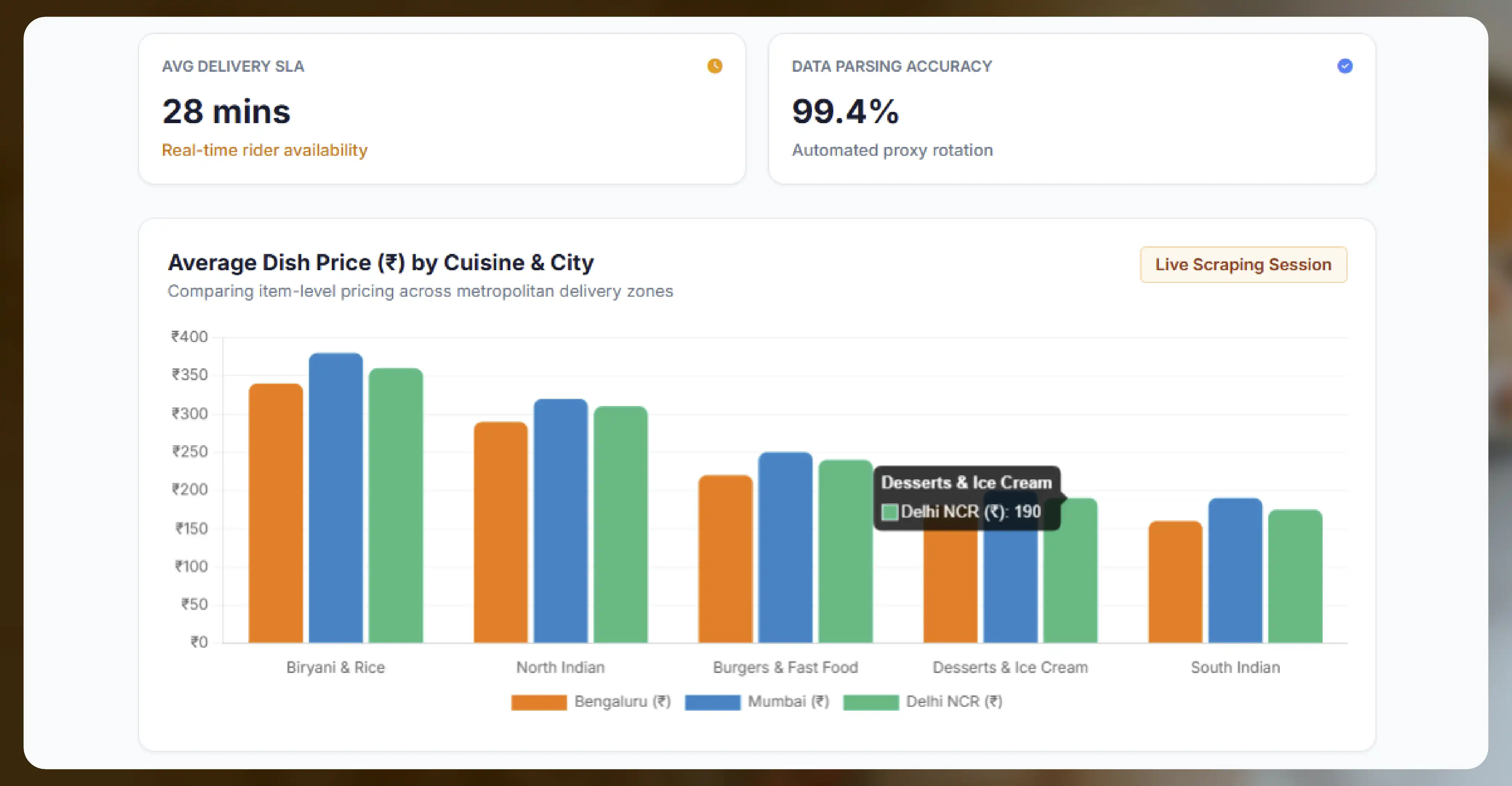
For example, a business studying Bengaluru may focus on quick-service restaurants, cafes, and cloud kitchens. A Delhi NCR project may examine North Indian cuisine, street-food categories, and multi-cuisine restaurants. Mumbai research may focus on premium dining, regional food, and delivery-oriented restaurant formats.
City-level datasets can include:
- Total restaurant listings captured within the defined scope
- Cuisine-wise restaurant distribution
- Average listed menu prices
- Restaurant rating distributions
- Promotional offer comparisons
- Delivery estimate comparisons
- Popular menu categories
- Location-wise restaurant availability
Combining these variables creates a more detailed picture of local food delivery competition.
7. Challenges in Swiggy Data Collection and How to Address Them
Although food delivery data offers significant analytical value, collecting and maintaining reliable information involves several challenges.
- Location-Based Data Variations: Restaurant listings, menus, prices, and delivery availability can differ according to the selected delivery location. Businesses should define specific geographic coverage and maintain location identifiers to avoid inaccurate comparisons.
- Frequent Menu Changes: Restaurants regularly introduce new dishes, modify prices, and remove unavailable items. Periodic data updates and historical records help businesses identify changes and maintain useful datasets.
- Data Inconsistency: Restaurant names, menu descriptions, categories, and price formats may vary. Standardization, duplicate removal, and validation processes are essential for creating consistent datasets.
- Limited Data Accessibility: Not every platform field is publicly accessible or available through authorized interfaces. Businesses should establish permitted collection methods, obtain necessary permissions, and avoid restricted account information or unauthorized access.
- Data Accuracy: Incorrect prices, missing menu items, and outdated ratings can affect business decisions. Validation rules, timestamp tracking, and quality checks help improve dataset reliability.
Compliance and Responsible Data Collection
An important consideration for businesses planning Swiggy data collection is platform compliance. Swiggy's published Terms of Use expressly restrict automated access through robots, spiders, page scraping, and similar methods without appropriate authorization. Its Builders Club guidelines also establish boundaries around API usage and prohibit extracting information beyond permitted API access.
Therefore, organizations should not assume that publicly visible information is automatically available for commercial automated extraction. Projects should use authorized APIs, approved integrations, licensed datasets, merchant-provided information, or written platform permissions, as applicable. They should also respect privacy requirements, intellectual property rights, and contractual restrictions.
8. Choosing the Right Swiggy Data Scraping Solution
Selecting a data intelligence partner requires evaluating more than the ability to collect information. Businesses should consider the complete data management process, from defining requirements to delivering validated datasets.
Here are some important factors to evaluate:
- Customized Data Fields: The solution should support business-specific requirements, including restaurant information, menus, prices, ratings, and location details.
- Geographic Coverage: It should accommodate the cities, localities, and delivery zones relevant to the research project.
- Data Quality: Validation, normalization, and duplicate removal should be incorporated into the delivery process.
- Flexible Formats: Data should be available in formats such as CSV, Excel, JSON, or database-ready structures.
- Update Frequency: The project should define suitable refresh schedules based on authorized data access and business requirements.
- Scalability: The data pipeline should accommodate additional locations, categories, and analytical requirements as the project expands.
A well-designed data intelligence solution can transform fragmented restaurant information into structured datasets that support better business planning and competitive research.
9. How iWeb Data Scraping Can Help You?
iWeb Data Intelligence provides customized data extraction, data processing, and analytics-oriented solutions for businesses seeking structured information from digital platforms. For Swiggy-related research, projects can be designed around authorized data sources and permitted access methods.
1. Restaurant Intelligence
iWeb can help organize authorized restaurant information into structured datasets covering restaurant names, cuisine categories, locations, and available listing details. Businesses can use this information to evaluate competitive presence, understand restaurant distribution, and identify potential market opportunities across selected locations.
2. Menu Data Structuring
Businesses can organize permitted menu information into standardized datasets containing dish names, categories, descriptions, variants, and listed prices. These structured records support menu benchmarking, product research, restaurant catalog management, and comparisons across food delivery platforms and restaurant categories.
3. Price and Promotion Analysis
iWeb can help businesses structure authorized pricing and promotional information into comparable datasets. Historical records and location-specific fields can support price comparisons, promotional research, discount analysis, and evaluations of restaurant pricing strategies across selected markets and time periods.
4. Ratings and Review Analytics
Using appropriately licensed or authorized customer feedback data, iWeb can help organize rating distributions, review counts, and relevant feedback indicators. These datasets can support customer sentiment research, restaurant performance assessment, service improvement initiatives, and identification of recurring customer concerns.
5. Customized Data Delivery
iWeb can deliver structured datasets through flexible formats such as Excel, CSV, JSON, and database-ready files. Customized fields, geographic coverage, validation requirements, and delivery schedules can be defined according to project objectives and applicable data access permissions.
Conclusion
The growing importance of online food delivery data India has made restaurant, menu, pricing, and customer intelligence valuable resources for businesses operating in India's food ecosystem. Structured information can help restaurants understand competitors, cloud kitchens identify market opportunities, FMCG brands evaluate food trends, and technology companies improve restaurant catalog management.
With properly authorized data collection, Swiggy data scraping services can support restaurant benchmarking, menu analysis, pricing research, and location-based market intelligence. Businesses exploring AI menu price monitoring Swiggy Zomato can also benefit from standardized datasets that enable cross-platform comparisons and historical pricing analysis.
Combining structured information with restaurant food delivery APIs and other authorized data sources can further strengthen business intelligence capabilities. iWeb Data Intelligence helps organizations transform permitted digital information into organized, validated, and analysis-ready datasets that support smarter decisions, improved market visibility, and scalable research initiatives.
Frequently Asked Questions (FAQs)
Swiggy data scraping services refer to solutions designed to collect and organize restaurant, menu, pricing, ratings, and other relevant platform information through authorized data access methods. These datasets help businesses conduct restaurant benchmarking and food delivery market research.
Depending on permissions and available data sources, businesses can work with restaurant names, cuisine categories, menu items, descriptions, listed prices, ratings, review counts, promotional details, and location-specific availability information.
Yes. Businesses can analyze authorized pricing datasets across selected cities and delivery locations. Comparing historical and current records helps identify price differences, promotional patterns, and location-specific pricing strategies.
Update frequency depends on business objectives and authorized data availability. Daily, weekly, or monthly updates may be suitable for different research requirements. Pricing-sensitive projects generally benefit from more frequent updates where permitted.
iWeb Data Intelligence offers customized data extraction and processing solutions using authorized sources and permitted access methods. Businesses can obtain structured datasets in Excel, CSV, JSON, and database-ready formats to support restaurant research, pricing intelligence, and competitive analysis.