Quick commerce has redefined how consumers interact with grocery platforms, making speed, availability, and pricing more critical than ever. Among the leaders in this space, Instamart stands out for its rapid delivery model and constantly evolving product catalog. For businesses aiming to stay competitive, understanding demand at a granular level is no longer optional—it’s essential. Swiggy Instamart Category-Level Demand Data Scraping empowers organizations to uncover deep insights into how different grocery categories perform in real time.
By leveraging Web scraping Swiggy Instamart product and category data, companies can monitor how consumer preferences shift across categories such as dairy, snacks, beverages, and fresh produce. This data becomes the backbone of smarter decisions across inventory, pricing, and marketing.
Businesses that Scrape Instamart Demand Data for Inventory Planning gain the ability to align stock levels with real-time demand, reducing inefficiencies and improving customer satisfaction in a highly competitive environment.
The nature of quick commerce demand is dynamic and highly localized. Unlike traditional retail, where trends evolve gradually, Instamart demand can shift within hours due to factors like time of day, weather, promotions, or sudden behavioral triggers. This makes it crucial for businesses to extract grocery demand data from Swiggy Instamart and analyze it continuously.
Key Demand Drivers Across Categories
Several factors influence category-level demand patterns on Instamart:
Using category-wise demand analytics From Instamart, businesses can identify which categories consistently outperform and which require optimization.
Forecasting transforms raw demand data into future-ready insights. With Q-Commerce Demand Forecasting Using Instamart Data, companies can anticipate category-level demand shifts and act proactively.
To unlock the full potential of Instamart data, businesses need robust systems to collect, process, and analyze information at scale. This is where Scraping Swiggy Instamart category-level sales insights becomes essential.
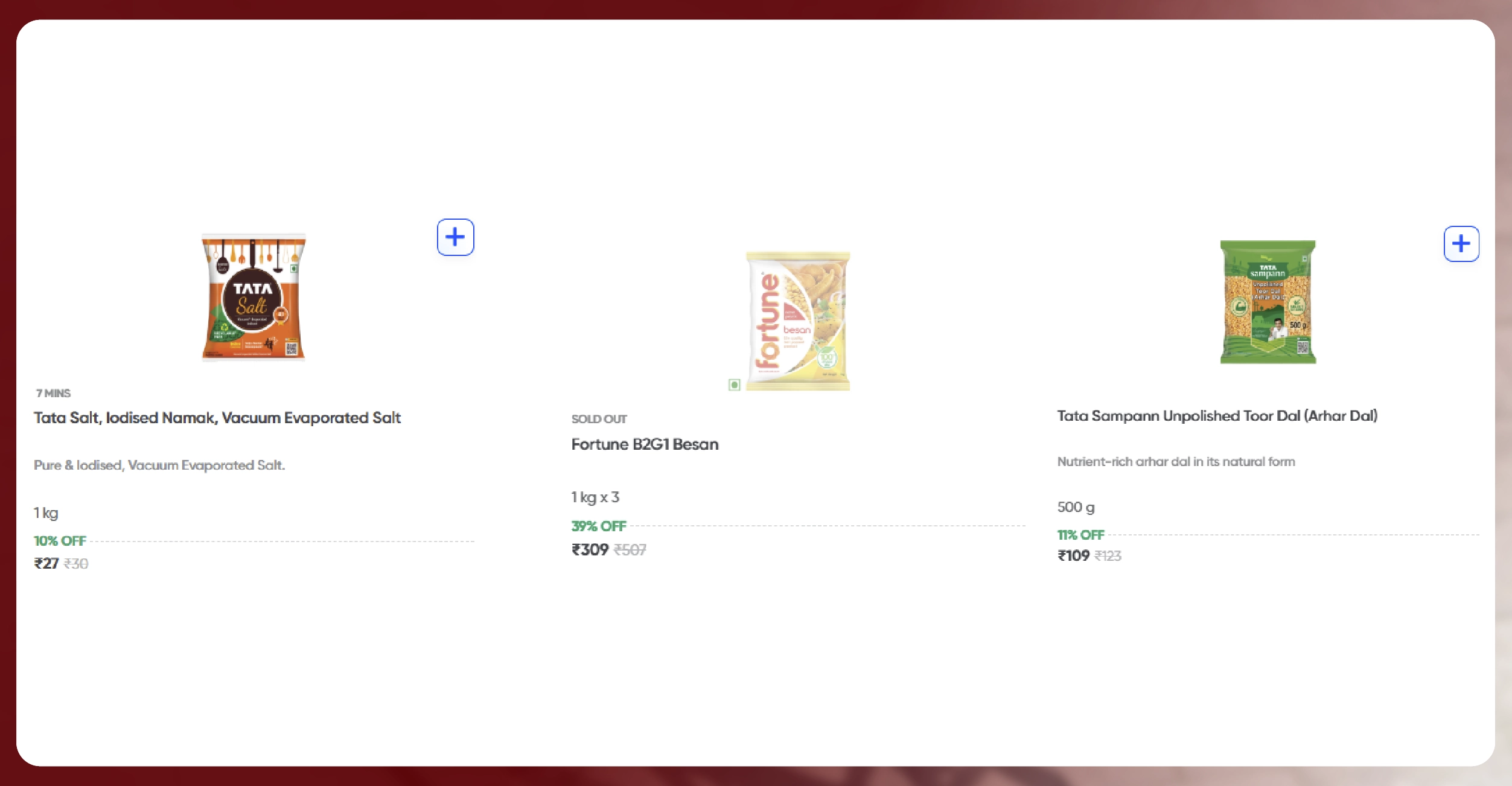
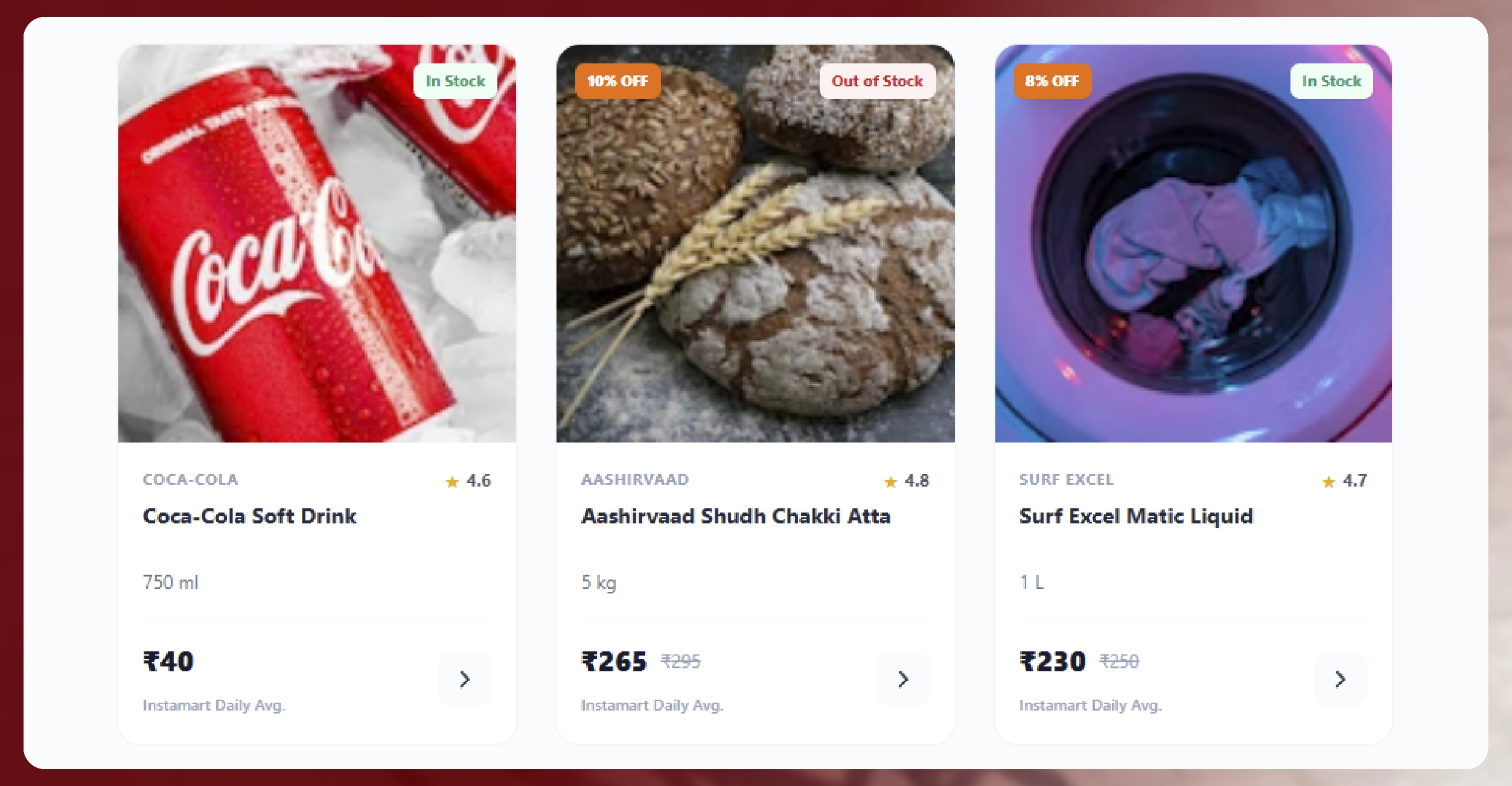
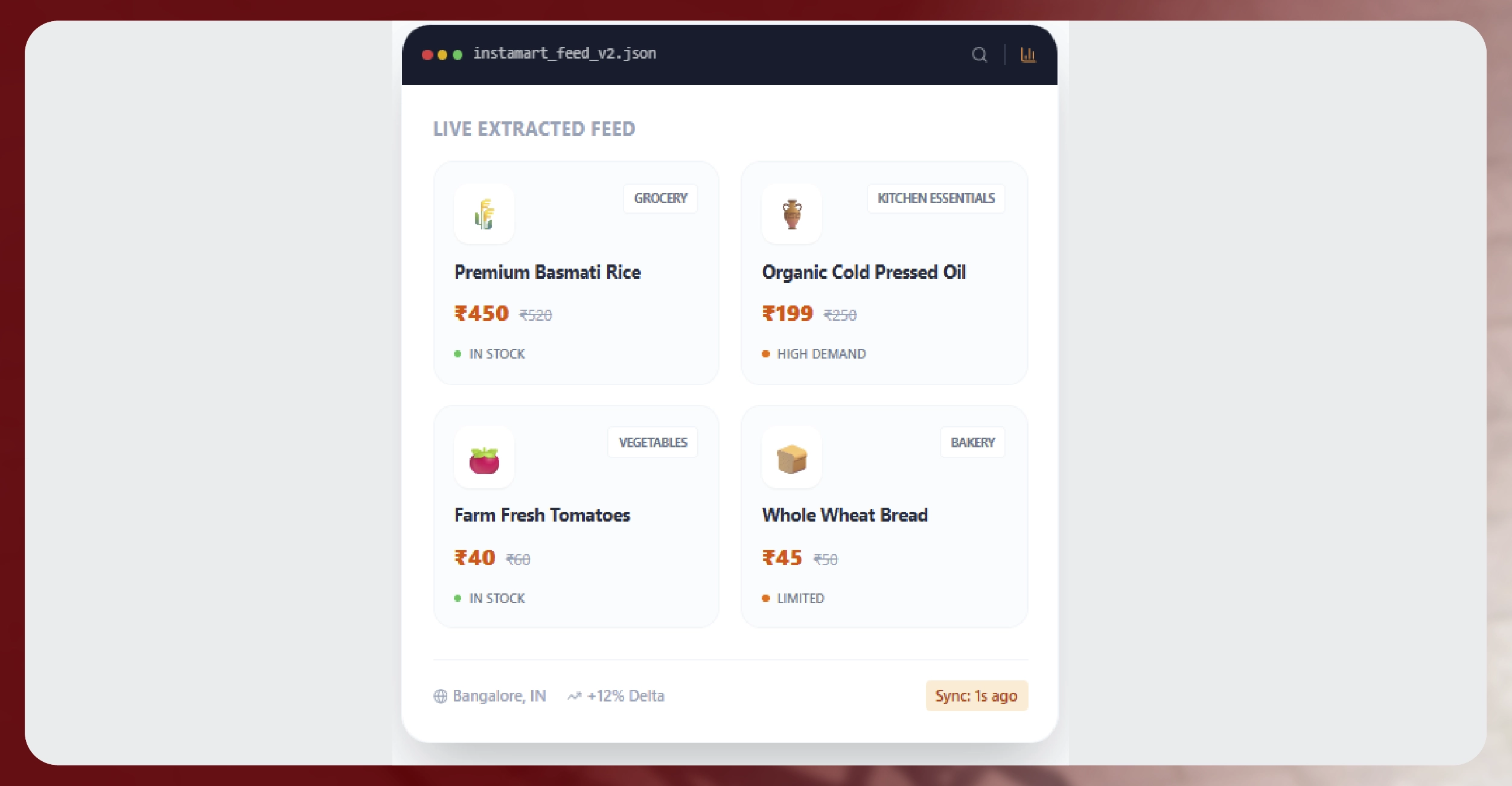
When companies Extract Swiggy Instamart Grocery Data, they gain access to multiple layers of valuable information:
Each of these data points contributes to a deeper understanding of demand behavior.
Modern Swiggy Instamart Grocery and Supermarket Data Extraction Services ensure seamless and scalable data collection.
With advanced Grocery Data Scraping Services, businesses can maintain a steady flow of updated data, ensuring their insights remain relevant.
Over time, collected data evolves into a powerful Grocery and Supermarket Store Dataset that supports strategic decision-making.
The real value of Instamart data lies in its application. Businesses that effectively use this data gain a significant competitive advantage.
Category-level insights help businesses maintain the right stock at the right time.
Demand data plays a critical role in refining pricing strategies.
Understanding category demand allows for more targeted and effective marketing.
Data-driven operations are essential in quick commerce.
Start turning real-time Instamart data into smarter decisions—partner with us to unlock actionable insights today.
The success of demand data strategies depends heavily on the technology stack used.
Additionally, professional Web Scraping Services help businesses handle complex data extraction needs while maintaining accuracy and compliance.
Our scraping solutions capture live category-level data, helping you monitor changing consumer demand and make faster, data-driven decisions.
We enable accurate demand tracking so you can stock the right products, reduce wastage, and avoid costly stockouts across categories.
Our data insights help you analyze pricing trends, optimize discounts, and stay competitive in fast-moving quick commerce environments.
We provide automated pipelines that continuously collect, clean, and structure large-scale grocery data for seamless integration with your systems.
Our services transform raw data into meaningful insights, empowering better decisions across marketing, operations, and supply chain strategies.
In the fast-paced world of quick commerce, data is the ultimate differentiator. Swiggy Instamart offers a wealth of real-time demand signals that can transform business strategies when leveraged effectively.
Category-level demand data scraping provides deep visibility into consumer behavior, enabling smarter decisions across inventory, pricing, marketing, and operations. Businesses that invest in robust data pipelines and analytics capabilities are better positioned to adapt and thrive in this competitive landscape.
By integrating insights from Grocery Pricing Data Intelligence Services, organizations can strengthen pricing and demand strategies.
By leveraging scalable Web Scraping API Services, businesses can automate real-time data collection efficiently.
With reliable Web Scraping Services, organizations can unlock the full potential of Instamart data and build a future-ready, data-driven business model.
Experience top-notch web scraping service and mobile app scraping solutions with iWeb Data Scraping. Our skilled team excels in extracting various data sets, including retail store locations and beyond. Connect with us today to learn how our customized services can address your unique project needs, delivering the highest efficiency and dependability for all your data requirements.
It refers to extracting and analyzing demand trends across different product categories on Instamart. This helps businesses understand which grocery segments perform best in real time.
It enables businesses to stock high-demand products efficiently, reduce wastage in low-demand categories, and ensure better product availability based on real-time consumption patterns.
Businesses can collect product details, category hierarchy, pricing, discounts, stock availability, and ranking data to gain a complete view of demand and performance.
Yes, combining historical and real-time data helps predict future demand trends, allowing businesses to plan procurement, pricing, and promotions more effectively.
Retailers, FMCG brands, quick commerce platforms, data analysts, and supply chain teams can all use this data to improve decision-making and gain a competitive advantage.