
38.6K+
TOTAL ORDERS PROCESSED

Swiggy & Zomato API Integration for Order Management Enhancing Restaurant Operations Through Automated Data Synchronization and Real-Time Intelligence.
This case study is based on a real-world enterprise scenario where a restaurant technology and franchise management organization integrated food delivery marketplace data into a centralized order management environment. The objective was to synchronize orders, menu information, outlet details, order statuses, and operational signals across multiple delivery ecosystems while reducing manual intervention.
It is designed for:
For growing restaurant networks, Swiggy & Zomato API integration for order management can create a unified operational layer where orders, menu information, outlet identifiers, statuses, and transaction-related data can be synchronized into internal systems.
Similarly, organizations managing distributed restaurant networks can use Swiggy & Zomato API integration for Indian Franchise operations to improve coordination between franchise outlets, central teams, POS environments, and food delivery channels.
The client's core requirement was to eliminate fragmented order workflows and create a centralized data environment capable of receiving, processing, validating, and organizing delivery-order information across multiple restaurant locations.
A rapidly expanding restaurant franchise network was receiving a significant percentage of its orders through major food delivery marketplaces. As the number of outlets increased, restaurant managers faced difficulties monitoring incoming orders, updating menus, reconciling order information, and maintaining consistent operational visibility.
The client required a centralized integration architecture capable of connecting food delivery data with its internal order management and restaurant systems. The solution focused on structured data ingestion, automated synchronization, order-status tracking, outlet-level monitoring, and analytics.
Through the implementation, the organization was able to Scrape Swiggy & Zomato API Data from permitted and accessible data interfaces and integrate structured information into its centralized operational environment.
The system was also designed to Extract restaurant order management API Data and transform incoming records into normalized fields that could be consumed by restaurant dashboards, order-management applications, analytics systems, and internal reporting workflows.
The implementation created a unified operational layer across restaurants operating in different cities. Instead of manually switching between multiple platforms, restaurant teams gained centralized visibility into order activity, outlet performance, menu availability, and order-status changes.
The resulting architecture processed thousands of order records while reducing duplicate entries, inconsistent status information, and delayed reporting. Data validation mechanisms helped maintain consistency between marketplace information and internal restaurant records.
The initiative ultimately helped the organization improve order visibility, operational responsiveness, outlet-level monitoring, and franchise-level decision-making.
The client was a rapidly growing Indian restaurant and franchise organization operating multiple food brands across metropolitan and tier-two cities. Its business model depended heavily on online food ordering, with a large proportion of daily transactions originating through third-party food delivery marketplaces.
As its digital order volume increased, the organization found that restaurant managers were spending considerable time monitoring individual platforms. Orders needed to be checked manually, statuses had to be reconciled, and outlet teams required timely updates regarding menu availability and order activity.
The client wanted to Automate restaurant orders using Swiggy & Zomato APIs and establish a centralized system capable of connecting marketplace order flows with its restaurant technology infrastructure.
The business operated a mixture of company-owned restaurants, franchise outlets, and cloud-kitchen locations. Each outlet had different order volumes, menu combinations, operating hours, and customer demand patterns.
This created an increasingly complex data environment.
A typical operational workflow involved:
The fragmented nature of these activities created delays and increased the possibility of discrepancies.
The client therefore required a centralized integration framework that could bring marketplace order information into a structured environment while supporting continuous synchronization and analytics.
The client faced several operational challenges as food delivery transactions expanded across its restaurant network.
The first major challenge was fragmented order visibility. Restaurant managers had to monitor different food delivery environments separately, making it difficult to obtain a consolidated view of active, completed, cancelled, and pending orders.
The business also required Scrape Food Delivery Order Data for Restaurants to create structured order datasets containing information such as outlet, order identifier, item details, quantities, pricing, timestamps, status, and other relevant operational fields.
Another major issue was the lack of standardized data structures between marketplace feeds and internal restaurant systems. The client needed Zomato & Swiggy Data Scraping API in India capabilities to consolidate accessible marketplace data into a consistent format suitable for internal applications and analytics.
The organization also operated in several cities, each with different outlet volumes and demand patterns. A City-Based Zomato and Swiggy Scraping API architecture was therefore required to support location-specific monitoring, outlet mapping, and city-level order intelligence.
By implementing a centralized data integration architecture, the client replaced fragmented platform monitoring with a structured pipeline capable of processing order, menu, outlet, and operational information.
| Dimension | Manual Platform Tracking | Client Integration System |
|---|---|---|
| Order collection | Manual monitoring across platforms | Centralized automated data ingestion |
| Order visibility | Platform-by-platform | Unified restaurant dashboard |
| Status monitoring | Manual refresh and review | Continuous synchronization |
| Outlet mapping | Spreadsheet-based mapping | Structured outlet identifiers |
| Menu information | Separate platform checks | Centralized menu datasets |
| Duplicate management | Manual identification | Automated validation and deduplication |
| City-level reporting | Manual report preparation | Automated city and outlet reporting |
| Order analytics | Delayed analysis | Near-real-time operational analytics |
| Scalability | Limited by manual workload | Designed for increasing order volumes |
| Decision-making | Reactive | Data-driven and proactive |
The integration pipeline provided a single operational environment where marketplace data could be normalized, validated, mapped, and distributed to relevant business systems.
The brand in focus is a multi-location Indian restaurant and franchise organization operating in a highly competitive food delivery environment.
The organization had established a strong digital ordering presence but faced growing operational complexity as more restaurants, menus, cities, and orders were added to its ecosystem.
Its management team needed a reliable way to answer critical operational questions:
Before the integration, answering these questions required information from multiple disconnected systems.
The new architecture established a centralized intelligence layer that connected food delivery information with internal restaurant operations.
Our approach focused on developing a structured food delivery data integration environment capable of processing permitted and accessible data interfaces and synchronizing relevant information with the client's internal systems.
The implementation incorporated Zomato and Swiggy data scraping capabilities to collect and organize relevant restaurant, menu, outlet, and order-related information according to the client's operational requirements.
The solution also incorporated Food Delivery Data Scraping Services to support continuous data collection, transformation, normalization, and structured delivery of information to downstream systems.
A dedicated Food Delivery App Menu Datasets layer was developed to organize menu-level information, including restaurant identifiers, item names, categories, prices, availability indicators, descriptions, and related metadata.
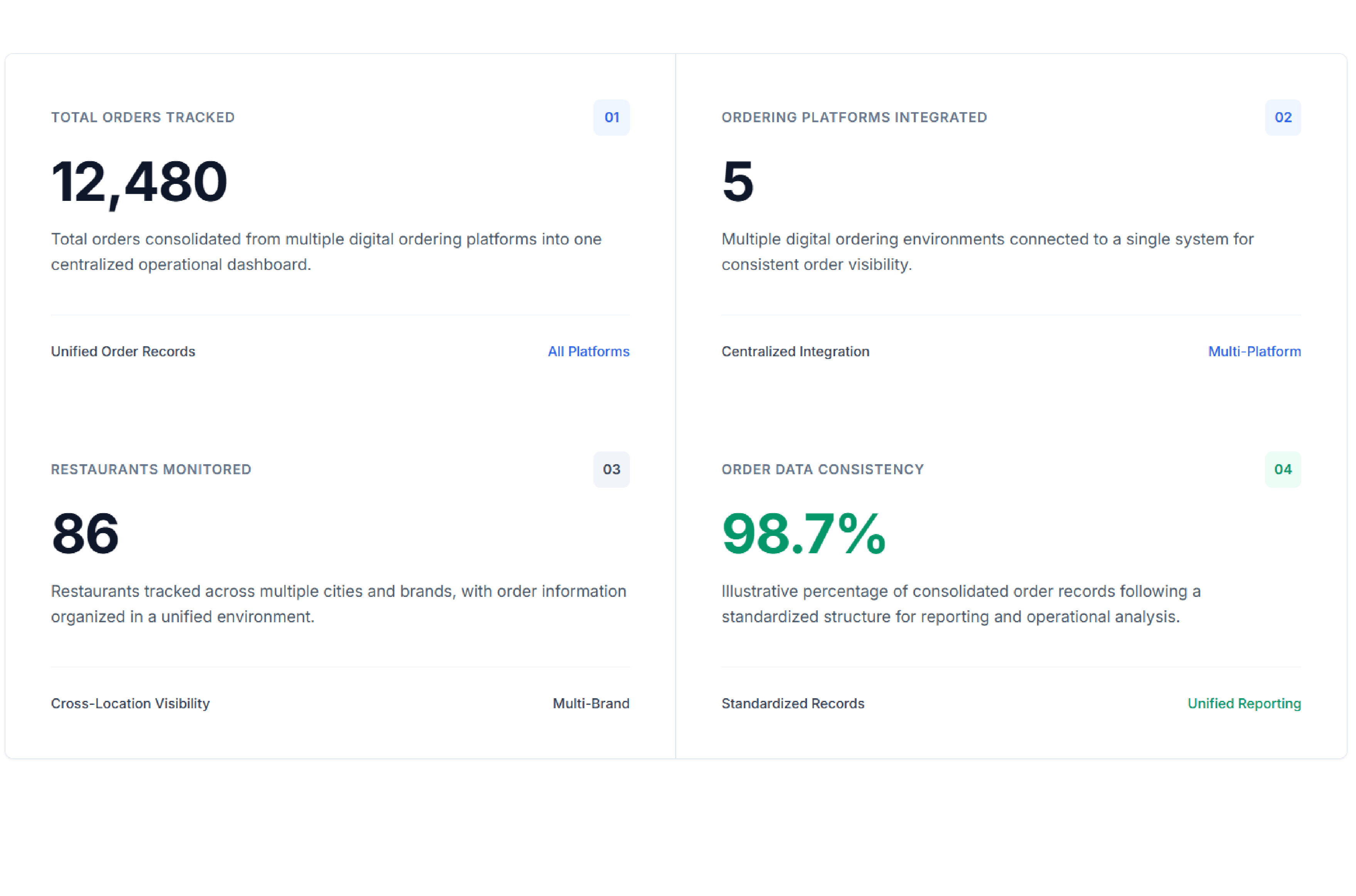
The first major finding was a substantial improvement in order visibility.
Previously, restaurant teams had to monitor multiple digital ordering environments independently. The centralized integration brought relevant order information into a unified operational environment.
Managers could view orders according to restaurant, city, brand, status, and time period.
This reduced dependency on manual platform switching and provided a clearer understanding of active order flows.
The centralized system also improved reporting consistency because the same structured records could be used by restaurant operations, analytics teams, and management.
The second major finding involved order-status visibility.
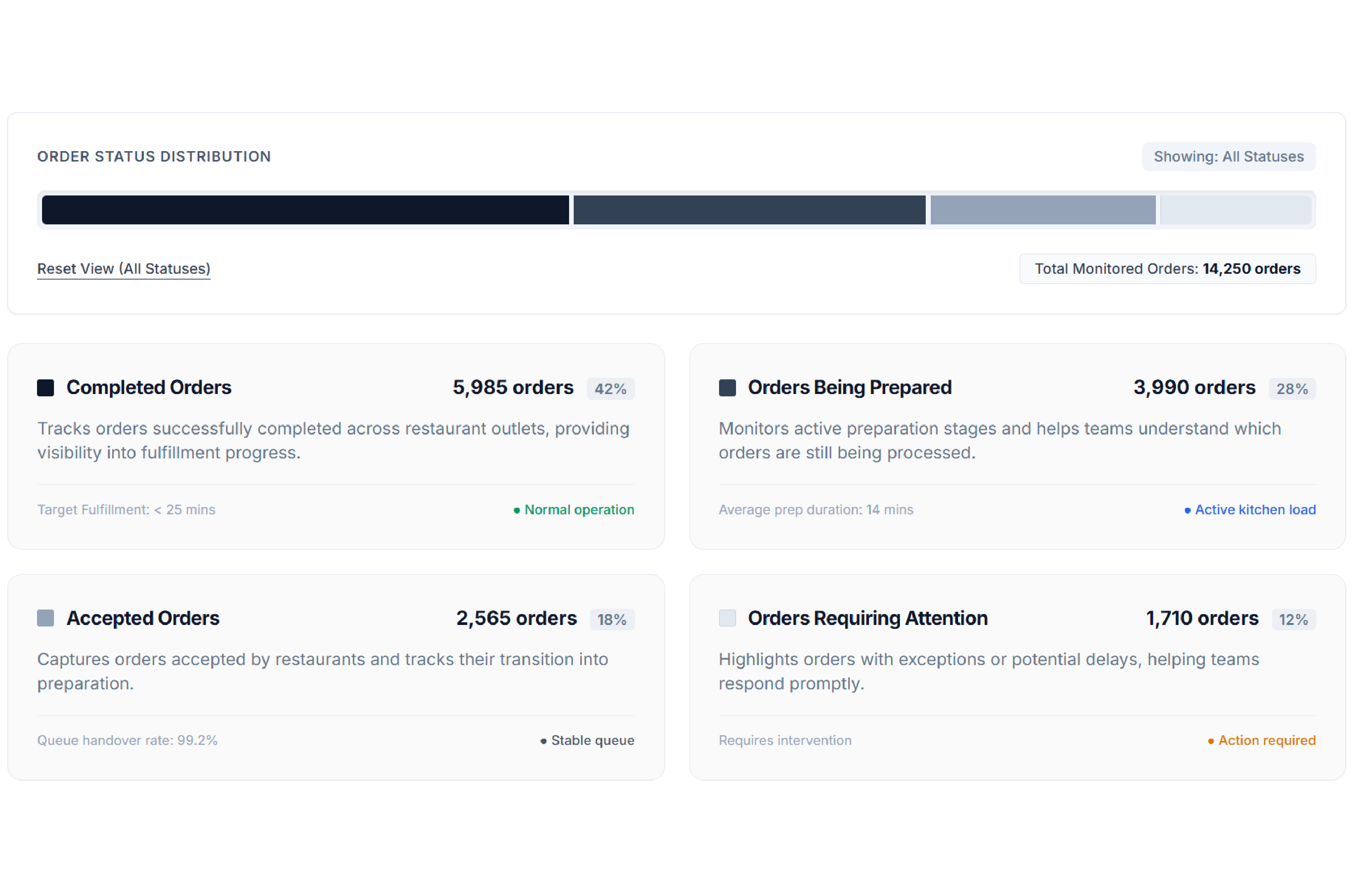
Order management requires timely awareness of whether an order is received, accepted, being prepared, completed, cancelled, or otherwise updated.
The integration pipeline standardized status information and made it easier to identify orders requiring attention.
This helped restaurant teams respond faster to operational exceptions and reduced the likelihood of orders remaining unnoticed within fragmented platform workflows.
The system also enabled management teams to analyze status patterns over time and identify outlets where operational delays were more frequent.
Menu data became another important intelligence layer.
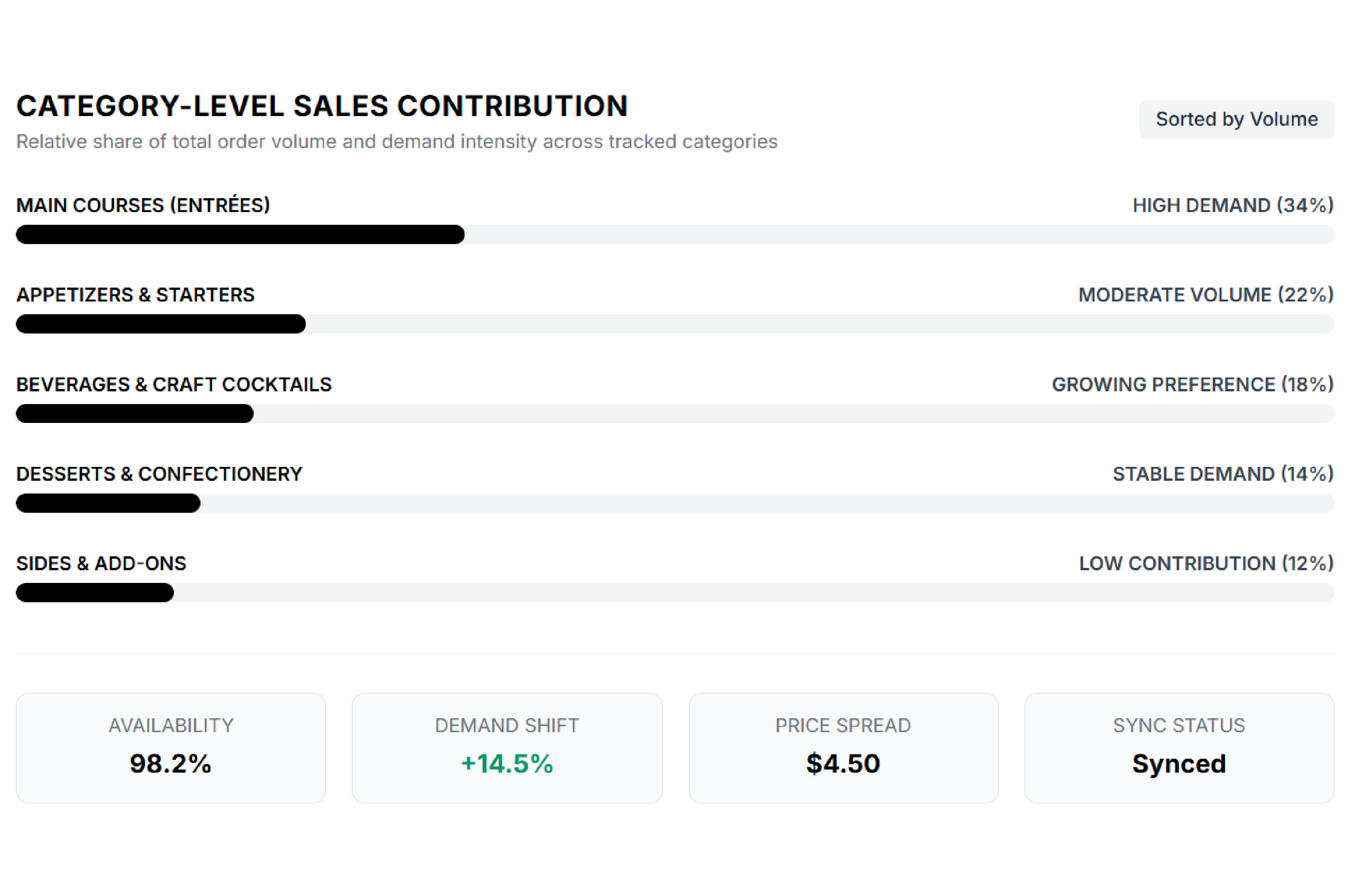
The organization could analyze menu items by restaurant, category, city, and order frequency.
This helped identify:
The structured menu environment also supported better synchronization between marketplace-facing information and internal restaurant records.
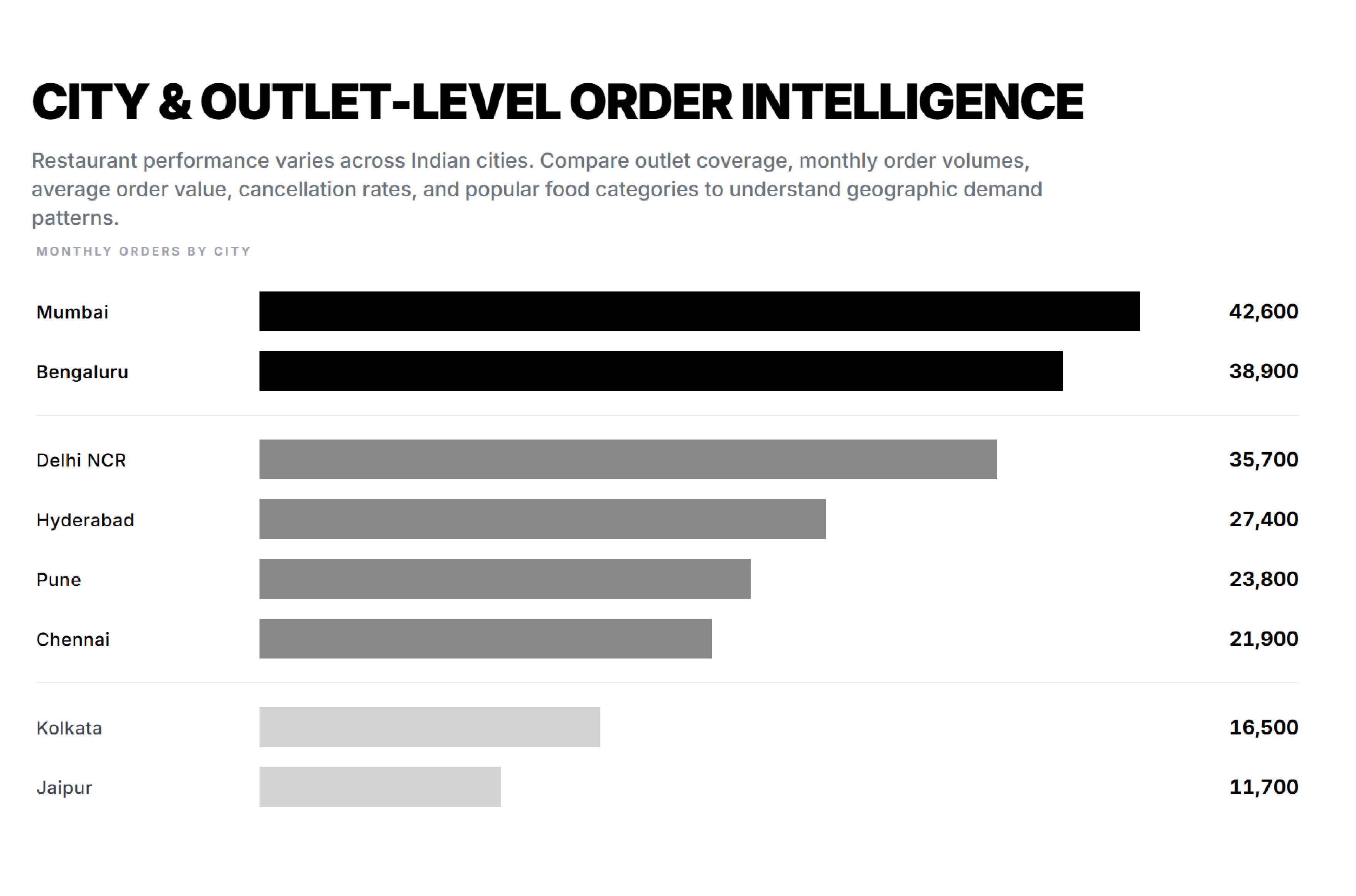
The organization operated across multiple Indian cities, making geographic order analysis particularly valuable.
The integration enabled management teams to compare restaurant performance across locations.
| City | Active Outlets | Monthly Orders | Avg. Order Value | Cancellation Rate | Top Category |
|---|---|---|---|---|---|
| Mumbai | 86 | 42,600 | ₹418 | 3.4% | Biryani |
| Bengaluru | 74 | 38,900 | ₹452 | 2.9% | Burgers |
| Delhi NCR | 69 | 35,700 | ₹401 | 3.7% | North Indian |
| Hyderabad | 52 | 27,400 | ₹389 | 3.1% | Biryani |
| Pune | 48 | 23,800 | ₹376 | 2.6% | Snacks |
| Chennai | 43 | 21,900 | ₹395 | 2.8% | South Indian |
| Kolkata | 31 | 16,500 | ₹361 | 3.9% | Bengali |
| Jaipur | 24 | 11,700 | ₹348 | 3.2% | Indian |
This geographic intelligence helped the organization identify high-volume locations and understand differences in customer ordering behavior.
The following sample dataset illustrates how structured food delivery order information can be organized for analytics and operational reporting.
| Order ID | City | Outlet | Order Value | Items | Status | Order Time | Category |
|---|---|---|---|---|---|---|---|
| SWG10281 | Mumbai | Andheri West | ₹682 | 4 | Completed | 12:14 PM | Biryani |
| ZMT21846 | Bengaluru | Koramangala | ₹514 | 3 | Completed | 12:27 PM | Burgers |
| SWG31972 | Delhi NCR | Gurugram | ₹746 | 5 | Accepted | 12:42 PM | North Indian |
| ZMT42761 | Hyderabad | Banjara Hills | ₹438 | 3 | Completed | 01:05 PM | Biryani |
| SWG51842 | Pune | Hinjewadi | ₹362 | 2 | Preparing | 01:19 PM | Snacks |
| ZMT62137 | Chennai | T Nagar | ₹489 | 4 | Completed | 01:31 PM | South Indian |
| SWG73491 | Kolkata | Salt Lake | ₹574 | 4 | Cancelled | 01:46 PM | Bengali |
| ZMT84512 | Jaipur | Malviya Nagar | ₹329 | 2 | Completed | 02:02 PM | Indian |
This structured dataset can support dashboards, order monitoring, demand forecasting, outlet benchmarking, menu analysis, and operational reporting.
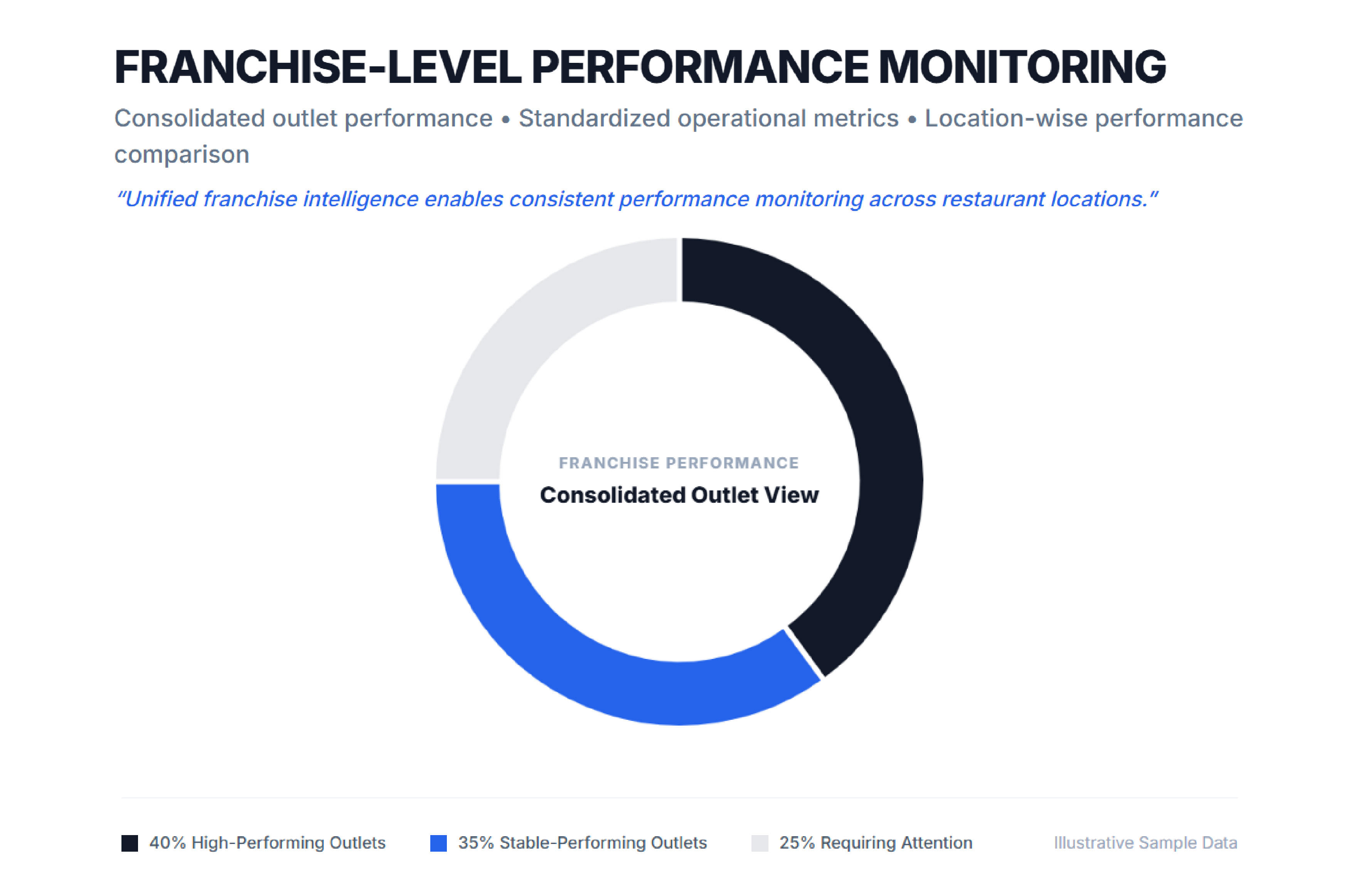
Franchise management teams gained a consolidated view of individual outlet performance.
Rather than reviewing restaurant performance independently, managers could compare locations using standardized operational metrics.
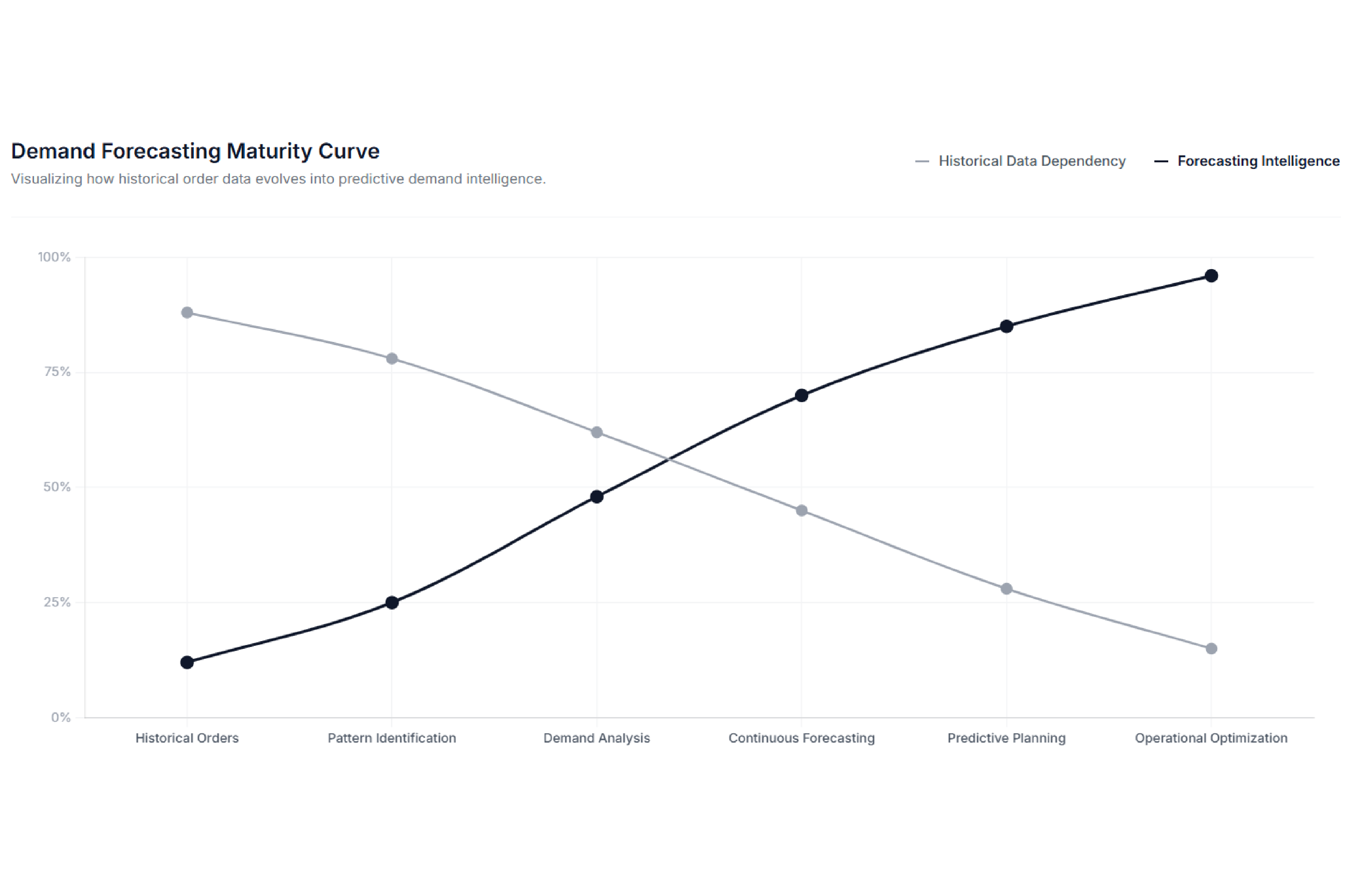
Historical order records created a foundation for demand forecasting.
By analyzing order volume according to city, day, time, outlet, and menu category, the organization could identify recurring demand patterns.
For example, certain locations showed stronger lunch demand, while others experienced significant evening and weekend activity.
These patterns could help restaurants improve staffing, ingredient planning, inventory preparation, menu availability, and promotional strategies.
The integration therefore evolved beyond simple order synchronization and became a broader operational intelligence platform.
After implementing the centralized food delivery integration architecture, the client achieved measurable improvements in restaurant order visibility and operational efficiency.
Overall, the integration transformed food delivery data from a fragmented operational resource into a structured business intelligence layer.
Our approach combines data extraction, structured processing, integration, and analytics to help restaurant businesses transform large volumes of food delivery information into actionable intelligence.
The architecture is designed to consolidate relevant information from multiple digital environments while maintaining consistent data structures across restaurants, outlets, menus, orders, and cities.
It supports scalable data processing for organizations managing expanding restaurant networks and increasing digital order volumes.
The solution also emphasizes data quality through validation, normalization, duplicate detection, field mapping, and structured storage.
For restaurant management teams, this means less dependency on manual tracking and greater visibility into operational performance.
The centralized data environment can also support dashboards and analytics applications that allow decision-makers to monitor order activity, menu performance, outlet efficiency, and city-level demand.
As restaurant businesses continue expanding their digital ordering channels, structured data integration can become an important component of modern FoodTech infrastructure.
"We were struggling to maintain centralized visibility as our restaurant network and online order volume continued to grow. The integration gave us a much clearer view of orders, outlet performance, menu activity, and city-level trends.
The biggest improvement was the reduction in manual monitoring. Our teams can now work with structured information instead of repeatedly checking different platforms and preparing reports manually.
The solution has improved operational responsiveness and given our management team stronger data visibility for franchise and restaurant-level decisions."
— Head of Digital Operations
The final outcome was a centralized and scalable food delivery order intelligence environment capable of organizing marketplace order information and connecting it with the client's internal restaurant operations.
The organization gained improved visibility into orders, menus, outlets, cities, and customer demand patterns.
The solution reduced fragmented monitoring and helped restaurant teams access standardized information through a unified operational environment.
Implementation of Web Scraping API Services further strengthened the architecture by enabling scalable integration capabilities for continuously changing digital data environments.
The final system supported structured order records, outlet mapping, menu intelligence, status monitoring, city-level analytics, and franchise performance reporting.
The organization also gained a stronger foundation for future applications involving demand forecasting, restaurant benchmarking, menu optimization, customer analytics, and automated business intelligence.
It refers to connecting permitted and accessible food delivery data interfaces with a restaurant's internal systems so order, menu, outlet, and status information can be managed through a centralized environment.
Yes, where appropriate interfaces and permissions are available, structured order information can be integrated with POS, ERP, restaurant-management, analytics, or other internal systems.
Depending on the available data interface, datasets can include order identifiers, restaurant and outlet information, menu items, quantities, pricing, timestamps, statuses, categories, and other operational metadata.
Centralized order data helps franchises compare outlet performance, monitor order volumes, analyze menu demand, identify operational issues, and generate standardized reports across cities.
Yes. A scalable architecture can organize information according to restaurant, outlet, city, brand, category, order status, and other business dimensions.
Transform fragmented food delivery information into structured order intelligence with scalable API integration, restaurant datasets, menu intelligence, outlet analytics, and centralized reporting.
Start a projectFields marked * are required. Everything else just helps us scope faster — skip what you don't know yet.