How Does Tender Data Scraping API from GeM Platform Transform Procurement Intelligence?
Introduction
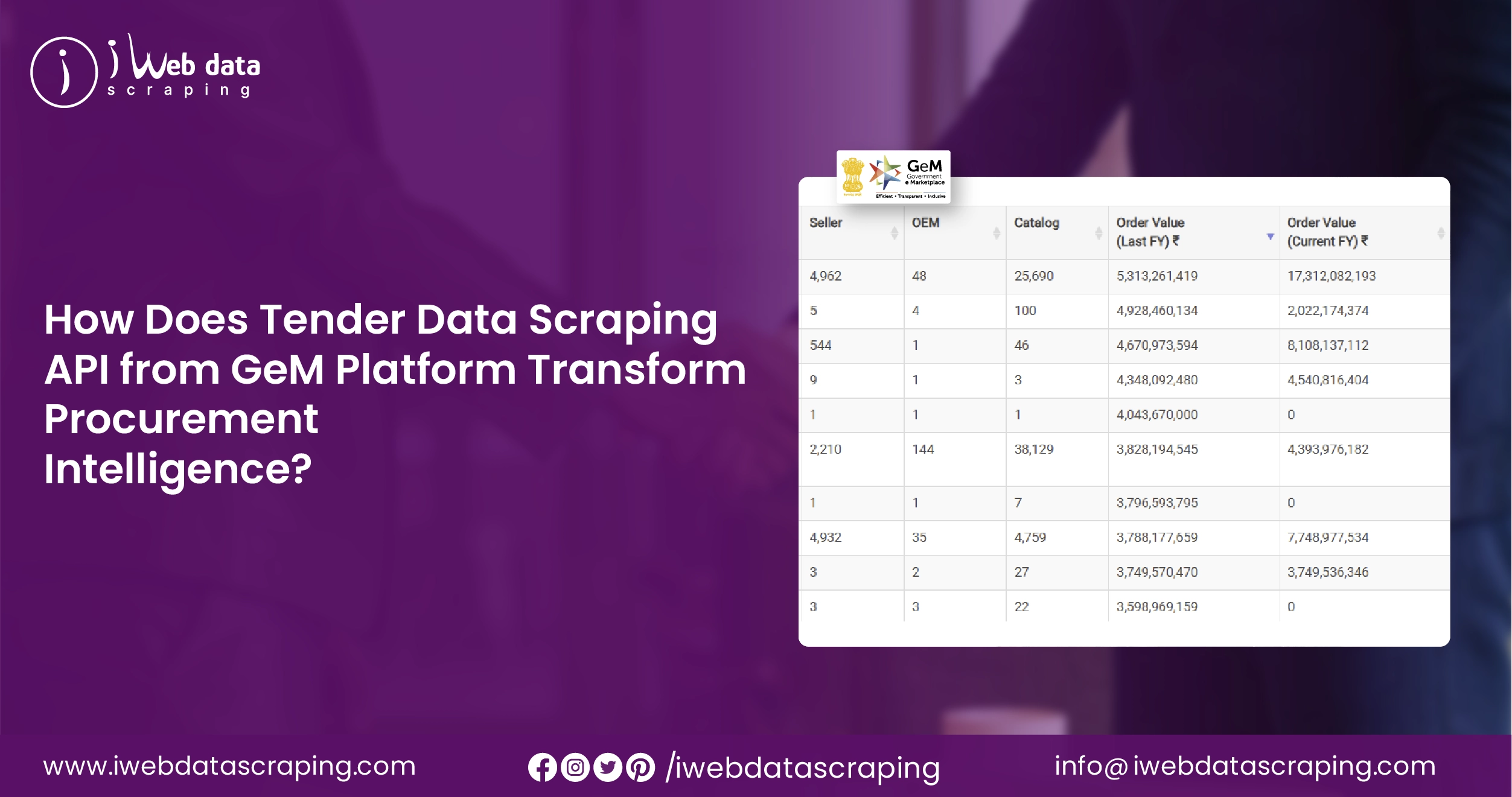
India’s public procurement ecosystem has undergone a digital transformation with the
introduction of the Government e-Marketplace (GeM). Businesses, suppliers, and analysts now rely
heavily on structured data from this platform to identify opportunities, track tenders, and gain
competitive insights. This is where Tender Data Scraping API from GeM platform plays a critical
role in automating and scaling access to valuable procurement data.
In parallel, organizations are increasingly adopting Tender Listing Data Extraction
API from GeM platform to streamline how they discover, filter, and analyze tenders across
categories, departments, and regions. These APIs eliminate manual effort and unlock real-time
visibility into government procurement activities.
Understanding the GeM Platform and Its Data Value
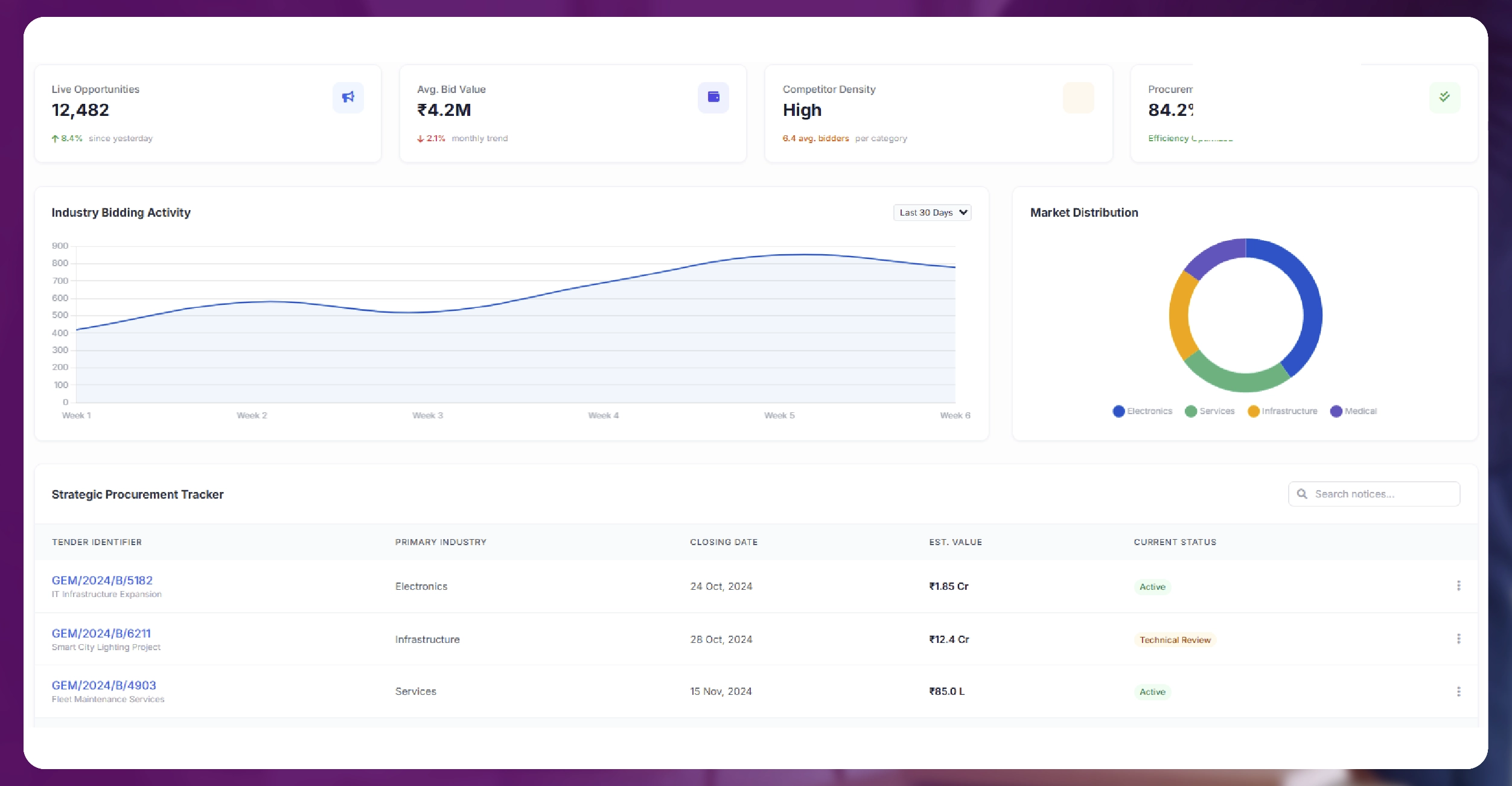
The GeM platform serves as a centralized marketplace for government buyers and
sellers. It hosts thousands of tenders, bids, reverse auctions, and procurement notices across
industries. From office supplies and electronics to infrastructure and services, GeM offers a
vast dataset that can empower businesses to:
- Identify relevant tenders quickly
- Monitor pricing trends and bidding behavior
- Track competitors and winning bids
- Optimize procurement strategies
However, extracting this data manually is time-consuming and inefficient. Automated
APIs solve this challenge by delivering structured, real-time insights.
Why Businesses Need Tender Data Scraping APIs?
Modern enterprises require speed, accuracy, and scalability. A robust Tender Data
Monitoring API from GeM platform allows organizations to stay updated with newly published
tenders, amendments, and bid results without delays.
Here’s why such APIs are essential:
- Real-Time Opportunity Discovery
With Real-Time Tender Data Tracking from
GeM, businesses can instantly identify new tenders as soon as they are published, ensuring
they never miss critical opportunities.
- Competitive Intelligence
Access to bidding data helps companies analyze
competitor pricing, participation trends, and win ratios, enabling smarter decision-making.
- Automation and Efficiency
APIs automate repetitive tasks like data
collection, filtering, and updates, reducing manual workload and operational costs.
- Data Accuracy and Consistency
Automated extraction ensures standardized
and error-free datasets, improving reliability for analysis.
Types of Tender Data Collected from GeM Platform
To deliver meaningful procurement intelligence, our API captures a wide range of
structured data fields from the GeM platform. These data points are essential for detailed
analysis, strategic bidding, and operational efficiency. The key data elements collected
include:
- Bid Number
Each tender is assigned a unique bid number, which acts as an
identifier for tracking, referencing, and managing specific procurement opportunities across
the GeM ecosystem.
- Items
The API extracts detailed information about the items or services
listed in each tender, including product descriptions, specifications, and categories,
enabling precise opportunity matching.
- Quantity
Accurate quantity details for each item are captured, helping
businesses estimate order volumes, plan inventory, and align their supply capabilities with
tender requirements.
- Department Name and Address
The system collects the complete details of
the issuing department, including name and address, allowing businesses to understand buyer
profiles and target specific government entities effectively.
- Start Date and End Date
Tender timelines, including publication (start
date) and submission deadline (end date), are extracted to help organizations plan
submissions and avoid missing critical deadlines.
- Tender Document URL
A direct URL to the detailed tender document is
provided, enabling quick access to full specifications, terms, conditions, and additional
requirements without manual searching.
Why These Data Points Matter?
Collecting these specific data attributes ensures that businesses not only discover
tenders but also gain actionable insights. With structured access to bid numbers, item details,
quantities, and timelines, organizations can:
- Improve bid accuracy and preparedness
- Align offerings with tender requirements
- Track and manage multiple bids efficiently
- Enhance decision-making with complete context
By integrating these datasets into your workflow, you transform raw tender listings
into strategic opportunities, ensuring better outcomes in competitive government procurement.
Key Features of a Tender Data Scraping API
A powerful API designed for GeM tender data extraction typically includes the
following features:
Comprehensive Tender Coverage
From active tenders to closed bids, APIs capture complete lifecycle data including
notices, corrigenda, and results.
Advanced Filtering Options
Users can filter tenders by category, ministry, value, location, or deadlines to
focus on relevant opportunities.
Structured Data Output
Clean datasets in formats like JSON, CSV, or Excel make integration with analytics
tools seamless.
Historical Data Access
Historical tender data enables trend analysis and forecasting for long-term
strategic planning.
Extracting Pricing and Bid Insights
One of the most valuable aspects of GeM data is pricing intelligence. Using Tender
Price Data Extraction from GeM platform, organizations can:
- Compare bid values across similar tenders
- Identify pricing benchmarks
- Detect underbidding or overpricing trends
- Optimize their own bidding strategies
Pricing insights not only improve competitiveness but also help in cost optimization
and procurement planning.
The Role of Government Data Scraping in India
With increasing digitization, Scraping Government Portals in India has become a
strategic necessity for businesses dealing with public sector procurement. Government portals
like GeM contain vast amounts of publicly available data, but accessing it efficiently requires
automation.
Benefits include:
- Faster access to procurement data
- Centralized data aggregation
- Improved compliance and transparency
- Enhanced decision-making capabilities
Technical Approach to GeM Data Extraction
The process of Web scraping GeM tender data involves advanced techniques such as:
- Automated bots for data crawling
- API-based extraction for structured access
- Data parsing and cleaning
- Real-time update mechanisms
These technologies ensure that users receive accurate and up-to-date information
without manual intervention.
Use Cases Across Industries
- Suppliers and Vendors
Suppliers can Extract tender listings from GeM
portal to identify relevant opportunities and submit bids on time.
- Market Research Firms
Research companies use GeM data to analyze
procurement trends, spending patterns, and sector growth.
- Consulting Firms
Consultants leverage tender data to advise clients on
bidding strategies and market positioning.
- Government Contractors
Contractors rely on APIs to Scrape GeM bid
numbers and tender details, ensuring they stay competitive in bidding processes.
Challenges in Tender Data Extraction
While the benefits are immense, there are certain challenges:
- Dynamic Website Structure
- Data Volume
- Compliance Considerations
- Data Normalization
These challenges can be effectively managed using professional Web Scraping Services
that offer robust and compliant solutions.
Unlock powerful procurement insights today—leverage our GeM
tender data scraping solutions to win more bids faster.
Choosing the Right API Provider
Selecting a reliable provider for Web Scraping API Services is critical for success.
Key factors to consider include:
- Data accuracy and reliability
- Real-time update capabilities
- Customization options
- Scalability
- Technical support
A well-designed API should seamlessly integrate with your existing systems and
provide actionable insights.
Future of Tender Data Intelligence
The future of procurement intelligence lies in advanced analytics, AI, and
predictive modeling. By combining tender data with machine learning, businesses can:
- Predict tender outcomes
- Identify high-probability wins
- Optimize bid pricing
- Forecast procurement trends
As digital transformation accelerates, tender data will become a cornerstone of
strategic decision-making.
How iWeb Data Scraping Can Help You?
1. Smart Opportunity Identification
Our data scraping services intelligently scan GeM listings, highlighting high-value
and relevant tenders, helping you focus resources on opportunities with maximum business
potential.
2. End-to-End Data Structuring
We transform unorganized tender information into structured, analysis-ready
datasets, making it easier for teams to interpret, compare, and act on procurement data
efficiently.
3. Faster Decision-Making
With instant access to updated tender insights, our services empower your team to
make quicker, data-driven decisions, reducing delays and improving bid responsiveness
significantly.
4. Historical Trend Analysis
We provide access to historical tender data, enabling you to identify long-term
trends, seasonal demand patterns, and pricing behaviors for more strategic bidding approaches.
5. Seamless System Integration
Our scraping solutions easily integrate with your existing tools, dashboards, and
workflows, ensuring smooth data flow, improved collaboration, and enhanced operational
productivity across teams.
Conclusion
The GeM platform has revolutionized government procurement in India, but the real
value lies in how effectively businesses can utilize its data. APIs designed for tender data
scraping provide a powerful solution to unlock this potential.
By leveraging automation, real-time tracking, and structured datasets, organizations
can gain a competitive edge, improve efficiency, and make data-driven decisions. Whether it’s
tracking opportunities, analyzing competitors, or optimizing bids, tender data APIs are
indispensable tools in today’s digital economy.
In addition, integrating tender insights with broader analytics solutions like Price
Monitoring Services can significantly enhance business intelligence and improve market
visibility. Leveraging Price Tracking Services
helps
organizations maintain competitive pricing
strategies and respond quickly to market fluctuations. Adopting Digital Shelf Analytics enables
businesses to optimize product positioning, monitor competition, and strengthen their
presence
in dynamic procurement environments.
Experience top-notch web scraping service
and mobile app scraping solutions with iWeb Data
Scraping. Our skilled team excels in extracting various data sets, including retail store locations and beyond. Connect with us
today to learn how our customized services can address your unique project needs, delivering the
highest efficiency and dependability for all your data requirements.