

Introduction
The restaurant industry has transformed into a highly competitive digital marketplace where pricing, menu engineering, promotions, and delivery fees change frequently. Businesses that rely on static information often struggle to understand evolving customer preferences and competitive pricing. Organizations today require continuous visibility into menus, pricing, availability, and delivery charges across multiple platforms to make informed business decisions.
Tracked Menus & Pricing Across Food-Delivery Apps has become one of the most valuable sources of competitive intelligence for restaurants, food delivery platforms, researchers, investors, and market analysts.
Restaurant Menu Data Extraction enables businesses to capture structured information from thousands of restaurants operating across multiple delivery applications.
Businesses increasingly scrape restaurant pricing from food delivery apps to monitor competitor pricing, promotional discounts, delivery charges, menu additions, and seasonal pricing strategies in real time.
One of the most valuable datasets available today is historical restaurant information. In particular, historical OpenTable NYC restaurant data covering the years 2018–2023 offers unique insights into how restaurants adapted before, during, and after the pandemic. Combined with food delivery datasets, businesses gain an unparalleled understanding of pricing evolution, menu innovation, consumer demand, and restaurant survival strategies.
Why Restaurant Menu Intelligence Matters?
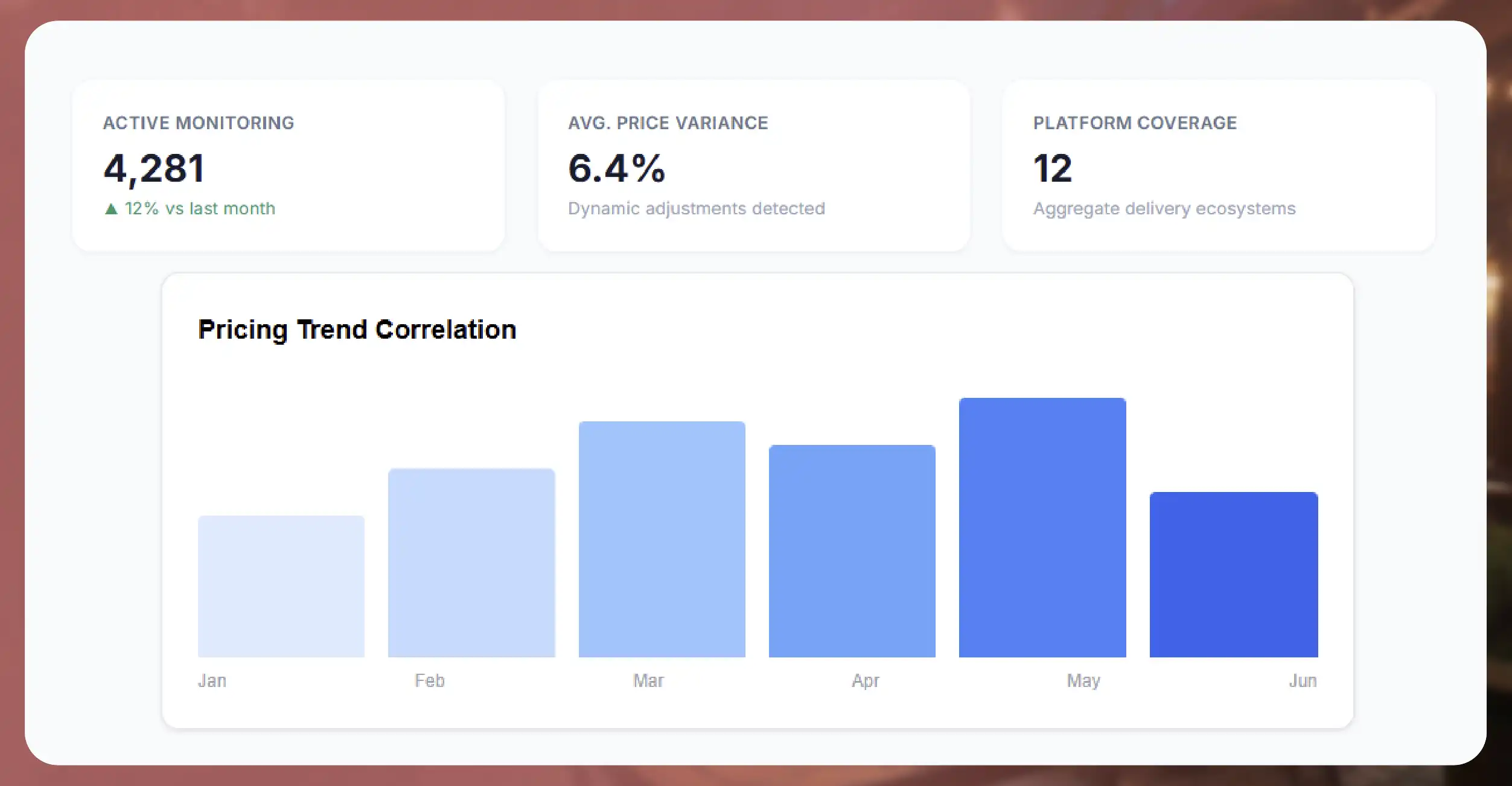
Restaurant pricing is no longer static. Prices fluctuate due to ingredient inflation, labor shortages, supply chain disruptions, delivery platform commissions, neighborhood competition, and seasonal demand.
Consumers compare prices across multiple delivery applications before placing an order. Restaurants frequently update menus, introduce combo meals, remove unpopular dishes, launch limited-time offers, and experiment with premium pricing.
Without continuous monitoring, businesses lose visibility into these market changes.
Restaurant menu intelligence provides decision-makers with structured data that reveals pricing trends, cuisine popularity, promotional frequency, delivery costs, service availability, and restaurant performance across multiple platforms.
Historical datasets further reveal long-term pricing patterns that cannot be identified using current snapshots alone.
Understanding Historical OpenTable NYC Restaurant Data (2018–2023)
Historical OpenTable NYC restaurant data from 2018 through 2023 offers one of the richest sources for analyzing the evolution of New York City's restaurant industry.
Historical OpenTable NYC restaurant data captures valuable information including restaurant listings, cuisine categories, neighborhood presence, dining availability, reservation patterns, pricing levels, customer ratings, operational status, and menu evolution throughout multiple economic cycles.
The 2018 dataset reflects a stable restaurant ecosystem before the global pandemic.
Data from 2019 demonstrates growth in reservation activity, premium dining experiences, and neighborhood expansion.
The 2020 data captures one of the industry's most dramatic transformations as restaurants shifted toward delivery, outdoor dining, digital menus, and operational restructuring.
Datasets from 2021 document gradual recovery, changing consumer behavior, and evolving restaurant concepts.
The 2022 and 2023 datasets reveal stabilization, premium pricing adjustments, expanded delivery operations, and greater investment in digital customer engagement.
Researchers can compare restaurant availability across years, identify closures, analyze cuisine shifts, monitor pricing evolution, and understand long-term business resilience.
Combining OpenTable History with Food Delivery Data
Historical reservation platforms provide one perspective while food delivery platforms provide another.
When these datasets are combined, businesses obtain a complete picture of restaurant operations.
Restaurants may increase dine-in prices while maintaining delivery discounts. Some establishments reduce menu variety on delivery applications while expanding reservation experiences. Others may increase delivery fees while lowering menu prices to attract customers. By integrating multiple datasets, analysts understand how restaurants balance profitability across different customer channels.
This integrated intelligence helps consultants, investors, hospitality groups, and market researchers evaluate long-term operational strategies.
The Value of Historical Menu Price Tracking
Restaurant prices rarely change randomly.
Ingredient inflation, supplier contracts, fuel costs, labor expenses, tourism demand, and competitive positioning all influence pricing decisions.
Historical Menu Price Changes Data Tracking enables businesses to examine how restaurants adjusted prices over months and years instead of relying solely on current pricing.
Long-term historical analysis reveals seasonal pricing cycles, recurring promotional periods, premium menu introductions, inflation responses, and regional pricing behavior.
Restaurant groups can benchmark their pricing strategy against competitors while economists and researchers analyze broader food inflation trends.
Historical pricing intelligence is especially valuable for forecasting future pricing behavior.
Monitoring Food Delivery Charges
Menu prices tell only part of the story.
Customers increasingly evaluate the total order cost, including delivery fees, service charges, packaging costs, taxes, platform commissions, and promotional discounts.
Extract Food Delivery charges Data to understand how pricing varies across delivery platforms, geographic regions, restaurant categories, and order sizes.
Restaurants often adjust delivery fees during peak demand periods.
Some platforms waive delivery charges for premium subscribers while others introduce surge pricing.
Historical delivery charge analysis enables businesses to estimate customer acquisition costs, optimize pricing strategies, and compare platform competitiveness.
Restaurant Menu Extraction Across Multiple Platforms
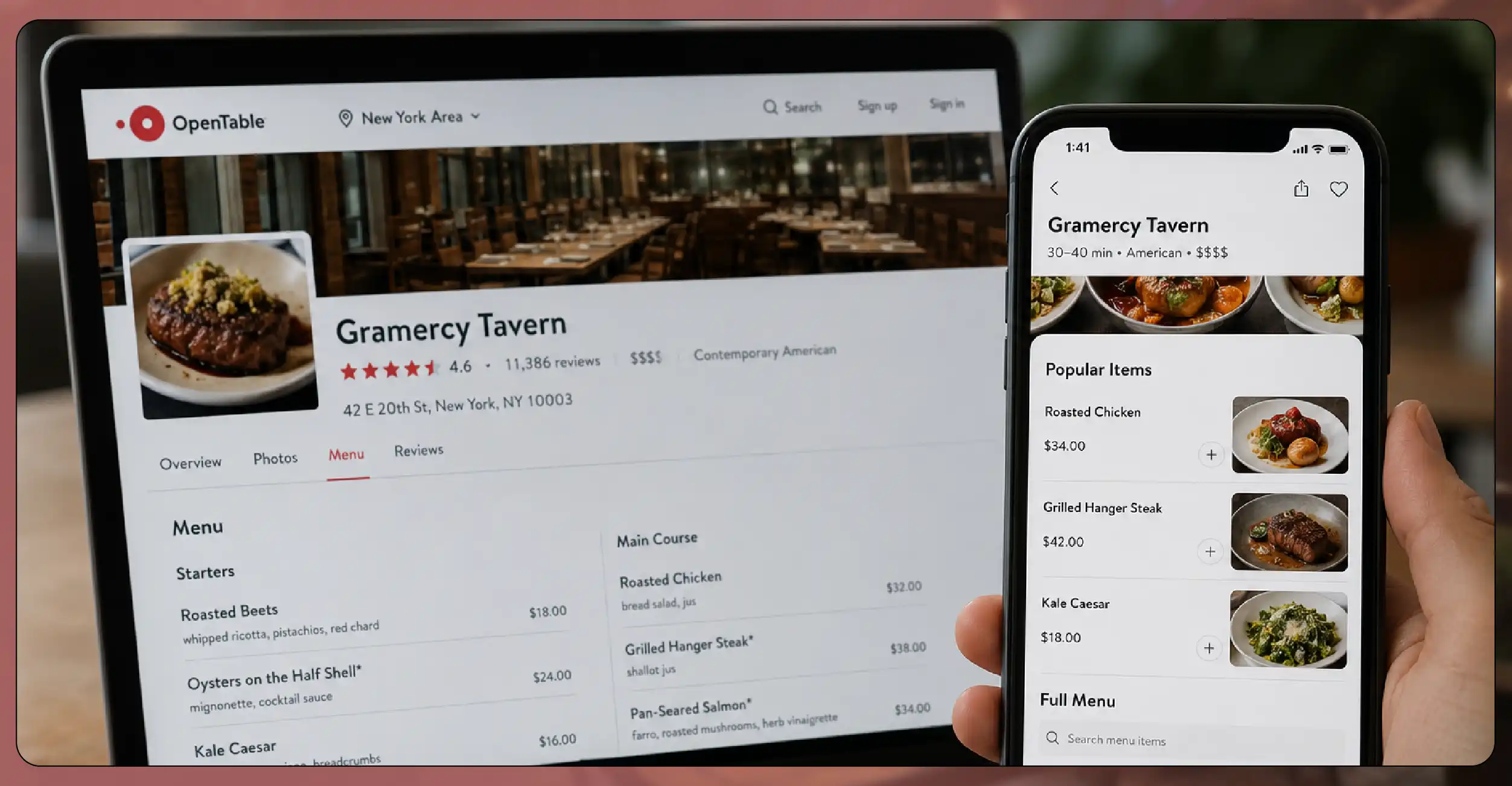
Restaurants operate across numerous digital channels simultaneously.
Menus may differ between delivery applications, reservation platforms, restaurant websites, and mobile apps.
Menu extraction allows organizations to standardize product names, categories, pricing, ingredients, portion sizes, nutritional information, availability, and promotional offers.
Businesses performing Scrape OpenTable restaurant menu and pricing data alongside delivery application monitoring gain a more comprehensive understanding of restaurant positioning across digital channels.
This integrated approach reveals inconsistencies, pricing differences, exclusive menu items, and customer targeting strategies.
Applications Across Multiple Industries
Restaurant menu datasets serve many industries beyond hospitality. Investment firms analyze restaurant expansion and pricing stability before acquisitions. Food manufacturers identify emerging cuisine trends and ingredient demand. Delivery platforms evaluate competitor pricing strategies. Market researchers monitor restaurant performance across metropolitan areas. Consultants advise restaurant chains using historical pricing intelligence. Academic researchers study consumer behavior, urban dining patterns, inflation, and business resilience. Insurance companies analyze business continuity trends. Government agencies evaluate food inflation and local economic recovery. Businesses also rely on Online Restaurant Data Extraction Services to collect accurate, structured, and scalable restaurant intelligence from multiple digital platforms. High-quality Restaurant Menu Datasets further empower technology companies to develop AI-driven recommendation engines, predictive pricing models, demand forecasting systems, and advanced analytics solutions for the evolving foodservice industry.
Advantages of Historical Restaurant Datasets
Historical restaurant data provides context that current information cannot.
Businesses identify pricing trajectories instead of isolated values.
Researchers understand how restaurant categories evolved over time.
Restaurant chains benchmark long-term pricing performance against competitors.
Market analysts observe neighborhood development patterns.
Investors evaluate restaurant resilience during economic disruptions.
Historical datasets also improve forecasting models by providing years of structured observations rather than temporary snapshots.
These insights support strategic planning across marketing, operations, expansion, and investment decisions.
Data Quality and Standardization
Restaurant information collected from multiple digital platforms often contains inconsistent formatting.
Restaurant names may vary across applications.
Menu categories differ between delivery providers.
Pricing structures include taxes, service fees, and promotional discounts.
Cuisine classifications may overlap.
Standardized data extraction cleans, validates, normalizes, and organizes these datasets into consistent formats for analytics.
Reliable datasets improve reporting accuracy, machine learning performance, and business intelligence dashboards.
Organizations can confidently compare restaurants across cities, years, and delivery platforms without manual data cleaning.
Future of Restaurant Data Intelligence
Artificial intelligence and predictive analytics increasingly depend on high-quality historical restaurant data.
Machine learning models can forecast menu pricing, estimate customer demand, recommend promotional timing, and predict restaurant expansion opportunities.
Historical OpenTable NYC data from 2018–2023 combined with food delivery datasets creates a comprehensive foundation for predictive restaurant intelligence.
Businesses leveraging these insights gain stronger competitive positioning, improved pricing decisions, better operational planning, and deeper understanding of changing consumer behavior.
How iWeb Data Scraping Can Help You?
Comprehensive Multi-Platform Collection
Our specialists collect restaurant information across delivery apps, reservation platforms, restaurant websites, and mobile applications. We deliver standardized datasets covering menus, pricing, availability, cuisines, ratings, promotions, and operational information that support analytics, competitive intelligence, forecasting, and strategic business planning with consistently high accuracy.
Historical Dataset Development
We build customized historical databases by collecting archived restaurant records, pricing histories, menu evolution, promotional timelines, and restaurant availability across multiple years. These datasets enable long-term trend analysis, inflation studies, investment research, predictive modeling, and comprehensive competitive benchmarking across markets.
Automated Data Refresh
Our automated scraping infrastructure continuously monitors restaurant changes, detecting new menu items, discontinued dishes, pricing updates, delivery fee modifications, promotional campaigns, and restaurant status changes. Businesses receive fresh structured data that reflects current market conditions with minimal manual effort.
Enterprise Data Integration
We provide datasets compatible with business intelligence platforms, analytics tools, cloud databases, CRM systems, machine learning environments, and reporting dashboards. Seamless integration allows organizations to convert raw restaurant information into actionable business insights without complicated preprocessing or formatting challenges.
Customized Industry Solutions
Every organization has unique objectives. We develop tailored extraction workflows that capture restaurant information based on geography, cuisine, delivery platform, pricing range, historical periods, or business requirements, helping organizations build specialized datasets that align perfectly with operational and research goals.
Conclusion
Restaurant intelligence has evolved beyond simply monitoring today's menu prices. Organizations increasingly require long-term historical visibility into pricing, delivery charges, promotions, reservation availability, and menu evolution to understand changing market dynamics. Historical OpenTable NYC data from 2018–2023 combined with food delivery platform intelligence creates one of the most comprehensive resources for restaurant analytics. Businesses investing in Food Menu Data Extraction Services gain access to reliable market intelligence that supports pricing optimization, competitive benchmarking, operational planning, and customer behavior analysis. Modern Food Delivery App Menu Datasets empower organizations to make faster, smarter, and data-driven decisions, while scalable Web Scraping API Services ensure continuous access to accurate restaurant information for business intelligence and predictive analytics.
FAQs
Historical pricing data helps businesses identify long-term pricing trends, inflation patterns, seasonal changes, promotional cycles, and competitive pricing strategies that support better forecasting and strategic planning.
Restaurants' names, menus, prices, delivery charges, service fees, cuisine types, ratings, reviews, availability, promotions, restaurant locations, operating hours, and menu updates can all be extracted depending on project requirements.
Historical OpenTable datasets from 2018–2023 allow businesses and researchers to analyze restaurant growth, closures, reservation trends, pricing evolution, cuisine changes, and the long-term impact of market events on the restaurant industry.
Yes. Automated scraping systems continuously monitor restaurant platforms and capture changes in pricing, menus, delivery charges, promotions, availability, and other important information at scheduled intervals.
Restaurant chains, delivery platforms, market research firms, investment companies, hospitality consultants, AI developers, food manufacturers, academic researchers, government agencies, and business intelligence teams all benefit from structured restaurant datasets and historical pricing intelligence.