
52.6K+
RETAIL PRODUCTS & STORE RECORDS ANALYZED

Utilize UK Convenience Retail Market Analysis in 2026 to drive smarter pricing, consumer insights, competitive strategies, and retail growth.
This case study highlights a real-world enterprise scenario where a retail intelligence organization leveraged advanced data extraction and analytics techniques to analyze the evolving convenience retail ecosystem in the United Kingdom. The solution focused on collecting, structuring, and analyzing large-scale retail information to improve pricing decisions, assortment planning, competitor monitoring, and consumer behavior understanding.
The project demonstrates how businesses can utilize UK Convenience Retail Market Analysis in 2026 to identify market movements, optimize retail strategies, and build stronger competitive positioning through accurate and real-time intelligence.
It is designed for:
The client’s primary challenge was the increasing complexity of the UK convenience retail landscape. With changing consumer expectations, rising operational costs, dynamic pricing strategies, and growing competition from supermarkets, quick commerce platforms, and independent stores, traditional market monitoring methods were no longer sufficient.
The organization required a structured intelligence system capable of continuously tracking product prices, store-level changes, consumer trends, and competitor movements to support faster and more accurate retail decisions.
The UK convenience retail sector experienced significant transformation in 2026 due to changing consumer purchasing patterns, inflation-driven price sensitivity, digital shopping adoption, and increased competition among retailers. The client required deeper visibility into market movements through automated data collection and advanced analytics.
The implementation of UK convenience store analytics enabled the organization to monitor retail performance indicators including product pricing, promotional activities, assortment variations, and consumer demand signals across multiple convenience store networks.
The analytics framework integrated automated data collection methods to capture real-time market information and generate actionable insights. Through advanced UK Convenience store price monitoring, the client gained visibility into competitor pricing strategies, product positioning, discount patterns, and category-level changes.
The system also enabled businesses to Scrape UK consumer shopping trends by analyzing product popularity, purchasing patterns, seasonal demand shifts, and customer preferences across convenience retail channels.
The collected data was processed, cleaned, and transformed into structured datasets containing product details, pricing information, availability status, store locations, and market indicators. Advanced analytics models helped identify emerging opportunities, optimize assortment decisions, and improve competitive responses.
The solution delivered improved market visibility, reduced manual research efforts, and enabled retail teams to make faster decisions based on accurate, continuously updated intelligence.
The client operated in a highly competitive convenience retail environment where understanding market changes quickly was essential for maintaining growth. However, existing research methods relied heavily on manual tracking, limited surveys, and delayed reporting processes.
One of the biggest challenges was understanding evolving Grocery retail trends in the UK In 2026. Consumer expectations were changing rapidly, with shoppers becoming more price-conscious while simultaneously demanding convenience, product variety, and faster purchasing options.
The client lacked a centralized system to monitor competitor pricing strategies, promotional campaigns, and assortment adjustments across different retail locations. This created difficulties in identifying pricing gaps and responding effectively to market movements.
Another major challenge was limited visibility into Convenience retail competitive intelligence. Competitors frequently changed product ranges, introduced new offers, adjusted prices, and optimized store-level strategies based on regional demand patterns.
The organization also struggled with fragmented retail information coming from multiple sources, making it difficult to compare pricing trends, identify high-performing categories, and evaluate consumer purchasing behavior.
Manual collection of store-level data was time-consuming and unable to support large-scale analysis. Retail teams needed faster access to structured insights covering:
Without an automated intelligence framework, the client faced delayed decision-making, inefficient pricing strategies, and missed opportunities in a rapidly evolving retail environment.
To overcome these challenges, the organization required a scalable retail data intelligence system capable of collecting, analyzing, and transforming complex retail information into actionable business insights.
By implementing an automated retail intelligence framework, the client replaced fragmented manual research processes with a scalable system designed to continuously capture, analyze, and interpret convenience retail market information across the UK.
The structured data pipeline enabled automated monitoring of competitor stores, product pricing, assortment changes, and consumer behavior signals. This helped retail teams move from reactive decision-making to proactive strategy development.
| Dimension | Manual Retail Tracking | Client Data Intelligence System |
|---|---|---|
| Data Collection | Manual store visits, surveys, and spreadsheet-based tracking | Automated collection from multiple retail sources and digital platforms |
| Market Visibility | Limited insights based on selected stores and periodic reviews | Continuous monitoring across wide retail ecosystems |
| Price Analysis | Slow comparison of competitor pricing changes | Automated price tracking and historical comparison |
| Product Monitoring | Difficult tracking of assortment changes | Structured product-level monitoring with category insights |
| Consumer Understanding | Dependent on delayed research reports | Real-time shopping behavior and demand analysis |
| Reporting Speed | Weekly or monthly reporting cycles | Faster intelligence generation with automated dashboards |
| Scalability | Limited coverage due to manual efforts | Large-scale monitoring across multiple regions and retailers |
The brand in focus is a retail analytics organization specializing in market intelligence, competitive analysis, and consumer behavior insights for the UK convenience retail sector.
The organization supports businesses operating in a rapidly changing retail environment where pricing decisions, product availability, and customer preferences directly influence revenue performance.
As competition increased between convenience stores, supermarkets, online grocery platforms, and quick commerce providers, the organization required deeper visibility into retail market movements.
The existing approach depended on fragmented data sources that made it difficult to identify pricing trends, understand category performance, and track competitor strategies effectively.
To overcome these limitations, the company adopted an advanced retail intelligence framework powered by automated data extraction, structured datasets, and analytical models.
The solution enabled continuous monitoring of:
By transitioning from traditional market research methods to automated intelligence systems, the organization gained faster access to reliable insights and improved its ability to support strategic retail decisions.
We delivered an end-to-end retail analytics solution that transformed scattered market information into structured business intelligence through automated extraction pipelines, data processing frameworks, and advanced analytical models.
The system collected and analyzed retail information including product names, categories, prices, discounts, availability status, promotions, store details, and regional market indicators.
The solution implemented Convenience store pricing and assortment analysis to help the client understand competitor positioning, identify pricing opportunities, and optimize product category strategies.
Advanced data processing techniques were applied to remove duplicate records, standardize product information, validate pricing changes, and maintain high-quality datasets for analysis.
The platform also integrated retail store location data scraping capabilities to analyze store presence, geographic expansion opportunities, competitor density, and regional retail performance patterns.
The intelligence framework enabled businesses to evaluate:
The final system combined automated data collection with visualization dashboards, allowing decision-makers to access actionable insights quickly and improve retail planning accuracy.
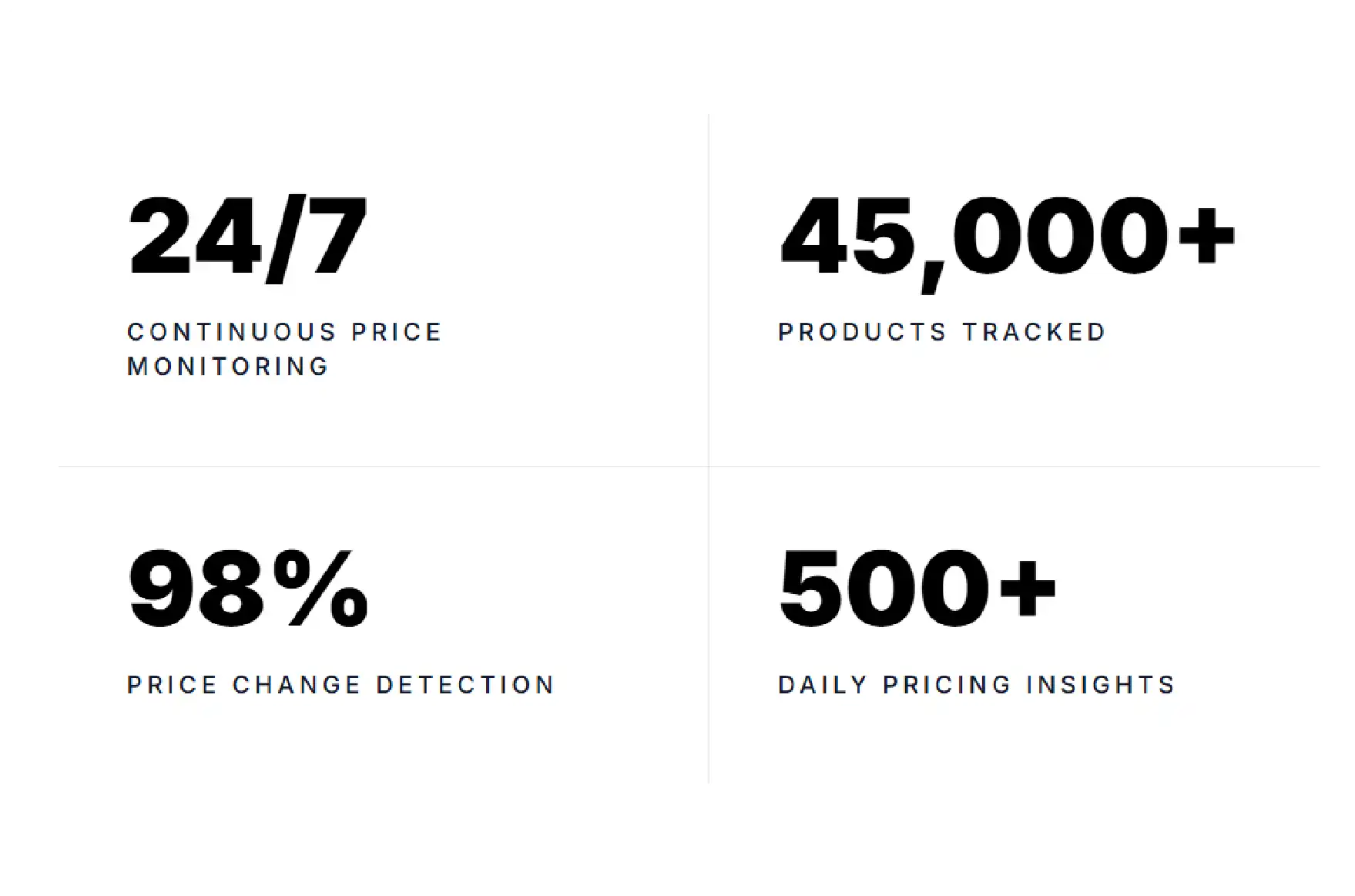
The implementation of automated retail intelligence enabled the client to gain continuous visibility into pricing movements across the UK convenience retail ecosystem.
Previously, pricing analysis depended on manual checks and periodic market reports, resulting in delayed responses to competitor price changes.
The new system continuously tracked product prices, discounts, promotions, and category-level fluctuations, allowing retail teams to identify pricing opportunities and adjust strategies faster.
This improved pricing awareness helped the organization maintain stronger competitiveness while responding effectively to changing consumer expectations.
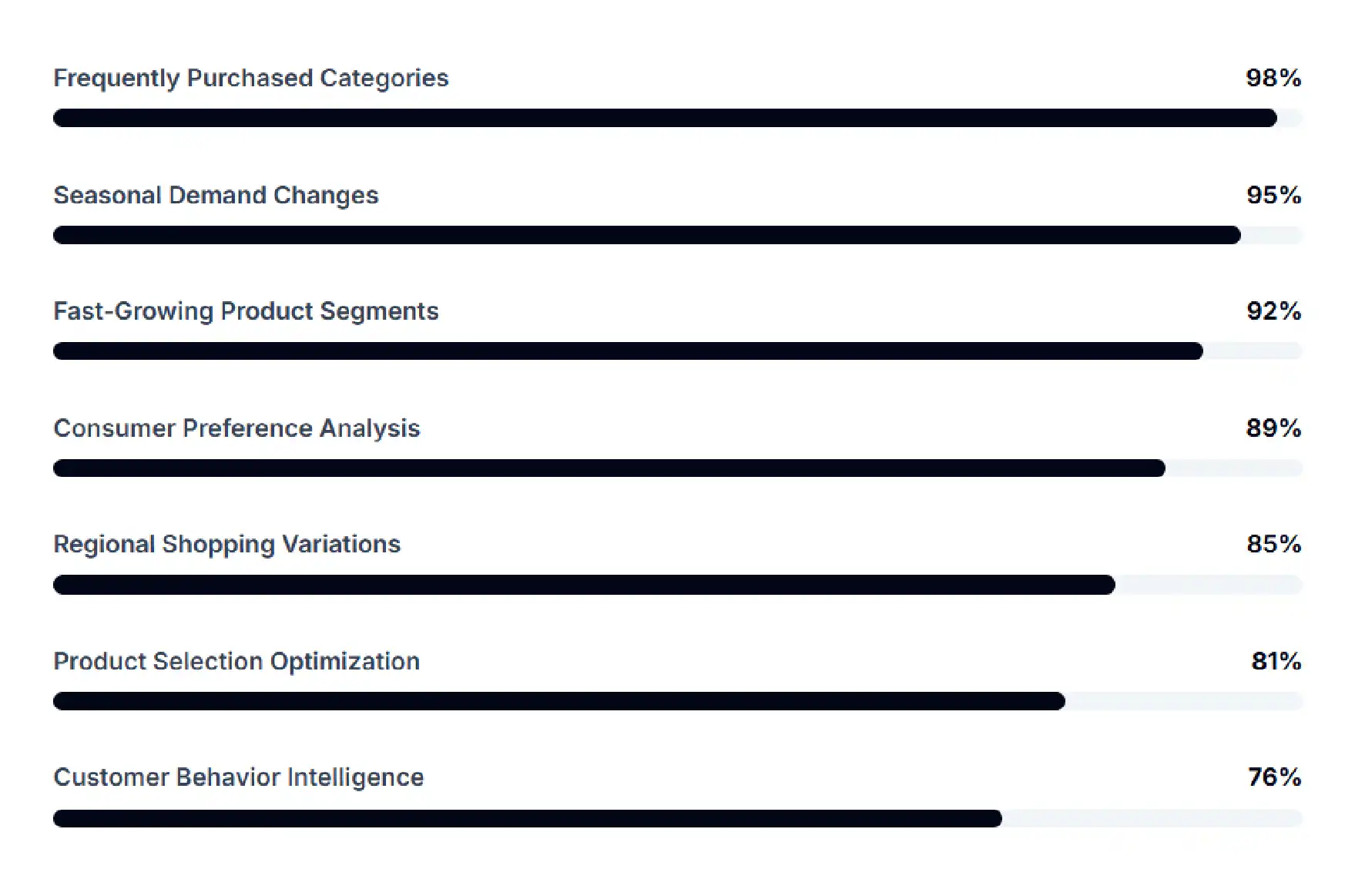
The analytics platform enabled deeper analysis of consumer purchasing patterns by monitoring product demand signals, category popularity, and shopping preferences.
The system identified:
These insights helped retailers understand how customers were adapting their buying behavior in response to economic conditions, convenience demands, and changing lifestyle patterns.
The organization used these insights to optimize product selection and improve customer-focused retail strategies.
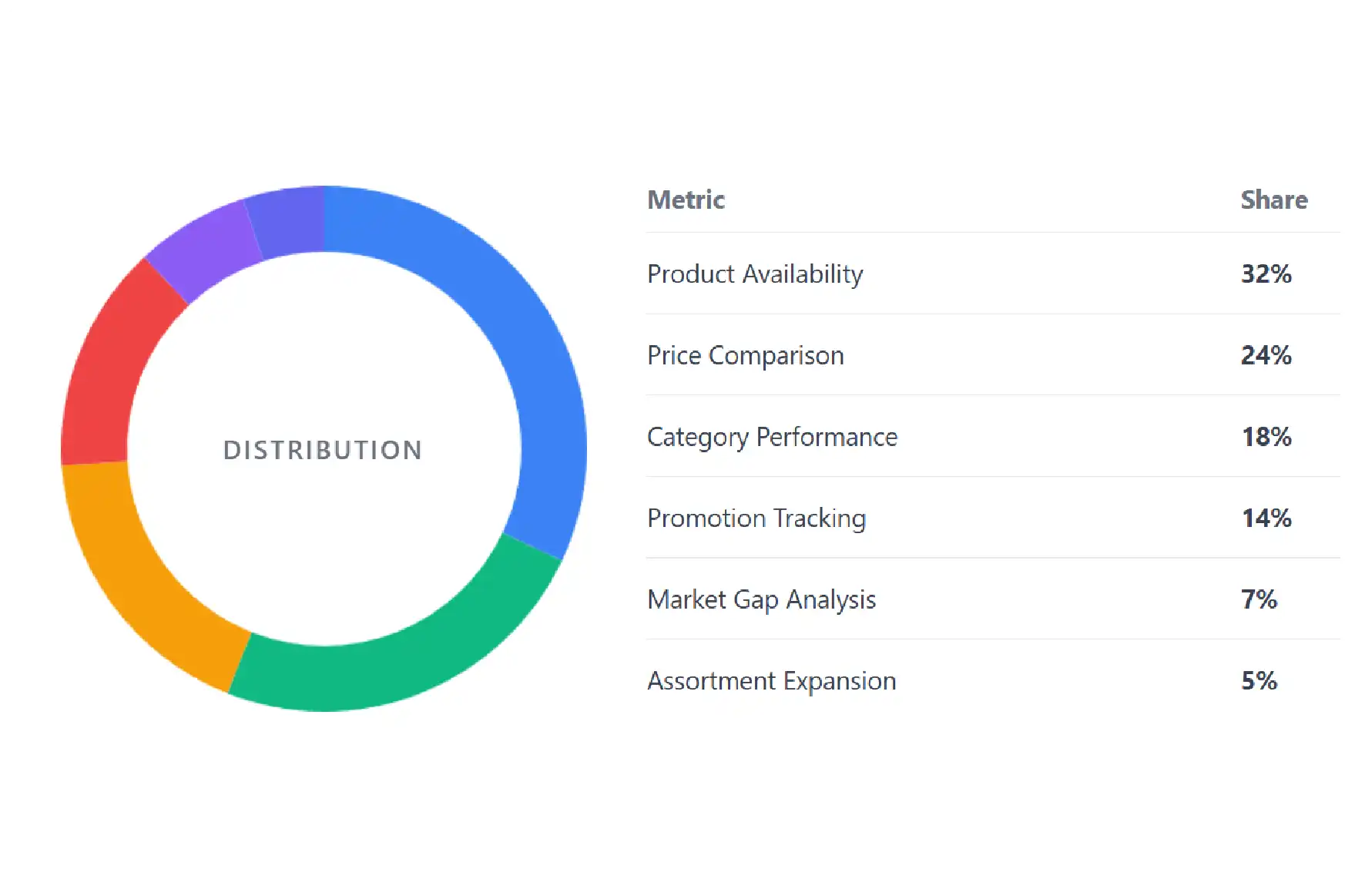
The structured dataset allowed the client to analyze competitor assortment strategies across different convenience retail environments.
The system tracked product availability, category distribution, pricing differences, and promotional activities to identify competitive advantages and market gaps.
| Metric | Insight Captured | Business Impact |
|---|---|---|
| Product Availability | Stock presence across retailers | Improved assortment planning |
| Price Comparison | Competitor price variations | Better pricing decisions |
| Category Performance | Product demand patterns | Optimized product mix |
| Promotion Tracking | Discount and offer activity | Improved promotional strategies |
The analysis helped retail teams identify opportunities for expanding product categories and improving customer satisfaction.
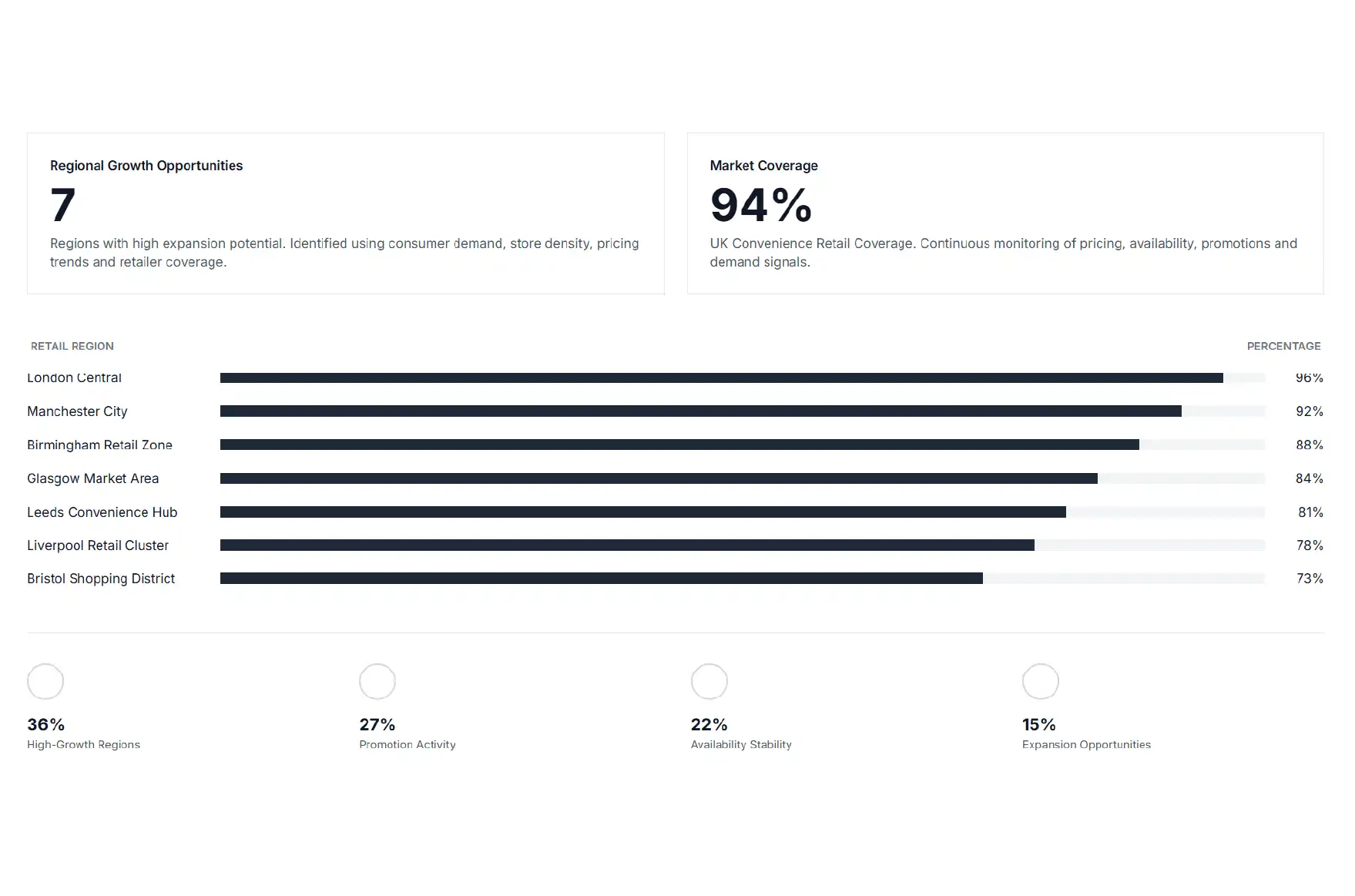
The integration of geographic retail intelligence helped the client evaluate store-level opportunities and understand competitive density across different UK regions.
By analyzing store locations, retail presence, and market coverage, the system provided insights into:
This allowed the organization to make more informed decisions regarding store planning, regional targeting, and market development strategies.
The dataset snapshot represents convenience retail performance insights collected across different UK retail locations. It highlights product categories, pricing movements, promotional activity, availability trends, and consumer demand indicators.
The dataset enabled detailed analysis of:
| Retailer Location | Retail Category | Product Type | Brand Segment | Average Price | Price Change | Promotion Activity | Availability Status | Consumer Demand Signal | Market Insight |
|---|---|---|---|---|---|---|---|---|---|
| London Central | Beverages | Energy Drinks | Premium Brands | £1.89 | +3.2% | Multi-buy Offer | High | Rising Demand | Increased demand among younger urban consumers |
| Manchester City | Grocery Essentials | Dairy Products | Everyday Value | £2.45 | -1.8% | Weekly Discount | Medium | Stable Demand | Competitive pricing required to maintain volume |
| Birmingham Retail Zone | Snacks & Confectionery | Packaged Snacks | Popular Brands | £1.25 | +2.5% | Limited-Time Promotion | High | Increasing Interest | Growing preference for convenient snack options |
| Glasgow Market Area | Household Products | Cleaning Supplies | Mass Market | £3.10 | +1.1% | Bundle Promotion | Medium | Seasonal Growth | Demand influenced by household purchase cycles |
| Leeds Convenience Hub | Fresh Foods | Ready-to-Eat Meals | Premium Convenience | £4.50 | +4.6% | New Product Launch | High | Strong Growth | Consumers showing higher adoption of quick meal solutions |
| Liverpool Retail Cluster | Bakery Products | Bread & Bakery Items | Local & National Brands | £1.65 | -0.9% | Price Match Offer | High | Consistent Demand | Stable category with strong repeat purchases |
| Bristol Shopping District | Health & Wellness | Organic Products | Premium Segment | £5.20 | +5.3% | Loyalty Discount | Medium | Emerging Demand | Increasing interest in healthier alternatives |
By continuously updating these datasets, the client achieved better visibility into market changes and improved the accuracy of retail forecasting models.
After implementing structured convenience retail intelligence through automated data collection and analytics, the client achieved significant improvements in pricing visibility, competitive monitoring, consumer understanding, and operational efficiency.
The solution transformed fragmented retail information into actionable insights, allowing teams to make faster decisions and respond effectively to changing market conditions.
Our retail intelligence approach enables businesses to transform complex market information into structured datasets that support faster and more accurate decision-making.
We provide automated data collection frameworks that consolidate retail information from multiple sources into a unified intelligence system, eliminating fragmented research processes and improving data consistency.
The solution helps businesses monitor pricing movements, competitor strategies, product availability, and consumer trends through continuous data analysis.
With advanced validation and cleaning processes, we ensure collected information remains accurate, reliable, and ready for analytical applications. Duplicate records, outdated information, and inconsistent product details are automatically identified and processed to maintain high-quality datasets.
Our scalable architecture supports growing retail data requirements, allowing businesses to analyze increasing volumes of product, pricing, and location information without performance limitations.
The system also enables predictive insights by identifying patterns in consumer demand, pricing behavior, and market movements, helping organizations improve forecasting and strategic planning.
Through customized retail intelligence solutions, businesses gain stronger visibility into competitive landscapes and can make evidence-based decisions with greater confidence.
We are extremely satisfied with the retail intelligence solution delivered by the team. The platform transformed the way we analyze convenience retail markets by providing accurate, structured, and timely insights.
The automated data collection system significantly reduced our manual research efforts and improved our understanding of competitor pricing, product availability, and consumer behavior patterns.
The dashboards and analytics capabilities provided our teams with better visibility into market movements and helped us make faster strategic decisions.
The accuracy, scalability, and reliability of the solution exceeded our expectations and created a strong foundation for future retail analytics initiatives.
We now operate with improved market awareness, faster reporting capabilities, and stronger competitive positioning across the UK convenience retail landscape.
— Head of Retail Analytics
The final outcome of the project was a fully automated and scalable retail intelligence ecosystem that transformed complex convenience retail information into structured business insights.
The client achieved improved visibility into pricing trends, competitor activities, consumer behavior patterns, and regional market opportunities through continuous data monitoring and analytics.
Implementation of Price Monitoring Services enabled the organization to track competitor pricing movements, identify market changes, and optimize pricing strategies with greater accuracy.
The integration of Web Scraping API Services provided seamless access to continuously updated retail datasets, supporting real-time analytics and faster decision-making across business operations.
Deployment of Web Scraping Services further enhanced the scalability of the intelligence framework, allowing the system to process growing volumes of retail data while maintaining accuracy, speed, and reliability.
The solution improved operational efficiency by reducing manual data collection efforts, increasing reporting speed, and enabling advanced retail forecasting capabilities.
Overall, the project delivered measurable business value by helping the client build a stronger understanding of the UK convenience retail market, improve competitive positioning, and establish a foundation for future data-driven growth.
UK convenience retail market analysis involves collecting and analyzing retail data to understand pricing trends, consumer behavior, product performance, competitor strategies, and market opportunities across convenience stores in the United Kingdom.
Retail data scraping helps businesses automatically collect product prices, availability information, store details, and competitor data. This enables faster analysis, improved pricing decisions, and better understanding of market movements.
Yes, automated systems can continuously monitor competitor pricing, promotions, discounts, and assortment changes across multiple convenience retailers, helping businesses maintain competitive pricing strategies.
Retail location intelligence helps organizations analyze store distribution, competitor presence, regional demand patterns, and expansion opportunities for better location planning and market development.
Yes, the solution architecture is designed to handle large-scale retail datasets efficiently. It can process increasing volumes of product, pricing, and location information while maintaining accuracy and performance.
Leverage advanced data intelligence solutions to analyze UK convenience retail trends, monitor competitors, and make smarter business decisions with accurate, real-time market data. Connect with us to transform retail data into actionable growth strategies.
Start a projectFields marked * are required. Everything else just helps us scope faster — skip what you don't know yet.