How Can Zepto Cleaning Aid Product Data Scraping Improve Retail Intelligence?
Introduction
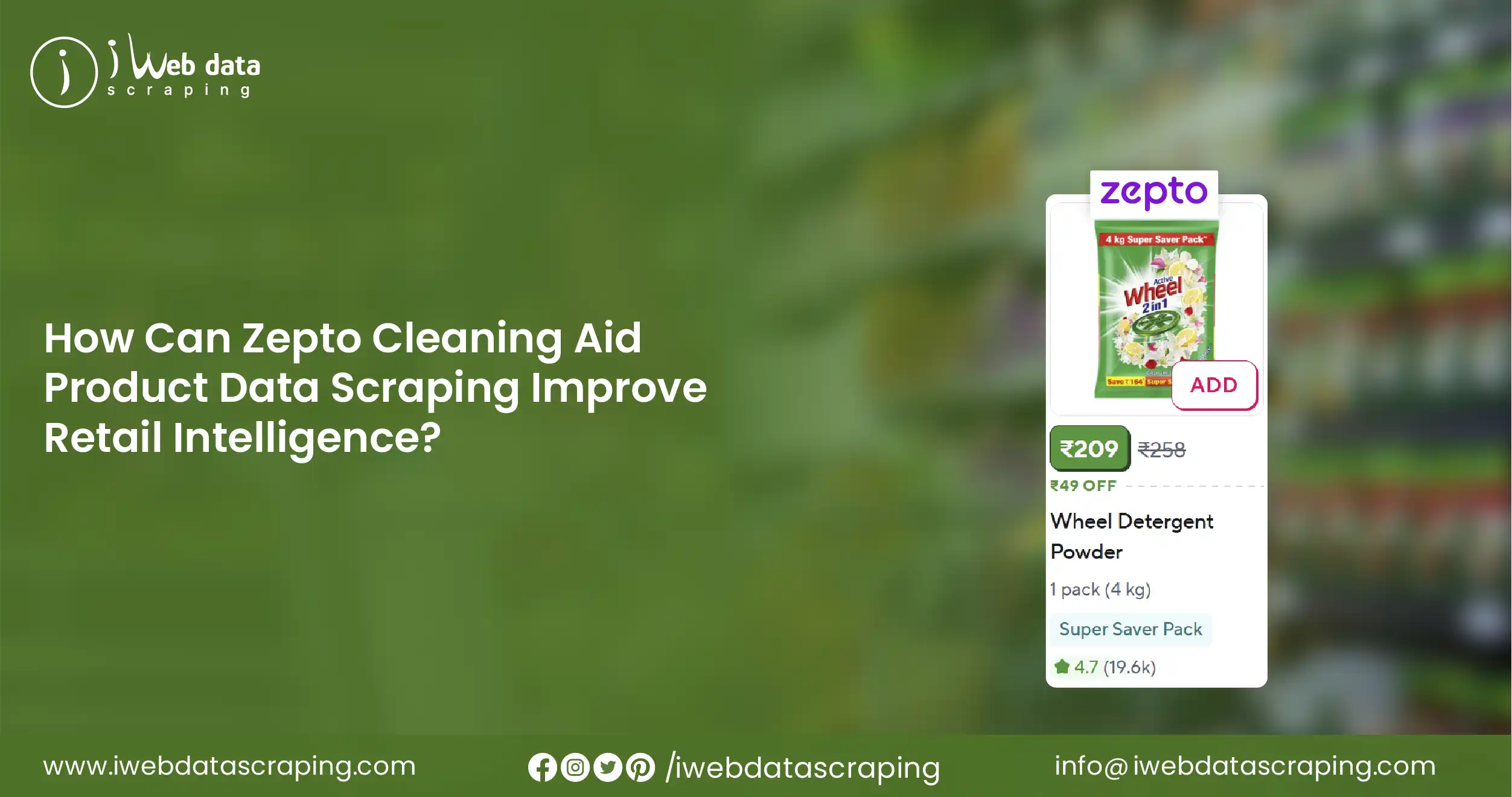
The rapid growth of quick commerce has transformed the way consumers purchase household essentials. Within minutes, customers can order floor cleaners, detergents, toilet cleaners, disinfectants, dishwashing liquids, wipes, and numerous other cleaning products from their preferred platforms. This accelerated buying behavior generates a continuous stream of valuable pricing, inventory, assortment, and promotional information that businesses can leverage for strategic decision-making. Zepto Cleaning Aid Product Data Scraping enables companies to collect this information at scale and convert it into meaningful business intelligence.
Organizations looking to Scrape cleaning aid product listings on Zepto gain access to dynamic product catalogs, promotional campaigns, stock availability, package sizes, customer preferences, and regional pricing variations. Combined with Delhi cleaning aids price analysis From Zepto, this information provides retailers, manufacturers, wholesalers, distributors, and analytics firms with a clearer understanding of one of India's fastest-growing grocery delivery ecosystems.
Why Cleaning Aid Data Matters More Than Ever?
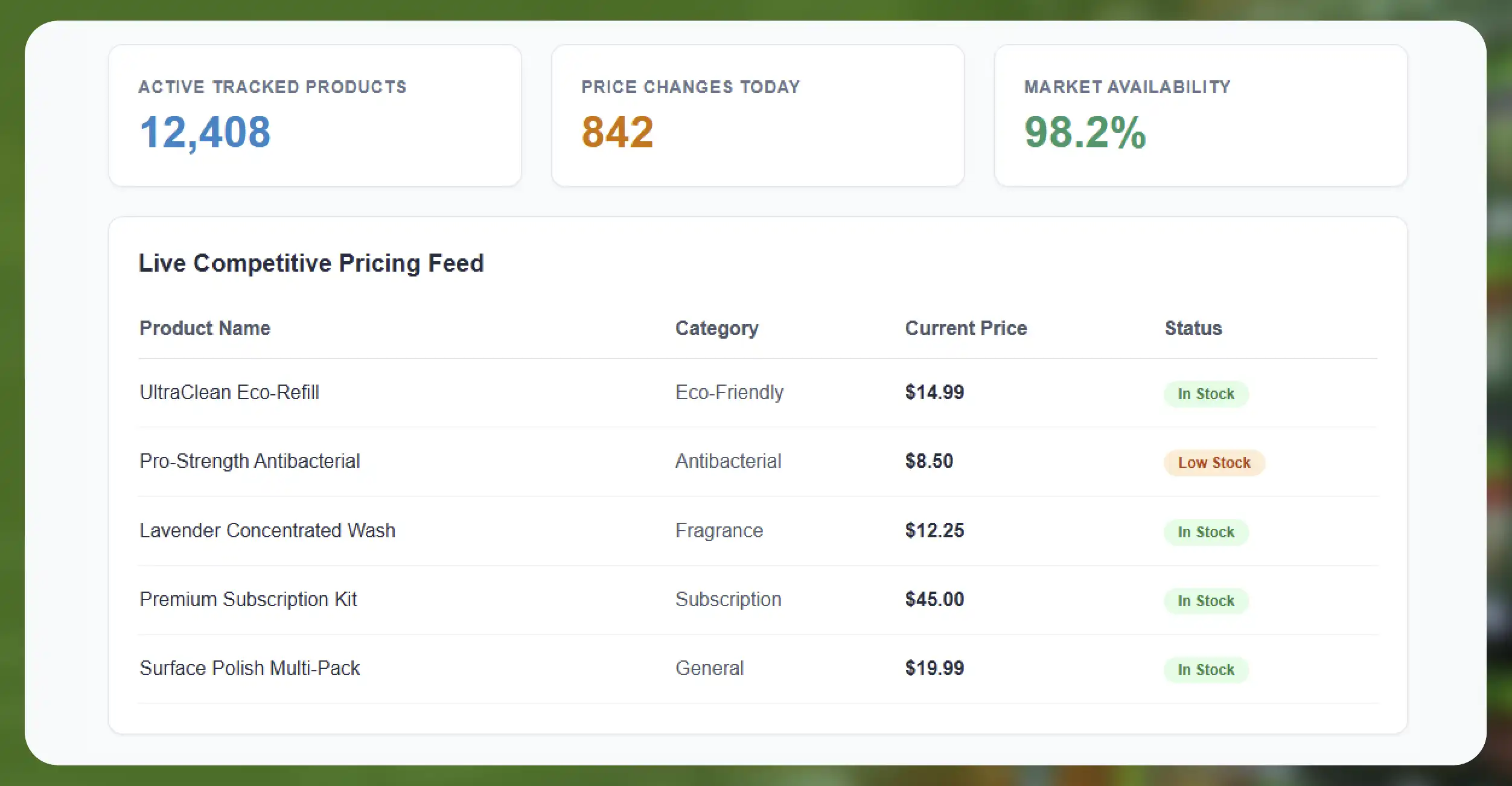
Cleaning products have evolved beyond simple household necessities. Consumers now compare eco-friendly ingredients, antibacterial properties, fragrances, refill packs, premium brands, concentrated formulas, and subscription offers before making purchasing decisions.
This evolution has created an increasingly competitive marketplace where pricing and product availability change multiple times throughout the day. Businesses that rely solely on manual monitoring often fail to capture these rapid fluctuations.
Automated data collection fills this gap by continuously gathering marketplace intelligence from thousands of product pages without manual intervention.
The result is a reliable database that reflects actual market activity instead of periodic observations.
The Growing Complexity of Quick Commerce
Quick commerce platforms operate differently from conventional eCommerce marketplaces. Product availability depends heavily on micro-warehouses, neighborhood demand, inventory movement, and delivery radius.
As a result, two customers located only a few kilometers apart may encounter different prices, discounts, available brands, and delivery estimates.
Capturing these localized differences requires intelligent data collection strategies capable of monitoring multiple regions simultaneously.
Instead of isolated snapshots, businesses receive a living dataset that evolves with market conditions.
Valuable Information Extracted from Cleaning Product Listings
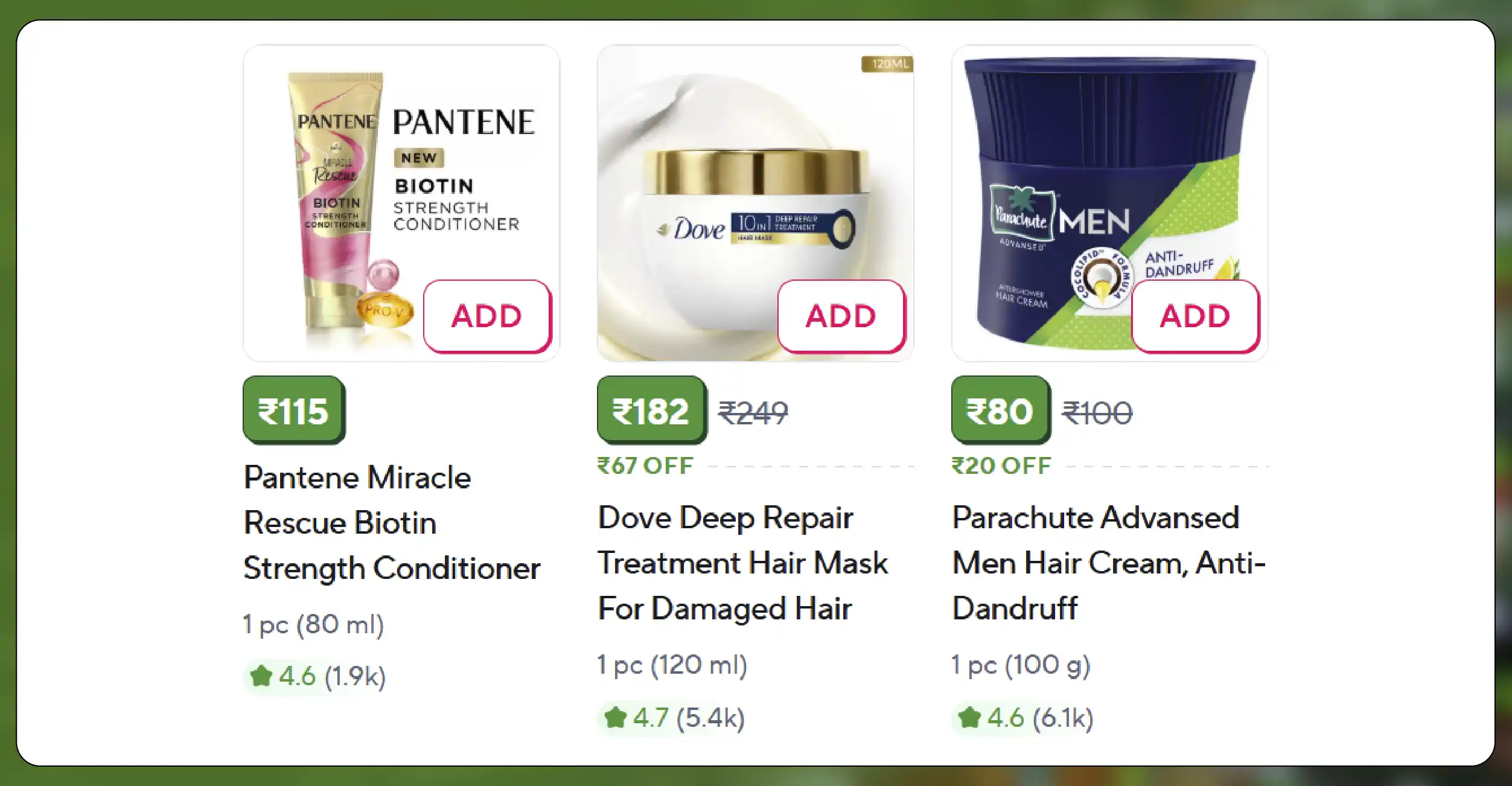
A comprehensive scraping solution can collect numerous attributes from every listed product, including:
- Product title
- Brand
- Category
- Package size
- Unit measurements
- Current price
- Original price
- Discount percentage
- Product images
- Product descriptions
- Availability status
- Delivery estimates
- Product ratings
- Review count
- Promotional labels
- Product variants
Together, these attributes provide an extensive view of how products compete within the marketplace.
Understanding Consumer Demand Through Product Availability
One of the strongest indicators of customer demand is inventory movement.
When certain products repeatedly become unavailable during weekends or festive periods, businesses can identify demand spikes without relying exclusively on sales data.
This makes Zepto cleaning product availability tracking an effective method for understanding purchasing behavior across neighborhoods and cities.
Manufacturers can optimize production planning while distributors improve inventory allocation based on observed trends.
Regional Intelligence Creates Competitive Advantages
Local markets behave differently despite belonging to the same metropolitan region.
Premium disinfectants may dominate affluent neighborhoods, while economical detergent packs perform better in price-sensitive areas.
This regional visibility allows companies to customize pricing strategies, optimize product assortment, and improve distribution planning.
Location-based intelligence becomes especially valuable when entering new markets or expanding warehouse networks.
Pricing Intelligence Beyond Simple Comparisons
Most companies focus only on comparing prices.
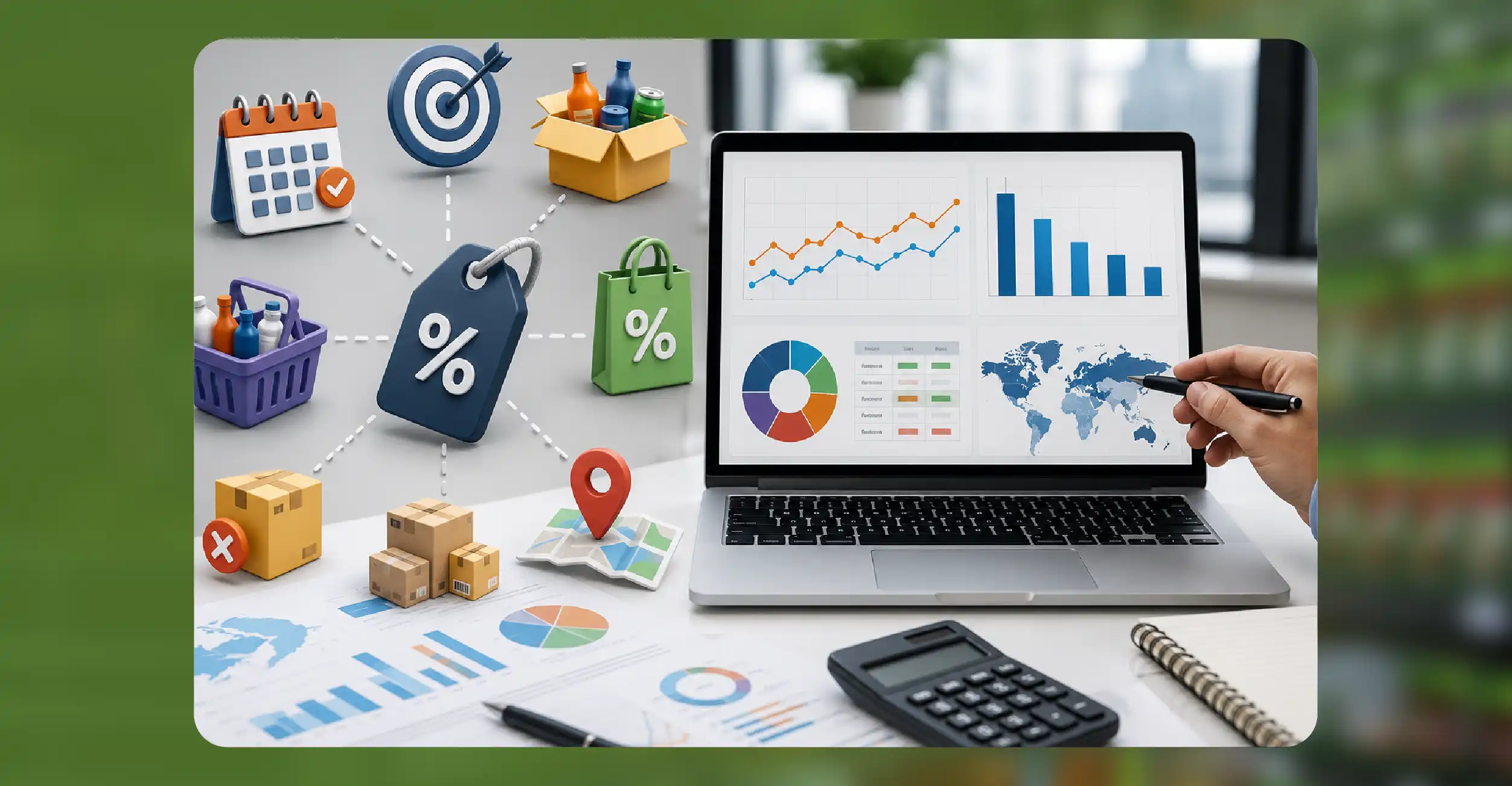
However, effective pricing intelligence involves understanding multiple influencing factors simultaneously.
These include:
- Promotional timing
- Brand positioning
- Bundle offers
- Seasonal discounts
- Inventory shortages
- Package size changes
- Regional price differences
Instead of reacting to isolated price changes, businesses understand the complete commercial context.
Monitoring Brand Performance
Every manufacturer wants answers to practical questions.
- How frequently does a competitor launch discounts?
- Which SKUs remain consistently available?
- Which products disappear quickly after promotions?
- Which brands dominate premium cleaning categories?
Automated monitoring delivers these insights continuously rather than requiring manual research every week.
Marketing teams gain a more accurate picture of competitive positioning across multiple product categories.
Ready to make smarter business decisions with reliable marketplace intelligence? Contact our experts today to access customized data collection solutions that deliver accurate, real-time insights for pricing optimization, inventory monitoring, competitor analysis, and informed market research.
Measuring Promotional Effectiveness
Quick commerce platforms frequently launch campaigns involving percentage discounts, flat-price offers, cashback incentives, bundled packs, or limited-time promotions.
Historical datasets allow businesses to evaluate:
- Promotion duration
- Average discount depth
- Brand participation
- Frequency of campaigns
- Price recovery after promotions
These insights support more profitable promotional planning for manufacturers and retailers alike.
Category Expansion Opportunities
Cleaning products now include numerous specialized categories such as:
- Kitchen cleaners
- Bathroom disinfectants
- Glass cleaners
- Furniture polish
- Laundry detergents
- Fabric conditioners
- Floor cleaners
- Toilet cleaners
- Multipurpose sprays
- Handwash refills
Businesses can identify emerging categories by monitoring product introductions and assortment expansion across various locations.
This enables faster response to changing customer preferences.
Demand Forecasting with Historical Intelligence
Historical datasets often reveal recurring purchasing patterns.
For example, cleaning products typically experience increased demand before festivals, during monsoon seasons, and following public health awareness campaigns.
Long-term datasets support forecasting models that improve procurement planning and warehouse optimization.
Historical intelligence often proves more valuable than isolated daily reports because it highlights recurring market cycles.
Supporting FMCG Manufacturers
Manufacturers benefit from continuous marketplace visibility throughout the product lifecycle.
Instead of waiting for distributor reports, they observe market activity almost instantly.
They can evaluate:
- Shelf visibility
- Competitive assortment
- Pricing consistency
- Availability trends
- Product launches
- Promotion frequency
- Regional performance
These insights contribute to stronger retail partnerships and improved sales planning.
Market Intelligence for Retail Consultants
Consulting firms increasingly depend on marketplace intelligence to guide retailers, FMCG manufacturers, and consumer goods companies with evidence-based strategies rather than assumptions. Instead of conducting expensive and time-consuming manual store audits, consultants can analyze continuously refreshed datasets that accurately reflect real-time pricing, inventory, promotions, and assortment changes across multiple locations. Quick Commerce & FMCG Data Extraction Services provide reliable, structured information that enhances research quality, uncovers emerging market trends, and supports competitive benchmarking with greater efficiency. Additionally, Quick Commerce Datasets enable deeper forecasting, regional demand analysis, performance tracking, and strategic decision-making while significantly reducing operational costs and improving the overall accuracy of market research and business recommendations.
Data Standardization Improves Analytics
Raw marketplace information frequently includes inconsistent product names, duplicate entries, varying unit formats, incomplete descriptions, and different pricing structures that make analysis difficult. Businesses often struggle to generate meaningful insights when data lacks consistency across multiple locations and categories. Delhi Cleaning Aids Market Analysis Using Zepto Data helps create standardized datasets that accurately reflect regional pricing, assortment, and inventory trends for informed business decisions.
By leveraging Extract Zepto data API, organizations can automate data collection, eliminate manual errors, and ensure continuous access to structured marketplace intelligence. Advanced processing techniques validate, cleanse, and normalize collected records before delivery. Zepto Quick commerce Grocery Price Data Scraping further supports seamless integration with business intelligence dashboards, forecasting tools, ERP platforms, and analytical systems, allowing companies to focus on strategic planning instead of time-consuming data preparation.
Real-Time Dashboards for Business Teams
Modern business intelligence platforms integrate scraped datasets into live dashboards.
Executives can monitor:
- Current pricing
- Regional inventory
- Brand rankings
- Category growth
- Promotion activity
- Product additions
- Inventory shortages
Instead of static spreadsheets, decision-makers gain continuously updated visual reports.
How iWeb Data Scraping Can Help You?
Real-Time Marketplace Monitoring
Our specialists collect continuously updated marketplace information, enabling businesses to monitor changing prices, promotions, inventory levels, regional assortment, and competitive movements without manual effort, improving faster commercial decisions across operations.
Customized Data Collection
Every organization has unique analytical objectives. We build tailored extraction workflows that gather only relevant information, ensuring datasets align perfectly with reporting requirements, forecasting models, pricing analysis, and research initiatives.
Enterprise-Ready Structured Data
Collected information is cleaned, standardized, validated, and formatted into business-ready datasets suitable for dashboards, ERP systems, machine learning models, business intelligence platforms, and enterprise reporting environments with minimal processing.
Scalable Multi-Location Intelligence
Whether monitoring one city or nationwide operations, our infrastructure efficiently captures localized marketplace differences, helping businesses compare regional pricing, assortment, inventory behavior, and promotional strategies at significant operational scale.
Flexible Delivery and Integration
We deliver datasets through multiple formats, automated schedules, secure cloud storage, APIs, and customized workflows, ensuring organizations receive reliable information exactly where their internal systems require it.
Conclusion
The future of retail intelligence belongs to businesses capable of converting marketplace activity into measurable insights. Quick commerce platforms generate enormous volumes of commercial information every hour, creating valuable opportunities for retailers, manufacturers, distributors, analysts, and technology providers. By leveraging Zepto Quick Commerce Datasets, organizations gain a comprehensive understanding of evolving customer preferences, pricing dynamics, inventory movement, and regional demand. Combined with advanced Web Scraping Services, businesses can build smarter forecasting models, optimize pricing strategies, and improve operational efficiency.
Scalable Web Scraping API Services further enable seamless data integration, automated intelligence, and faster decision-making, helping organizations strengthen their competitive position in India's rapidly expanding quick commerce ecosystem.
Experience top-notch web scraping service and mobile app scraping solutions with iWeb Data Scraping. Our skilled team excels in extracting various data sets, including retail store locations and beyond. Connect with us today to learn how our customized services can address your unique project needs, delivering the highest efficiency and dependability for all your data requirements.