

Introduction
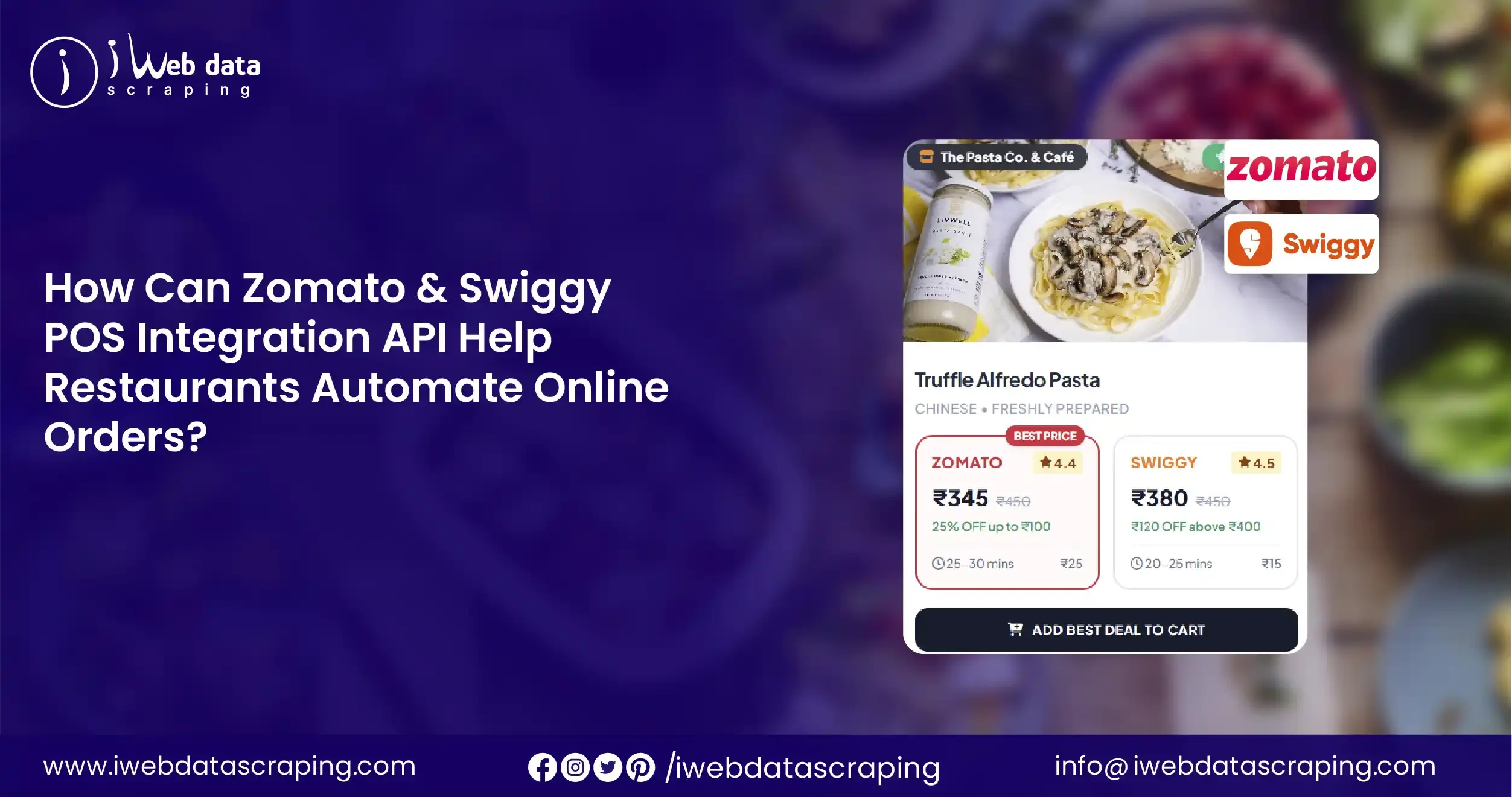
The growth of online food ordering has transformed restaurant operations, making seamless technology integration essential for improving speed, accuracy, and customer satisfaction. Restaurants managing orders from multiple food delivery platforms need automated systems that reduce manual efforts and centralize operations. Zomato & Swiggy POS integration API enables restaurants to connect their point-of-sale systems with leading food delivery platforms, allowing real-time order synchronization, menu updates, and operational efficiency.
Modern restaurants are increasingly adopting automation solutions to handle increasing order volumes from multiple channels. A connected POS system helps staff avoid manually entering online orders, reducing errors and improving order processing speed. Zomato POS integration API allows restaurants to directly receive customer orders from Zomato into their existing POS software without depending on separate tablets or manual workflows.
Similarly, restaurants can streamline their Swiggy operations through automated connectivity. Swiggy POS API integration helps businesses synchronize incoming orders, update availability, manage menus, and improve communication between delivery platforms and restaurant systems.
Understanding POS Integration APIs for Food Delivery Platforms
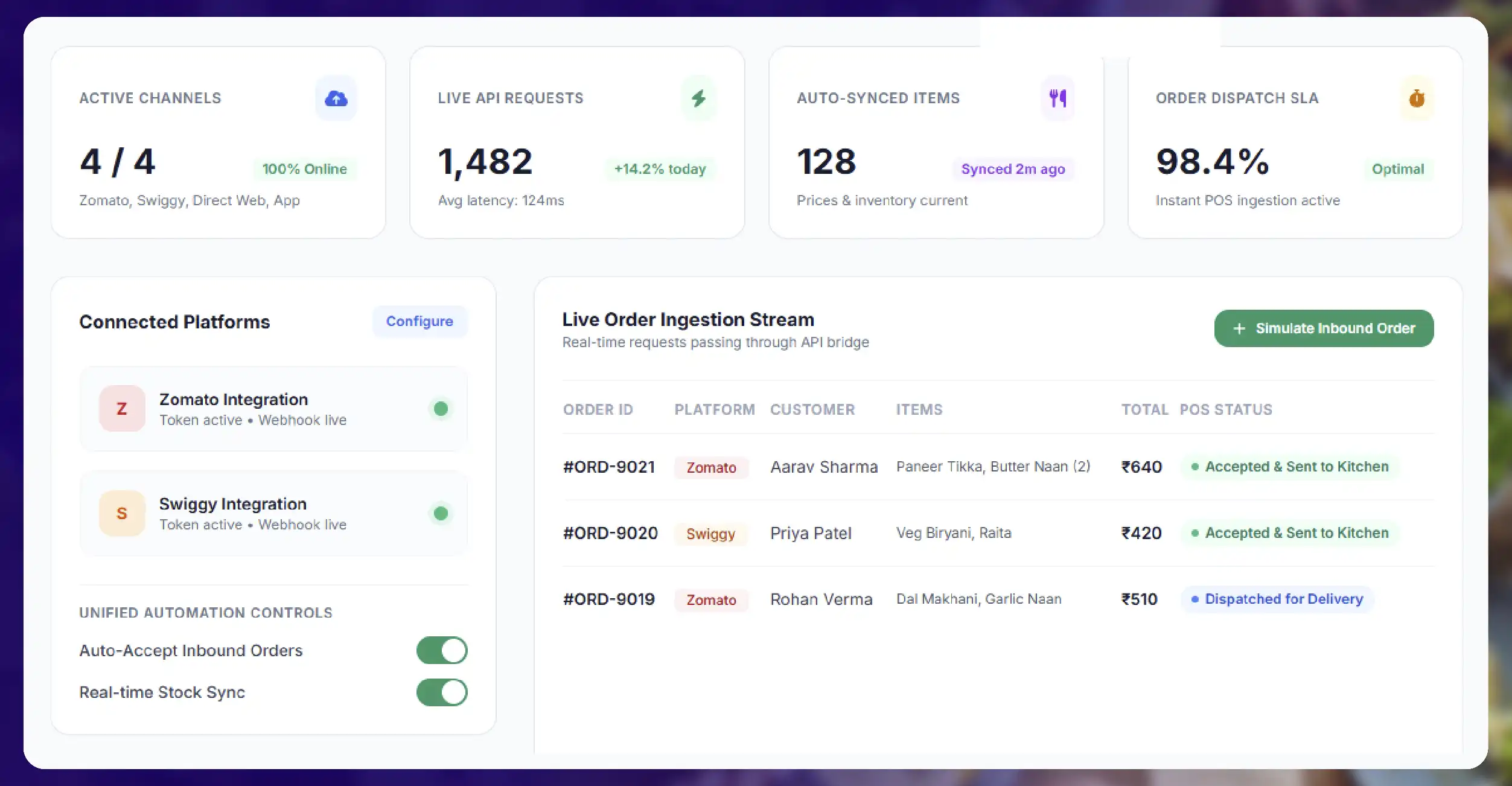
A POS integration API acts as a communication bridge between restaurant management software and online ordering platforms. Instead of managing multiple applications separately, restaurants can connect their internal systems with external food delivery marketplaces.
A reliable food delivery POS integration API allows restaurants to automate several important processes, including order acceptance, menu synchronization, pricing updates, inventory tracking, and customer information management.
When restaurants decide to Integrate Zomato and Swiggy with restaurant POS, they create a unified ecosystem where online orders directly flow into their operational system. This eliminates repetitive tasks and allows employees to focus more on food preparation and customer service.
POS integration APIs work by exchanging structured data between platforms. When a customer places an order through a food delivery application, the API transfers order details to the restaurant POS system. After preparation, order status updates are automatically shared back with the delivery platform.
Key Features of Zomato and Swiggy POS Integration
Restaurant technology providers design POS integration solutions with multiple features that improve efficiency. One major advantage is real-time order management. Restaurants receive orders instantly without manually checking different applications.
Another important capability is automated menu synchronization. If a restaurant changes prices, adds new dishes, or removes unavailable items, updates can be reflected across connected platforms. This prevents customer dissatisfaction caused by outdated menus.
Inventory management is another critical benefit. Restaurants can monitor item availability and prevent accepting orders for unavailable products. This improves operational accuracy and reduces cancellations.
Advanced systems also support Restaurant order management API integration, enabling restaurants to manage online and offline orders through one centralized platform. This creates better visibility into sales performance, customer preferences, and operational trends.
Benefits of Multi-Platform Restaurant POS Connectivity
Restaurants operating multiple locations face additional challenges in maintaining consistent operations. A centralized integration system helps businesses manage different branches, menus, and order channels efficiently.
With Multi-outlet POS integration with Zomato and Swiggy, restaurant chains can monitor performance across locations, update menus centrally, and maintain standardized operations. This is especially useful for franchises and growing food businesses.
POS integration also improves reporting capabilities. Restaurants can analyze order volumes, peak ordering hours, popular dishes, and customer trends. These insights support better decision-making related to marketing campaigns, inventory planning, and menu optimization.
Automation also reduces employee workload. Staff members no longer need to switch between multiple devices or manually transfer order details. This improves productivity and minimizes human errors.
Role of Food Delivery Data in Restaurant Technology
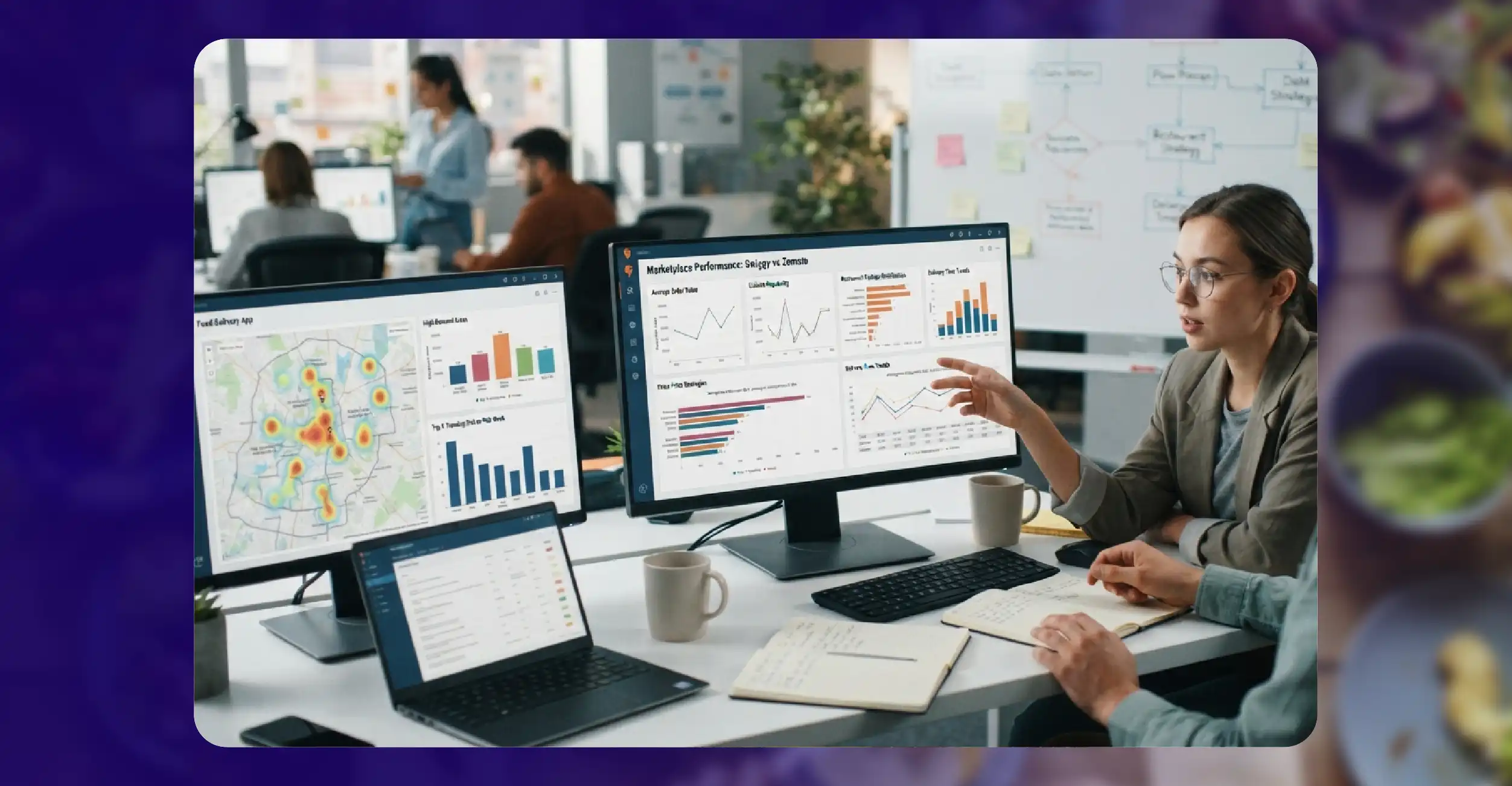
Restaurant technology companies require accurate marketplace information to build better integration solutions. Data related to menus, pricing, availability, ratings, and restaurant performance helps businesses understand market conditions.
Businesses often analyze Swiggy Food Delivery App Datasets to understand menu structures, category trends, pricing strategies, and customer preferences across different regions.
Similarly, Zomato Food Delivery App Datasets provide valuable insights into restaurant listings, cuisine popularity, promotional trends, and competitive positioning.
Food businesses can use marketplace intelligence to improve their own operations. Understanding competitor pricing, menu changes, and customer demand helps restaurants develop stronger strategies.
Importance of Restaurant Data Extraction for POS Solutions
Accurate food delivery data supports businesses that want to improve automation and decision-making. Data extraction solutions help collect structured information from food delivery platforms for analysis and integration purposes.
Companies offering Zomato Food Data Extraction Services help businesses gather restaurant information, menu details, prices, ratings, and availability data that can support market research and operational planning.
Similarly, Swiggy Food Data Extraction Services provide structured marketplace insights that help restaurants and technology providers understand food delivery trends.
Menu intelligence is another important area where data extraction plays a role. Businesses use Food Menu Data Extraction Services to analyze dish names, categories, pricing patterns, and promotional changes across different platforms.
How APIs Improve Restaurant Customer Experience?
Customer expectations in food delivery are continuously increasing. Faster confirmations, accurate availability information, and reliable delivery updates directly influence customer satisfaction.
POS integrations help restaurants process orders faster because information moves automatically between systems. Customers receive quicker confirmations, and restaurants can maintain better communication with delivery partners.
Automated menu management also improves customer experience. When customers view updated menus with accurate prices and availability, they are more likely to complete their purchases.
Security and Scalability Considerations
Restaurants choosing POS integration solutions should focus on security, reliability, and scalability. APIs should use secure authentication methods to protect business and customer information.
Scalable systems are important because restaurant order volumes can increase during weekends, holidays, and promotional campaigns. A strong integration framework should handle high transaction volumes without performance issues.
Businesses should also select solutions that support future expansion. As restaurants add new locations or integrate additional delivery channels, flexible API architecture becomes essential.
Future Trends in Restaurant POS Integration
The future of restaurant technology will focus on automation, artificial intelligence, and real-time analytics. POS systems will become more intelligent by predicting demand, optimizing inventory, and recommending menu adjustments.
AI-powered restaurant platforms will analyze customer behavior and provide insights that improve revenue opportunities. Integration between delivery platforms, payment systems, kitchen management tools, and analytics platforms will continue growing.
Restaurants that adopt connected technology will gain advantages through improved efficiency, better customer experiences, and stronger operational control.
How iWeb Data Scraping Can Help You?
Accurate Marketplace Data Collection
Our data scraping solutions help businesses collect structured restaurant information, menu details, pricing updates, and availability data from food delivery platforms to support competitive analysis and technology development.
Restaurant Market Intelligence Solutions
We provide customized data extraction solutions that help restaurants analyze competitor strategies, customer preferences, menu trends, and regional food delivery patterns for better business planning and decision-making.
Automated Data Monitoring Systems
Our scraping services enable continuous tracking of restaurant platforms, allowing businesses to monitor menu changes, pricing fluctuations, promotions, and availability updates without performing manual research activities.
Customized Dataset Development
We create business-specific datasets containing restaurant information, food categories, pricing details, and marketplace insights that help companies improve analytics, forecasting, and operational strategies.
Integration-Ready Data Solutions
Our solutions deliver clean and structured data formats that can be easily connected with dashboards, analytics platforms, and restaurant management systems for improved workflow automation and reporting.
Conclusion
Zomato and Swiggy POS integration APIs are becoming essential tools for restaurants looking to automate operations and improve online ordering efficiency. By connecting food delivery platforms with restaurant systems, businesses can reduce manual work, improve accuracy, and provide better customer experiences.
Restaurant technology providers and businesses can leverage Food Delivery App Menu Datasets to understand market trends, improve menu strategies, and develop smarter solutions. Advanced Web Scraping API Services help organizations access structured marketplace intelligence for automation and analytics.
With reliable Web Scraping Services, restaurants and technology companies can collect valuable food delivery insights, optimize operations, and build data-driven strategies for long-term growth.
FAQs
A Zomato and Swiggy POS integration API connects restaurant point-of-sale systems with food delivery platforms, allowing automated order transfer, menu updates, and real-time operational management.
POS integration reduces manual order entry, minimizes errors, improves workflow efficiency, and helps restaurants manage online orders from multiple platforms through a centralized system.
Yes, modern POS integration solutions can support multiple outlets by providing centralized menu management, reporting, order tracking, and operational control across different branches.
Restaurant data helps businesses analyze menus, pricing trends, customer preferences, and competitor strategies, enabling better decision-making and improved technology solutions.
Yes, extracted food delivery data can support analytics by providing insights into menu trends, pricing patterns, availability changes, and marketplace performance.