

Introduction
The recruitment industry increasingly depends on real-time employment data to understand hiring trends, salary movements, skill demand, employer activity, and workforce competition. Job portals contain valuable information that can help recruiters, staffing agencies, HR technology companies, researchers, and businesses make informed decisions. One important source of employment information is JobsDB, which provides job listings and employer-related information across several Asian markets. By implementing scraping JobsDB job listings data API solutions, organizations can collect structured information from job postings and transform it into usable datasets for analysis. JobsDB API scraping further enables businesses to automate the collection and organization of job listing information for recruitment intelligence, workforce research, and market analysis.
Modern recruitment teams can combine this information with JobsDB job market analytics to identify growing occupations, changing hiring requirements, geographic opportunities, and competitive employment trends. Instead of manually reviewing thousands of listings, an automated extraction process can collect relevant job information at scale and organize it for dashboards, databases, or analytics platforms.
What Is JobsDB API Scraping?
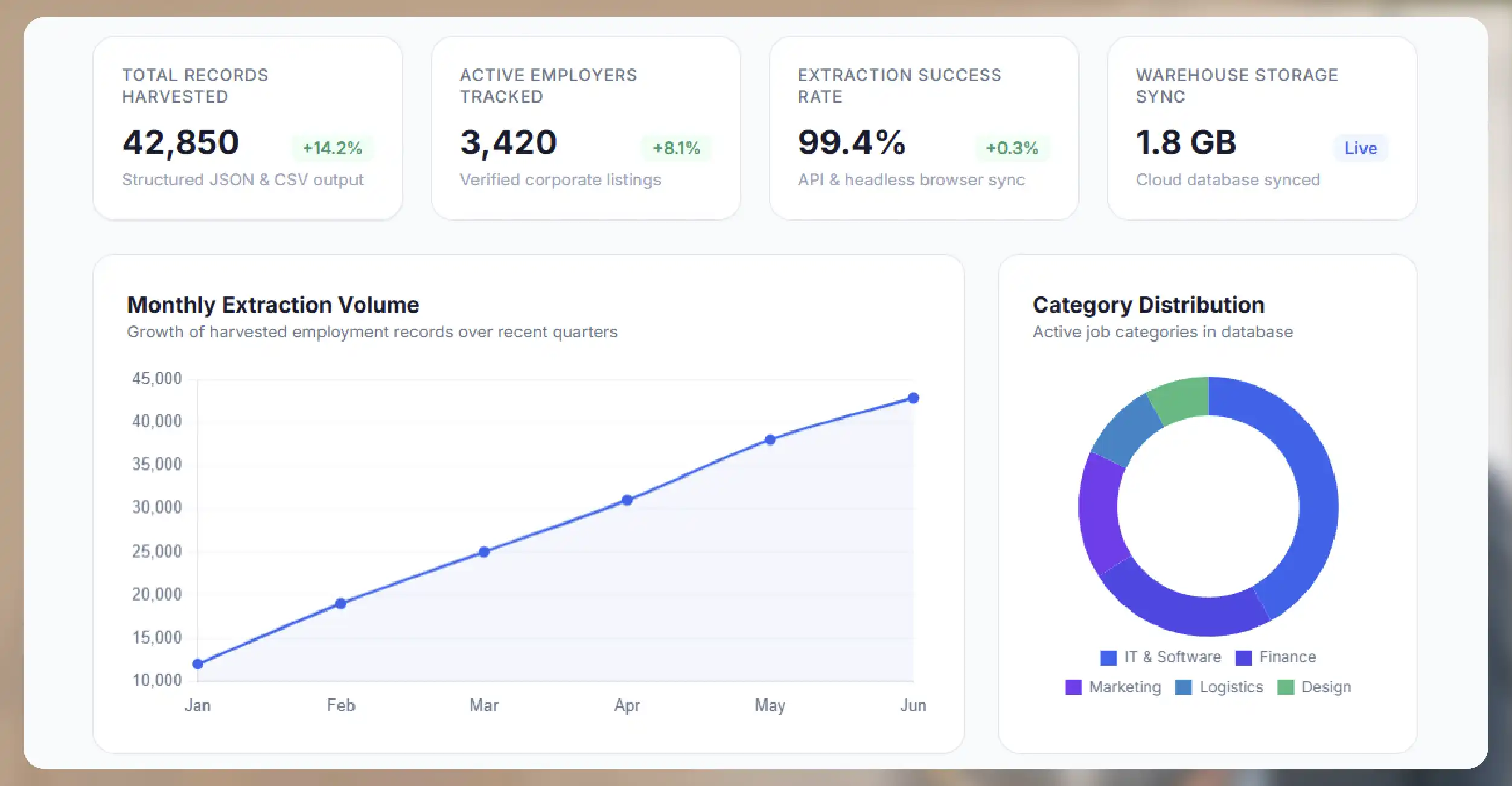
JobsDB API scraping refers to the automated collection of publicly available job-related information from JobsDB pages or accessible data interfaces and converting it into structured records. Depending on the project requirements and available access methods, the extraction workflow may use APIs, HTML parsing, browser automation, or other compliant data collection techniques.
A well-designed scraping system can collect fields such as job title, employer name, location, salary information when available, employment type, job category, experience requirements, education requirements, skills, job description, posting date, application information, and listing URLs.
The collected information can then be stored in formats such as JSON, CSV, Excel, databases, or cloud data warehouses. This makes it easier for businesses to connect employment data with recruitment platforms, business intelligence tools, and workforce analytics systems.
Key Data Fields to Extract
The quality of a JobsDB dataset depends heavily on the fields collected. Basic job listing information generally includes the job title, company, location, category, and posting URL. More detailed extraction can capture salary ranges, employment types, experience levels, qualifications, required skills, benefits, descriptions, and timestamps.
Job identifiers can also help prevent duplicate records when listings remain online for several days. Date fields are particularly useful for historical analysis because they allow businesses to monitor how quickly new vacancies appear and disappear.
For employer analysis, company names and profile information can help identify organizations with high recruitment activity. Combining job postings with employer details can reveal which companies are expanding, which industries are hiring aggressively, and where recruitment demand is concentrated.
How Does the Scraping Process Work?
A JobsDB data extraction workflow normally begins by defining the target categories, locations, keywords, companies, and data fields. The scraper then accesses the relevant publicly available pages or approved interfaces and retrieves the required information.
The extraction layer identifies individual job listings and parses their structured elements. If job descriptions contain additional information, text-processing techniques can transform unstructured descriptions into standardized attributes such as skills, certifications, job levels, and experience requirements.
After extraction, a cleaning process removes duplicate listings, normalizes company names, standardizes locations, and converts salary information into comparable formats where possible. Finally, the processed dataset is delivered to a database, dashboard, API endpoint, or downloadable file.
Automation allows the workflow to run periodically, creating continuously refreshed datasets rather than relying on one-time collection.
Recruitment Intelligence Through Job Data
Recruitment organizations can use collected JobsDB information to understand hiring patterns and improve workforce planning. JobsDB recruitment analytics can reveal which roles are appearing most frequently, which skills employers request, and which locations have the highest concentration of opportunities.
For staffing agencies, this information can support candidate sourcing and recruitment prioritization. If demand for a particular technical skill increases across multiple employers, recruiters can proactively search for candidates with matching qualifications.
Businesses can also compare their hiring requirements with market demand. This may help HR teams identify whether job descriptions are aligned with prevailing market expectations or whether compensation and skill requirements need adjustment.
Understanding Labor Market Trends
Employment data becomes particularly valuable when it is collected consistently over time. JobsDB labor market intelligence can help organizations observe changes in employment demand across industries, regions, and job categories.
Historical datasets can show whether hiring activity is increasing or declining within specific sectors. Researchers can analyze the relationship between job availability and geographic regions, while recruitment companies can identify emerging employment hotspots.
For example, an increase in listings for data analysts, cybersecurity professionals, cloud engineers, or digital marketing specialists may indicate changing business priorities. Tracking these trends over several months can provide stronger insights than reviewing individual listings.
Measuring Job Demand
Job demand analysis helps organizations understand where opportunities are concentrated. JobsDB job demand analytics can categorize vacancies according to job title, industry, location, experience level, and required skills.
A structured dataset makes it possible to calculate the number of postings for specific occupations and compare demand across different periods. Recruiters can use this information to determine which talent pools deserve greater attention.
Educational institutions and workforce development organizations can also benefit by identifying skills frequently requested by employers. These insights may support curriculum development, professional training programs, and career guidance.
Building a JobsDB Job Posting Dataset
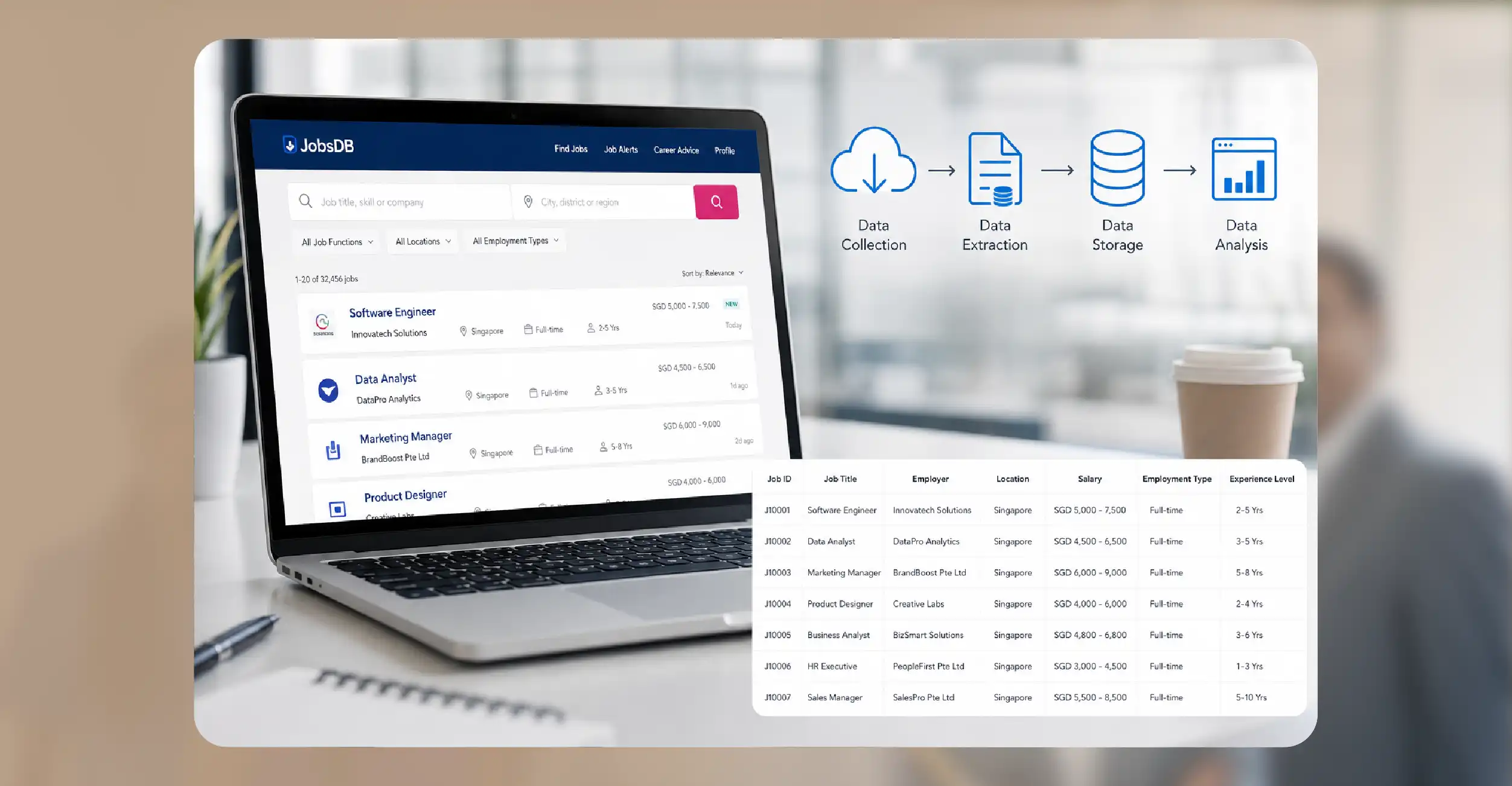
A scalable extraction project can transform individual listings into a comprehensive employment database. JobsDB Job Posting data API solutions can provide structured access to collected information when an appropriate and authorized API or data delivery mechanism is available.
A typical dataset may contain job ID, job title, employer, category, location, salary, employment type, experience level, skills, qualifications, description, posting date, update date, and URL.
Historical snapshots are especially useful because job portals continuously change. A listing that appears today may be removed tomorrow. Storing periodic snapshots allows analysts to study posting lifecycles, employer activity, and changes in job requirements.
Job Monitoring and Competitive Tracking
Automated job monitoring allows businesses to track newly published vacancies according to predefined criteria. Instead of manually searching a portal every day, organizations can schedule extraction jobs that identify new or modified listings.
Recruiters may monitor particular job titles, locations, industries, companies, or skill combinations. Alerts can then be generated when relevant vacancies appear.
Businesses can also monitor competitors' hiring activity. A sudden increase in recruitment for sales, engineering, operations, or management positions may indicate expansion, restructuring, or entry into a new market.
Scraping Job Boards and Company Profiles
Job listings become more valuable when combined with employer-level information. Scraping Job boards and company profiles can provide additional context about organizations posting vacancies, while job board data reveals their current hiring requirements.
Combining these datasets allows analysts to study employer recruitment frequency, geographic expansion, role distribution, and workforce requirements. A company that consistently posts positions across multiple locations may indicate an expanding operational footprint.
This information can support competitive intelligence, recruitment planning, market research, and workforce strategy.
Technical Architecture for Scalable Extraction
A reliable JobsDB scraping solution generally consists of several components. The collection layer retrieves available data, while parsers identify and structure relevant fields. Data validation checks whether records contain the expected information.
A scheduling layer controls how frequently the system runs. Depending on the project, jobs may execute hourly, daily, or weekly. A storage layer can use PostgreSQL, MySQL, cloud storage, or data warehouses for historical records.
For larger datasets, distributed processing technologies can help manage high-volume extraction and transformation. Monitoring systems can also detect failed requests, structural changes, missing fields, or unexpected changes in page layouts.
Data Cleaning and Standardization
Raw employment data often contains inconsistencies. Company names may appear in different formats, locations may use abbreviations, and job titles can vary even when the underlying role is similar.
Data cleaning can standardize these attributes and make cross-record comparisons more reliable. Natural language processing can categorize similar job titles and identify skills mentioned in descriptions.
Salary normalization is another important process. Where salary information is available, values can be converted into consistent numerical formats while preserving the original currency and pay period.
Business Applications
JobsDB datasets can support several business functions. Recruitment agencies can identify high-demand roles and target candidate acquisition accordingly. HR teams can compare internal hiring requirements with market conditions.
Market researchers can analyze employment patterns by industry and location. Staffing companies can identify sectors with increasing vacancy volumes. Workforce platforms can use job data to build career intelligence and recommendation systems.
Companies can also combine job posting information with their own recruitment records to understand where they stand against broader market trends.
Challenges and Best Practices
Job data extraction requires careful planning because websites can change their layouts, introduce dynamic content, or implement technical restrictions. A robust system should therefore include error handling, validation, monitoring, retry mechanisms, and adaptable parsing logic.
Data collection should also respect applicable laws, website terms, privacy requirements, and access restrictions. Organizations should focus on publicly available information and avoid collecting unnecessary personal or sensitive information.
Maintaining a historical data model is equally important. Rather than simply overwriting old records, businesses can retain timestamps and snapshots to support longitudinal analysis.
Future of Automated Recruitment Data
As recruitment becomes increasingly data-driven, automated employment datasets will play a larger role in workforce intelligence. Machine learning models can analyze historical postings to identify emerging skills, estimate demand patterns, categorize occupations, and support recruitment forecasting.
Organizations can combine JobsDB information with other employment sources to create broader market datasets. Cross-platform analysis can reveal differences in employer activity, salary ranges, geographic demand, and skill requirements.
The result is a more complete view of the employment ecosystem, allowing organizations to move from reactive recruitment toward proactive workforce planning.
How Food Data Scrape Can Help You?
Recruitment Intelligence
Food Data Scrape can collect structured employment information, identify hiring patterns, compare job requirements, and understand workforce movements across industries, locations, companies, and professional categories.
Demand Analysis
Automated job data extraction helps analyze posting volumes, identify rapidly growing roles, monitor skill requirements, and discover changing employment demand across different markets and business sectors.
Competitor Tracking
Recruitment data enables organizations to monitor competitor hiring activity, compare recruitment volumes, identify expansion signals, and evaluate workforce requirements through continuously collected job listing information.
Market Research
Historical job datasets help researchers study employment trends, evaluate salary movements, analyze geographic opportunities, and generate valuable insights for workforce planning and strategic decision-making.
Recruitment Strategy
Structured employment intelligence helps recruitment teams prioritize high-demand positions, discover relevant employers, identify emerging skills, improve candidate sourcing, and develop data-driven hiring strategies for sustainable business growth.
Conclusion
JobsDB API scraping can turn continuously changing job listings into structured, actionable employment intelligence. By collecting job titles, companies, locations, salaries, skills, experience requirements, and posting activity, organizations can build valuable datasets for recruitment, market research, and workforce planning.
A reliable Jobs Scraper can automate repetitive collection tasks and deliver refreshed information for dashboards, databases, and analytical systems. Similarly, Job Recruitment Data Scraping enables recruitment teams to monitor vacancies, understand employer activity, and identify emerging hiring requirements.
Well-maintained Job Postings Datasets can provide the historical foundation needed for trend analysis, demand forecasting, competitive recruitment research, and labor market intelligence. With appropriate technical architecture, data quality controls, responsible collection practices, and regular monitoring, JobsDB data can become a valuable resource for modern recruitment and workforce analytics.
FAQs
Automated extraction reduces manual research and helps businesses continuously collect structured employment information for recruitment, workforce planning, and competitive analysis.
Yes. Analyzing job descriptions over time can reveal frequently requested technical, professional, and industry-specific skills that are gaining employer attention.
Organizations can monitor publicly available job postings to compare competitors by hiring volume, job categories, locations, experience requirements, and workforce expansion patterns.
Yes. Historical job posting datasets can help identify recurring hiring patterns, seasonal demand, emerging occupations, and changes in workforce requirements for predictive analysis.
Recruitment agencies, staffing firms, HR technology providers, market researchers, educational institutions, consulting companies, and businesses can use structured JobsDB data for employment intelligence.