

Introduction
The hotel industry has become increasingly dynamic, with room rates changing multiple times a day based on demand, occupancy, seasonality, events, competitor pricing, and booking behavior. For hotels, OTAs, travel agencies, revenue managers, and travel technology companies, understanding these changes requires more than viewing today's prices. Businesses need historical data to understand how rates evolved and why they changed.
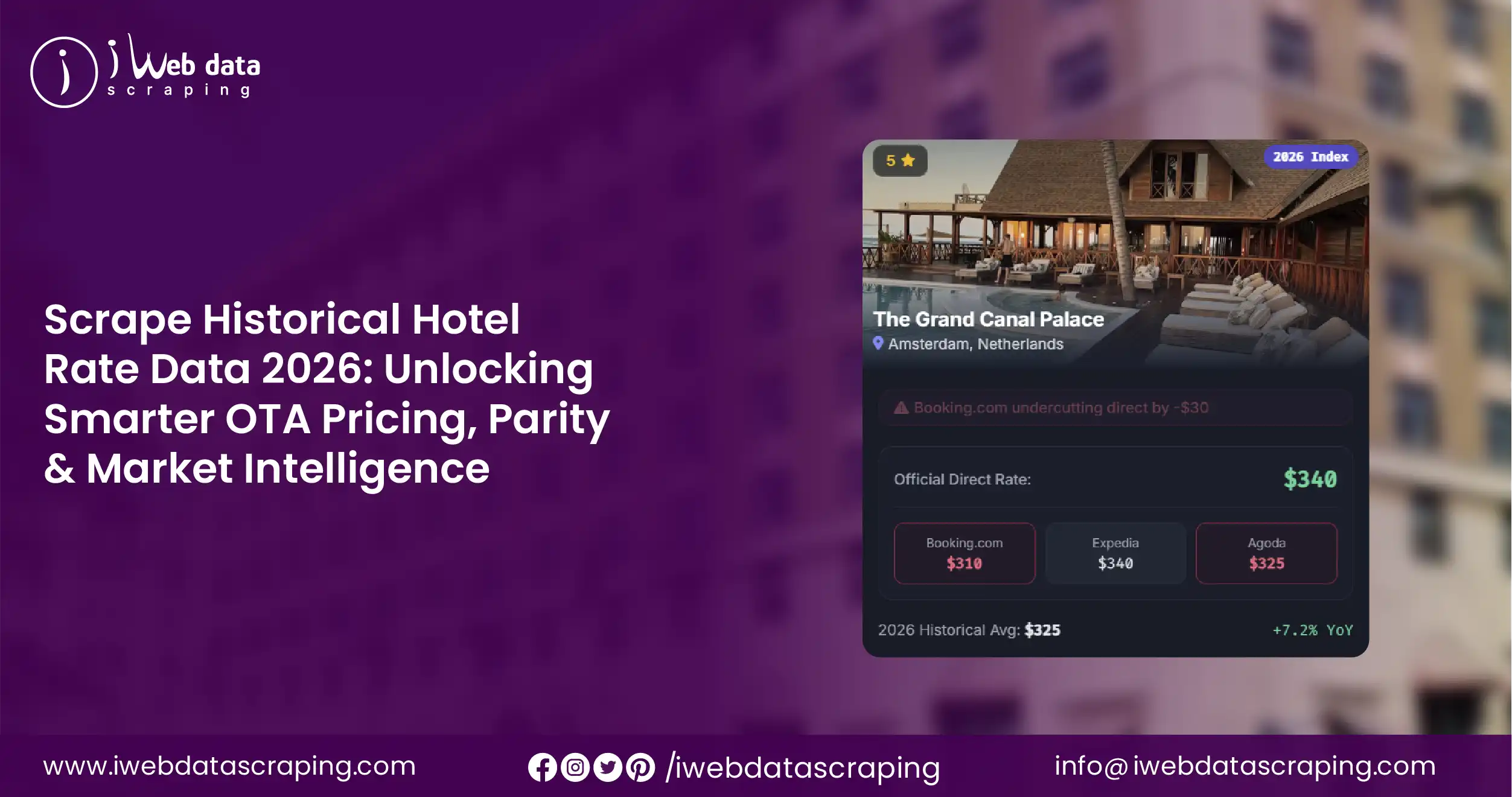
Businesses looking to Scrape Historical hotel rate data 2026 can build structured datasets containing room prices, availability, stay dates, booking dates, hotel attributes, cancellation policies, taxes, discounts, and other pricing signals. Such datasets help companies analyze pricing movements rather than relying on isolated snapshots.
Similarly, Historical hotel rate data for OTA price parity analysis provides valuable visibility into whether the same hotel and room type maintained consistent pricing across Booking.com, Expedia, Agoda, Hotels.com, Trip.com, and other distribution channels.
Why Historical Hotel Rate Data Matters in 2026?
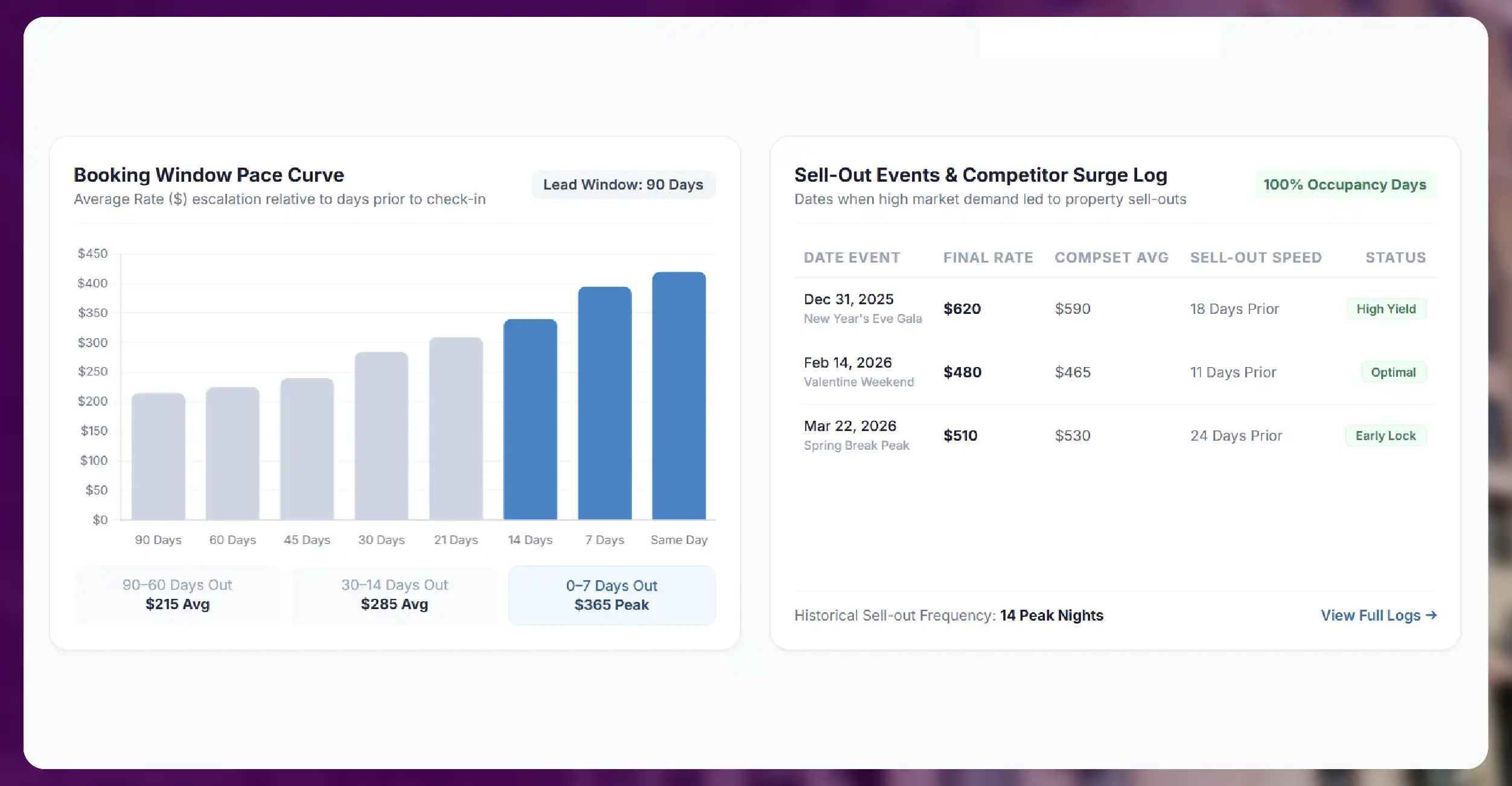
Hotel pricing is no longer static. A property may charge one rate on Monday, another on Friday, and a significantly different amount during a major event. Two OTAs may also display different prices for the same property because of promotions, member discounts, taxes, commissions, currency conversion, or inventory differences.
Historical hotel rate data preserves these pricing changes.
Instead of asking, "What is the hotel charging today?" businesses can answer more valuable questions:
- How did the rate change over the previous six months?
- Which OTA consistently offered the lowest price?
- When did competitors increase their prices?
- How far in advance did rates begin rising?
- Which destinations experienced the strongest seasonal pricing?
- How frequently did a property sell out?
- Did discounts actually improve competitiveness?
- Were rate differences caused by promotions or genuine pricing changes?
This historical perspective transforms hotel pricing from a reactive activity into a measurable intelligence function.
Tracking Hotel Prices Across OTAs Over Time
One of the strongest applications of historical hotel datasets is the ability to Track hotel prices across OTAs over time.
A monitoring system can capture hotel prices at regular intervals for identical properties, room types, occupancy levels, check-in dates, and stay durations. Each observation can be timestamped, allowing analysts to reconstruct the pricing environment for any historical period.
For example, a hotel in Paris could be monitored across five OTAs for 180 days. The resulting dataset could reveal that one OTA consistently offered a lower base rate while another frequently displayed higher prices but included breakfast.
This distinction is important because headline price alone does not always represent the best customer value.
Historical tracking can therefore incorporate:
- Base room rate
- Discounted rate
- Taxes and fees
- Breakfast inclusion
- Cancellation terms
- Room category
- Occupancy
- Availability
- Member pricing
- Promotional offers
- Currency
- Booking timestamp
- Check-in and check-out dates
Combining these attributes makes cross-platform comparisons considerably more meaningful.
Partner with iWeb Data Scraping to collect accurate historical hotel rate data and gain a competitive edge across OTAs.
Understanding Historical Hotel Pricing Patterns
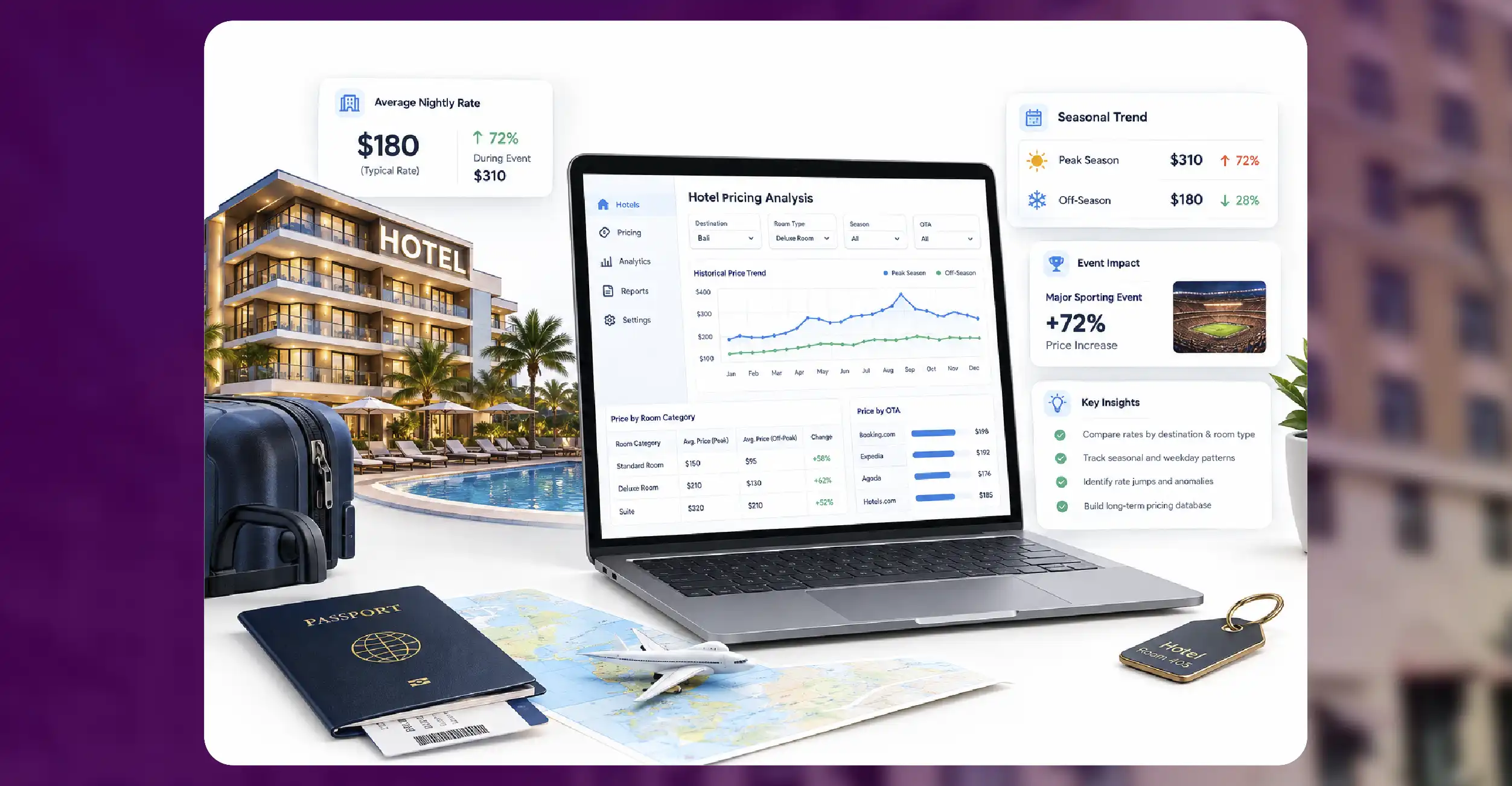
Historical hotel pricing data scraping enables businesses to create long-term pricing databases rather than temporary reports. Once collected, the data can be analyzed by destination, property, room category, season, weekday, booking window, and OTA.
For example, analysts can compare average hotel rates during peak and off-peak periods. They can identify whether rates increase gradually as the check-in date approaches or whether hotels use sudden price jumps when availability declines.
Historical datasets can also reveal pricing anomalies.
A hotel might typically charge $180 per night but suddenly increase its rate to $310 during a major sporting event. Without historical context, that price may appear unusual. With historical data, analysts can determine whether similar increases occurred during previous events.
This makes historical pricing particularly useful for revenue management, investment research, travel planning, and destination intelligence.
OTA Price Parity Monitoring
OTA hotel price parity monitoring allows hotels and hospitality groups to identify inconsistencies in publicly displayed room prices across distribution channels.
Price parity does not necessarily mean every OTA will show identical final prices. Differences may arise from legitimate promotions, loyalty programs, taxes, currency conversions, or packaging. However, persistent unexplained differences can indicate distribution or pricing issues that deserve investigation.
Historical monitoring adds another layer.
Rather than identifying a price discrepancy only once, businesses can determine whether it happened repeatedly. A hotel could discover that a particular OTA displayed lower prices on 35% of monitored dates over a three-month period.
That insight is significantly more actionable than a single screenshot.
Hotels can use these findings to investigate:
- Contractual pricing arrangements
- Promotional campaigns
- Rate loading issues
- Inventory synchronization
- Discount structures
- Mobile-only pricing
- Member-exclusive offers
- Currency discrepancies
- Tax and fee presentation
Cross-OTA Hotel Rate Benchmarking
Cross-OTA hotel rate benchmarking helps hospitality businesses understand their competitive position across multiple distribution channels.
A hotel does not compete only with properties located next door. Customers frequently compare dozens of properties across OTAs before making a booking decision.
Historical benchmarking can measure a property's average rate against comparable hotels while controlling for destination, room type, occupancy, booking window, and travel dates.
For example, a four-star hotel could compare its historical pricing with ten competing four-star properties within the same market. Analysts could then determine whether the hotel generally priced above, below, or near the market median.
Useful benchmarking metrics include:
- Average daily rate
- Median room rate
- Minimum and maximum rate
- Rate difference versus competitors
- OTA-specific price position
- Discount frequency
- Availability percentage
- Weekend versus weekday premium
- Seasonal price variation
This information can support more precise pricing decisions and competitive positioning.
Extracting Hotel Pricing Trends from Historical OTA Data
Extract hotel pricing trends using historical OTA data to identify patterns that are difficult to observe through manual monitoring.
Historical OTA datasets can support trend analysis across months or years. Businesses can identify destinations where prices are rising, markets experiencing increasing competition, and properties whose pricing strategies are becoming more aggressive.
Machine learning and statistical models can also be applied to historical hotel datasets.
For instance, predictive models can use historical prices alongside:
- Booking lead time
- Historical occupancy
- Destination demand
- Day of week
- Holidays
- Local events
- Seasonality
- Competitor rates
- Room availability
These signals can help estimate future pricing behavior.
A revenue manager could use the information to determine whether current prices should be maintained, increased, or adjusted based on historical market patterns.
Combining Hotel Rates and Reviews for Deeper Intelligence
Hotel Rates & Reviews via OTA Data creates an even richer dataset by combining commercial pricing information with customer sentiment.
Price tells businesses what customers are being asked to pay. Reviews provide context about the perceived value of that price.
A property charging $250 per night with consistently high ratings may have a different competitive position from a similarly priced property with declining customer sentiment.
Businesses can connect:
- Historical room prices
- Review ratings
- Review volume
- Sentiment
- Amenities
- Property category
- Location
- Room types
- Availability
- Cancellation policies
This allows analysts to investigate whether pricing changes correspond with changes in customer perception.
For example, a hotel increasing prices while maintaining strong ratings may demonstrate pricing power. Conversely, increasing rates alongside declining ratings could create a competitive disadvantage.
Building Travel Intelligence Datasets
Travel datasets built from historical OTA information can support a broad range of commercial applications.
Travel companies can analyze hotel pricing by city, country, destination type, hotel category, and travel season. Investors can use the information to understand hospitality market movements. Travel agencies can benchmark supplier pricing, while hotel groups can evaluate competitive performance across multiple markets.
A well-designed dataset may contain millions of historical observations.
Each record can include a hotel identifier, location, OTA, room category, booking date, stay date, nightly rate, total stay cost, availability status, rating, review count, cancellation policy, meal plan, and promotional information.
Standardizing these fields makes it easier to compare properties and markets at scale.
How Historical Hotel Data Supports Revenue Management
Revenue management depends heavily on understanding demand and willingness to pay.
Historical hotel rate datasets provide evidence about how competitors responded to demand fluctuations in the past. Revenue managers can identify recurring periods of high demand and observe how quickly market prices responded.
Consider a coastal destination where rates historically increase 45% during holiday periods. A hotel can use this information to prepare pricing strategies before demand reaches its peak.
Historical datasets can also reveal booking-window behavior. If customers typically book premium rooms 20–30 days before arrival, hotels can monitor availability during that period and adjust rates accordingly.
The objective is not simply to charge higher prices. It is to determine the optimal price for a specific market condition.
Automating Historical Hotel Data Collection
Manual hotel price tracking becomes impractical when hundreds or thousands of properties and multiple OTAs are involved.
Automated data extraction can collect pricing information at predefined intervals and store it in structured databases. Depending on business requirements, data can be delivered through CSV, Excel, JSON, APIs, cloud storage, or database integrations.
Automated workflows can also normalize property names, room categories, currencies, dates, and pricing structures.
This creates a continuously expanding historical database that businesses can query whenever they need competitive insights.
Data validation is equally important. Duplicate records, inconsistent room names, missing prices, currency differences, and changing hotel identifiers can affect analytical accuracy. Strong extraction and normalization processes help maintain reliable datasets.
Business Applications Across the Travel Industry
Historical hotel pricing intelligence extends beyond hotels.
OTA platforms can use it for competitor monitoring. Travel agencies can benchmark supplier prices. Metasearch platforms can analyze market competitiveness. Investors can study destination pricing. Revenue-management companies can develop predictive models.
Other applications include:
- Hotel investment research
- Destination market analysis
- Dynamic pricing
- Competitor intelligence
- OTA monitoring
- Revenue forecasting
- Travel demand analysis
- Pricing anomaly detection
- Promotional effectiveness analysis
- Hotel portfolio benchmarking
The common advantage is access to historical evidence rather than relying on assumptions.
How iWeb Data Scraping Can Help You?
Scalable Historical Data Collection
iWeb Data Scraping can collect structured hotel pricing information across properties, destinations, room types, dates, and OTAs, creating reliable historical datasets for large-scale analysis and competitive intelligence.
Multi-OTA Monitoring
Our solutions can monitor hotel pricing across multiple online travel platforms, capturing comparable rates, availability, discounts, room details, and booking conditions to support comprehensive competitive benchmarking.
Customized Data Fields
Businesses can request datasets containing specific fields such as hotel names, room rates, ratings, reviews, cancellation policies, amenities, availability, taxes, discounts, and timestamps based on analytical requirements.
Historical Trend Analysis
Collected datasets can help organizations evaluate pricing movements across seasons, destinations, competitors, booking windows, and travel periods, supporting revenue management and more informed strategic pricing decisions.
Structured Data Delivery
iWeb Data Scraping can provide organized hotel intelligence in business-ready formats, making it easier to integrate historical pricing datasets with dashboards, analytics platforms, databases, forecasting systems, and internal workflows.
Conclusion
Historical hotel pricing has become a powerful source of intelligence for an increasingly competitive travel ecosystem. By preserving rate movements across properties, dates, room categories, and OTAs, businesses can move beyond simple price checking toward deeper market understanding.
Reliable Travel data scraping can help organizations identify pricing patterns, monitor competitors, evaluate OTA parity, benchmark destinations, and support predictive revenue strategies. Professional Hotel Data Extraction Services can further simplify the collection and organization of large-scale hotel information.
The real value of historical hotel data lies in its ability to answer not only what a hotel costs today, but how, when, and why that price changed. In 2026, that historical perspective can become a significant competitive advantage for businesses seeking smarter decisions across the global hospitality and travel market.
FAQs
Historical hotel rate data is a time-series record of hotel prices, availability, room types, discounts, policies, and related attributes captured across specific booking and travel dates.
It helps businesses understand competitor movements, identify seasonal trends, evaluate OTA price differences, benchmark hotel rates, and develop more informed revenue and pricing strategies.
Depending on requirements, datasets can include hotel names, room categories, prices, discounts, availability, ratings, reviews, cancellation policies, amenities, taxes, stay dates, and booking timestamps.
Historical records show whether pricing differences between OTAs are isolated events or recurring patterns, helping businesses investigate persistent rate inconsistencies and distribution-related issues.
Yes. Historical pricing can be combined with seasonality, booking windows, availability, competitor rates, events, and other demand signals to develop forecasting and pricing models.